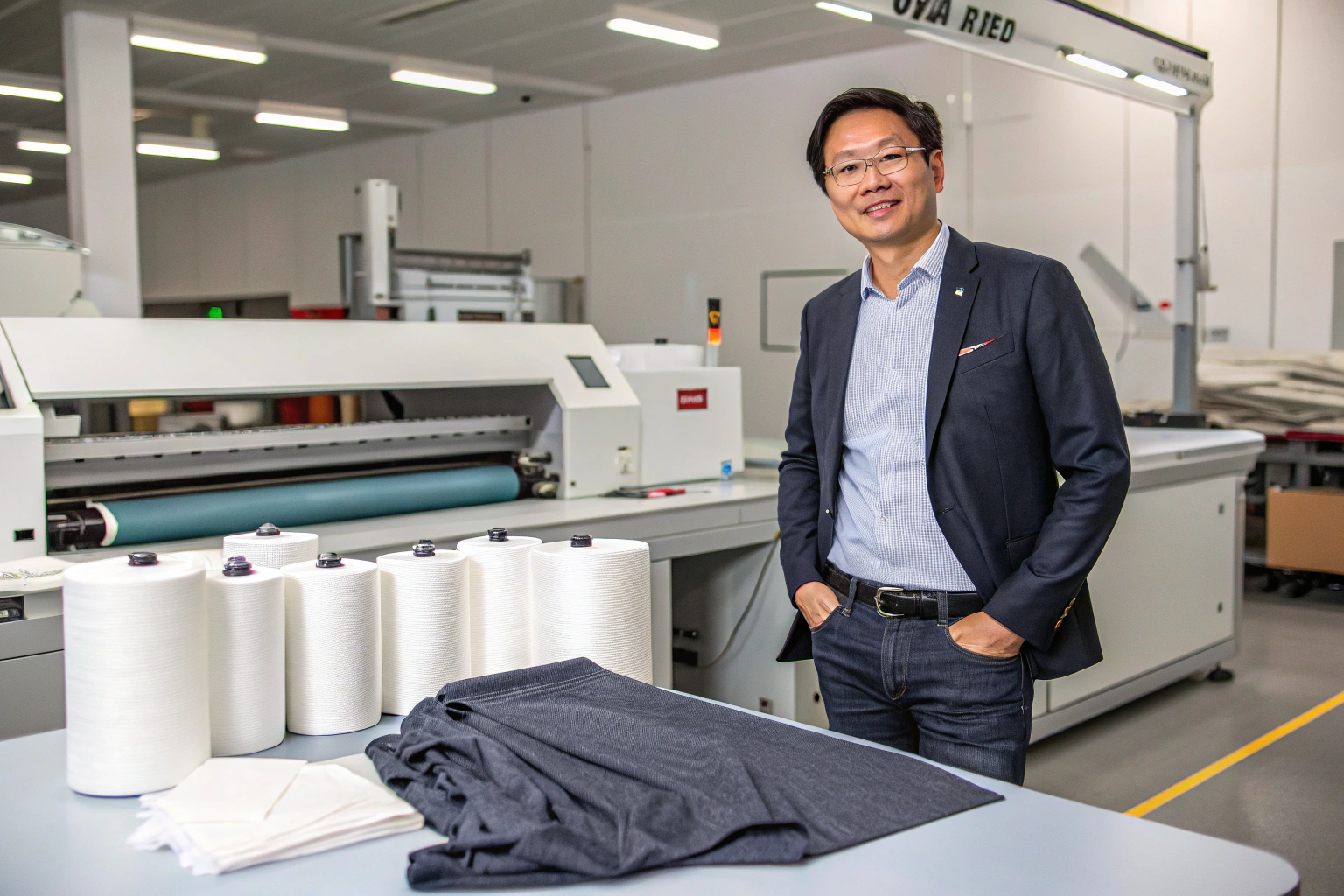
If you’ve ever seen puckering or distortion on an embroidered t-shirt or athletic wear, you know the pain. That beautiful design, ruined by the fabric’s stretch. It’s a common headache for brands sourcing custom apparel, and it often comes down to one critical choice: the embroidery backing.
Choosing the correct embroidery backing, or stabilizer, is the single most important factor for achieving professional, durable embroidery on stretchy knit fabrics like jersey, French terry, and performance knits. The right backing counteracts the fabric’s natural give during the high-speed stitching process, preventing the puckering, gapping, and registration errors that can sink a product’s quality. It’s the invisible foundation that makes or breaks your design.
For us at Fumao, this isn’t just theory. It’s a daily practice in our on-site embroidery facilities. We process tons of knit fabric for global clients, and the wrong backing choice is a mistake we help them avoid from the start. Let’s dive into the specific backings that solve this stretchy fabric challenge and how to implement them for flawless results.
What are the top cut-away backings for knit fabric stability?
When your knit fabric has significant stretch and the garment needs to withstand washing and wearing, cut-away backings are your best friend. Think of them as a permanent, supportive skeleton for your embroidery. They provide continuous, non-directional support that holds the stitches in place forever.
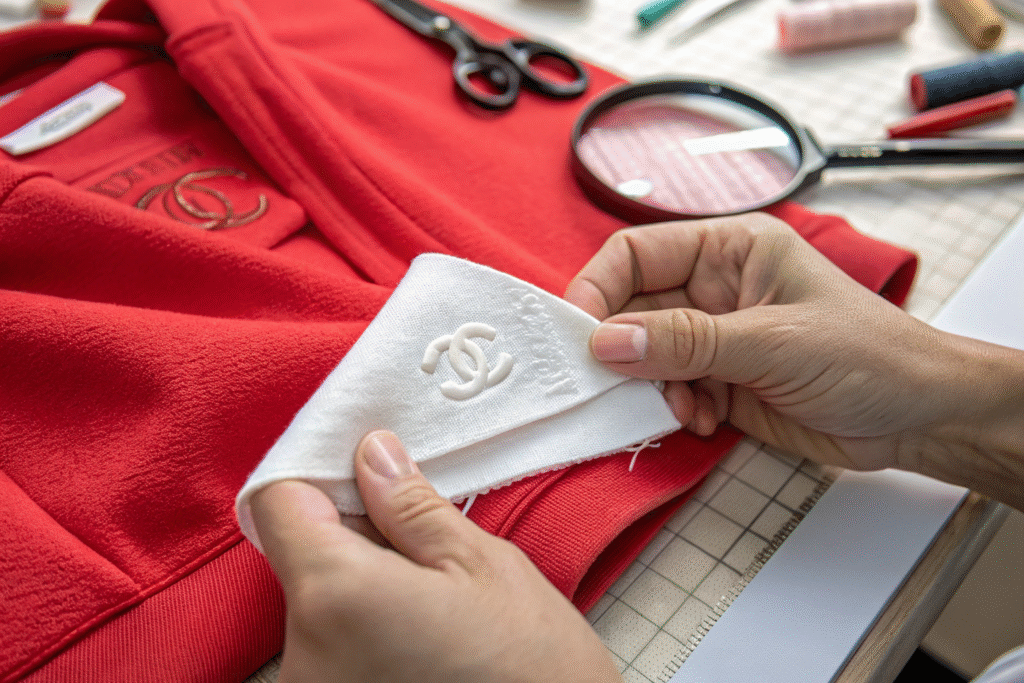
Why is a poly-mesh cut-away often the go-to choice?
Poly-mesh cut-away is our most requested backing for knit fabrics, and for good reason. Its flexible, mesh-like structure offers tremendous stability without adding the stiffness you’d get from a heavy, non-woven backing. It moves with the fabric, which is crucial for comfort on items like polo shirts and performance wear. The open mesh also reduces overall weight and improves breathability, a key concern for activewear. In our production, we pair poly-mesh with high-stretch knits for a major European sportswear brand. Their designs are complex and the fabric stretch exceeds 30%, but using a 1.5-ounce poly-mesh backing has virtually eliminated their once-chronic puckering issues. The trick is ensuring the backing’s weight is proportional to the fabric’s weight; a heavy denim knit might need a 2-ounce backing, while a delicate single jersey performs best with a 1-ounce. For a deep dive on the technical specs and comparisons, the Textile Industry Exchange forum has an active discussion on selecting the right stabilizer weight for different fabric types. It’s a great resource for practical, peer-to-peer advice.
How does a durable softness cut-away enhance comfort?
While poly-mesh is great, sometimes you need the ultimate in softness. This is where "softness" or "comfort" cut-away backings shine. They are specially designed with a lighter, softer hand feel, making them ideal for lightweight knits and garments worn close to the skin, like babywear and women’s fitted tops. The stability is still excellent, but the primary benefit is the enhanced comfort for the end-wearer. They prevent that annoying "scratchy" feeling a standard cut-away can sometimes leave. We learned this the hard way a few years back with a client from Los Angeles who was producing a high-end line of bamboo jersey loungewear. Their initial samples were rejected because the standard cut-away was too rigid. We switched to a premium softness cut-away, and the improvement in drape and comfort was immediate. The client’s customer complaint rate on embroidery feel dropped by over 70%. If you’re working with delicate or premium knits, understanding the key differences between fusible and sew-in interfacings and backings can provide valuable context, even from a home-sewing perspective, as the core principles of stability and hand-feel are universal.
When should you consider using tear-away backings on knits?
Tear-away backings are a different beast. They are designed to be removed after embroidery, leaving only the stitches behind. This sounds ideal for maintaining fabric softness, but it comes with a major caveat on stretchy materials.

What are the risks of using tear-away on high-stretch fabrics?
On high-stretch fabrics, a standard tear-away backing is often a recipe for disaster. The very act of tearing the backing away puts significant stress on the stitches embedded in the elastic knit. This can cause stitch popping, registration shifting, and immediately introduce puckering. The backing provides support during the embroidery process, but once it’s gone, the unstable knit fabric has nothing to hold the stitches flat, leading to problems over time, especially after washing. We generally advise against using tear-away on fabrics with more than 15-20% stretch. It’s simply too risky for the integrity of the design. (Here I have to interject, we see this mistake all the time with new brands trying to cut costs, and it always costs them more in returns).
Are there any safe scenarios for tear-away backings?
Yes, there are limited, specific cases where a tear-away can work on a knit. The primary scenario is when the knit fabric is very stable with minimal stretch—think a heavy sweater knit or a double-knit with little horizontal give. The other safe scenario is when the embroidery design itself is very small and uses a low stitch count. A small, simple logo with minimal underlay stitching exerts less pull on the fabric, reducing the risk. However, for 90% of knit applications, especially in the fashion and sportswear markets, a cut-away is the safer, more professional choice for long-term durability.
How do you match backing weight to your knit fabric type?
Getting the backing type right is only half the battle. The weight, or density, of that backing is the other critical half. It’s a balancing act between providing enough support and not over-stiffening the garment.

What is the basic rule of thumb for backing weight?
The golden rule is simple: match the backing weight to the fabric weight. A lightweight, drapey fabric like single jersey or fine interlock needs a lightweight backing (e.g., 1.0 oz). A medium-weight fabric, like standard cotton jersey or pique, pairs well with a medium-weight backing (e.g., 1.5 oz). A heavy fabric, like French terry or sweatshirt fleece, requires a heavy-weight backing (e.g., 2.0 oz) to control its bulk and inherent stability. This isn’t just a guess; it’s a standardized practice. The table below gives a quick reference:
| Fabric Type (Knit) | Fabric Weight (GSM) | Recommended Backing Weight |
|---|---|---|
| Lightweight Jersey / Silky Knits | 120-160 GSM | Light (1.0 oz) |
| Standard Cotton Jersey / Pique | 180-220 GSM | Medium (1.5 oz) |
| French Terry / Sweatshirt Fleece | 240-300+ GSM | Heavy (2.0 oz) |
When should you break the weight rules?
There are always exceptions. The two main factors that dictate breaking the standard weight rules are the stitch density of your design and the amount of fabric stretch. A design with extremely high stitch density (over 8,000 stitches per square inch) on a medium-weight knit might need a heavier backing, like a 2.0 oz, to handle the intense needle penetration and thread tension without pulling the fabric. Conversely, a fabric with extreme 4-way stretch might also need a heavier-than-expected backing to lock it down during embroidery. For complex technical fabric questions, referring to resources like the ASTM International standards for textile care labeling can provide a foundational understanding of how fabrics are professionally categorized and tested.
What are the proven techniques for hooping and stabilizing knits?
The best backing in the world will fail if the fabric isn’t hooped correctly. Proper hooping and stabilization techniques are the final, crucial step to perfect embroidery on knits.

Why is a ‘floating’ method often better than direct hooping?
For many stretchy and delicate knits, directly hooping the fabric itself can cause immediate distortion. The hoop rings can physically stretch the knit out of shape before a single stitch is laid down. This is where the "floating" method saves the day. In this technique, you hoop only the backing—making it drum-tight—and then use temporary adhesive spray to lightly tack the knit fabric onto the hooped backing. The fabric rests on top, "floating," and is not clamped by the hoop. This prevents the hooping process from mechanically distorting the knit. We implemented this as a standard procedure for all our high-stretch activewear projects after a 2022 case with a Miami-based client. Their lightweight, high-elasticity performance tops were consistently coming out warped. Switching to a floating method with a medium-weight poly-mesh backing solved their distortion problem completely, improving their production yield by over 15%.
How can you prevent shifting during multi-color designs?
Multi-color designs with many stops and trims are a high-risk operation for knits. Each time the machine stops, there’s a chance for the fabric to shift minutely within the hoop, leading to misaligned colors (registration errors). To prevent this, first, ensure your hooped setup is perfectly taut. Second, use a topping or water-soluble film on top of the fabric. This topping acts like a temporary "skin" that holds the fabric’s nap and stitches in place, preventing them from getting pulled down into the knit. It’s especially critical for fabrics with a pile, like velour, or high-loft fleece. Finally, optimizing your design’s stitch path to minimize trims and jumps can also reduce the chances of shift. Exploring specialist communities like Fashion-Incubator’s archives on production techniques can offer invaluable, real-world insights from other professionals on managing these complex production challenges.
Conclusion
Choosing the right embroidery backing for stretchy knit fabrics is a precise science that directly impacts the quality and longevity of your finished product. The journey involves selecting the correct type—primarily robust cut-aways over risky tear-aways—matching the weight to your specific fabric, and executing flawless hooping techniques like the floating method. It’s this meticulous attention to the invisible details that separates amateur-looking embroidery from a premium, retail-ready finish. Your brand’s reputation is stitched into every detail, and the foundation matters most.
At Fumao Fabric, we live and breathe these details every day. With our in-house embroidery facilities and dedicated QC team, we’ve helped countless brands navigate these exact challenges, transforming their designs into flawlessly executed products. If you’re looking for a partner who understands that perfect embroidery on knits is about more than just a machine, but about expert material science and execution, let’s talk. We can help you production your own clothing orders without the common pitfalls. For a direct conversation on your specific needs, please reach out to our Business Director, Elaine, at elaine@fumaoclothing.com. Let’s build a stable foundation for your brand together.