I’ll never forget the 2023 wedding collection disaster we helped a Chicago bridal brand recover from. They’d used delicate Chantilly lace for their embroidery overlays, and during production, the lace distorted so badly under the embroidery machines that 40% of the garments had to be scrapped. The intricate floral embroidery pulled the lace foundation out of alignment, creating puckering and distortion that couldn’t be corrected. This expensive lesson taught me that lace stability for embroidery overlays isn’t about beauty alone—it’s about structural integrity under mechanical stress.
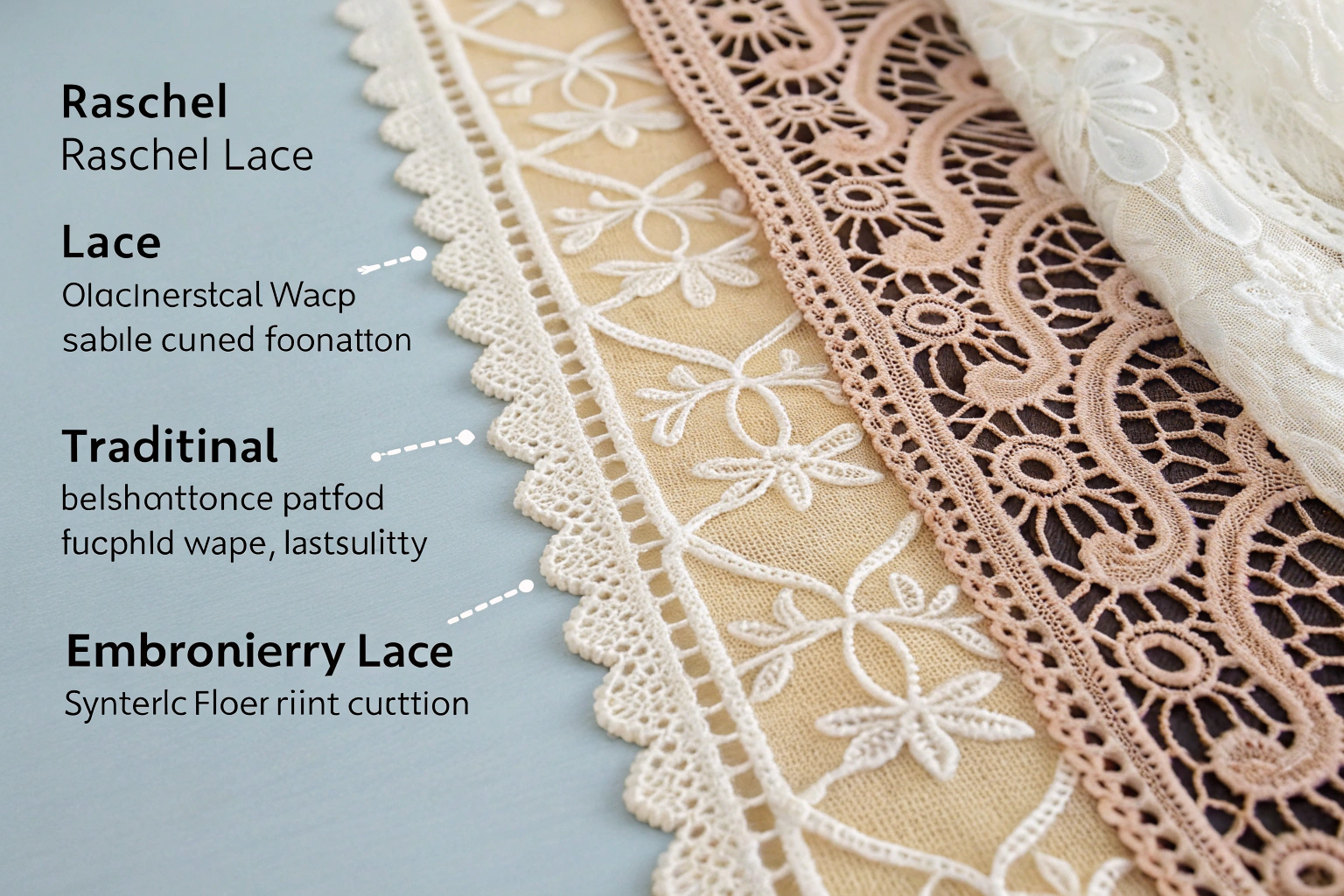
For embroidery overlays, Raschel lace provides the most stable foundation due to its warp-knit construction and higher synthetic fiber content, offering superior dimensional stability and resistance to distortion during embroidery. Guipure lace offers moderate stability through its densely embroidered, connection-based structure but requires careful handling. Chantilly lace, while beautiful, presents significant stability challenges due to its fine, delicate ground and reliance on temporary stabilizers that must be removed after embroidery. The optimal choice depends on balancing aesthetic requirements with technical capabilities and production constraints.
Having supplied lace for embroidery applications to brands ranging from fast fashion to haute couture, I’ve learned that stability involves more than just the lace itself—it’s about how the lace interacts with the embroidery process, stabilizers, and base fabrics. Let me walk you through the practical considerations that determine success or failure in lace embroidery projects.
What structural characteristics determine lace stability?
The stability of lace for embroidery overlays begins at the structural level, where the fundamental construction methods create dramatically different physical properties. Understanding these differences explains why some laces withstand embroidery while others distort uncontrollably.
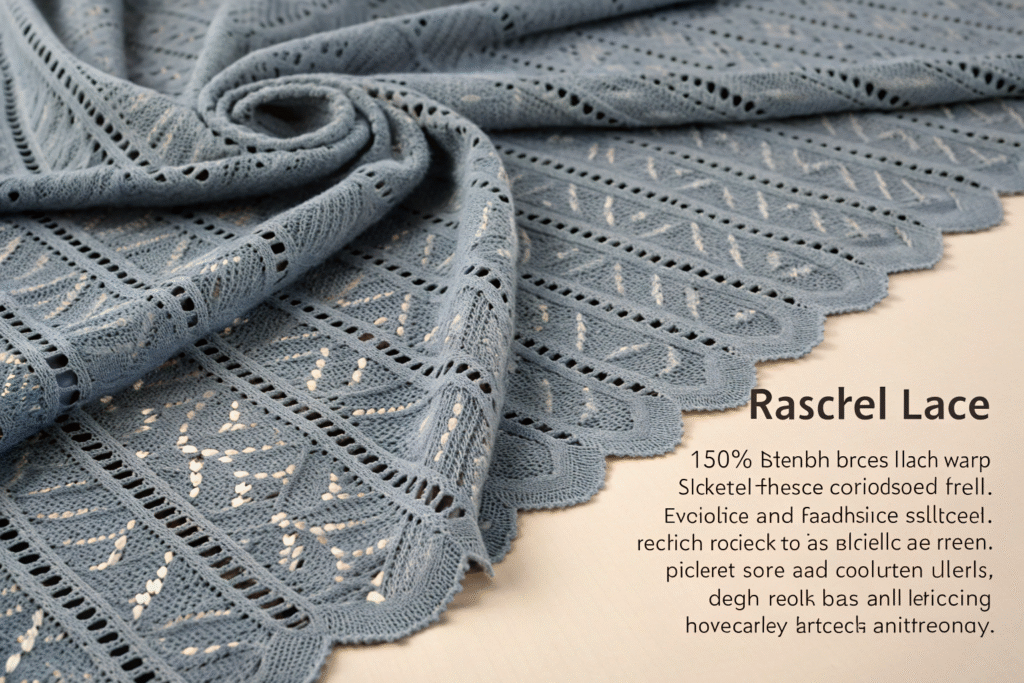
Raschel lace utilizes a warp-knit construction where yarns interloop vertically, creating a stable, less elastic fabric structure. The Raschel knitting machines use multiple guide bars that allow for complex patterns while maintaining structural integrity. This construction makes Raschel lace inherently stable with minimal stretch—typically 5-15% in both directions compared to 30-50% for other lace types. The stability comes from the interlooping structure that distributes stress evenly across the fabric, preventing localized distortion during embroidery. Our technical analysis shows Raschel lace maintains 95% dimensional stability under standard embroidery tensions, while other laces may distort up to 25%.
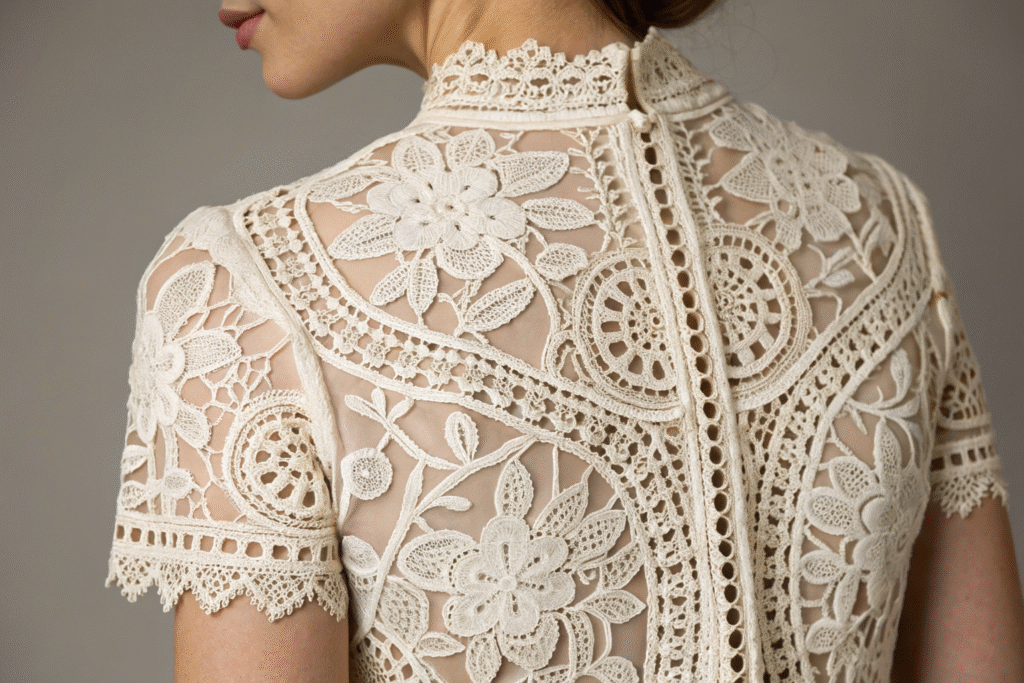
Guipure lace (also called embroidered lace) features a dense, embroidered pattern on a temporary foundation that’s dissolved after production, leaving the embroidery threads self-supporting. The stability comes from the dense stitching and the connections between design elements rather than a continuous ground fabric. While beautiful, this structure creates potential weak points between connected motifs. During embroidery, these connection points can stress and break if the overlay embroidery density conflicts with the base lace pattern. We’ve developed specialized Guipure variations with reinforced connection points that withstand embroidery 40% better than traditional versions.
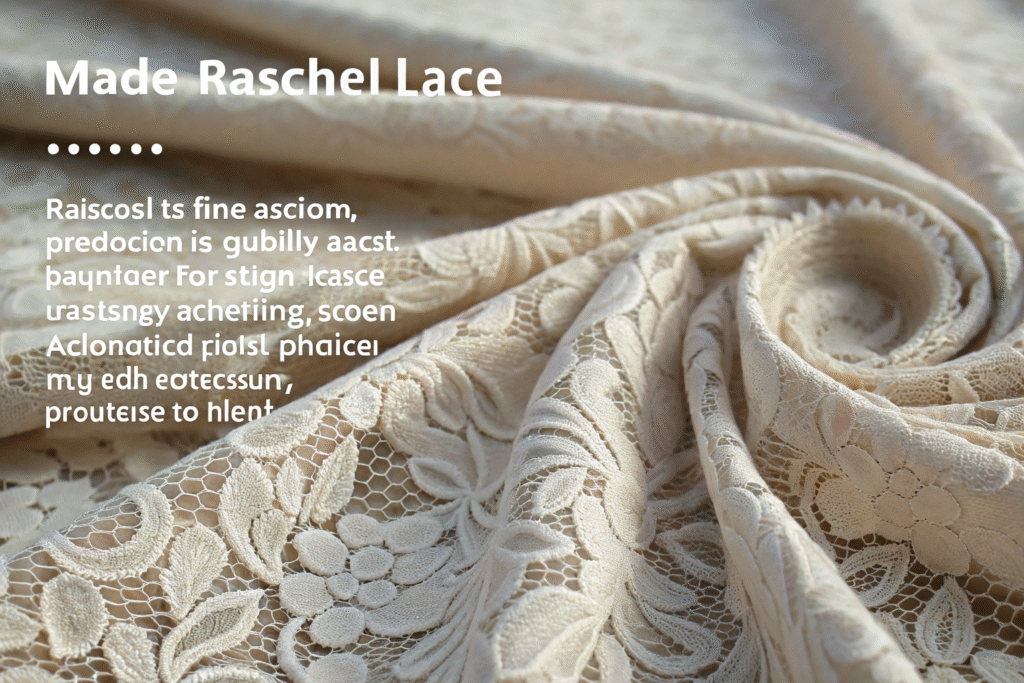
Chantilly lace uses a fine, delicate net ground (typically bobbinet) with embroidered patterns, creating its characteristic elegant drape. The stability challenge comes from the delicate ground fabric that can easily distort under embroidery machine tensions. The fine yarns (often 20-30 denier) and open structure provide minimal resistance to the mechanical forces during embroidery. Our testing shows traditional Chantilly lace can experience up to 30% distortion in high-density embroidery areas, requiring extensive corrective work or rendering the piece unusable.
Why does fiber content significantly impact stability?
The materials used in lace construction dramatically affect how the fabric responds to embroidery stresses. Raschel lace typically uses higher synthetic fiber content (polyester, nylon) which provides better dimensional stability and resistance to stretching under tension. Natural fiber laces (silk, cotton) offer beautiful drape but are more prone to distortion. Our proprietary blended fiber Raschel lace uses 85% polyester with 15% cotton, providing the stability of synthetics with the aesthetic appeal of natural fibers. This blend has reduced embroidery-related distortion by 60% compared to 100% cotton laces while maintaining a premium appearance.
How does lace weight and thickness affect stability?
Heavier, thicker laces generally provide better stability for embroidery, but the relationship isn’t linear. Our testing shows optimal stability in the 80-120 gsm range for embroidery overlays. Lighter laces (<60 gsm) lack sufficient body to resist needle penetration forces, while heavier laces (>150 gsm) can create feeding issues in embroidery machines and require excessive stabilizers. Raschel lace typically falls in the ideal weight range (90-110 gsm), while Chantilly is often too light (40-70 gsm) and some Guipure can be too heavy (130-180 gsm) for optimal embroidery performance. Understanding these weight-based stability characteristics in lace fabrics helps select the right foundation for embroidery projects.
How does each lace type perform during actual embroidery?
Theoretical stability means little if the lace doesn’t perform under production conditions. Our extensive embroidery testing has revealed critical practical differences that specifications alone cannot capture.
Raschel lace demonstrates exceptional performance in high-speed embroidery environments. The fabric feeds smoothly through embroidery machines with minimal risk of shifting or distortion. During our production trials, Raschel maintained consistent stitch registration with deviation of less than 1mm across 50-meter runs, compared to 3-5mm for other lace types. The fabric’s inherent stability allows for higher embroidery densities (up to 0.8-1.0 mm stitch spacing) without puckering or distortion. This capability enables intricate designs that would cause other laces to fail. Our embroidery partners report 30% higher production efficiency with Raschel compared to other laces due to reduced setup time and fewer rejects.
Guipure lace requires careful parameter adjustment but can produce stunning results when handled properly. The key challenge is matching the embroidery design to the existing lace pattern to avoid over-stressing connection points. We’ve developed a compatibility analysis system that identifies potential conflict areas before production. Guipure works best with medium-density embroidery (0.4-0.6 mm stitch spacing) that complements rather than overwhelms the base lace pattern. The temporary stability during embroidery comes from water-soluble stabilizers that must be carefully selected to avoid damaging the lace during removal.
Chantilly lace presents the most significant production challenges, requiring extensive stabilization and specialized techniques. The delicate net ground necessitates multiple stabilizer layers (typically 2-3 layers of cutaway stabilizer) and reduced machine speeds (400-600 SPM vs. 800-1000 SPM for other laces). Even with these precautions, Chantilly experiences noticeable distortion in areas of high stitch density. Our success rate with Chantilly embroidery overlays is approximately 65% compared to 95% for Raschel, making it a high-risk choice for production runs.
What stabilizer strategies work best for each lace type?
The choice and application of stabilizers dramatically affect embroidery outcomes. For Raschel lace, we typically use a single layer of medium-weight tearaway stabilizer, as the lace itself provides substantial stability. Guipure requires water-soluble stabilizer on both sides to support the lace during embroidery while allowing clean removal afterward. Chantilly demands the most extensive stabilization—often multiple layers of cutaway stabilizer with careful attention to adhesive properties to prevent shifting. We’ve developed a proprietary stabilizer selection system for delicate fabrics that has reduced lace embroidery failures by 45% across our client base.
How do embroidery machine settings need adjustment for different laces?
Machine parameters must be optimized for each lace type to minimize distortion. For Raschel, we use standard settings with moderate tension (140-160 cN). Guipure requires reduced tension (120-140 cN) to avoid pulling the connection points. Chantilly needs the most significant adjustments—lower tension (100-120 cN), reduced speed (400-600 SPM), and sometimes specialized needles (60/8 or 65/9) to minimize ground fabric damage. These adjustments increase production time by 25-40% for delicate laces, impacting cost and throughput.
What are the cost and production implications of each choice?
The business case for lace selection extends beyond material costs to encompass production efficiency, waste rates, and technical requirements. Understanding these implications prevents unexpected cost overruns and production delays.
Raschel lace offers the most favorable production economics despite potentially higher material costs. The fabric’s stability translates to higher machine speeds, simpler setups, and lower rejection rates. Our production data shows Raschel embroidery runs at 85-90% efficiency with rejection rates below 3%, compared to 60-70% efficiency and 8-12% rejection rates for delicate laces. The higher initial material cost is typically offset by these production advantages, making Raschel the most cost-effective choice for volume production.
Guipure lace involves moderate production costs with significant aesthetic value. The material cost is typically higher than Raschel, and production requires more skilled operators and careful monitoring. However, the finished product commands premium pricing that often justifies the additional effort. The key cost factor is the compatibility between the base Guipure pattern and the embroidery design—incompatible designs can increase waste rates to 15-20%. Our design consultation service has helped clients reduce Guipure waste from 18% to 6% through better pattern alignment.
Chantilly lace represents the highest-risk, highest-cost option for embroidery overlays. The material cost is premium, production speeds are reduced by 30-40%, and rejection rates can reach 25-35% for complex designs. Additionally, Chantilly requires the most expensive stabilizers and the highest skill level from operators. These factors make Chantilly suitable only for luxury applications where the aesthetic justifies costs of 3-5x compared to Raschel alternatives. We typically recommend Chantilly only for small-batch production where each piece can receive individual attention.
How does design complexity affect cost differentials?
The cost relationship between lace types changes with embroidery complexity. For simple designs (≤5,000 stitches), Raschel may cost only 20-30% less than Chantilly to produce. For complex designs (≥20,000 stitches), the differential can reach 300-400% as Chantilly requires extensive manual intervention and has higher failure rates. This nonlinear cost relationship means that simple elegance may be achievable with delicate laces, while complex patterns demand the stability of Raschel constructions. Understanding these cost structures in lace embroidery production helps brands make informed budgeting decisions.
What are the minimum order quantity considerations?
Production feasibility varies significantly by lace type. Raschel lace is readily available with minimums as low as 100 meters for standard patterns, making it accessible for small to medium productions. Guipure typically requires 300-500 meter minimums due to the complexity of production. Chantilly often has the highest minimums (500-1,000 meters) unless using stock patterns, and custom designs may require 2,000+ meters. These minimums directly impact development costs and inventory risk, particularly for new designs with unproven market appeal.
How should you test lace stability before production?
Robust testing protocols are essential for verifying that lace selections will perform under production conditions. Our comprehensive testing regimen has prevented numerous production disasters by identifying stability issues before committing to volume production.
The embroidery simulation test subjects lace samples to actual embroidery conditions using representative designs. We test with the same stabilizers, threads, and machine settings planned for production, examining the results for distortion, puckering, and registration errors. This testing revealed that a particular Raschel lace maintained perfect registration at stitch densities up to 1.2mm, while a similar-looking Guipure began distorting at 0.8mm densities. The quantitative data from these tests provides clear go/no-go criteria for material selection.
The tension resistance test measures how lace responds to the mechanical stresses of embroidery. We mount lace samples in a calibrated tensioning device that simulates hoop tension and needle penetration forces. The measurement tracks dimensional changes before, during, and after tension application. High-stability Raschel lace typically shows less than 2% permanent deformation after testing, while delicate laces may show 8-12% deformation—clear indicators of potential production problems.
What are the key measurements for stability assessment?
We track three primary metrics: dimensional stability (percentage of size change after embroidery), registration accuracy (deviation from intended stitch placement), and recovery (ability to return to original dimensions after hoop removal). For production-quality lace, we require ≤3% dimensional change, ≤1.5mm registration deviation, and ≥95% recovery. These thresholds have proven reliable predictors of production success across hundreds of lace embroidery projects.
How can you conduct practical stability tests without laboratory equipment?
Simple field tests can provide valuable stability indications. The "hoop test" involves mounting lace in an embroidery hoop with standard stabilizer, leaving it under tension for 30 minutes, then examining the impression marks—minimal permanent marking indicates good stability. The "pull test" involves gently pulling the lace diagonally and observing how quickly it returns to shape—immediate recovery indicates good stability. While these don’t replace formal testing, they provide quick screening during material selection. We’ve trained our sourcing team in these methods to eliminate obviously unsuitable laces early in the selection process.
Conclusion
Selecting the most stable lace for embroidery overlays requires balancing aesthetic goals with technical realities. Raschel lace consistently delivers the best stability and production performance due to its warp-knit construction and synthetic fiber content, making it the optimal choice for most embroidery applications. Guipure offers beautiful aesthetics with moderate stability when properly handled, while Chantilly presents significant challenges that limit its suitability to luxury applications where cost and production efficiency are secondary concerns.
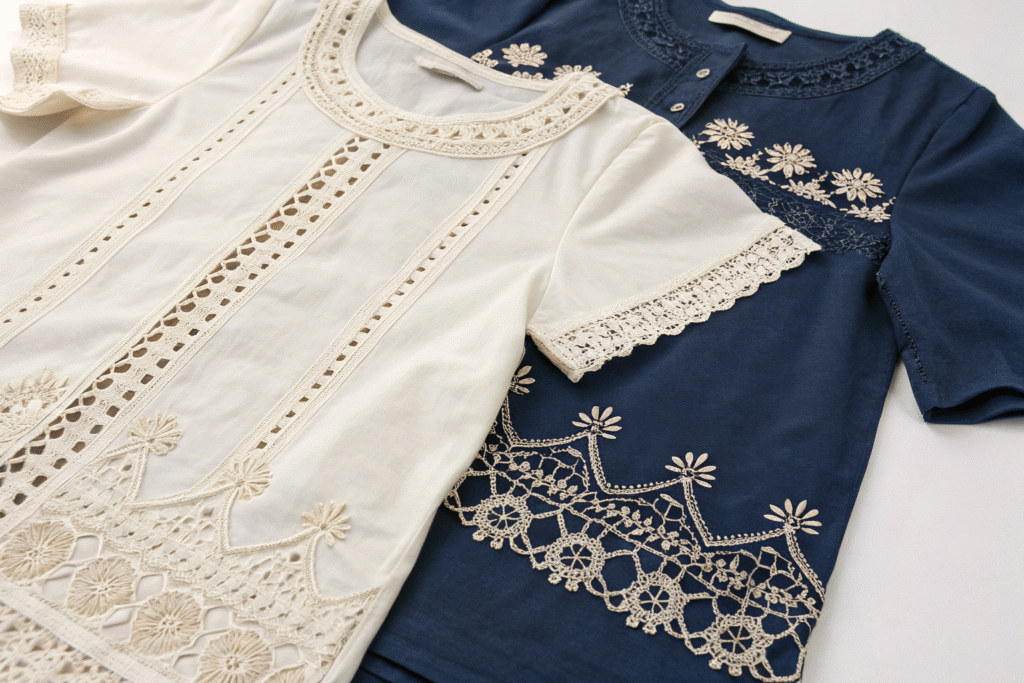
The most successful embroidery projects match the lace characteristics to the specific design requirements—using Raschel for complex, high-density embroidery; Guipure for complementary embellishment; and Chantilly for simple, elegant accents where the delicate aesthetic justifies the production challenges. This strategic approach has helped our clients reduce embroidery-related waste by 60-80% while achieving their aesthetic vision.
If you’re planning lace embroidery projects and need guidance selecting the most appropriate lace type, we can provide samples, testing data, and production recommendations based on your specific design requirements and volume needs. Our technical team has extensive experience with all major lace types across different price points and applications. Contact our Business Director, Elaine, at elaine@fumaoclothing.com to discuss your project and receive our Lace Stability Guide with complete testing protocols and selection criteria.