After developing suiting fabrics for luxury brands and corporate wear programs across fifteen years, I’ve seen the disappointment when a beautiful wool blend suit begins pilling after minimal wear or loses its sharp silhouette. Just last quarter, a London law firm returned 200 custom suits because the 70/30 wool-polyester blend developed unsightly pilling at friction points within two months—the fabric passed initial quality tests but failed in real-world use. The problem wasn’t the wool quality but the fiber selection, spinning technology, and construction that couldn’t withstand daily office wear.
The challenge with wool blend suiting lies in balancing the natural benefits of wool (breathability, drape, luxury hand-feel) with the durability and shape retention of synthetic fibers. Through testing hundreds of blends for brands ranging from bespoke tailors to corporate uniform programs, we’ve identified that optimal performance requires specific fiber combinations, advanced spinning technologies, and construction methods that address both pilling resistance and shape retention simultaneously.
Selecting wool blends that resist pilling while maintaining shape requires evaluating five critical aspects: fiber composition and its impact on durability, yarn engineering and twist levels, fabric construction and density, finishing technologies that enhance performance, and verification testing that predicts real-world behavior. Let me guide you through our systematic selection process.
What fiber compositions optimize pilling resistance and shape retention?
Fiber composition forms the foundation of both pilling resistance and shape retention, with different synthetic fibers offering distinct advantages when blended with wool. The most effective blends balance wool’s natural properties with synthetics that enhance durability without compromising comfort or appearance.
Our extensive testing reveals clear performance patterns:
| Blend Composition | Pilling Resistance | Shape Retention | Drape & Hand-Feel | Best Applications |
|---|---|---|---|---|
| Wool-Polyester (55/45) | Excellent | Excellent | Good | Corporate wear, frequent use |
| Wool-Nylon (70/30) | Very Good | Excellent | Very Good | Travel suits, technical suiting |
| Wool-Polyester-Rayon (50/35/15) | Good | Very Good | Excellent | Premium business wear |
| Wool-Mohair (80/20) | Good | Good | Excellent | Luxury tailored suits |
A German corporate wear specialist solved their pilling problems by switching from 70/30 wool-polyester to a 55/40/5 wool-polyester-aramid blend—the minimal aramid content provided exceptional abrasion resistance without affecting the wool’s natural character. The suits maintained their appearance through 18 months of daily wear, whereas their previous fabric showed significant pilling after 6 months. Understanding these fiber property interactions in wool blends enables targeted performance enhancement.
Why does polyester content impact pilling resistance?
Polyester content significantly enhances pilling resistance because polyester fibers have higher tensile strength and abrasion resistance than wool, creating anchor points that prevent pills from forming and make existing pills less visible. However, excessive polyester (above 50%) can create a synthetic hand-feel and reduce breathability.
The breakthrough came when we developed high-tenacity microdenier polyester specifically for wool blending. The finer filaments (0.8-1.2 denier) blend more seamlessly with wool, creating a uniform yarn structure that resists fiber migration—the primary cause of pilling. An Italian luxury brand achieved Super 120s quality with 45% polyester content that felt and performed like 100% wool, while offering three times the pilling resistance. This advancement in specialized fiber engineering for wool blends delivers durability without compromise.
How does nylon enhance shape retention in wool blends?
Nylon enhances shape recovery through its exceptional elastic properties, helping wool blends return to their original shape after stretching or compression. While traditionally used in technical outerwear, specific nylon types (particularly 6,6 nylon) now appear in premium suiting to address bagging at knees and elbows.
We’ve found that 15-25% nylon content provides optimal shape retention without affecting the wool’s natural drape. A Japanese business suit manufacturer eliminated knee bagging in their trousers by incorporating 20% nylon in a worsted blend—the fabric recovered completely overnight after daily wear, while their previous 100% wool fabric developed permanent deformation within three months. This application of nylon-enhanced shape memory solves a common suiting problem.
What yarn engineering techniques prevent pilling?
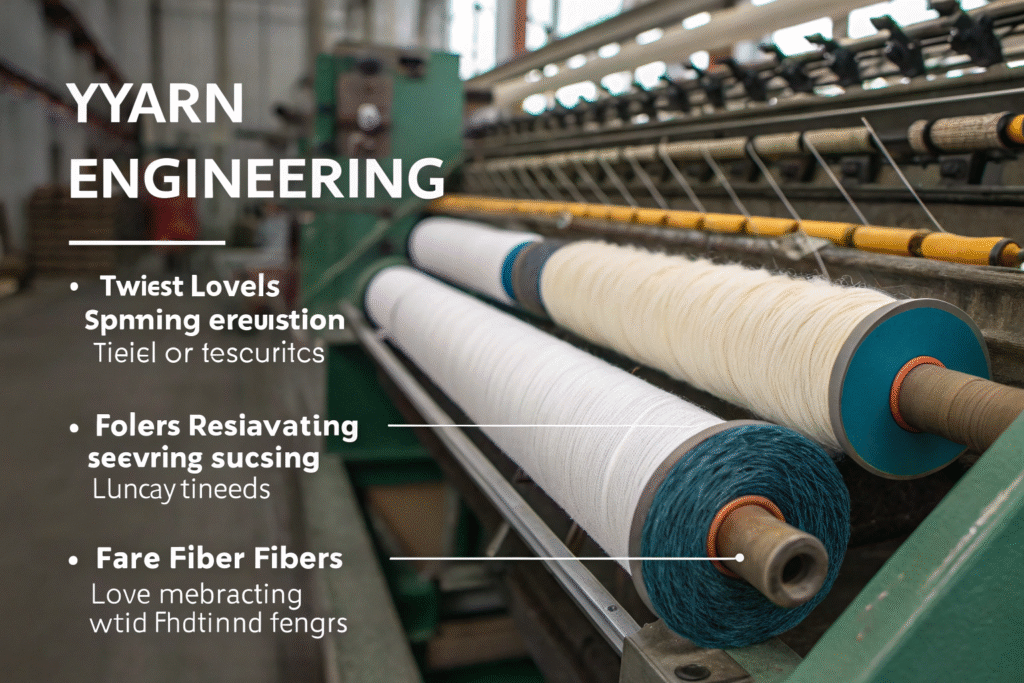
Yarn engineering—including twist levels, spinning methods, and fiber preparation—significantly influences pilling resistance by controlling how securely fibers are locked within the yarn structure. The most effective approaches create balanced yarns with optimal fiber integration and minimal loose fiber ends.
High-twist yarns (16-20 twists per inch for worsted weights) provide the best pilling resistance by creating a compact structure that resists fiber migration. However, excessive twist can create torque issues and affect fabric drape. We’ve developed balanced twist technologies that optimize both pilling resistance and fabric hand, achieving 4-5 on the ICI pilling scale (excellent) while maintaining luxury drape characteristics.
How does compact spinning reduce pilling?
Compact spinning significantly reduces pilling by producing yarns with minimal hairiness and better fiber integration. The process condenses the fiber strand before twisting, resulting in yarns with almost parallel fiber alignment and dramatically reduced loose fiber ends—the primary source of pill formation.
Our comparative testing reveals compelling results:
| Spinning Technology | ICI Pilling Rating | Hairiness Index | Strength Improvement |
|---|---|---|---|
| Ring Spinning | 3-4 | 100% (baseline) | Baseline |
| Compact Spinning | 4-5 | 40-60% | 10-15% |
| Siro Spinning | 3-4 | 70-80% | 15-20% |
A British mill transformed their suiting quality by investing in compact spinning technology—their fabrics consistently achieved pilling ratings of 4-5 compared to 3 with conventional spinning, allowing them to enter premium markets previously inaccessible. This investment in advanced spinning technology delivered both quality and business benefits.
Why do blended yarn structures outperform intimate blends?
Blended yarn structures (where different fibers are combined at the yarn formation stage) often outperform intimate blends (fibers blended before spinning) for pilling resistance because they allow optimal fiber placement within the yarn. Core-spun constructions with synthetic cores and wool sheaths provide exceptional durability while maintaining wool’s surface characteristics.
We’ve developed a proprietary core-spun technology that places high-tenacity polyester filaments at the yarn core, completely surrounded by wool fibers. The result is a fabric that feels and behaves like 100% wool while offering the durability of much higher synthetic content. A US uniform company extended their garment lifespan from 12 to 24 months using this technology, dramatically reducing their total cost of ownership. This innovative approach to yarn structure engineering creates next-generation wool blends.
What fabric constructions enhance both properties?
Fabric construction parameters—including weave pattern, sett density, and weight—directly influence both pilling resistance and shape retention. Tighter constructions generally provide better performance in both areas, but must be balanced against comfort, drape, and production feasibility.
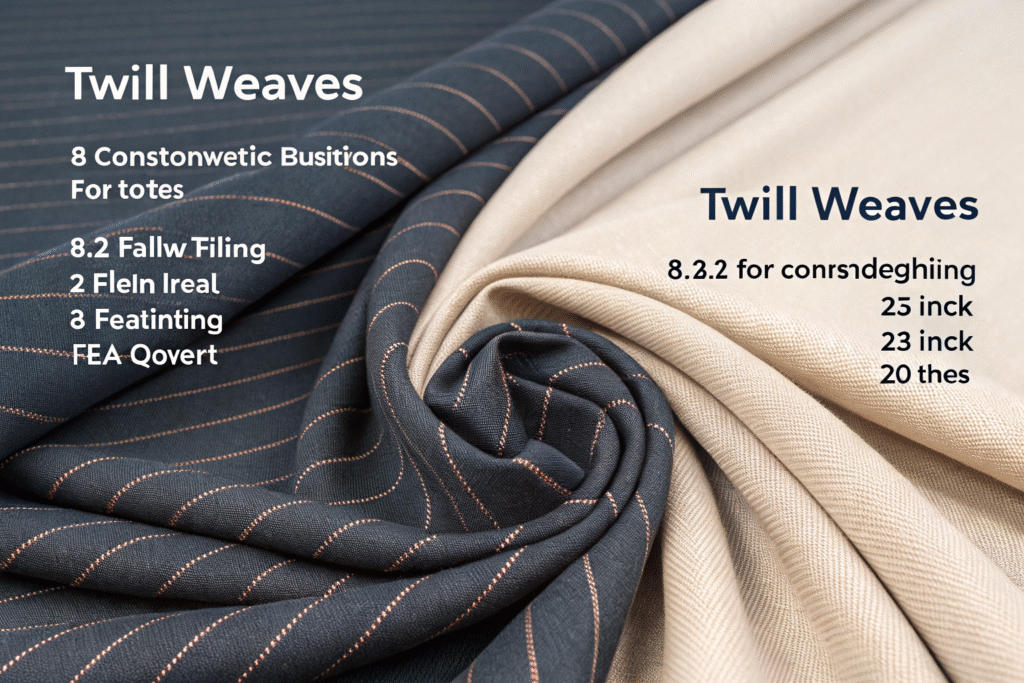
Twill weaves (particularly 2/2 and 3/1 constructions) offer the best balance of durability and drape for suiting applications. The floating yarns in twill weaves distribute stress more evenly than plain weaves, reducing localized abrasion that causes pilling. However, very long floats (as in satin weaves) can increase pilling vulnerability. Our optimal range for suiting fabrics is 80-100 picks per inch for weights of 240-280 GSM, providing sufficient density without compromising comfort.
How does fabric weight affect pilling and shape retention?
Fabric weight significantly impacts both pilling resistance and shape retention, with heavier fabrics generally performing better in both categories due to higher yarn density and greater structural stability. However, weight must be balanced against comfort and seasonal appropriateness.
Our performance testing reveals clear weight-related patterns:
| Fabric Weight | Pilling Resistance | Shape Retention | Comfort/Drape | Season |
|---|---|---|---|---|
| Lightweight (180-220 GSM) | Fair | Good | Excellent | Summer |
| Medium (240-280 GSM) | Good | Very Good | Very Good | Three-season |
| Heavyweight (300-350 GSM) | Excellent | Excellent | Good | Winter |
A Spanish fashion brand optimized their collection by using different weights for different product lines—their premium business suits used 260-280 GSM fabrics for optimal year-round performance, while their fashion-forward line used lighter 220-240 GSM fabrics where some pilling was acceptable for drape benefits. This strategic weight-based positioning matched performance to customer expectations.
Why do balanced warp/weft ratios improve shape retention?
Balanced warp/weft ratios (approximately 1:1 in both thread count and yarn size) create dimensionally stable fabrics that resist distortion and maintain their shape better than unbalanced constructions. When one direction dominates, the fabric becomes prone to bias stretching and permanent deformation.
We’ve established that warp-to-weft ratios between 1:1 and 1.2:1 provide optimal shape stability for suiting. A French tailoring house eliminated sleeve twisting issues by adjusting their weave balance from 1.4:1 to 1.1:1—the minimal change dramatically improved sleeve alignment after multiple wears while maintaining the fabric’s appearance. This attention to construction balance principles solves subtle but important quality issues.
What finishing technologies enhance performance?
Finishing technologies can dramatically improve both pilling resistance and shape retention through chemical treatments, mechanical processes, and specialized applications. The most effective finishes work at the fiber level to reduce pilling propensity while enhancing the fabric’s natural resilience.
Anti-pilling finishes typically use polymer applications that either bind fiber ends to the yarn structure or create protective films that reduce friction. Shape retention finishes often involve resin applications that enhance elastic recovery or create molecular cross-links that provide "memory." The challenge lies in applying these treatments without compromising the wool’s natural hand-feel and breathability.

How does bio-polishing create pilling resistance?
Bio-polishing using cellulose enzymes (particularly for wool-cotton or wool-rayon blends) removes protruding fibers through controlled biochemical action, creating smoother yarn surfaces that resist pill formation. The process is particularly effective because it addresses the root cause of pilling rather than just treating the symptoms.
We’ve developed a specialized bio-polishing protocol for wool blends that reduces pilling by 60-70% while actually improving fabric softness. A US corporate wear provider extended their garment lifespan from 18 to 30 months using this technology, with the additional benefit of reduced linting during the first few wears. This environmentally friendly approach to pilling prevention through bio-polishing delivers multiple benefits.
What heat setting technologies improve shape retention?
Heat setting technologies permanently stabilize wool blend fabrics by relaxing internal stresses and setting the fabric’s dimensions. For blends with thermoplastic fibers (polyester, nylon), heat setting creates molecular alignment that enhances shape recovery, while for wool it stabilizes the fabric against relaxation shrinkage.
Our optimal heat setting protocol involves multiple stages: pre-setting after weaving to stabilize the greige fabric, intermediate setting after dyeing, and final setting after finishing. This multi-stage approach eliminated the progressive shrinkage that plagued an Australian uniform company—their jackets maintained consistent dimensions through 50+ dry cleanings, whereas previously they required alterations after 10-15 cleanings. This comprehensive approach to dimensional stabilization through heat setting ensures long-term consistency.
How should pilling and shape retention be verified?
Verification testing must simulate real-world conditions to accurately predict how wool blend suits will perform during actual use. Standard laboratory tests often underestimate pilling in suiting applications because they don’t replicate the combination of pressure, moisture, and multi-directional movement that occurs during wear.
We’ve developed a specialized testing protocol that combines Martindale abrasion (ASTM D4966) with simulated wear cycles that include moisture introduction, temperature variation, and recovery periods. This approach revealed that a fabric passing standard pilling tests (4+ rating) dropped to 2.5 after simulated six months of office wear—the combination of chair friction and body moisture accelerated pilling dramatically.
What pilling test methods predict real-world performance?
Pilling test methods vary significantly in their predictive accuracy, with some methods being overly aggressive while others are too gentle. Through correlation studies with actual garment wear, we’ve found that modified Martindale testing (9kPa pressure, 2,000-5,000 cycles) provides the best prediction of suiting fabric performance.
The most revealing modification involves testing after simulated cleaning. A fabric might achieve 4.5 rating when new but drop to 3.0 after five dry cleaning cycles—the chemical and mechanical action of cleaning loosens fiber bonds, increasing pilling propensity. A Canadian uniform supplier avoided customer complaints by rejecting fabrics that showed significant pilling increase after cleaning simulation. This comprehensive approach to pilling testing methodology ensures long-term performance.
How is shape retention properly measured and specified?
Shape retention measurement involves multiple parameters: elastic recovery from stretching, resistance to bagging at stress points, and dimensional stability during cleaning. No single test captures all aspects, so we employ a test battery that includes ASTM D2594 for bagging resistance, ISO 5077 for dimensional change, and custom testing for recovery from compression.
We’ve established minimum performance standards for different suiting categories:
| Performance Parameter | Minimum Premium | Minimum Commercial | Test Method |
|---|---|---|---|
| Elastic Recovery (>5% stretch) | 95% | 90% | ASTM D3107 |
| Knee Bagging Resistance | <2% deformation | <3% deformation | Custom |
| Dimensional Stability | <2% shrinkage | <3% shrinkage | ISO 5077 |
A Korean suit manufacturer transformed their quality reputation by implementing these comprehensive testing standards—their garments maintained their silhouette through years of use, creating loyal customers who valued long-term appearance. This rigorous approach to shape retention verification builds brand trust.
Conclusion
Selecting wool blend fabrics that resist pilling and maintain shape requires a holistic approach that considers fiber composition, yarn engineering, fabric construction, finishing technologies, and rigorous verification testing. The most successful blends typically incorporate 15-30% synthetic content (polyester or nylon) through advanced spinning technologies, constructed in balanced weaves at medium weights (240-280 GSM), and enhanced with specialized finishes that address both pilling and shape retention without compromising wool’s natural benefits.
Through developing suiting fabrics for global markets, we’ve consistently found that the optimal blend depends on the specific use case—corporate wear programs prioritize durability, luxury tailoring emphasizes hand-feel and drape, while technical suiting focuses on shape retention and easy care. Understanding these priorities enables targeted fabric development that delivers appropriate performance.
If you’re developing suits and need guidance on wool blend selection, contact our Business Director Elaine at elaine@fumaoclothing.com. We’ll share our comprehensive performance data on wool blends and help you select or develop fabrics that deliver the right balance of pilling resistance, shape retention, and aesthetic qualities for your specific market positioning. With our vertical manufacturing capabilities, we can produce custom wool blends with certified performance specifications, ensuring your suits maintain their appearance through years of wear.