
As a fabric supplier dealing with international clients daily, I’ve seen how poor packaging can turn a perfect fabric order into a nightmare. You invest time and money sourcing the right materials, only to receive them creased, damaged, or contaminated. This isn’t just an inconvenience; it’s a direct hit to your production timeline and profitability. The frustration is real, and we’ve built our entire logistics operation to eliminate it.
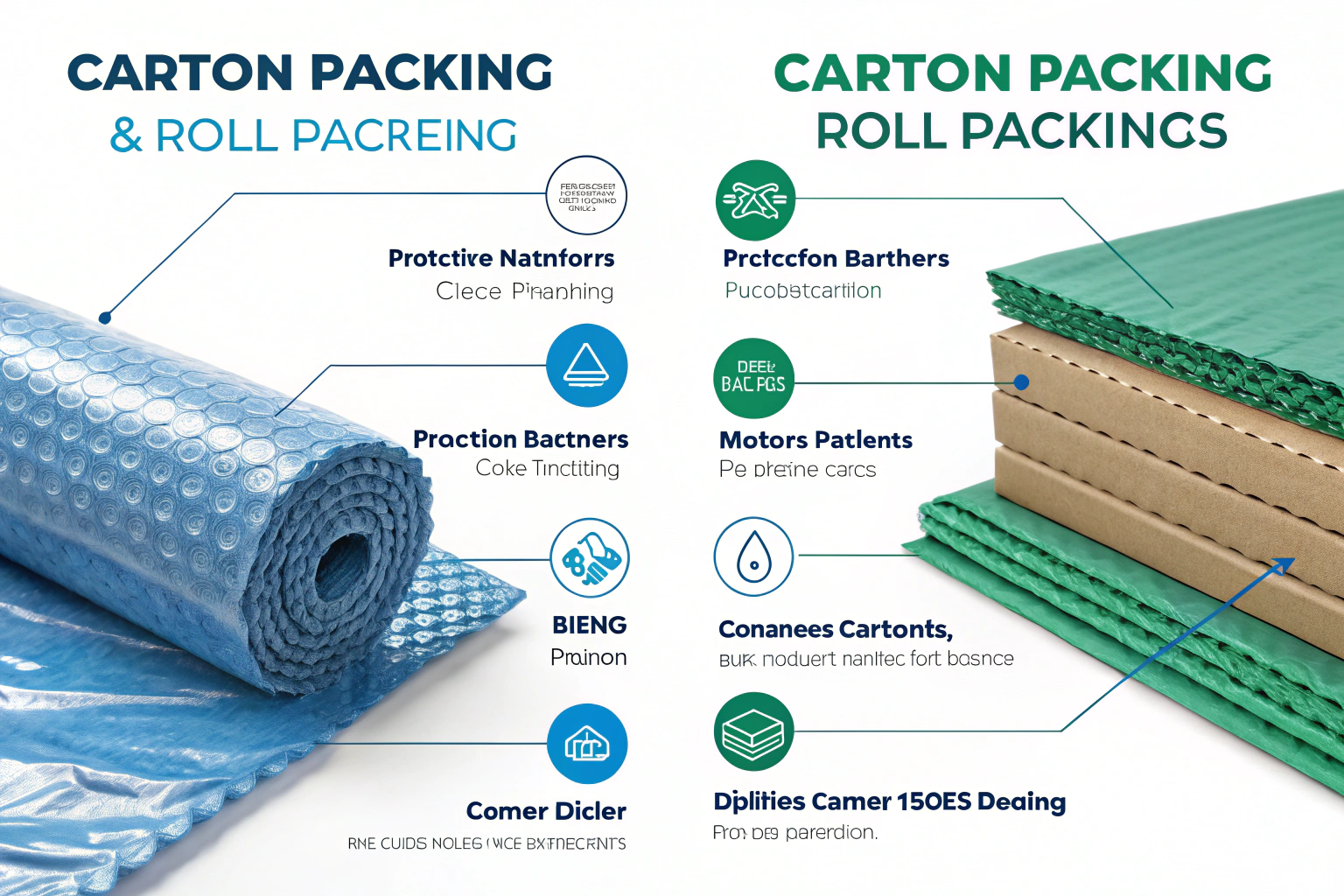
The most effective packing methods to prevent fabric damage combine structural carton designs with specialized roll-wrapping techniques. For cartons, we use rigid, moisture-resistant corrugated cardboard with internal bracing and layered separation. For rolls, we employ a multi-layer system of plastic wrapping, corner guards, and reinforced cores. The choice between the two depends heavily on the fabric type, with delicate wovens often benefiting from flat-packing in cartons and stable knits/synthetics traveling well on rolls. It’s not just about the outer box; the internal securing and protective barriers make all the difference.
Understanding the pros and cons of each method, and more importantly, how to tailor them to your specific fabric, is key to ensuring your goods arrive in pristine condition. Let’s dive into the specifics of how we safeguard your valuable textile shipments from our factory floor to your doorstep.
What are the best carton packing techniques for delicate fabrics?
When you’re shipping high-end silks, delicate chiffons, or fragile velvets, the packing method can’t be an afterthought. These materials demand a packaging strategy that prioritizes protection against pressure, moisture, and friction. A standard box thrown together won’t cut it; it requires a deliberate, layered approach.
The best carton packing for delicate fabrics uses a multi-layered system inside a high-strength, single-wall corrugated carton. We start by wrapping each piece of fabric in a soft, acid-free tissue paper to prevent surface abrasion. Then, we fold the fabric carefully, avoiding sharp creases in the same spot, and place it in a clear polyethylene bag. This bag acts as a crucial moisture barrier, especially during long sea voyages where humidity is a major concern. Multiple bagged and folded pieces are then stacked in the carton, separated by corrugated cardboard dividers. This prevents the weight of the upper layers from crushing the lower ones. Finally, we use edge protectors and fill any remaining void space with air-filled cushioning pads to eliminate internal movement. The carton is then sealed with strong, water-resistant tape.

How does internal bracing prevent compression damage?
Internal bracing is all about managing the vertical pressure that stacks of cartons endure during shipping and warehousing. Without proper support, the fabric at the bottom of a stack can be permanently creased or crushed. We address this with two key strategies: corrugated cardboard dividers and full-height corner posts.
- Cardboard Dividers: We insert these stiff sheets between every few layers of folded fabric inside the carton. They act like shelves, distributing the downward force evenly across their surface area instead of letting it concentrate on the fabric folds beneath. Think of it like the floors in a building—each floor supports the one above it.
- Full-Height Corner Posts: For especially heavy fabrics like jacquards or dense linens, we glue rigid cardboard columns in all four corners of the carton. These posts absorb a significant portion of the stacking load, preventing the carton walls from bowing inwards and compressing the contents. It’s a simple addition that dramatically increases the carton’s crush strength. For more insights on industrial packaging standards, the IoPP (Institute of Packaging Professionals) provides detailed guidelines on box strength testing and design. Furthermore, understanding the right methods for calculating carton stack load capacity for international shipping is a critical part of our QC process.
Why is moisture protection a non-negotiable step?
Moisture is a silent killer for fabric shipments. It can lead to mildew, water stains, and in the case of natural fibers like cotton or linen, even permanent degradation. The risk is highest during sea freight, where containers can experience massive temperature swings, leading to "container rain." Our moisture protection system is a barrier against this threat.
We use 3-in-1 desiccant packets placed strategically inside the carton. These don’t just absorb moisture; the ones we use often contain a humidity indicator card that changes color to show when the environment is becoming risky. Every piece of fabric is sealed in a plastic poly bag before being placed in the carton. This creates a primary, immediate barrier. For extra sensitive shipments, we’ve even used vapor barrier liners—essentially a giant sealed bag that lines the entire inside of the carton. I recall a shipment of organic cotton velour to a client in Seattle in late 2022. They had previously faced mildew issues with another supplier. We used a combination of poly-bagging and extra desiccant packs. The client confirmed it was the first time their goods arrived completely dry and ready for production, despite the rainy season. You can learn more about this specific challenge through resources like The Journal of Commerce which often discusses perishable cargo and moisture control.
When should you choose roll packing over carton packing?
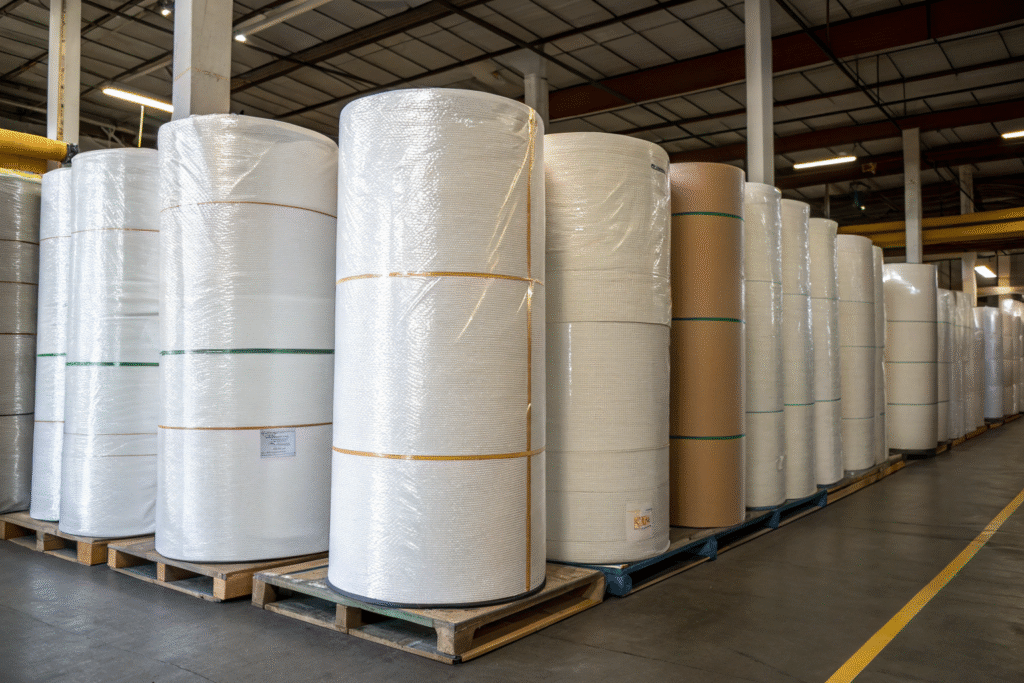
The roll vs. carton debate is fundamental in textile logistics. Making the wrong choice can lead to unnecessary costs and damaged goods. Roll packing isn’t just an alternative; it’s the superior solution for specific fabric types and production workflows, primarily because it inherently avoids the sharp fold lines that carton packing can create.
You should choose roll packing for fabrics that are resilient, heavy, or specifically intended for automated cutting systems. This includes most knitted fabrics (like jersey and interlock), stable wovens (like canvas and denim), upholstery textiles, and most synthetic materials (polyester, nylon). Rolls are also ideal for long, continuous lengths of fabric, as they prevent the multiple fold marks that would occur if the same fabric were boxed. The primary advantage is that fabric arrives flat, ready to be laid out and cut immediately, saving your team valuable time in fabric preparation and reducing waste from having to cut around fold-induced flaws.
Which fabric types are ideally suited for roll packing?
Not all fabrics can handle the tension of being wound onto a core. The key is stability. We almost exclusively recommend roll packing for:
- Knits: Their looped structure gives them natural stretch and recovery, allowing them to be wound under tension without permanent distortion. Shipping a knit fabric folded in a carton is a recipe for stubborn, hard-to-remove creases.
- Heavy Wovens: Denim, canvas, twill, and coated fabrics are too bulky and stiff to be folded efficiently without causing severe pressure marks. Rolling is the only logical way to pack them.
- Textured Fabrics: Plush, velour, and some velvets can have their pile crushed by folds. Rolling preserves their luxurious surface.
- Technical Fabrics: Laminated and coated materials can crack or adhere to themselves if creased sharply. Rolling maintains their integrity.
We learned this the hard way early on. A European client ordered a bulk quantity of performance stretch fabric for sportswear in 2021. We initially shipped in cartons, and the deep fold lines required significant steaming and relaxing before cutting, delaying their production by a week. After switching to roll packing for all subsequent orders, they reported zero preparation time and a 5% reduction in fabric waste because they no longer had to cut around the crease-damaged areas. For a deeper look at textile handling, Textile World often publishes articles on fabric preparation for manufacturing.
How does core strength impact roll integrity?
The core—the tube at the center of the roll—is the foundation of the entire package. A weak core leads to a collapsed roll, which is a total loss. We don’t use flimsy cardboard; we specify 3-inch diameter, thick-walled paper cores for most rolls. For very heavy fabrics (like weighted curtains or thick denim), we use plastic or reinforced composite cores.
A strong core prevents the roll from buckling under its own weight or the pressure of other rolls during transit. When a core collapses, the fabric inside becomes tightly jammed, making it impossible to unroll without force, which often tears the material. We also pay close attention to the overhang—we ensure the fabric is wound so that its edges do not extend beyond the ends of the core. This protects the edges from impact damage. Proper core selection is a topic frequently discussed on platforms like Fibre2Fashion, which has technical papers on logistics best practices.
What are the hidden costs of poor fabric packaging?
Many buyers focus on the unit price of the fabric but overlook the total cost of ownership, which is severely impacted by packaging. Inferior packing might save a supplier a few dollars per carton, but it can cost you, the importer, hundreds or thousands in hidden expenses down the line. These aren’t just direct costs; they are disruptions that ripple through your entire operation.
The hidden costs include production delays from fabric inspection and repair, increased labor for manual fabric relaxing and steaming, higher material waste from having to cut around damaged sections, and potential chargebacks from your own end-buyers for quality issues. Perhaps the most damaging cost is the erosion of trust and the strain on the supplier-client relationship. When goods arrive damaged, it triggers a time-consuming process of claims, negotiations, and often, the need for a costly re-production and expedited shipment.

How do creases directly affect your cutting room efficiency?
In a modern, efficient cutting room, fabric is spread in dozens of layers on a long table and cut simultaneously with a computer-guided knife or laser. Any crease, wrinkle, or fold line present in the fabric creates an uneven surface. This forces the spreading team to either stop and steam each crease—a massively time-consuming process—or risk the knife deflecting, resulting in mis-cut pieces.
Let’s quantify it. If your spreading team loses 30 minutes per roll to steam out creases, and you have 100 rolls in an order, that’s 50 lost man-hours. At a labor rate of $20/hour, that’s $1,000 added to your cost before a single garment is even sewn. Furthermore, a deep, permanent crease might render a section of the fabric unusable. If you have to waste just half a meter per roll, on 100 rolls of $5/meter fabric, that’s another $250 wasted. I had a call with a buyer from Los Angeles just last month who was thrilled that the 5,000 meters of polyester spandex we shipped on rolls arrived with zero defects. He said, "This is the first shipment in a year that went straight from the truck to the cutting table. You just saved me two days of labor." For those managing production, understanding how to calculate the true cost of fabric waste in apparel manufacturing is crucial for accurate costing.
Can packaging influence your customs clearance and tariffs?
Yes, indirectly but significantly. Customs authorities in many countries, including the U.S., assess duties based on the value of the imported goods. If your packaging is insufficient and the fabric is damaged, you have a dilemma. Do you declare the full value and pay duties on damaged goods, or do you try to file a claim and adjust the value, which can lead to customs delays and audits?
More directly, certain packaging materials themselves can be subject to phytosanitary regulations. For example, if you use wooden pallets or crating that isn’t ISPM 15 certified (heat-treated or fumigated and stamped), the entire container could be held at the port, incurring demurrage charges. We only use ISPM 15 certified wood or, preferably, plastic or metal pallets and skids to avoid this risk entirely. This is one less thing for you to worry about. A great resource for up-to-date information is the U.S. Customs and Border Protection website’s section on import requirements.
How can you verify your supplier’s packaging standards?
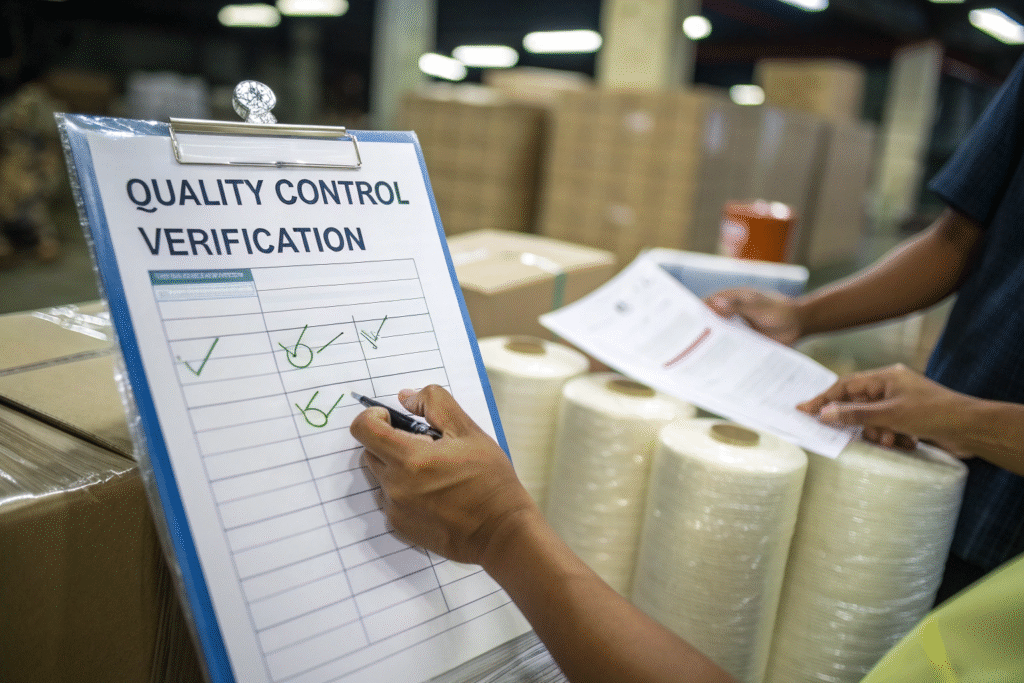
You don’t have to take a supplier’s word for it when they say their packaging is "good." As a seasoned buyer, you need tangible proof and clear standards to hold them accountable. Verifying packaging is part of a robust supplier qualification process, and it should be as routine as checking fabric quality certificates.
You can verify standards by explicitly requesting and reviewing the Supplier’s Packaging Specification Sheet, insisting on pre-shipment photos and videos of the packed goods, and making packaging criteria a defined part of your Initial Production Sample (IPS) and During Production (DUPRO) quality checks. A professional supplier will have documented procedures and will be proud to show them to you. If they are vague or resistant, it’s a major red flag.
What should you look for in pre-shipment photos?
Pre-shipment photos are your window into the packing process. Don’t settle for a picture of a sealed carton. You need a sequence of images that tell the story of how your fabric was protected. Require your supplier to provide:
- The "Empty Carton" Shot: A photo of the inside of the empty carton, showing the bottom layer of void fill and the corner posts or braces, if used.
- The "In-Process" Shot: A photo showing the layered fabric inside the carton, with dividers and desiccant packs visible, before the top is sealed.
- The "Sealed & Labeled" Shot: A clear photo of the fully sealed and labeled carton, showing the handling symbols (fragile, this side up, keep dry) and the address label.
- The "Palletized" Shot: For LCL or FCL shipments, a wide-angle photo showing how the cartons or rolls are stacked and secured on the pallet with stretch wrap.
For roll packing, request a close-up of the roll ends to check the core and the edge protection, and a shot of the plastic wrapping. In early 2023, a client from New York was hesitant about our process until we sent them a detailed photo series for their first order of wool coating fabric. They replied, "The photo documentation was more thorough than some of our domestic suppliers. We have full confidence." This level of detail is often recommended in supply chain management guides, such as those found on Sourcing Journal, which covers supplier relationship management.
Why is a clear packaging agreement crucial for avoiding disputes?
A handshake or a vague "we pack well" note in a contract is meaningless. Your purchase order or contract should have a dedicated section or appendix detailing the packing specifications. This agreement turns subjective expectations into objective, measurable requirements.
Your packaging agreement should specify:
- Packing Method: Carton or Roll (and if roll, core type).
- Carton Specification: Ply count, bursting strength, and whether it’s moisture-resistant.
- Internal Materials: Types of plastic bags, tissue paper, dividers, and void fill.
- Moisture Protection: The type and quantity of desiccant per carton.
- Palletization: Pallet type (wood/plastic, ISPM 15) and stacking pattern.
- Documentation: Requirement for pre-shipment photos.
Having this agreement protects both parties. It gives you a firm basis for a claim if the goods arrive damaged due to non-compliance. It also guides the supplier’s warehouse team precisely, leaving no room for error or cost-cutting on packaging materials. For a framework, you can look at examples of technical specifications for textile and apparel packaging from the ASTM International.
Conclusion
Choosing the right fabric packing method is a critical, strategic decision that goes far beyond simple logistics. It’s a direct investment in your supply chain’s efficiency, cost-control, and product quality. The goal is to move fabric from our factory to your cutting table not just safely, but in a condition that allows it to flow immediately into your production, without delays, extra labor, or wasted material. The best method is always a tailored one, considering the fabric’s characteristics, the shipping mode, and your specific handling processes.
We don’t just sell fabric; we deliver a product ready for your production line. Our expertise in carton bracing, moisture control, roll winding, and core selection is part of the value we bring to every order. We’ve invested in our packaging processes because we understand that our responsibility doesn’t end when the goods leave our dock. If you’re tired of dealing with the hidden costs and frustrations of damaged fabric, let’s talk. We can provide packing recommendations for your next order and show you what a difference professional packaging makes. For a consultation on your specific needs, please contact our Business Director, Elaine, at elaine@fumaoclothing.com. Let’s ensure your next shipment arrives perfectly.








