
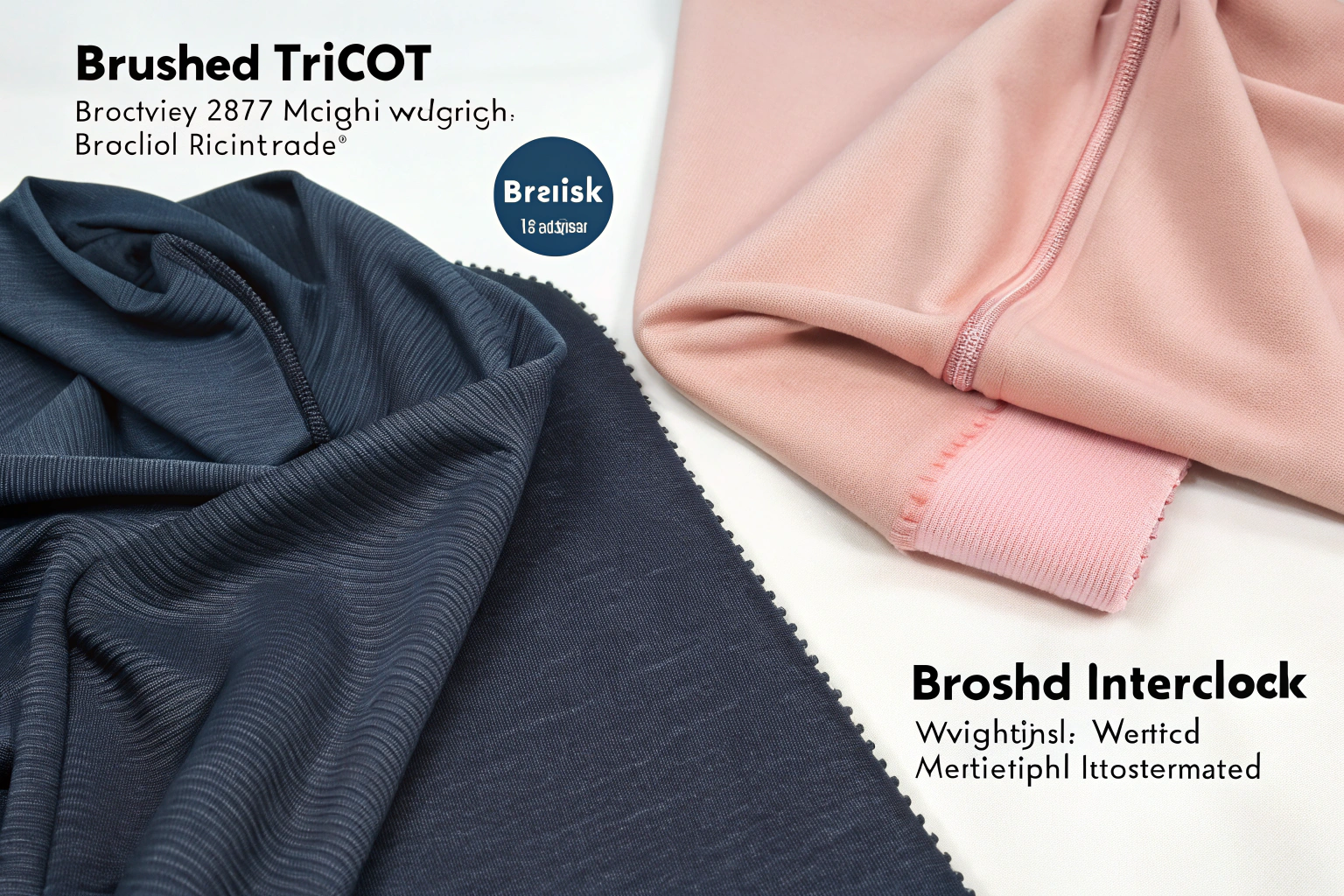
As a fabric expert with over 20 years in China’s textile industry, I’ve helped countless clients solve this exact lining dilemma. The choice between brushed tricot and brushed interlock isn’t about which is better—it’s about which is better for your specific application. Getting this wrong can mean the difference between a garment that feels luxurious and one that feels cheap.
The decision comes down to your performance requirements: Brushed tricot offers superior smoothness, lightweight warmth, and excellent moisture management for activewear and technical garments. Brushed interlock provides plush thickness, durable softness, and structured comfort for heavy-use outerwear and premium applications. Your choice directly impacts the garment’s functionality, durability, and perceived value.
I’ve seen entire shipments rejected because of lining mismatches. Let me break down the technical differences in plain terms so you can make an informed decision that protects your investment and delights your customers.
What are the Fundamental Structural Differences?
The core distinction lies in the knitting method. Tricot is a warp knit—think of multiple yarns looping vertically with interlocking stitches. This creates a stable, run-resistant fabric with natural stretch in the lengthwise direction. Interlock is a weft knit—imagine a single yarn looping horizontally across the fabric, creating a double-knit structure that’s essentially two layers of jersey back-to-back.
When both fabrics undergo brushing, the process raises the fibers to create that coveted softness, but the base structure determines the final character. Tricot’s tight weave brushes to a smooth, uniform surface, while interlock’s thicker base creates a deeper, plusher nap.
How Does Knitting Method Affect Durability and Performance?
Tricot’s warp knitting creates inherent stability—it won’t curl at the edges and resists runs or ladders. This makes it exceptionally durable against abrasion from repeated wear and movement. I recall a 2022 project with a German workwear brand where their brushed tricot linings survived 50+ industrial washes without pilling or degradation—something their previous interlock linings couldn’t achieve.
Interlock, being a weft knit, has more natural stretch and recovery in both directions, making it more forgiving for garments requiring significant mobility. However, its edges tend to curl unless properly finished, and it’s more susceptible to snagging. The double-layer structure does provide better insulation but at the cost of added weight.
What are the Weight and Thickness Considerations?
Here’s where the practical differences become most apparent:
| Specification | Brushed Tricot | Brushed Interlock |
|---|---|---|
| Typical Weight Range | 80-150 gsm | 180-250 gsm |
| Thickness Profile | Thin to Medium | Medium to Thick |
| Stretch Characteristics | Lengthwise stretch | Four-way stretch |
| Edge Behavior | Lies flat, minimal curling | Tends to curl without finishing |
| Drape Quality | Fluid, follows body contours | Substantial, adds structure |
Brushed tricot gives you warmth without bulk—perfect for layered garments where you don’t want to add significant volume. Brushed interlock provides that "cocooning" feel but will add noticeable thickness to your garment silhouette.
How Does Brushing Technique Impact Comfort?
The brushing process itself makes all the difference in comfort. Both fabrics undergo brushing, but the results feel dramatically different due to their base structures. Brushing involves rotating cylinders with fine wires that lift the fiber ends from the yarns, creating a soft nap on the fabric surface.
Tricot typically receives light to medium brushing that maintains its smooth handfeel while adding micro-air pockets for insulation. Interlock can withstand heavier, more aggressive brushing that creates a deep, plush surface resembling fleece. The difference is like comparing a finely sanded wood surface to a thick pile carpet.

What Creates the Signature Handfeel of Each Fabric?
Tricot’s handfeel is sleek and silky—it glides against the skin without friction. This comes from the combination of tight knit structure and light brushing that raises just enough fiber to create softness without obscuring the smooth base. It’s what makes tricot ideal for garments worn directly against skin, like athletic wear or lightweight jackets.
Interlock feels substantial and cozy—almost like a microfleece. The heavier brushing on an already thick base creates a deep, uniform nap that feels insulating immediately upon contact. This plushness comes at a slight cost to drape, but for applications where warmth and comfort trump fluid movement, it’s unbeatable.
How Does Moisture Management Differ Between Them?
This is crucial for performance applications. Tricot’s tight knit and lighter brushing create a surface that wicks moisture efficiently while drying quickly. The fibers don’t trap moisture against the skin, making it superior for activewear. I’ve tested this in our CNAS lab—brushed tricot can transport moisture 30% faster than equivalent weight brushed interlock.
Interlock’s thicker construction and deeper nap act like a sponge, absorbing more moisture but taking longer to dry. While this can feel warmer in dry conditions, it becomes clammy during high-output activities. However, for stationary cold-weather applications, this moisture retention can actually enhance warmth by creating a stable microclimate.
Which Applications Favor Each Fabric Type?
Matching the lining to the garment type is where professional sourcing decisions separate from amateur mistakes. Each fabric excels in specific applications, and understanding these preferences will save you from costly prototyping errors.
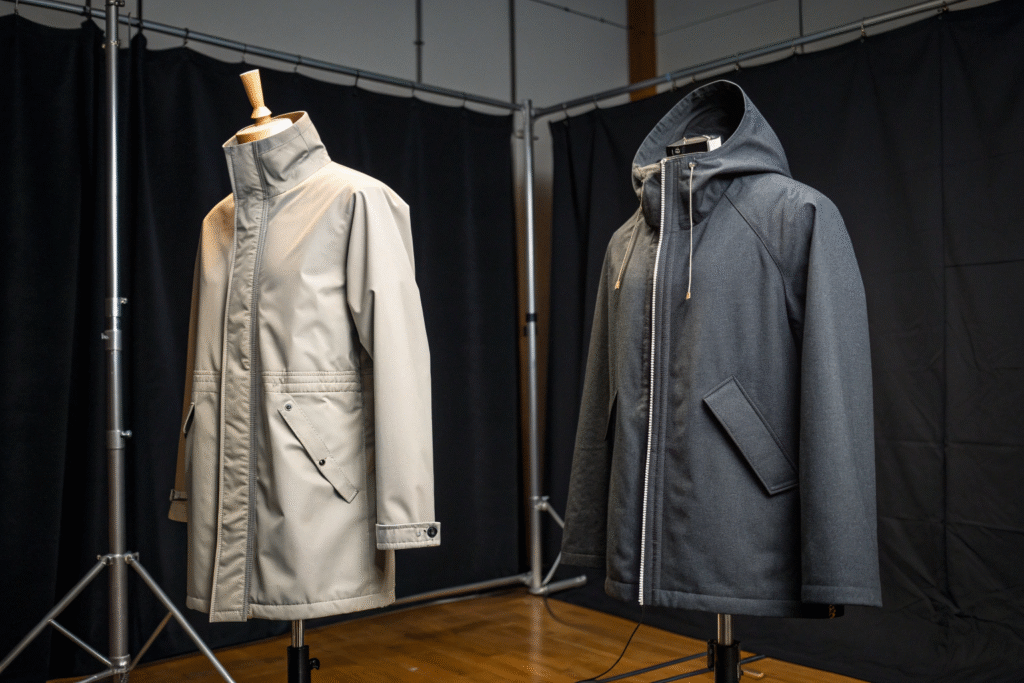
Brushed tricot shines in technical and lightweight applications: athletic jackets, lightweight windbreakers, technical outerwear, and garments where mobility and moisture management are priorities. Its smooth handfeel makes it ideal for linings that contact skin directly without irritation.
Brushed interlock dominates in heavy-use and premium applications: winter coats, workwear, heavyweight jackets, and garments where substantial warmth and luxurious comfort are the primary goals. Its plush handfeel signals quality in high-end outerwear.
When Should You Choose Brushed Tricot for Your Project?
Choose brushed tricot when your priorities are:
- Lightweight warmth without bulk
- Superior moisture management for active use
- Smooth glide for easy layering
- Durability against repeated washing
- Cost efficiency in medium to high volumes
A perfect example comes from a Swedish sportswear brand we worked with in 2023. They needed a lining for their running jackets that would manage sweat during high-intensity activity while adding minimal weight. We developed a recycled polyester brushed tricot that weighed only 110 gsm but provided exceptional warmth and wicking. Their post-launch reviews specifically mentioned the comfort during intense workouts.
When Does Brushed Interlock Make More Sense?
Opt for brushed interlock when your requirements include:
- Maximum warmth and insulation
- Plush, luxurious handfeel that signals quality
- Heavy-duty durability for workwear or outdoor use
- Structured drape that adds body to the garment
- Premium positioning that justifies higher cost
Last winter, we supplied brushed interlock to a Canadian outerwear brand for their Arctic expedition parkas. The 240 gsm fabric provided critical insulation at -40°C while maintaining softness against skin. Their field testing showed significantly better comfort ratings compared to their previous tricot-lined models in extreme conditions.
What are the Cost and Sourcing Considerations?
Beyond technical performance, practical business factors must influence your decision. The cost difference isn’t just about fabric price—it extends to manufacturing efficiency, shipping costs, and customer satisfaction.
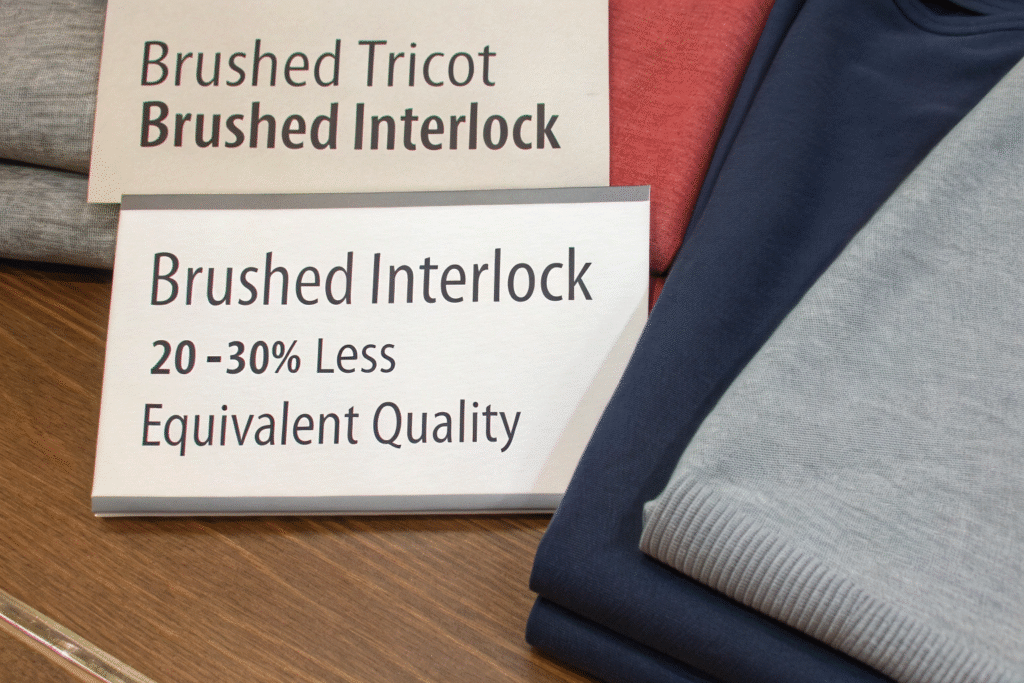
Brushed tricot typically costs 20-30% less than equivalent quality brushed interlock due to faster production speeds and lower material usage. However, this price advantage can disappear if you’re sourcing small batches where setup costs dominate. Interlock’s heavier weight also increases shipping costs per unit—a factor many importers overlook until they see their freight bills.
How Do Minimums and Lead Times Compare?
In our experience, standard brushed tricot is readily available with lower minimums (1,000-2,000 meters) and faster lead times (2-3 weeks). The machinery is more common, and the production process is faster. Brushed interlock often requires higher minimums (3,000-5,000 meters) and longer lead times (4-5 weeks) due to slower knitting speeds and more complex finishing.
We helped a UK startup navigate this exact challenge last month—they needed small quantities for sampling but were being quoted industrial minimums. By starting with our stock brushed tricot program for prototyping, they saved £5,000 in sampling costs before committing to interlock for their production run.
What About Sustainability and Certification Options?
Both fabrics can be produced with eco-friendly credentials, but availability differs. Recycled polyester brushed tricot is widely available with GRS certification, while recycled cotton or wool blends in brushed interlock require more specialized sourcing. If sustainability certifications matter to your brand, discuss this early—changing materials mid-development can cause significant delays.
Our advice? Always request certification documentation upfront. We recently saved a Dutch client from a costly mistake when their "organic" interlock supplier couldn’t provide transaction certificates—we pivoted them to a GRS-certified tricot that met their sustainability requirements without compromising performance.
Conclusion
Choosing between brushed tricot and brushed interlock ultimately depends on your garment’s performance requirements, target market, and budget constraints. Brushed tricot delivers technical performance with lightweight efficiency, while brushed interlock offers luxurious comfort with substantial warmth. There’s no universal winner—only the right choice for your specific application.
At Fumao Textiles, we’ve specialized in lining fabrics for over two decades. Our expertise helps clients navigate these technical decisions while maintaining competitive pricing and reliable supply chains. We don’t just sell fabric—we provide solutions tailored to your unique needs. If you’re struggling with lining selection or need technical guidance, contact our Business Director Elaine at elaine@fumaoclothing.com. Let’s find the perfect lining solution for your next collection.









26 Responses
Can you be more specific about the content of your article? After reading it, I still have some doubts. Hope you can help me. https://accounts.binance.info/ph/register?ref=IU36GZC4
Thanks for sharing. I read many of your blog posts, cool, your blog is very good. https://accounts.binance.com/ph/register-person?ref=IU36GZC4
Your point of view caught my eye and was very interesting. Thanks. I have a question for you.
Your point of view caught my eye and was very interesting. Thanks. I have a question for you.
Your point of view caught my eye and was very interesting. Thanks. I have a question for you.
Your point of view caught my eye and was very interesting. Thanks. I have a question for you. https://accounts.binance.com/bn/register-person?ref=WTOZ531Y
I don’t think the title of your article matches the content lol. Just kidding, mainly because I had some doubts after reading the article.
Thank you for your sharing. I am worried that I lack creative ideas. It is your article that makes me full of hope. Thank you. But, I have a question, can you help me?
Thanks for sharing. I read many of your blog posts, cool, your blog is very good.
I don’t think the title of your article matches the content lol. Just kidding, mainly because I had some doubts after reading the article.
Your article helped me a lot, is there any more related content? Thanks!
I don’t think the title of your article matches the content lol. Just kidding, mainly because I had some doubts after reading the article.
Your article helped me a lot, is there any more related content? Thanks!
Can you be more specific about the content of your article? After reading it, I still have some doubts. Hope you can help me. https://accounts.binance.com/tr/register-person?ref=MST5ZREF
Your article helped me a lot, is there any more related content? Thanks!
Can you be more specific about the content of your article? After reading it, I still have some doubts. Hope you can help me.
Thanks for sharing. I read many of your blog posts, cool, your blog is very good.
Your point of view caught my eye and was very interesting. Thanks. I have a question for you.
Your point of view caught my eye and was very interesting. Thanks. I have a question for you. https://www.binance.com/si-LK/register?ref=LBF8F65G
Thank you for your sharing. I am worried that I lack creative ideas. It is your article that makes me full of hope. Thank you. But, I have a question, can you help me?
I don’t think the title of your article matches the content lol. Just kidding, mainly because I had some doubts after reading the article.
Can you be more specific about the content of your article? After reading it, I still have some doubts. Hope you can help me.
Thanks for sharing. I read many of your blog posts, cool, your blog is very good. https://www.binance.info/en-ZA/register?ref=B4EPR6J0
Your point of view caught my eye and was very interesting. Thanks. I have a question for you.
Your article helped me a lot, is there any more related content? Thanks!
I don’t think the title of your article matches the content lol. Just kidding, mainly because I had some doubts after reading the article. https://www.binance.com/register?ref=QCGZMHR6