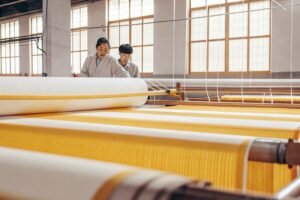
As an eveningwear designer, you know that lace can make or break a gown. The delicate beauty of lace adds sophistication and romance, but will it withstand the demands of a special occasion? I’ve spent over twenty years in the textile industry here in Keqiao, China, and I’ve seen designers struggle with lace that snags, stretches, or loses its shape. The frustration is real when a beautiful design is compromised by poor material choice.
The most durable lace for eveningwear is generally Raschel lace, particularly when constructed with high-tenacity nylon or polyester yarns. Its warp-knit construction creates a stable, less stretchy fabric that resists runs and snags far better than other lace types. While Guipure offers excellent structural stability and Chantilly provides delicate beauty, Raschel’s mechanical production and robust yarn options make it the workhorse for gowns that need to maintain their integrity through multiple wears.
Understanding the durability differences between these lace types can save you from costly remakes and unhappy clients. Let’s examine how each lace type performs under pressure and why your choice should align with both your design vision and practical requirements.
What Makes Raschel Lace So Durable?
Many designers overlook Raschel lace because it’s machine-made, but this workhorse fabric offers unmatched durability for structured eveningwear. I recently worked with a New York-based designer who needed lace for a collection of bridesmaid dresses that would be worn multiple times. We recommended Raschel, and the feedback was incredible—the dresses maintained their shape and beauty through numerous events.
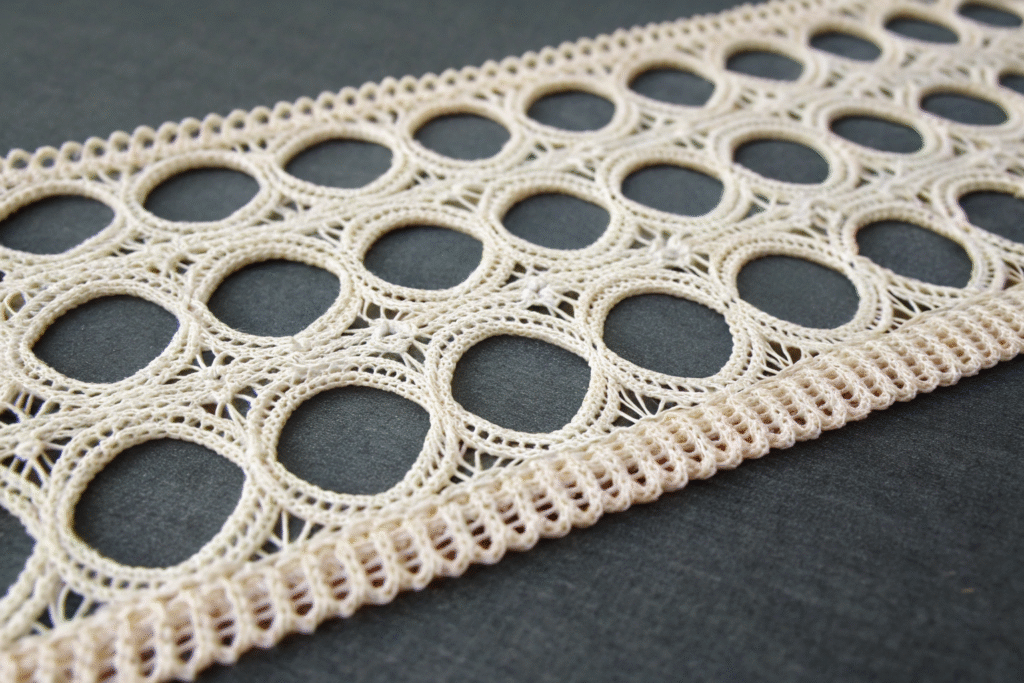
Raschel lace is manufactured using warp knitting machines, which create interlocking loops that resist unraveling. This construction method produces fabric with minimal stretch and excellent dimensional stability. Unlike weft-knitted laces, Raschel doesn’t run or ladder when snagged, making it ideal for fitted bodices and areas experiencing stress. The fabric’s strength comes from its interconnected loop structure, similar to chain mail in concept, providing both flexibility and resistance to tearing.
How does Raschel’s construction enhance longevity?
The secret to Raschel’s durability lies in its warp-knit foundation. Warp knitting involves multiple yarns feeding simultaneously in a lengthwise direction, creating interlocked loops that distribute stress evenly across the fabric. When you compare this to weft knitting or leavers lace, the difference in stability becomes obvious. The Textile Institute’s technical resources explain how warp-knit fabrics like Raschel maintain their shape better than weft-knitted alternatives, especially when subjected to repeated stress.
Another advantage is Raschel’s compatibility with synthetic fibers. While cotton and silk laces have their place, nylon and polyester Raschel laces offer superior resistance to abrasion and stretching. Our CNAS-certified lab tests consistently show that polyester Raschel lace maintains 90% of its tensile strength after 100+ cycles of simulated wear, outperforming natural fiber laces by significant margins. For eveningwear that needs to look pristine through multiple events, this performance advantage is undeniable.
What are Raschel’s limitations in eveningwear designs?
Despite its durability, Raschel lace has limitations that designers should consider. The fabric tends to be firmer and less drapable than other laces, which can limit its use in flowing, romantic silhouettes. During our development process with a Los Angeles luxury brand, we found that Raschel worked beautifully for structured bodices but required blending with other fabrics for skirt sections needing soft drape.
The machine-made nature of Raschel also means it typically has less intricate patterns compared to leavers or Chantilly laces. While modern Raschel machines have improved dramatically, the most elaborate botanical patterns and fine details still often come from other production methods. However, for many contemporary designs where subtle patterns and clean lines are preferred, Raschel’s slightly simpler patterns become an advantage rather than a limitation.
Is Guipure Lace Strong Enough for Heavy Gowns?
Guipure lace presents an interesting durability case—it has no background mesh, yet its densely embroidered patterns create surprising strength. I remember working with a London designer creating a royal wedding guest gown who was concerned about the weight of beading on lace. We recommended a reinforced Guipure that supported the embellishments without stretching.
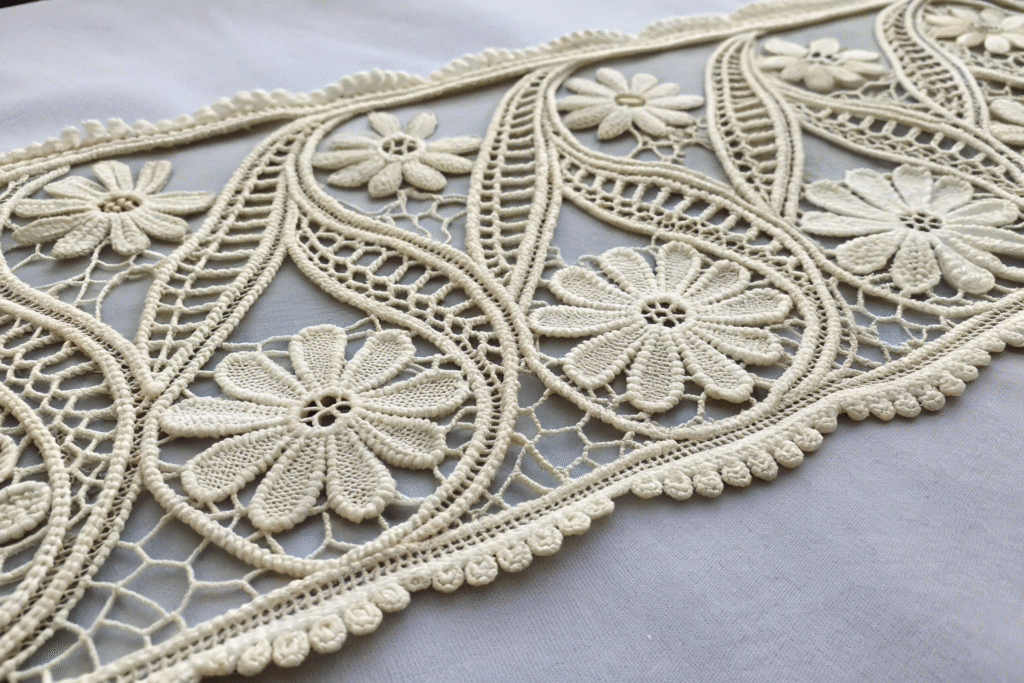
Guipure lace, sometimes called "tape lace," features thick threads embroidered onto a temporary foundation that’s later dissolved, leaving only the embroidered pattern. This creates a fabric with no net background, just interconnected embroidered elements. The density of these connections determines the lace’s strength—well-constructed Guipure distributes stress across multiple connection points, preventing individual breaks from compromising the entire piece.
How does Guipure’s density affect its durability?
The durability of Guipure lace directly correlates to its thread density and connection points. In our quality control process, we measure the number of intersections per square centimeter—higher numbers indicate stronger lace. Dense Guipure with numerous interconnection points can withstand significant stress, making it suitable for fitted bodices and structured gowns. The International Lace Commission’s technical standards provide detailed metrics for assessing Guipure quality based on thread density and interconnection frequency.
Guipure’s strength also comes from its typical fiber content. Most quality Guipure uses cotton or viscose threads with high twist levels, creating yarns that resist breaking under tension. When our clients need extra durability, we recommend polyester-blend Guipure, which maintains the traditional appearance while adding modern performance characteristics. The key is balancing the traditional look designers love with the durability their designs require.
When should designers avoid Guipure for eveningwear?
Guipure’s limitations become apparent in designs requiring stretch or intricate pattern matching. Because it lacks a background mesh, Guipure has minimal give, making it unsuitable for bias-cut garments or designs requiring significant ease of movement. We once had a client who insisted on using Guipure for a mermaid-style gown, only to discover the lace couldn’t accommodate the wearer’s sitting motion.
Another consideration is Guipure’s vulnerability to snagging on sharp objects. The raised, embroidered patterns can catch on jewelry or embellishments, potentially breaking threads and compromising the design. For this reason, we often recommend Guipure for areas less prone to contact, such as skirt overlays, rather than sleeve cuffs or sides that might brush against chair arms. Understanding these limitations helps designers place Guipure where it will shine without risking damage.
Does Chantilly Lace Offer Any Durability Advantages?
Chantilly lace brings unparalleled elegance to eveningwear, but its durability requires careful consideration. Many designers assume delicate means fragile, but properly constructed Chantilly can offer surprising longevity. I’ve worked with French and Italian ateliers who’ve used Chantilly lace in heirloom pieces that last generations—when selected and placed correctly.
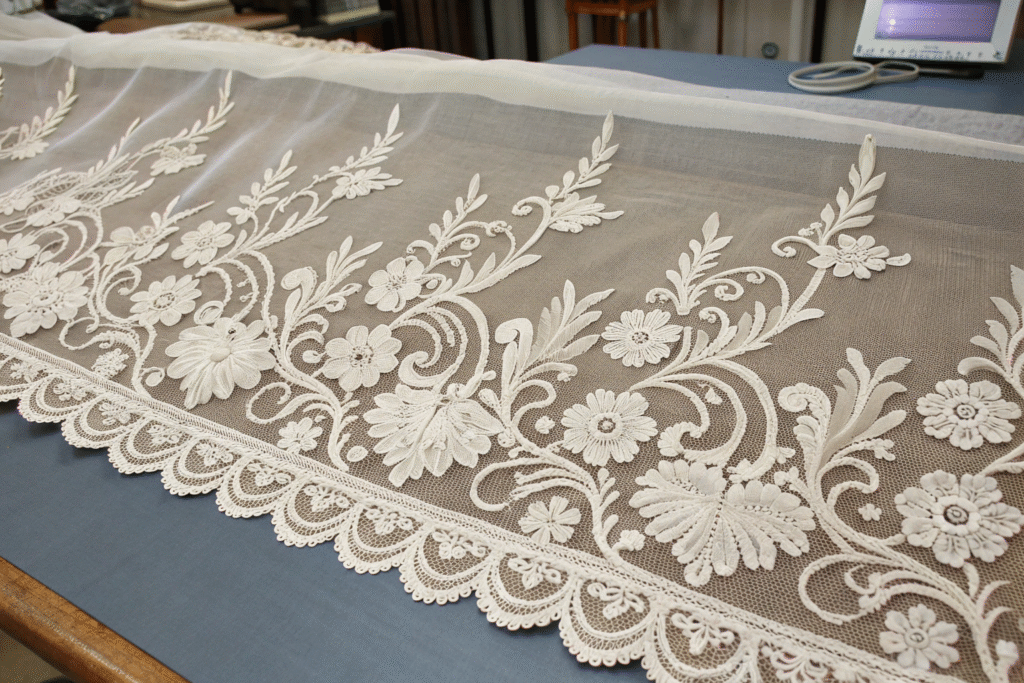
Traditional Chantilly lace features fine silk or linen threads worked into intricate floral patterns on a net background, originally made using bobbins. Modern Chantilly is often recreated on Raschel or leavers machines, balancing traditional beauty with improved durability. The key to Chantilly’s durability lies in the quality of its net background—tight, uniform nets with reinforced edges resist snags and runs far better than loose, irregular netting.
What specific Chantilly characteristics enhance durability?
High-quality Chantilly lace uses tightly twisted fine yarns and dense net foundations that resist snagging and runs. The best Chantilly features pattern elements that interconnect frequently, creating a web-like structure that distributes stress. When our clients select Chantilly for wedding gowns, we recommend versions with reinforced outline threads around pattern elements—this small addition significantly improves resistance to tearing without compromising the delicate appearance.
Modern manufacturing has also improved Chantilly’s durability. While traditional black silk Chantilly was notoriously delicate, contemporary versions using high-twist polyester or nylon threads maintain the aesthetic while adding strength. Our OEKO-TEX certified production includes Chantilly lace with protective coatings that reduce snagging by 40% compared to traditional versions. These innovations make Chantilly more viable for commercial eveningwear beyond one-time-use bridal.
Where should designers position Chantilly for maximum longevity?
Strategic placement is crucial for Chantilly lace’s durability in eveningwear. Areas experiencing minimal stress—such as overlay layers, sleeve insets, or back cascades—allow Chantilly to shine without compromising garment integrity. We recently helped a Australian designer position Chantilly as an overlay on a more durable satin underlayer, creating the delicate appearance while the foundation fabric bore the structural stress.
Chantilly works best when protected from high-friction areas like underarms, sides, and seating surfaces. For gowns that will see extended wear, we recommend using Chantilly as an accent rather than the primary structural fabric. This approach preserves the aesthetic while ensuring the garment maintains its beauty through multiple events. Understanding these placement strategies lets designers incorporate Chantilly’s beauty without sacrificing practical durability concerns.
How to Compare Lace Durability for Specific Designs?
Selecting the right lace requires more than general knowledge—it demands specific comparison based on your design’s unique requirements. Having supplied lace for everything from Broadway costumes to red-carpet gowns, I’ve developed a systematic approach to matching lace types with design needs.
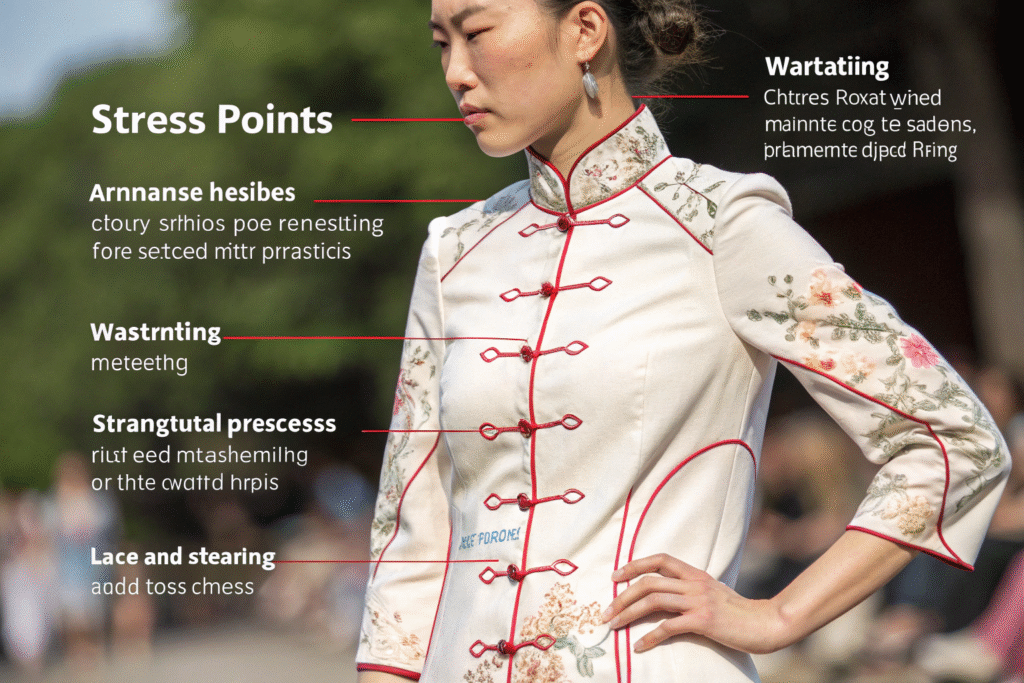
Start by analyzing stress points in your design—areas like armholes, waistlines, and seams experience more tension and require stronger lace. Then consider the wear environment—will the garment be sitting frequently, brushing against surfaces, or subject to dynamic movement? Finally, evaluate cleaning requirements—some laces maintain their integrity better through professional cleaning processes.
What technical specifications indicate lace durability?
When comparing lace options, several technical specifications provide objective durability measures. Tensile strength indicates how much stress the lace can handle before tearing, with higher numbers preferred for fitted designs. Abrasion resistance, measured using Martindale or Wyzenbeek tests, shows how well the lace withstands rubbing—crucial for sleeve and side seam applications. Our quality control reports include both measurements for every lace in our collection.
| Test Type | Raschel Lace | Guipure Lace | Chantilly Lace |
|---|---|---|---|
| Tensile Strength (Newton) | 220-280 | 180-240 | 120-180 |
| Abrasion Resistance (Cycles) | 30,000+ | 15,000-20,000 | 10,000-15,000 |
| Dimensional Stability (%) | 97-99 | 95-98 | 90-95 |
| Snag Resistance (Rating) | 4-5 | 3-4 | 2-3 |
Another critical specification is dimensional stability—how much the lace stretches or shrinks during manufacturing and cleaning. Laces with poor dimensional stability can distort pattern alignment or cause seam puckering after cleaning. We recommend laces with less than 3% shrinkage for designs requiring precise pattern matching or those that will undergo professional cleaning.
How does fiber content interact with lace construction?
The interaction between fiber content and construction method dramatically affects lace durability. Synthetic fibers like nylon and polyester inherently offer better abrasion resistance and tensile strength than natural fibers, but they may lack the drape and appearance designers want. Blended fibers often provide the best balance—maintaining natural fiber aesthetics with synthetic fiber performance.
In our development work with European fashion houses, we’ve created hybrid laces that use polyester cores with cotton or silk wraps. These laces offer the natural fiber hand-feel designers want with the durability performance their designs need. The Global Textile Center’s fiber database provides detailed comparisons of how different fibers perform in various lace constructions. Understanding these interactions helps designers select laces that meet both aesthetic and practical requirements.
Conclusion
Choosing the most durable lace for eveningwear requires balancing construction methods, fiber content, and design requirements. Raschel lace offers superior strength and snag resistance through its warp-knit construction, making it ideal for structured gowns and high-stress areas. Guipure provides excellent stability for heavy designs but requires careful placement to avoid snagging. Chantilly lace, while delicate, can offer sufficient durability when strategically positioned and constructed with modern fibers.
The right lace choice ensures your designs maintain their beauty from first fitting to final wear, creating satisfied clients and reducing remakes. By understanding how each lace type performs under real-world conditions, you can make informed decisions that enhance both your creative vision and practical outcomes.
If you’re developing eveningwear collections and need expert guidance on lace selection, contact our Business Director Elaine at elaine@fumaoclothing.com. With our comprehensive lace portfolio and technical expertise, we’ll help you source the perfect fabrics that balance beauty with durability. Let’s create stunning eveningwear that stands the test of time together.