As a fabric supplier who has worked with hundreds of first-time importers over the past two decades, I’ve witnessed how choosing the wrong trade terms can turn an exciting first order into a financial disaster. The selection of Incoterms® 2020 fundamentally determines where your responsibility begins and ends, who pays for what, and most importantly—who bears the risk when things go wrong. For new buyers, this isn’t just about cost; it’s about managing uncertainty in an unfamiliar supply chain.
Trade terms define the division of costs and responsibilities between buyers and sellers in international transactions. They specify who arranges and pays for transportation, insurance, customs clearance, and other logistics. More crucially, they determine when risk transfers from seller to buyer. I’ve seen first-time buyers accidentally choose terms that left them responsible for Chinese domestic trucking breakdowns, port strikes, and even pre-shipment warehouse fires—situations they couldn’t possibly control from overseas.
Based on our experience guiding new importers through their first orders, here are the most risk-averse trade terms and implementation strategies.
Why should new buyers avoid EXW and FCA terms?
EXW (Ex Works) and FCA (Free Carrier) might appear cost-effective initially, but they place maximum logistical responsibility and risk on buyers who likely lack international shipping experience. These terms require you to manage complex logistics in a foreign country where you may not speak the language or understand local procedures.
Under EXW, your responsibility begins at the seller’s factory gate. This means you’re responsible for arranging all transportation within China, export customs clearance, and loading onto international transport. We had a client from Texas who chose EXW to "save money" but didn’t realize they’d need to hire a Chinese trucking company. When their fabrics were damaged during domestic transportation, they had no recourse because the damage occurred before international shipment began. The $8,000 they "saved" on surface costs vanished with the $45,000 fabric shipment.
What hidden risks does EXW create for newcomers?
EXW creates multiple hidden risks: domestic transportation liability, export documentation complexity, communication barriers with local providers, and difficulty verifying that goods are properly prepared for export. As the buyer, you become the importer of record in China—a role for which most foreign companies are unprepared.
The specific risks include: responsibility for Chinese value-added tax compliance, liability for goods during factory-to-port transportation, and full accountability for export declaration accuracy. We recently helped a client transition from EXW to FOB after they discovered their "cost-saving" EXW arrangement required them to navigate Chinese export regulations they didn’t understand. Their first shipment was delayed three weeks while they found a competent export agent. Understanding the comprehensive guide to EXW risks for international buyers could prevent similar situations.
How does FCA differ from EXW in risk allocation?
FCA shifts some risk by making the seller responsible for loading goods onto the buyer’s appointed vehicle at a named place. However, risk still transfers to the buyer once the seller delivers the goods to the first carrier—which could be a local trucking company hours from the port.
The critical difference is that under FCA, the seller typically handles export clearance, reducing one major administrative burden. However, you still bear risk during domestic transportation and port operations. A European client learned this when their FCA shipment was damaged at the Chinese container yard before loading—since risk had already transferred to them, they absorbed the complete loss. Moving to FOB would have kept the risk with us until the goods were safely onboard the vessel. The International Chamber of Commerce’s FCA guidelines detail these often-misunderstood risk allocations.
Why does FOB provide better risk control?
FOB (Free On Board) offers significantly better risk management for first-time buyers because risk transfers only when goods physically cross the ship’s rail at the origin port. This means the seller bears all risks and costs until your fabrics are safely loaded onto the vessel, including domestic transportation and port handling.
Under FOB, the seller arranges and pays for transportation to the port, export clearance, and loading onto your chosen vessel. Your responsibility and risk begin once the goods are onboard. This arrangement protects you from the most common pre-shipment problems in the origin country. We’ve guided over 200 first-time buyers through FOB shipments, and this approach has consistently prevented losses from domestic transportation issues, port handling damage, and export documentation errors.
How does FOB protect against pre-shipment damage?
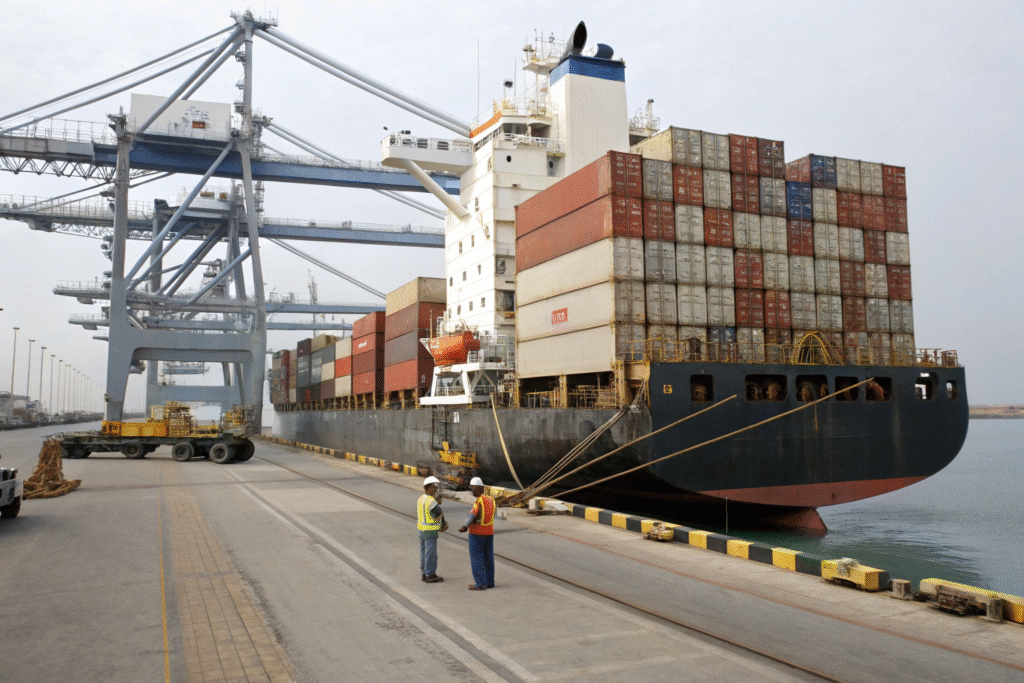
FOB protection is clearcut: any damage occurring before goods cross the ship’s rail is the seller’s responsibility. This includes damage during factory-to-port transportation, while goods are stored at the port, or during loading operations. The visual of crossing the ship’s rail provides a definitive moment when risk transfers.
We had a situation where a typhoon damaged fabrics waiting at Ningbo port—since we hadn’t yet loaded the vessel under our FOB terms, we absorbed the loss and reproduced the order at our cost. If the client had used EXW or FCA, they would have borne this loss. This protection is why we recommend FOB for all first-time buyers—it provides crucial breathing room while you’re learning international trade. Understanding FOB risk transfer principles in detail helps buyers appreciate this protection.
What cost control advantages does FOB offer?
FOB provides predictable cost structure since sellers typically quote all-in pricing to the loaded vessel. You know your exact costs up to the origin port, eliminating surprises from domestic Chinese logistics. You then contract directly with your freight forwarder for ocean transportation, maintaining control and visibility over these costs.
The financial benefits include: fixed origin costs in seller’s currency, ability to negotiate ocean freight directly, and clear separation of cost responsibilities. A startup client recently used FOB to compare multiple freight forwarders for their first shipment, saving 22% on ocean freight compared to using a supplier-arranged through transport. This transparency helps new importers understand true logistics costs from the beginning.
When should buyers consider CIF for maximum protection?
CIF (Cost, Insurance, and Freight) provides the highest protection level for first-time buyers by making the seller responsible for arranging and paying for main carriage and insurance to the destination port. This approach minimizes your operational burden while ensuring adequate insurance coverage throughout the voyage.
Under CIF, the seller handles everything until goods arrive at your destination port, including purchasing marine insurance on your behalf. This is particularly valuable when you lack experience arranging international transportation or want to ensure proper insurance coverage. We typically recommend CIF for orders under $50,000 or when buyers want a truly hands-off approach to logistics management.
How does CIF simplify insurance arrangements?
CIF ensures professional insurance coverage by making it the seller’s responsibility to procure marine insurance with minimum coverage of 110% of invoice value under Institute Cargo Clauses (C) or better. This guarantees coverage that many first-time buyers might overlook or under-purchase if arranging themselves.
The insurance advantage is significant: we arrange All Risk coverage for our CIF clients, protecting against theft, pilferage, non-delivery, and freshwater damage in addition to basic perils. A client’s shipment was damaged by seawater during a storm—because we had arranged comprehensive CIF coverage, their claim was paid within 30 days. If they’d arranged their own insurance under FOB, they might have purchased inadequate coverage. The Institute of Export & International Trade’s CIF analysis explains these insurance benefits comprehensively.
What are the limitations of CIF protection?
CIF’s main limitation is that risk still transfers to the buyer once goods are loaded onto the vessel at the origin port—even though the seller arranges and pays for transportation. This means you bear the risk of loss or damage during the ocean voyage, though you’re protected by the insurance the seller arranges.
Additionally, CIF gives sellers control over carrier selection, which can sometimes lead to less optimal routing or service quality. We address this by providing clients with multiple carrier options and transparent routing decisions. For buyers who want voyage control but CIF’s simplicity, CFR (Cost and Freight) offers a middle ground where sellers arrange transportation but buyers handle insurance.
How can payment terms complement trade term selection?
Choosing the right payment terms creates an additional layer of protection that works alongside your selected trade terms. The combination determines both your financial risk and your leverage throughout the transaction process.
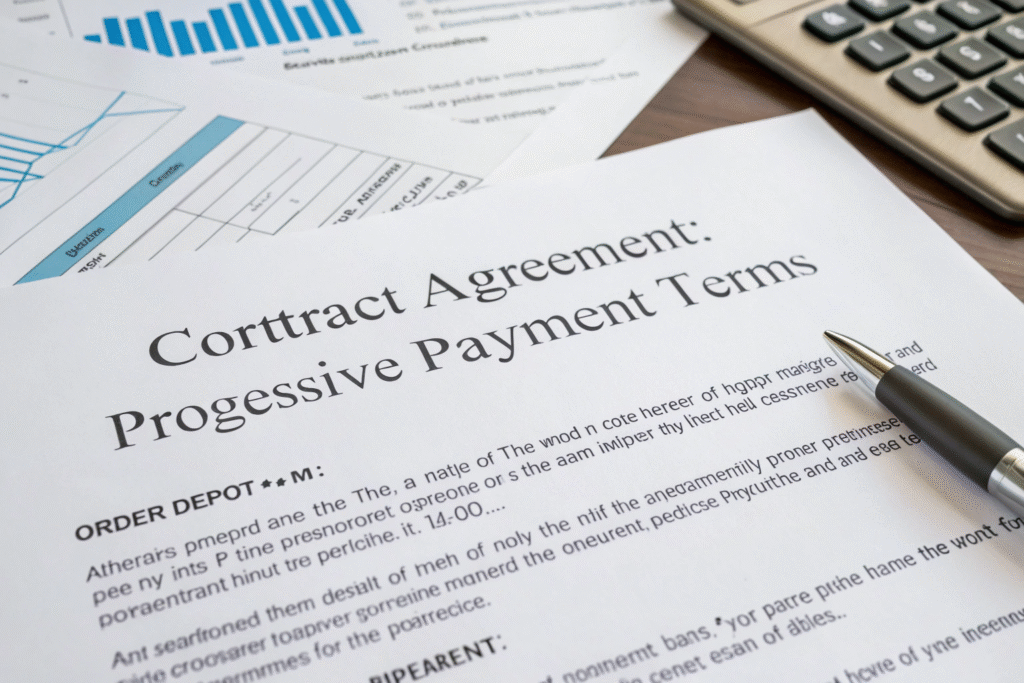
We recommend progressive payment terms for first-time buyers: typically 30% deposit with order, 40% before shipment, and 30% after successful pre-shipment inspection. This approach balances risk between buyer and seller while ensuring you maintain leverage until goods meet quality standards. Combined with FOB or CIF terms, this payment structure has protected numerous first-time buyers from quality issues and delivery problems.
What deposit percentage balances risk appropriately?
A 30% deposit typically covers the seller’s raw material costs while limiting the buyer’s financial exposure. This percentage is high enough to demonstrate commitment but low enough that buyers don’t face catastrophic losses if the seller fails to perform.
We’ve found this percentage works well because it gives us confidence to reserve production capacity and purchase materials while giving buyers comfort that most payment occurs after quality verification. A client recently used this structure when switching from a supplier who demanded 80% upfront—the reduced deposit requirement immediately lowered their financial risk. Understanding secure payment structures for international textile trade helps buyers negotiate balanced terms.
How does LC payment protect first-time buyers?
Letters of Credit (LCs) provide the highest payment security by making banks rather than trading partners guarantee payment. An LC ensures you only pay when the seller presents documents proving they’ve met all agreement terms, including shipping within specified dates and providing required certifications.
We work with many first-time buyers using LCs, which protect them by ensuring payment only occurs after we provide evidence of proper shipment. The documentation requirements—including bills of lading, insurance certificates, and inspection reports—create a paper trail that verifies performance. While LCs involve banking fees (typically 1-2% of transaction value), they’re often worthwhile for orders exceeding $100,000 or when dealing with new partners.
Conclusion
For first-time wholesale fabric buyers, FOB and CIF trade terms provide the optimal balance of risk management, cost control, and operational simplicity. FOB offers better cost transparency and carrier control, while CIF provides maximum hands-off convenience and insurance protection. Combined with progressive payment terms or Letters of Credit, these Incoterms create a safety net that lets you focus on your business rather than logistics complexities.
The right trade terms won’t prevent all problems, but they’ll ensure you’re not bearing risks you can’t control or even understand. If you’re planning your first fabric import and want guidance selecting the most protective terms for your specific situation, contact our Business Director Elaine at elaine@fumaoclothing.com. We’ll help you choose terms that protect your investment while building a foundation for successful long-term sourcing.