
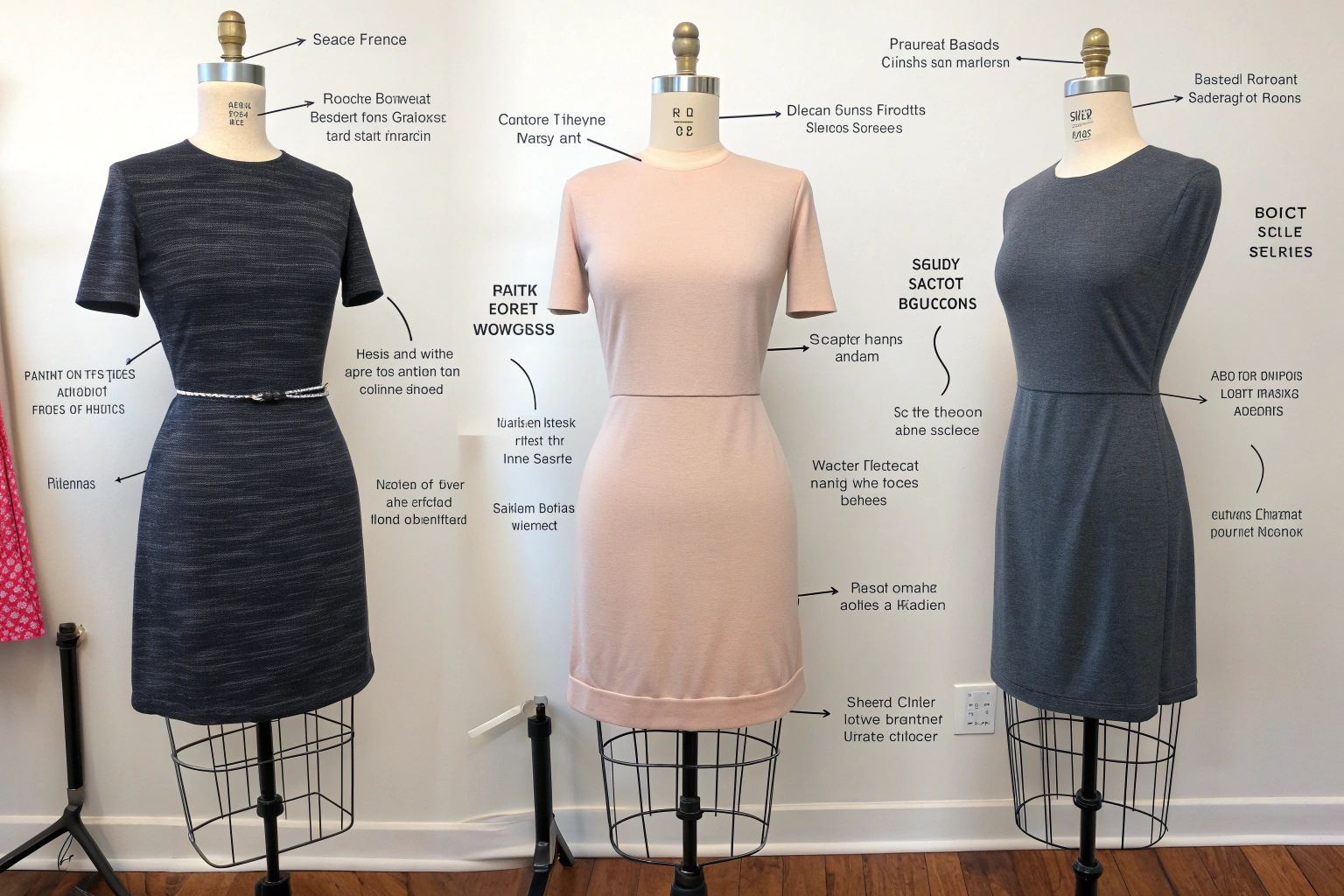
As someone who’s worked with dress manufacturers from New York to Paris for over twenty years, I’ve seen this question make or break collections. Designers often fall in love with a fabric’s handfeel without considering how it will actually move on the body. The wrong knit choice can turn an elegant design into a bulky mess or leave it clinging in all the wrong places. Drape isn’t just about softness—it’s about how fabric flows, folds, and follows the body’s contours.
The knit structure directly determines your dress’s silhouette and movement. For the best drape in dresses, single jersey typically outperforms interlock and double knit due to its lighter weight and inherent flexibility. However, the "best" choice ultimately depends on your specific design vision, desired weight, and performance requirements. Single jersey offers fluid movement for flowing designs, while interlock provides structured drape for tailored pieces, and double knit delivers body-skimming drape for fitted styles.
I remember working with a London-based designer who insisted on using double knit for a bias-cut evening gown. The fabric refused to flow, standing away from the body in stiff folds. When we switched to a premium single jersey with excellent recovery, the dress transformed—it moved like liquid with the wearer. That single change saved their collection. Let me break down exactly how each knit performs so you can make informed decisions for your designs.
How does single jersey create fluid movement in dresses?
Single jersey is the lightweight champion of drape. As the most basic knit structure, it consists of a single layer of interlooped stitches, giving it natural stretch and a soft hand. This simplicity allows it to flow and follow body curves without adding bulk. The fabric tends to cling slightly while still moving freely, making it ideal for designs where you want the fabric to reveal rather than conceal the body’s movement.
The magic of single jersey lies in its balance between weight and flexibility. Most quality single jersey fabrics weigh between 140-180 gsm, light enough to float and drape beautifully while maintaining enough substance to avoid being sheer. I recently worked with a Miami resort wear brand that was struggling with their maxi dresses not moving properly in beach photoshoots. Their current fabric was too heavy. We switched them to a 160 gsm bamboo-cotton single jersey, and the difference was immediate—the dresses photographed like dream, catching the wind and moving with natural grace.

What makes single jersey superior for bias-cut designs?
Single jersey’s four-way stretch and minimal memory make it perfect for bias cutting. Unlike woven fabrics that gain drape when cut on the bias, knits like single jersey already possess natural stretch that aligns beautifully with the body’s diagonal curves. The fabric elongates and recovers without distorting, maintaining the designer’s intended silhouette while moving with the wearer.
The structure matters here. Single jersey’s V-shaped stitches on the face and semicircular loops on the back create a fabric that behaves differently lengthwise versus widthwise. This directional characteristic actually enhances bias drape by providing varying degrees of stretch and recovery. We supplied a New York designer with our premium combed cotton single jersey for her bias-cut slip dresses, and she reported the fabric "draped like silk but wore like cotton." Understanding bias cutting techniques with knit fabrics can help designers maximize this potential.
How does fiber choice affect single jersey’s drape?
The fiber content can dramatically alter how single jersey behaves. While 100% cotton single jersey offers good drape, blending with other fibers can enhance its flowing properties. Bamboo blends provide exceptional fluidity and weight, while rayon blends offer beautiful hang and movement. Even 5-10% lycra can improve recovery without sacrificing drape.
We conducted extensive testing for a Los Angeles contemporary brand that wanted the drape of silk with the practicality of knit. Through fiber blending trials, we developed a 70% bamboo, 25% micronodal, and 5% lycra single jersey that achieved their goals. The bamboo provided weight and flow, the modal added softness, and the minimal lycra ensured the dress returned to its original shape after stretching. The collection sold out twice in Neiman Marcus. Designers should understand how to choose dress fabric fiber compositions to make informed decisions.
When should designers choose interlock for structured drape?
Interlock knit provides what I call "architectural drape"—it flows but with more body and structure than single jersey. As a double-knit fabric (essentially two single jerseys interlocked together), it’s thicker, more stable, and has less stretch. This makes it perfect for designs where you want the fabric to stand away from the body slightly or create defined folds rather than fluid movement.
The weight and stability of interlock make it particularly suitable for tailored knit dresses, A-line silhouettes, and designs requiring clean lines without excessive clinging. I worked with a German minimalist brand that needed fabric for their structured shift dresses—single jersey was too flimsy, and woven fabrics didn’t provide the comfort their customers expected. Our 240 gsm cotton interlock provided the perfect solution: it draped in clean, sharp folds while maintaining its shape throughout the day.

Why does interlock maintain shape better in structured designs?
Interlock’s double-layer construction creates a fabric that resists stretching out of shape. The two layers of stitches interlock with each other, creating a stable structure that maintains its dimensions even when subjected to stress. This means a dress made from interlock will keep its silhouette throughout wear rather than growing or distorting.
The stability comes from the interlocking needle setup that creates two distinct fabric faces that are identical. This balanced structure prevents the rolling edges common with single jersey and provides consistent performance in all directions. A Parisian designer we work with uses our interlock exclusively for her signature tunic dresses because the fabric "holds its architecture while moving with Parisian elegance." For manufacturers, understanding interlock knit production specifications ensures they source the right quality.
What weight range works best for interlock dress fabrics?
The ideal weight for interlock in dresses typically falls between 200-280 gsm. Lighter weights (200-230 gsm) work for summer dresses with moderate structure, while heavier weights (240-280 gsm) provide the body needed for winter dresses and more architectural designs. Going too light defeats interlock’s structural advantages, while going too heavy creates unnecessary bulk.
We maintain a detailed specification sheet for our interlock clients because small weight variations dramatically affect drape. Here’s our general guidance:
| Dress Type | Ideal Weight | Drape Character | Best Silhouettes |
|---|---|---|---|
| Summer Shift Dresses | 200-220 gsm | Light structure, minimal bulk | A-line, shift, modest bodycon |
| All-Season Sheaths | 230-250 gsm | Balanced structure and flow | Sheath, fit-and-flare, tailored |
| Structured Winter Dresses | 260-280 gsm | Architectural folds, substantial feel | Cowl neck, A-line, trapeze |
(Here’s something I learned the hard way: always request physical samples in your exact target weight. Numbers don’t capture the complete drape story.)
How does double knit provide body-skimming drape?
Double knit offers a unique drape that skims the body without tight clinging. As another double-layer construction, it’s thicker than single jersey but typically lighter and more flexible than interlock. The characteristic drape is smooth and controlled—the fabric follows body contours without revealing every curve, making it flattering for various body types.
The beauty of double knit lies in its ability to provide coverage while maintaining shape. The fabric doesn’t cling aggressively like lighter knits, nor does it stand completely away from the body like heavy interlock. Instead, it creates a smooth silhouette that disguises minor imperfections while moving gracefully with the wearer. We supplied a size-inclusive brand in Toronto with our polyester-rayon double knit for their wrap dresses, and the feedback highlighted how the fabric "made every body shape look elegant without squeezing."

What makes double knit ideal for versatile day-to-evening dresses?
Double knit’s medium weight and excellent recovery make it perfect for dresses that transition from day to evening. The fabric maintains its appearance through long wear without wrinkling or stretching out, while providing enough substance to look polished without being heavy. This versatility makes it a workhorse for contemporary dress collections.
The structure provides what our clients call "forgiving elegance." The fabric has enough body to disguise seat and thigh areas that many women feel self-conscious about, while still creating a feminine silhouette. A Chicago-based designer we work with uses our double knit exclusively for her travel dress collection because the dresses "pack without wrinkling and wear without straining." For brands developing versatile collections, researching double knit fabric performance characteristics provides valuable technical insights.
How does double knit compare to ponte for dress drape?
Ponte di Roma (often called ponte) is actually a specific type of double knit with a distinctive pattern, but the terms are often used interchangeably. True ponte typically has more structural integrity than basic double knit, making it slightly less fluid but more supportive. For drape, standard double knit offers more flow, while ponte provides more control.
We recently helped a brand choose between double knit and ponte for their new fit-and-flare dress line. They wanted the skirt to flow while the bodice provided structure. Our solution: standard double knit for the skirt and ponte for the bodice. The result was a dress that moved beautifully while maintaining its shape in key areas. This hybrid approach delivered exactly the drape characteristics they needed for their specific design. Understanding these subtleties helps designers make informed decisions about knit fabric selections for their specific applications.
What role does fabric weight play in knit drape?
Fabric weight often matters more than knit type when determining drape. A heavy single jersey might drape more like interlock, while a lightweight double knit could approach single jersey’s fluidity. Understanding how weight interacts with knit structure helps predict how a fabric will behave in your specific design.
The relationship is straightforward: lighter weights generally create more fluid drape, while heavier weights provide more structured drape. However, the optimal weight range varies by knit type. Through years of testing, we’ve identified ideal weight ranges for each knit type to achieve optimal drape in dresses.

How does GSM affect drape within the same knit type?
Even within the same knit type, small GSM variations create noticeable drape differences. In single jersey, a 140 gsm fabric will float and flow dramatically, while a 180 gsm version of the same knit will provide more modest drape with better coverage. The fiber content remains the same, but the drape character changes significantly.
We maintain a detailed database matching GSM to drape performance for this reason. When a Swedish brand requested "single jersey that drapes like heavy silk," we knew to recommend our 170 gsm bamboo blend rather than their usual 140 gsm cotton. The slightly higher weight provided the substantial drape they wanted while maintaining single jersey’s fluidity. This attention to detail separates good suppliers from great partners.
What’s the ideal weight range for each knit type?
Through testing thousands of fabric samples and tracking client feedback, we’ve identified these optimal weight ranges for dress drape:
| Knit Type | Ideal Dress Weight Range | Too Light (Poor Performance) | Too Heavy (Poor Drape) |
|---|---|---|---|
| Single Jersey | 150-180 gsm | < 140 gsm (too sheer, clings badly) | > 190 gsm (loses fluidity, bulky) |
| Interlock | 220-260 gsm | < 200 gsm (loses structure) | > 280 gsm (stiff, uncomfortable) |
| Double Knit | 240-280 gsm | < 220 gsm (insufficient body) | > 300 gsm (heavy, restrictive) |
These ranges represent the sweet spot where each knit type delivers its characteristic drape while maintaining wearability and comfort. A Milan-based design house we work with uses these guidelines exclusively for their initial fabric selections.
Conclusion
Choosing the right knit for dress drape requires balancing structure, weight, and design intention. Single jersey offers fluid movement for body-conscious designs, interlock provides structured drape for tailored silhouettes, and double knit delivers body-skimming elegance for versatile dresses. The optimal choice depends entirely on your specific design vision and the drape character you want to achieve.
Remember that fabric weight often matters as much as knit structure, and fiber content can dramatically alter drape properties. The best approach is to request physical samples in your target weights and test them on a dress form or live model. Seeing how fabric moves in three dimensions always reveals more than any specification sheet can capture.
If you’re developing a dress collection and need expert guidance on knit selection, contact our Business Director Elaine at elaine@fumaoclothing.com. We’ll help you select the perfect knit fabric that brings your design vision to life with exactly the right drape for your specific application.








