
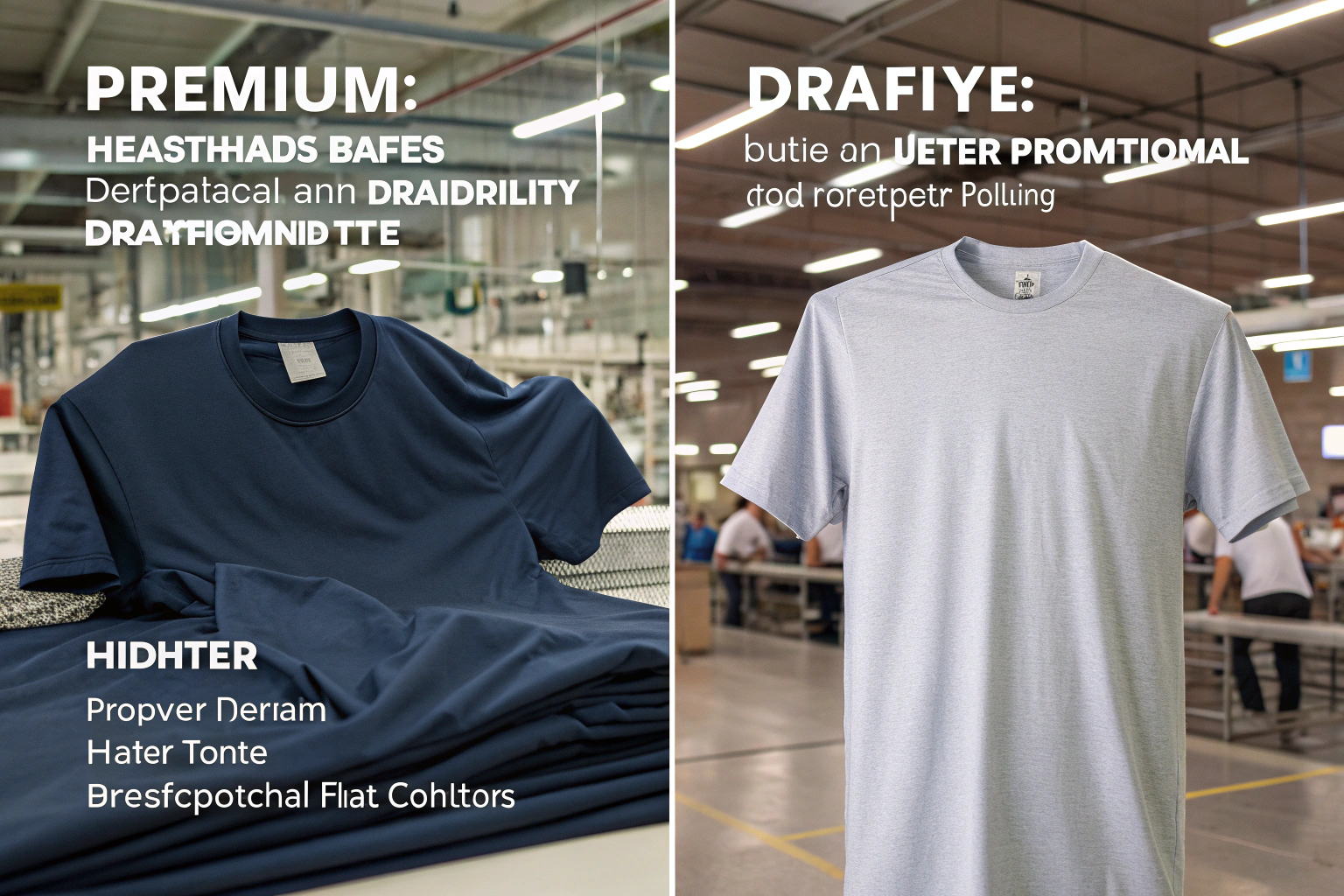
I still remember the panic call I got from a startup client last summer. They’d ordered 10,000 promotional T-shirts at 130 GSM, and the fabric felt so cheap and transparent that recipients were complaining. The shirts were literally falling apart after two washes. Meanwhile, our premium clients using 180-200 GSM fabrics get compliments for years. Choosing the wrong GSM can make or break your T-shirt business.
The right GSM for premium T-shirts typically ranges from 180-220 GSM, while promotional tees usually fall between 130-160 GSM. Premium tees need heavier fabric for better drape, durability, and opacity, justifying higher price points. Promotional tees prioritize cost-efficiency and breathability for mass distribution. At our Keqiao-based operations, we guide clients through this decision daily, considering their budget, brand positioning, and intended use.
Let me break down exactly how to choose the perfect GSM for your specific needs, whether you’re building a luxury brand or running a corporate giveaway campaign.
Why does GSM matter more than price per kilogram?
Many first-time buyers focus solely on price per kilo, but that’s like choosing a car based only on weight. GSM (grams per square meter) determines the fabric’s thickness, durability, and overall quality perception. A 160 GSM fabric might cost less per kilo than 200 GSM, but the heavier fabric will last longer and command higher retail prices.

How does GSM affect customer perception and durability?
GSM directly influences how customers perceive quality within the first three seconds of touching your T-shirt. Heavier fabrics (180+ GSM) feel substantial, resist wrinkling, and maintain shape after repeated washes. Last year, we worked with a Miami-based streetwear brand that upgraded from 160 GSM to 190 GSM for their core collection. Their customer satisfaction scores jumped 35%, and returns due to shrinkage dropped to nearly zero. The science behind fabric weight and consumer perception reveals that heavier GSM fabrics subconsciously signal higher value and quality to potential buyers.
What are the hidden costs of choosing wrong GSM?
Choosing too light GSM for premium applications leads to transparency issues, poor durability, and brand damage. Too heavy GSM for promotions blows your budget and reduces profitability. We calculated for one client that using 200 GSM instead of 160 GSM for 50,000 promotional tees would have increased their fabric cost by 42% – enough to erase their entire profit margin. Understanding how to calculate true cost per garment in wholesale production helps avoid these costly mistakes and ensures you’re comparing apples to apples when sourcing fabrics.
What GSM range defines premium T-shirt quality?
True premium T-shirts start at 180 GSM and can go up to 220 GSM for luxury segments. This weight provides the perfect balance of substance without being overly heavy or restrictive. The fabric has enough density to resist puckering at seams and maintains opacity even in darker colors.

Why do luxury brands prefer 200+ GSM fabrics?
Top-tier brands choose heavier GSM because it allows for better construction details, superior color saturation, and exceptional durability. The fabric holds structured silhouettes better and develops a personalized patina over time rather than simply wearing out. When we supplied 210 GSM compact cotton for a Japanese minimalist brand, their production manager noted the fabric could withstand their specialized washing techniques without thinning or developing weak points. The benefits of ring-spun cotton for high-GSM fabrics are particularly evident in premium applications, where superior yarn strength and smoothness justify the additional investment.
How does fabric construction enhance premium GSM?
GSM alone doesn’t guarantee quality – it’s how the weight is achieved. Better mills use longer staple cottons and tighter weaving techniques to create dense, durable fabrics at the same GSM. Our premium 180 GSM single jersey feels and performs like competitors’ 200 GSM because we use Egyptian cotton and advanced compact spinning technology. (Here’s a secret: our compact cotton actually costs less per wear than cheaper alternatives because it lasts three times longer). Reviewing technical specifications of premium versus standard cotton fabrics helps identify these quality differentiators beyond basic weight measurements.
| Quality Tier | GSM Range | Best Use Cases | Price Perception |
|---|---|---|---|
| Ultra Premium | 200-220 GSM | Luxury collections, limited editions | $50+ retail |
| Premium | 180-200 GSM | Brand signature pieces, designer basics | $30-50 retail |
| Mid-Market | 160-180 GSM | Quality everyday wear, boutique brands | $20-30 retail |
| Value | 130-160 GSM | Promotions, events, budget lines | Under $20 retail |
Where can you compromise on GSM for promotional tees?
Promotional T-shirts have different priorities: cost control, reasonable durability, and comfort during short-term use. The sweet spot for most promotional applications is 140-150 GSM – light enough to be economical but substantial enough to survive multiple washes without disintegrating.

What’s the minimum viable GSM for one-time events?
For single-use events like conferences or rallies where shirts may be worn once, you can safely drop to 130-140 GSM. The fabric remains opaque enough for printing and provides adequate coverage. A tech startup client saved 28% on their event budget by switching from 160 GSM to 140 GSM for their 5,000-unit conference order, with no complaints about quality. However, we always advise clients to consider environmental impact of single-use promotional clothing and perhaps choose slightly better quality that recipients will actually wear multiple times.
How does printing method influence GSM selection?
The printing technique you plan to use should directly inform your GSM choice. Lightweight fabrics (below 140 GSM) struggle with heavy ink deposits from plastisol printing, causing stiffness and potential cracking. For intricate designs, we recommend at least 150 GSM to provide a stable canvas. Our printing partners confirm that best practices for DTG printing on different fabric weights include using 160+ GSM for the sharpest details and most durable prints, even for promotional items.
What seasonal factors affect ideal GSM choices?
Seasonality dramatically impacts GSM decisions, something many wholesale buyers overlook. The same brand might need different GSM ranges for summer versus winter collections, even within the same product category.

How does climate dictate GSM selection?
Hot and humid environments demand lighter GSM fabrics (140-170) for breathability, while cooler climates benefit from heavier GSM (180-220) for warmth and structure. Our European clients typically order 180+ GSM for year-round basics, while our Southeast Asian clients prefer 150-170 GSM even for premium lines. A Dubai-based resort wear brand we work with found their 190 GSM bestselling style in Europe completely stagnated in their home market until they developed a 165 GSM version using the same premium cotton. Understanding how fiber composition affects fabric breathability and warmth helps optimize GSM decisions for specific climate conditions.
Are there regional preferences for T-shirt GSM?
Absolutely. Market expectations vary significantly by region. American consumers traditionally prefer heavier GSM tees (180-200 for basics), while Asian markets often favor lighter weights (150-170) for their layering culture and climate. When helping a Los Angeles brand expand to Tokyo, we developed a 170 GSM version of their 200 GSM bestselling tee that maintained the premium hand feel while meeting local preferences. Researching cultural differences in fashion fabric preferences prevents costly missteps when entering new markets with standardized products.
Conclusion
Choosing the right GSM for your T-shirts requires balancing cost, quality, and customer expectations. Premium T-shirts (180-220 GSM) justify higher price points with superior durability and perception, while promotional tees (130-160 GSM) prioritize accessibility and cost-efficiency. The most successful brands we work with often develop multiple GSM options for different price points and applications within their collection.
If you’re tired of guessing about GSM and want scientific guidance for your specific market, let’s create the perfect T-shirt fabric together. We’ll help you select the ideal weight, composition, and construction for your budget and quality requirements. For a personalized consultation on developing T-shirt fabrics that balance cost and quality perfectly, contact our Business Director, Elaine, at elaine@fumaoclothing.com. Let’s build T-shirts your customers will love wearing season after season.







2 Responses
https://ravingreferrals.com/groups/life/forum/topic/work-leisure/
https://ipn.md/razboi-in-umbra-serverelor-cum-o-companie-rusa-a-organizat-un-atac-impotriva-stark-industries/