As a fabric supplier with over two decades in the textile hub of Keqiao, I’ve seen too many orders go wrong because of uncontrolled fabric shrinkage. Just last year, a sportswear client from California faced a 15% return rate on their cotton-polyester blend joggers. The legs became shorter after washes. We fixed it by revising their shrinkage standards. Getting shrinkage right isn’t a one-size-fits-all game. It’s a scientific process tailored to each fiber’s personality.
Setting different shrinkage standards for cotton, viscose, and blends requires understanding each fiber’s unique behavior when exposed to moisture and heat. Cotton shrinks primarily due to fiber relaxation, viscose is highly hydroscopic and can shrink dramatically, while blends require balancing the shrinkage rates of their constituent fibers. You must establish specific testing protocols, acceptable shrinkage percentages, and finishing treatments for each category. Our CNAS-accredited lab does this daily, helping clients achieve a consistent 98% pass rate on quality inspections. It’s why major brands trust us with their fabric specifications.
Let’s break down the critical steps for managing shrinkage across these different fabric types, ensuring your garments maintain their size and shape, wash after wash.
Why does fiber type dictate shrinkage standards?
Different fibers react differently to water and heat. Ignoring this is like trying to use the same recipe for baking bread and frying chicken. It just won’t work. Cotton and viscose, both cellulosic, behave worlds apart. Synthetics like polyester add another layer of complexity. Your quality standards must reflect these intrinsic properties.

What is the fundamental science behind fiber shrinkage?
At its core, fabric shrinkage is about fiber morphology and stress release. During spinning, weaving, and finishing, fibers are under tension. When washed or heated, they relax. Natural fibers like cotton have a natural twist and swell when wet, causing the fabric to contract. Viscose, a regenerated cellulose, has a much higher water absorption capacity—it can swell up to 90% in cross-section—leading to more severe shrinkage if not properly finished. Synthetic fibers like polyester are thermoplastic; they shrink primarily when heat is applied beyond their set point. Understanding this fundamental guide to fiber properties and behavior is essential for any designer or manufacturer looking to control their final product quality.
How do we test and set benchmarks for each type?
We don’t guess; we test. Rigorously. Our process starts with the standard AATCC 135 test method for dimensional change. But we go further. For a client’s 100% cotton poplin shirting, we might set a maximum shrinkage allowance of 3% in the warp and weft after three wash cycles. For a viscose challis, that number might be tightened to 5% due to its sensitivity. For a 65/35 poly-cotton blend, we aim for under 2% because the polyester stabilizes the cotton. We create a comprehensive quality control checklist for fabric inspection that includes these tailored shrinkage benchmarks, which becomes part of the tech pack for every order. This checklist is your first defense against post-production disasters.
How to control shrinkage in 100% cotton fabrics?
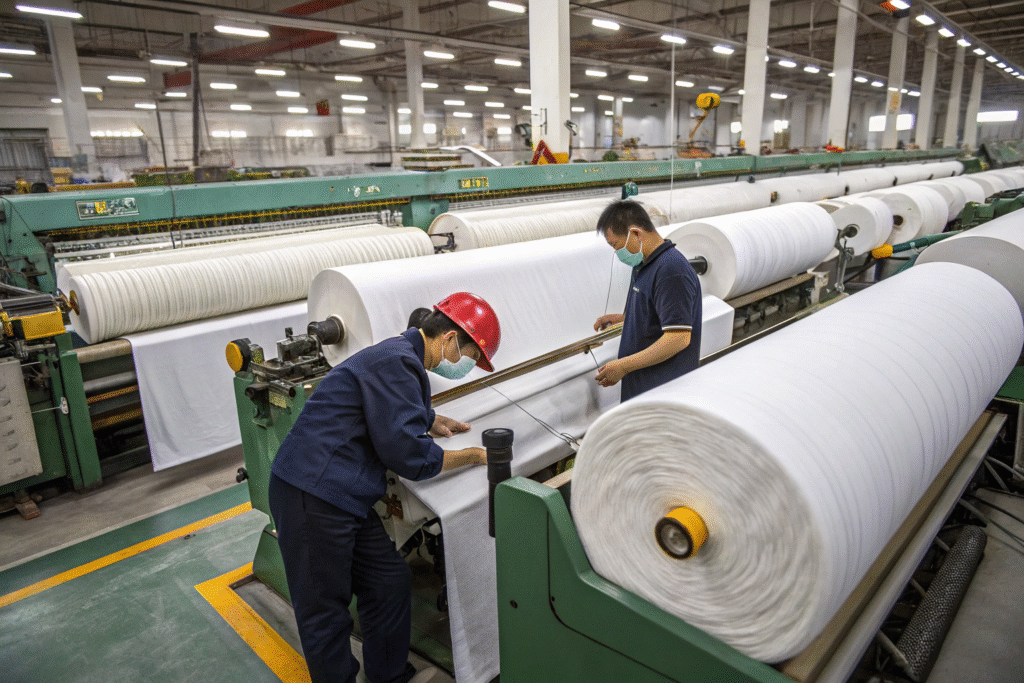
Cotton is beloved for its comfort, but its tendency to shrink is notorious. The key is to pre-emptively address the shrinkage potential through mechanical and chemical finishing. We’ve found that a combination of precise pre-shrinking and sanforization processes can bring cotton shrinkage down to a very manageable 1-3%.
What are the most effective pre-treatment methods?
The two most powerful methods in our arsenal are Sanforization and Compaction. Sanforization is a controlled mechanical compression and relaxation process that literally pre-shrinks the fabric. Compaction, often used for knits, uses a rubber belt to squeeze the fabric. For a major home textiles brand we work with, we run all their cotton sheeting through a sanforizing range. This brought their shrinkage from a potential 8% down to a guaranteed 1%. It’s an added cost, but it eliminates customer returns. Another critical step is optimizing fabric singeing and desizing processes to ensure even tension and treatment across the entire fabric width, which directly impacts consistent shrinkage behavior.
How does fabric construction impact your results?
A tight plain weave like poplin will shrink differently than a loose twill or a jersey knit. The more "room" the yarns have to move, the more they can relax and contract. We once developed a heavy cotton twill for workwear that kept exceeding the 3% shrinkage limit. The problem was the weave structure. By adjusting the warp and weft density and then applying a specific compressive shrinkage finish, we solved it. You must consider the GSM, yarn count, and weave/knit structure when setting your standards. For instance, a guide to understanding woven fabric construction and performance can help you predict how these factors interact and influence the final fabric’s properties, including shrinkage.
| Fabric Construction | Typical Shrinkage Without Treatment | Realistic Target with Treatment |
|---|---|---|
| Cotton Jersey Knit | 8-10% | 3-5% |
| Cotton Poplin (Woven) | 5-7% | 1-3% |
| Cotton Twill (Woven) | 6-8% | 2-4% |
| Heavy Cotton Canvas | 4-6% | 1-2% |
What makes viscose so tricky for shrinkage control?
Viscose is a diva. It’s incredibly absorbent and has low wet strength, meaning it’s fragile when wet and prone to dramatic distortion. Its molecular structure is less crystalline than cotton, allowing for greater water penetration and fiber swelling. This is the biggest challenge we tackle with designers who love the drape of viscose but hate its volatility.
Why is wet processing the critical stage?
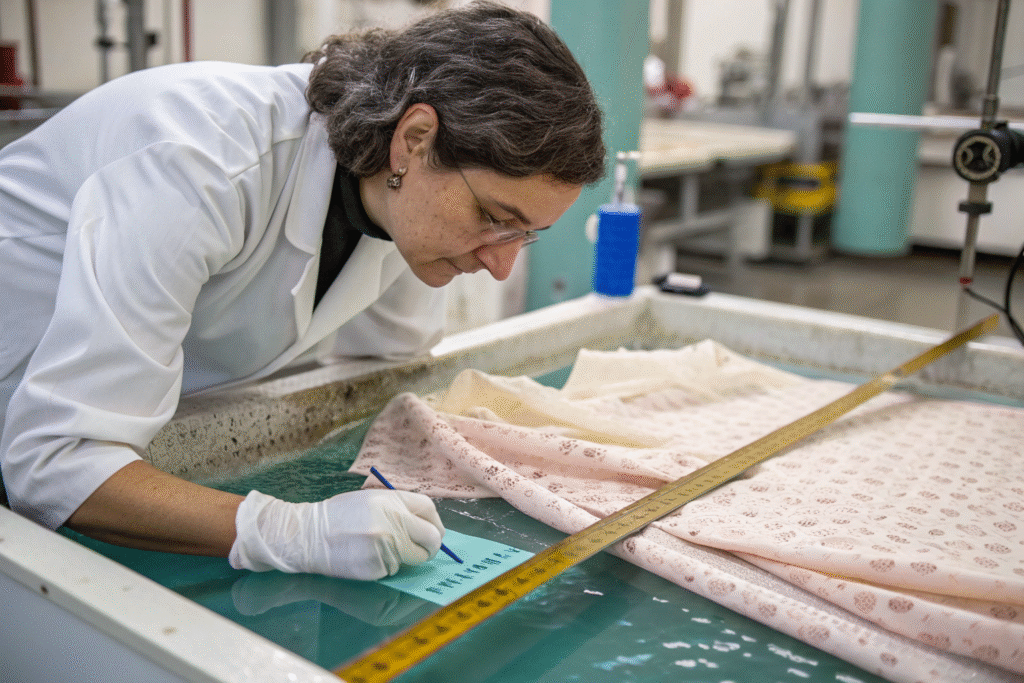
From the moment viscose gets wet in the dyeing vat, it’s at risk. The tension applied during dyeing and subsequent drying can lock in stresses that release later in the customer’s washing machine. We partner with dyehouses that specialize in low-tension jet dyeing for viscose. For a recent order of viscose linen blend for a New York designer, we controlled the dryer temperature and used overfeed systems to allow the fabric to relax dimensionally. This reduced the final shrinkage from a scary 10% to a acceptable 4%. Mastering the best practices for dyeing and finishing sensitive fabrics is non-negotiable for working with viscose successfully.
Can fiber blends and finishes stabilize viscose?
Absolutely. Blending viscose with stable fibers like polyester is a common strategy. A 50/50 viscose-poly blend will be much more stable than 100% viscose. Furthermore, applying modern resin finishes can cross-link the cellulose molecules, reducing swelling and shrinkage. We’ve had great success with innovative sustainable fabric finishes that enhance performance for our eco-conscious clients, using bio-based softeners and cross-linkers that improve dimensional stability without compromising the fabric’s hand-feel or environmental profile.
How do you manage shrinkage in polyester-cotton blends?
Blends are a balancing act. Polyester, being synthetic and hydrophobic, wants to shrink from heat, while cotton, being natural and hydrophilic, wants to shrink from water. Your goal is to find a finishing process that satisfies both. The dominance of polyester in a blend usually leads to lower overall shrinkage.

What is the role of heat-setting for synthetics?
Heat-setting is the magic word for polyester blends. This process heats the fabric to a temperature above the polyester’s glass transition point (around 120-130°C), allowing the polymer chains to reorganize and then "set" in that dimension as the fabric cools. This dramatically reduces future heat-induced shrinkage. For our client making hotel uniforms, we heat-set their 65/35 poly-cotton fabric as a standard step. This ensures the uniforms can withstand industrial laundering at high temperatures without warping. The principles of textile heat setting and its impact on fabric quality are fundamental knowledge for anyone sourcing performance blends.
How do you balance competing fiber reactions?
You must sequence your finishing steps correctly. Typically, you would heat-set first to stabilize the polyester component. Then, you might apply a compressive shrinkage (like sanforization) to address the cotton’s relaxation shrinkage. It’s a one-two punch. Getting the sequence wrong can lead to poor results. We also meticulously test the blend ratio. A 80/20 poly-cotton will behave almost like a pure polyester, while a 50/50 blend requires a much more nuanced approach. Consulting a definitive resource for international textile care labeling codes is also crucial, as the care instructions you provide (e.g., wash temperature) must align with the blend’s stabilized properties.
Conclusion
Setting intelligent, fiber-specific shrinkage standards is not a luxury; it’s a necessity for protecting your brand’s reputation and profitability. It requires a deep understanding of fiber science, precise testing, and strategic partnerships with mills and finishers who have the right technology and expertise. From the inherent shrinkiness of cotton to the volatile nature of viscose and the balanced challenge of blends, each category demands a tailored roadmap. By implementing the strategies discussed—like sanforization for cotton, low-tension processing for viscose, and heat-setting for blends—you can deliver garments that consistently meet your customers’ expectations for fit and durability.
If you’re tired of grappling with unpredictable fabric shrinkage and want a partner who builds dimensional stability into the fabric from the very beginning, let’s talk. We can help you co-create fabrics that stand the test of time and washing. For a direct conversation about how we can manage quality and production for your next clothing order, please reach out to our Business Director, Elaine, at elaine@fumaoclothing.com. We are here to make your sourcing from Asia seamless and successful.