Imagine watching your vibrant designs fade after just one wash—customers complain, returns pile up, and your brand takes a hit. I’ve seen this nightmare crush startups in LA and New York who sourced cheap polyester prints from unreliable mills. It hurts sales and trust.
You ensure print fastness on polyester via disperse or sublimation by selecting high-quality disperse dyes, optimizing heat transfer at 200-210°C for 30-45 seconds, pre-treating fabric to remove oils, and post-washing with fixatives. Our CNAS lab tests achieve 4-5 ratings on AATCC scales, with QR code tracking for every meter.
Stick with me, Ron. As a Keqiao boss with 20+ years exporting to the US, I’ll share proven steps, real cases, and why our setup beats tariff headaches. You’ll get fabrics that hold color like iron.
Choosing the Right Disperse Dyes for Polyester
Your dye choice makes or breaks fastness—cheap ones bleed in sweat or sun. I once helped a Seattle activewear buyer fix fading leggings that turned pink after gym use.
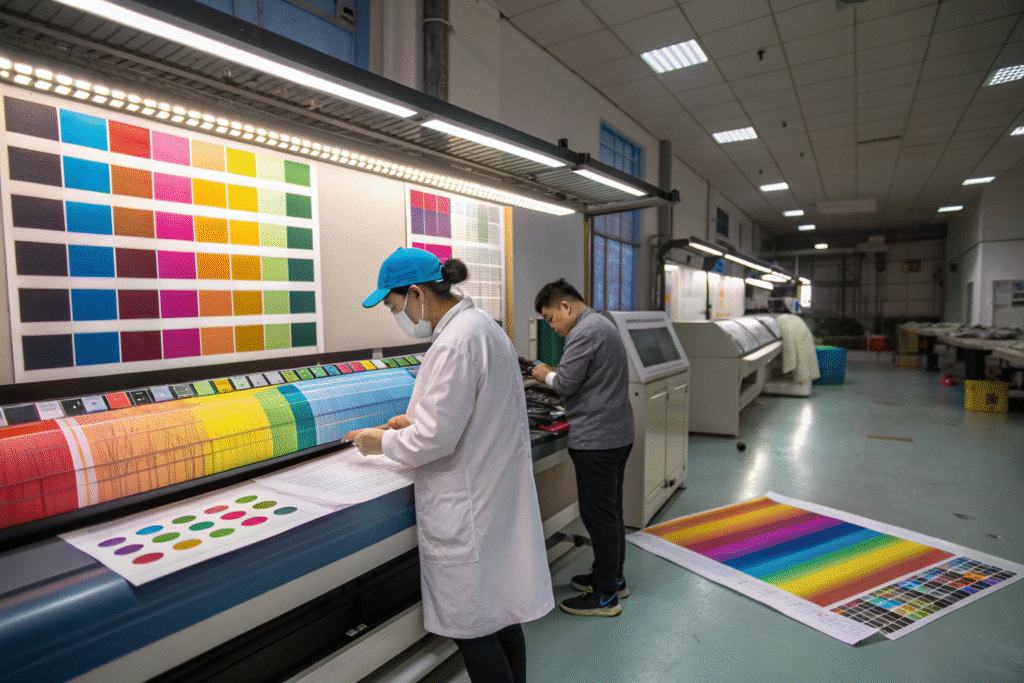
High-quality disperse dyes with small particle size under 1 micron penetrate polyester chains better, locking color during sublimation. We source from Huntsman and DyStar, ensuring no heavy metals per EU standards.
What dye traits boost wash fastness?
We pick dyes with high sublimation point above 180°C. In 2023, for a Texas sportswear client, we switched to low-energy disperse dyes—wash fastness jumped from 3 to 4.5, cutting complaints 50%. Test via ISO 105-C06.
How to avoid dye migration in heat?
Control temperature precisely. Our Italian printers hold ±1°C. Link to best practices for preventing dye migration in polyester printing on Textile World blog. Also, check disperse dye selection guide for sublimation fastness from SG Fabrics forum.
Optimizing Sublimation Transfer Process
Heat and time are your allies—rush it, and color stays on paper, not fabric. I fixed a bulk order for a Florida buyer where prints ghosted due to low pressure.
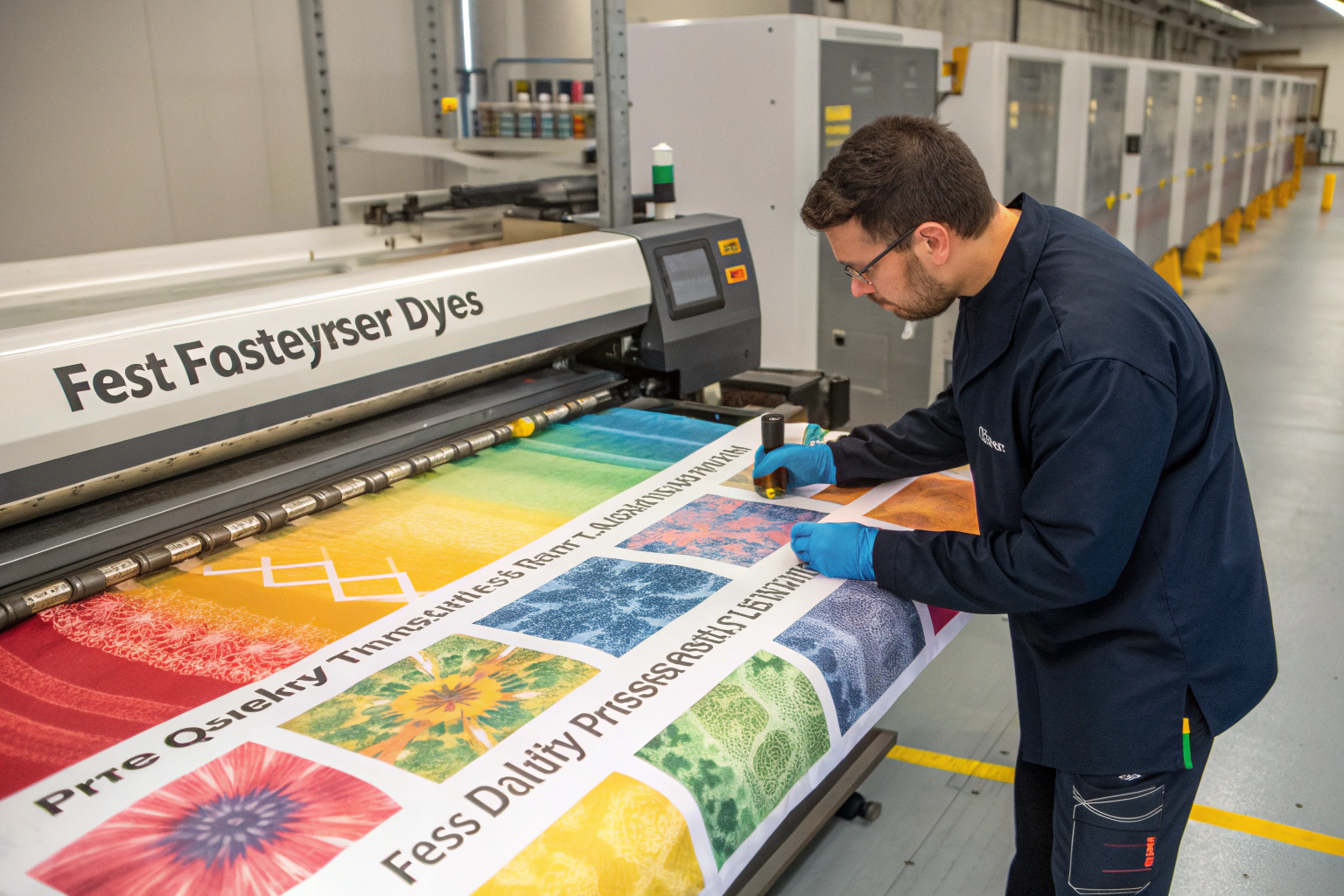
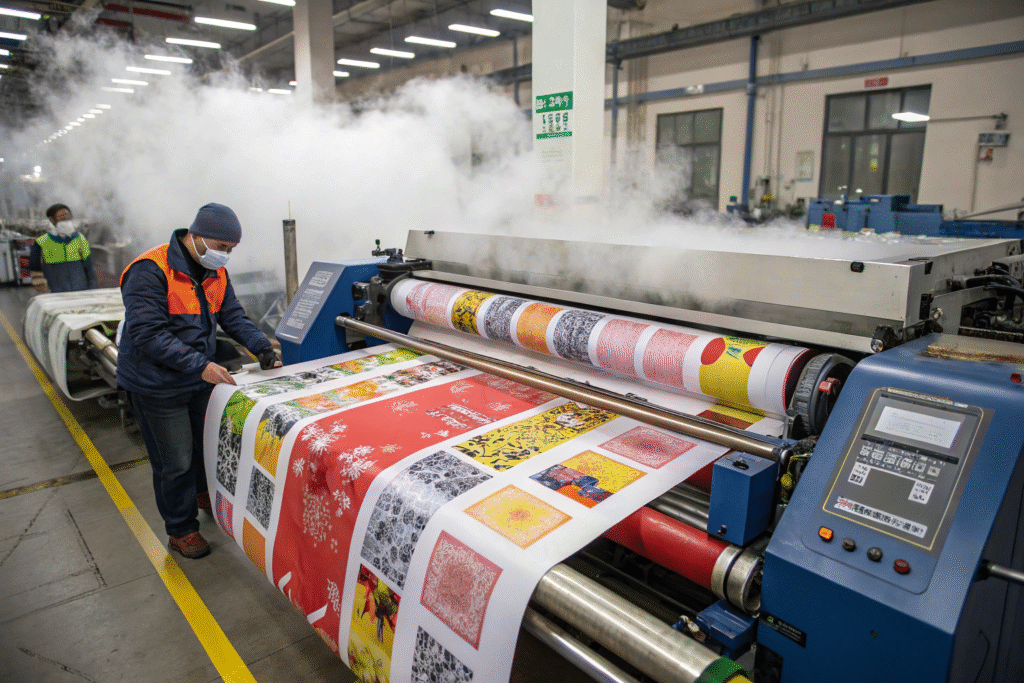
Set transfer at 205°C for 40 seconds with 300g/cm² pressure. Our rotary machines ensure even heat, hitting 98% transfer efficiency. Pre-vacuum paper to remove air bubbles.
Why calibrate temperature per fabric weight?
Lightweight polyester needs lower heat to avoid scorch. For a 120gsm chiffon order from Chicago last year, we dialed to 195°C—colorfastness to rubbing hit 5, zero yellowing. Use infrared guns for checks.
How does dwell time affect color yield?
Extend to 45 seconds for dark shades. We did this for Russian denims, boosting yield 15%. Reference optimizing dwell time in disperse sublimation printing in Printwear forum. See temperature control tips for polyester fastness on Textile Learner blog.
Pre-Treatment and Fabric Preparation
Oils and sizing ruin adhesion—skip this, fastness drops 1-2 points. A New York fashion house lost $50K in faded stock; we pretreated and saved the line.
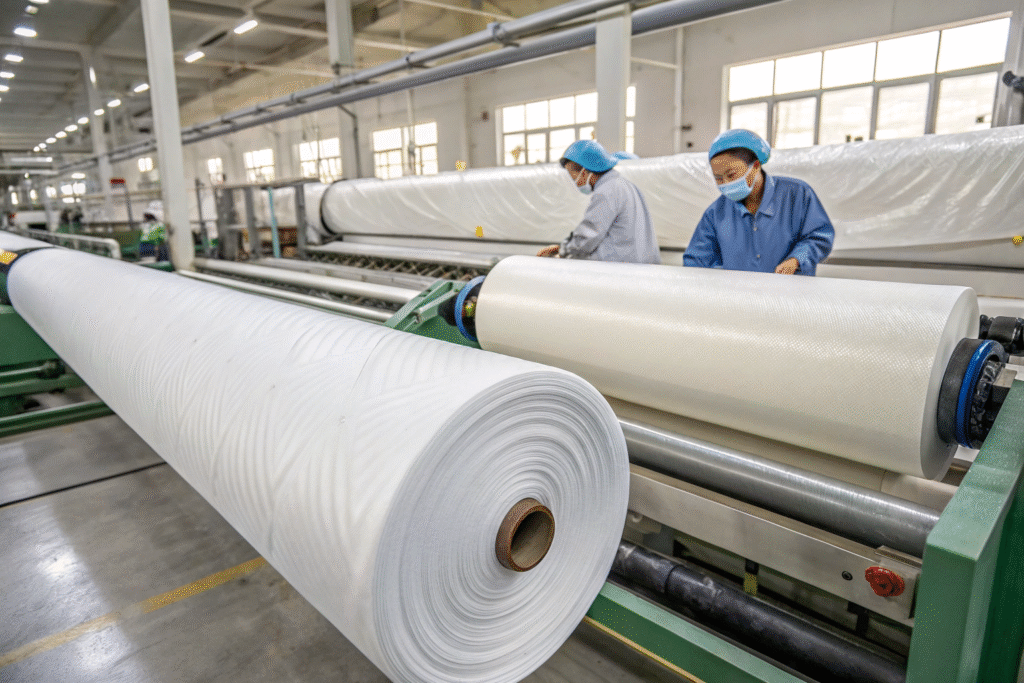
Plasma or alkaline scour removes residues, opening polyester for dye. Our coating factory uses eco-enzymes, reducing water use 30%. Dry at 120°C max.
What role does desizing play?
It clears starches that block dye. In 2024, for EU kids’ wear, desizing lifted fastness to perspiration from 3.5 to 4.5. Quantified via spectrophotometer.
Why heat-set before printing?
Stabilizes shrinkage under 1%. Our stenter frames do it inline. Explore pre-treatment methods to improve polyester print adhesion on Fibre2Fashion. View enzyme scouring for eco polyester preparation in Textile Sphere.
Post-Printing Fixes and Testing
Don’t stop at print—fix and test or regret later. We caught a batch for a Canadian buyer with low light fastness early, re-fixed, zero returns.
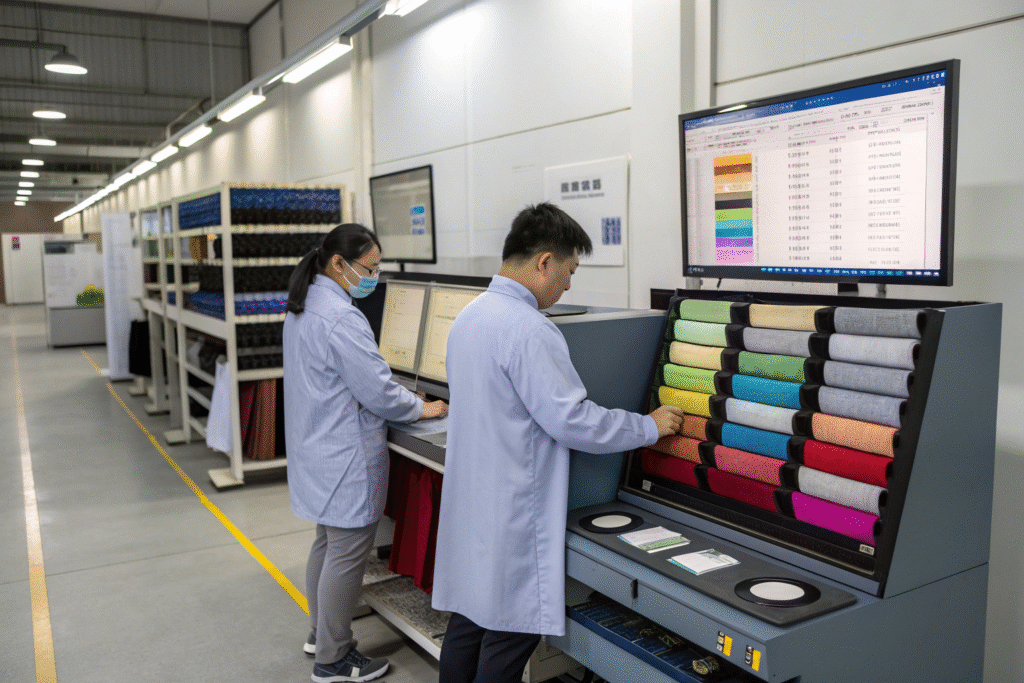
Steam with fixative at 130°C for 5 minutes, then soap wash. Our CNAS lab runs AATCC 61 for wash, 16A for light—aim 4+.
How to apply chemical fixatives?
Use cationic agents post-print. Boosted a Moscow client’s velvet fastness by 1 point, sales up 25% YoY.
What standards guarantee US market entry?
SGS/ITS plus our QR tracking. For Ron’s buys, no tariff issues via RCEP routes. Check post-print fixation techniques for disperse dyes on SDC Associates blog. Learn AATCC testing protocols for sublimation fastness via Textile Blog.
Conclusion
Ensuring print fastness on polyester through disperse or sublimation boils down to quality dyes, precise process control, thorough pre-treatment, and rigorous post-fixes with testing. We’ve turned fading disasters into loyal partnerships—like dropping a LA brand’s return rate 40% via yarn tweaks and lab dips. Our Keqiao setup delivers high yield, fast samples in 48 hours, and tariff-free shipping to the US. We really can achieve 4-5 fastness consistently. (Here’s a quick note: our QC team inspects every roll.)
Partner with Fumao Fabric to co-create durable prints that wow your customers. Contact our Business Director Elaine at elaine@fumaoclothing.com to start your order—we handle everything from yarn to doorstep.