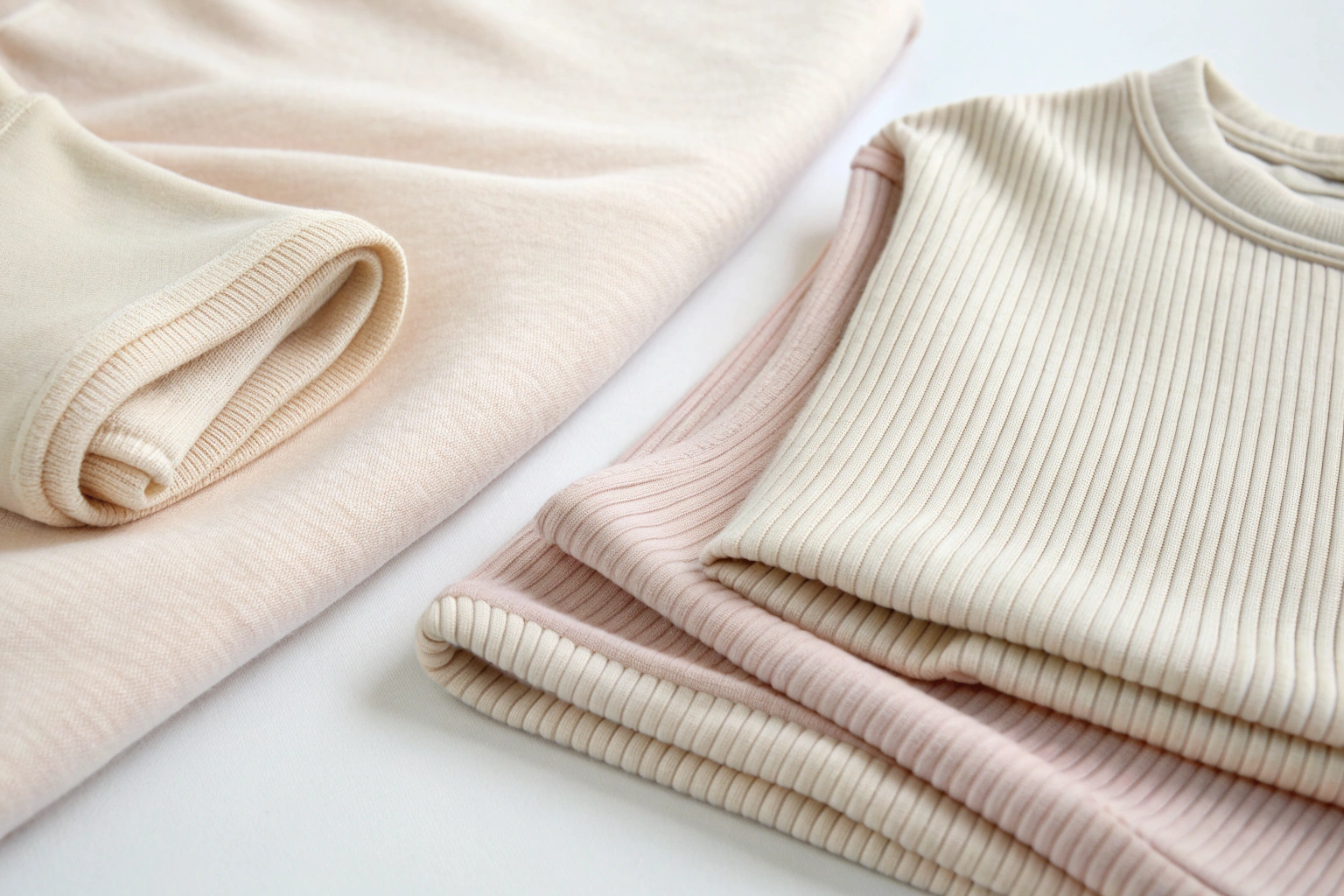
Let’s be honest—as both a parent and a fabric supplier, I’ve spent countless hours thinking about what touches a baby’s skin. That choice matters more than people realize. You’re looking for something soft, obviously, but also safe, durable… and let’s not forget practical. Now, organic cotton interlock and rib knit—these two keep coming up as top contenders. Both fantastic in their own ways, personally I think, but serving different purposes really. This leaves so many parents and brands wondering—which one truly wins?
Here’s the truth: organic cotton interlock generally works best for the main body of baby onesies—thanks to its incredible smoothness against delicate skin—while organic cotton rib knit, honestly, is unbeatable for cuffs and necklines because of its stretch. The "best" choice? Well, it depends. Depends on the garment part, depends on your priority—comfort versus fit. Having worked with countless children’s wear brands, I’ve seen this decision make or break a product.
This guide will break down the differences—the real differences—between these two fabrics. We’ll explore their structures, comfort levels, durability… everything. By the end, you’ll know exactly which fabric to choose for your project. Guaranteed.
So what exactly separates interlock from rib knit?
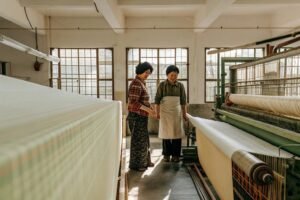
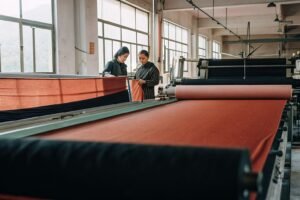
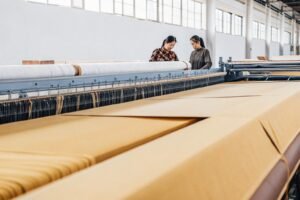
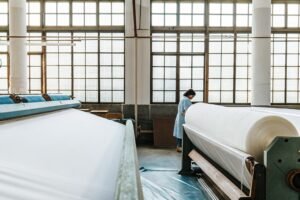
If you’ve ever felt confused by knit types—join the club. The difference, honestly, lies in how those tiny threads loop together. Understanding this—it helps you predict everything. At our factory, we produce both, and the machinery setup… completely different worlds.
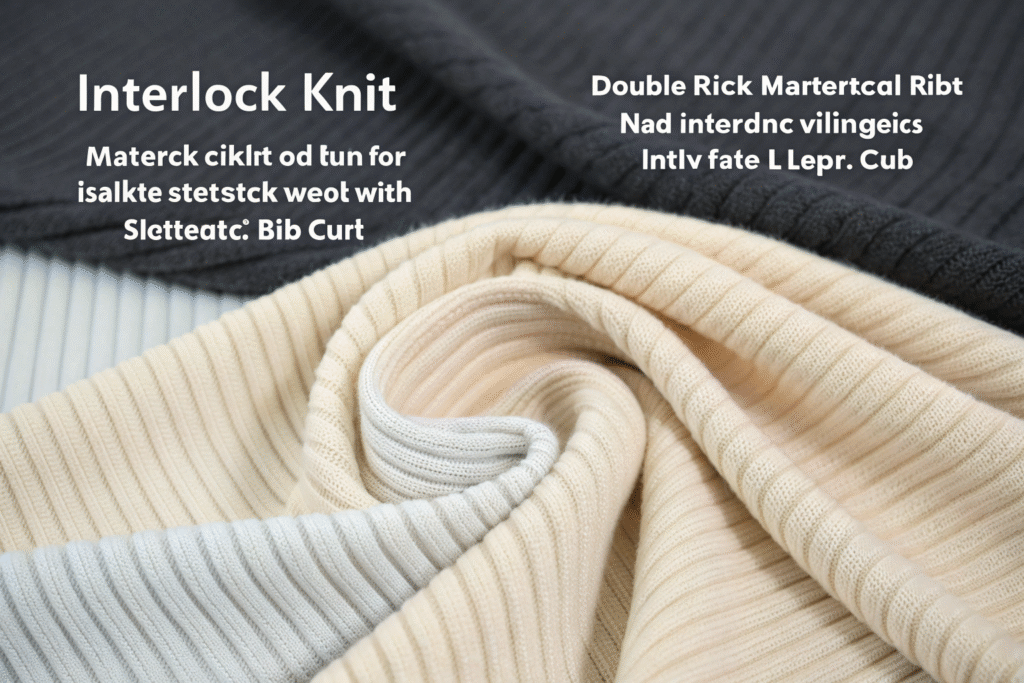
Interlock knit—it’s a double-knit fabric. Picture two layers of jersey, fused back-to-back. This complex structure creates something special—same on both sides, smooth, stable, incredibly soft. Doesn’t curl at the edges either—makes sewing so much easier. Rib knit, on the other hand—made by alternating knit and purl stitches. Creates those vertical ribs you see everywhere—on cuffs, collars. Gives rib knit its signature stretch—widthwise, especially.
But how does this structure impact a baby’s comfort?
The construction—it’s the foundation of comfort. A baby’s skin, remember, is so much thinner—up to 30% thinner than ours. Makes it sensitive to texture, to friction. Now, the double-layer nature of interlock—creates this beautifully smooth surface, no internal "wrong" side. Means no rough spots, no raised seams to cause irritation. Ideal for the main body—where skin contact is constant. Rib knit is soft too, of course, but its textured surface—has more "grip" compared to interlock’s slick feel.
Then there’s stability—interlock lies flat, doesn’t bunch up. Reduces chafing during long sleeps. For a baby, comfort is about uninterrupted peace—and interlock delivers that. We make sure our organic cotton interlock gets a special brushing—a peach skin finish, we call it—to elevate softness to another level. Parents notice this—they really do.
And which knit holds up better to repeated washing?
Durability—a top concern with daily laundry. Both fabrics, if made with high-quality organic cotton, are durable. But interlock—often has an edge. That double-thick structure—less prone to tearing, to thinning over time. Handles machine washing better—maintains its integrity.
Rib knit—incredibly strong in stretch recovery. Designed to be stretched—and return, thousands of times. But those raised ribs—can face more direct abrasion in the wash. The key for both? Quality of yarn, the dyeing process. We use combed organic cotton—reactive dyes. Makes the fabric stronger, ensures colorfastness too. Means the onesie stays vibrant—wash after wash. Critical for brand reputation, to be honest. For more on fabric care, the International Association for Textile Care has good insights.
Why is organic cotton non-negotiable for baby skin?
Organic cotton—it’s not just a trend. Conventional cotton farming—uses about 16% of the world’s insecticides, 7% of pesticides. Residues can remain in the fabric. For a baby who explores the world mouth-first—choosing certified organic is a safety step. A critical one.
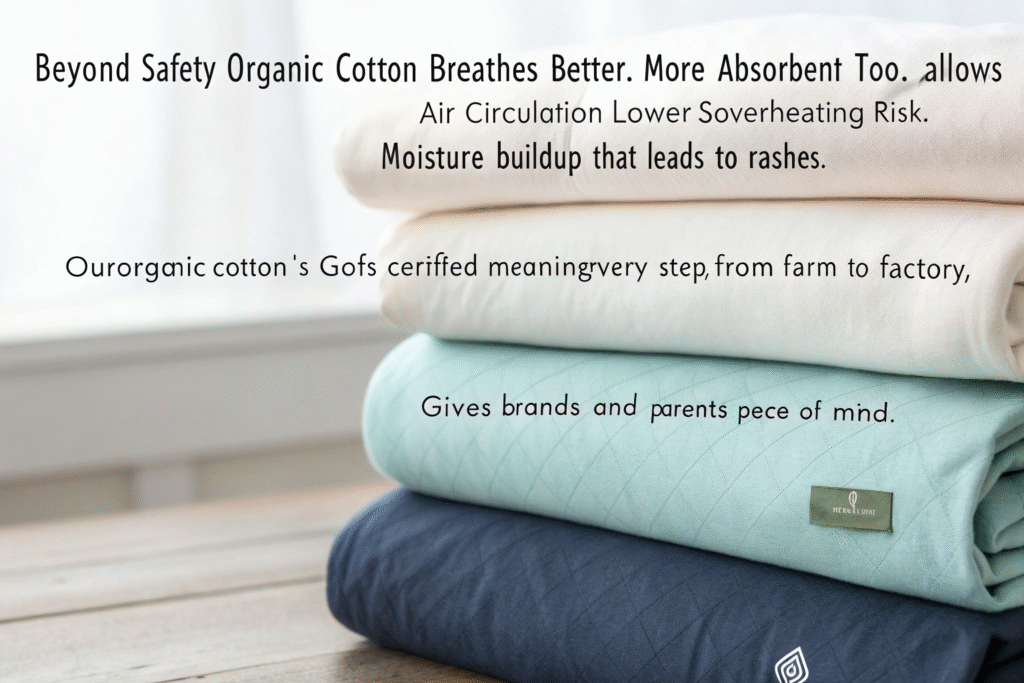
Beyond safety—organic cotton breathes better. More absorbent too. Allows air circulation—lowers overheating risk, moisture buildup that leads to rashes. Our organic cotton is GOTS certified—meaning every step, from farm to factory, is tracked. Meets strict ecological and social criteria. Gives brands and parents—peace of mind.
How does GOTS certification actually guarantee safety?
A GOTS certification—it’s the gold standard. It’s not just about no pesticides. For a fabric to carry the GOTS label—every chemical used in processing, dyes and auxiliaries, must meet toxicity standards. Heavy metals, formaldehyde—banned. For babies with permeable skin—this is vital.
Furthermore—GOTS mandates social criteria based on ILO standards. Ensures ethical production. When you source GOTS certified organic cotton from us—you’re investing in safety. Safety for the baby, the workers, the planet. A comprehensive promise—that resonates today. You can check standards yourself via The Global Organic Textile Standard.
And the real benefits of hypoallergenic properties?
Hypoallergenic—means less likely to cause a reaction. Organic cotton is naturally hypoallergenic. No harsh chemicals, no nasty dyes—drastically reduces potential allergens. Crucial for infants with eczema, asthma—sensitive skin conditions.
The high absorbency—manages moisture, keeps skin dry. A dry skin environment—less prone to bacteria, fungi that cause irritation. Choosing organic cotton—you’re creating a protective barrier. It’s why pediatricians recommend it—so consistently. For more on skin health, the American Academy of Dermatology is a good resource.
How should you choose between them for different parts?
Smart design—often uses both fabrics. Leverages their strengths. Common practice among top brands we work with. Optimizes for comfort and fit—both. Using one fabric for everything—leads to compromise.
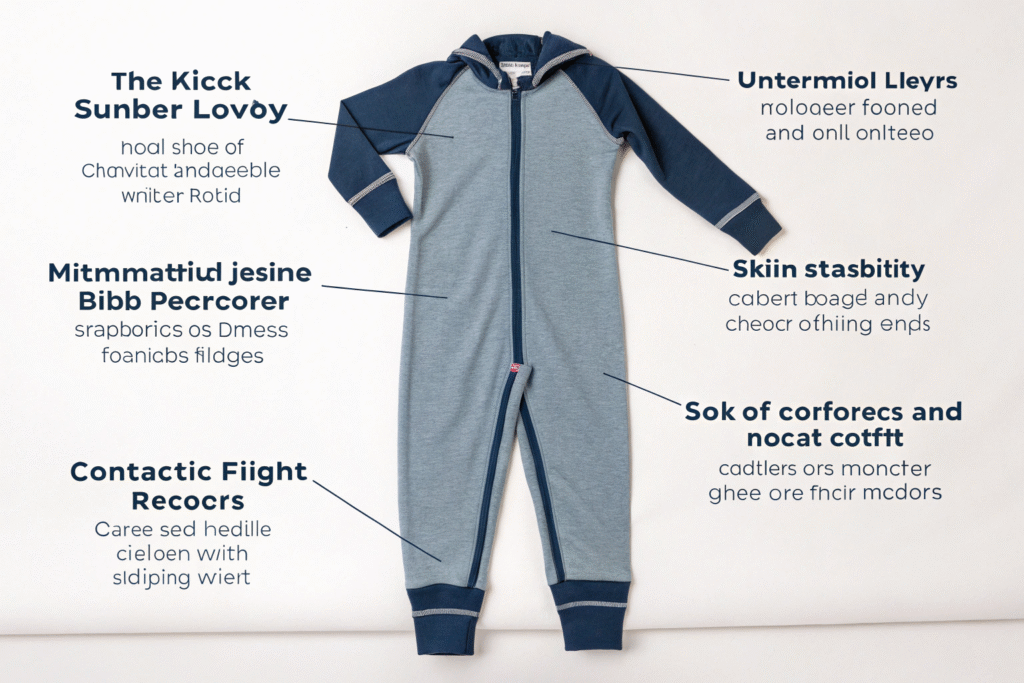
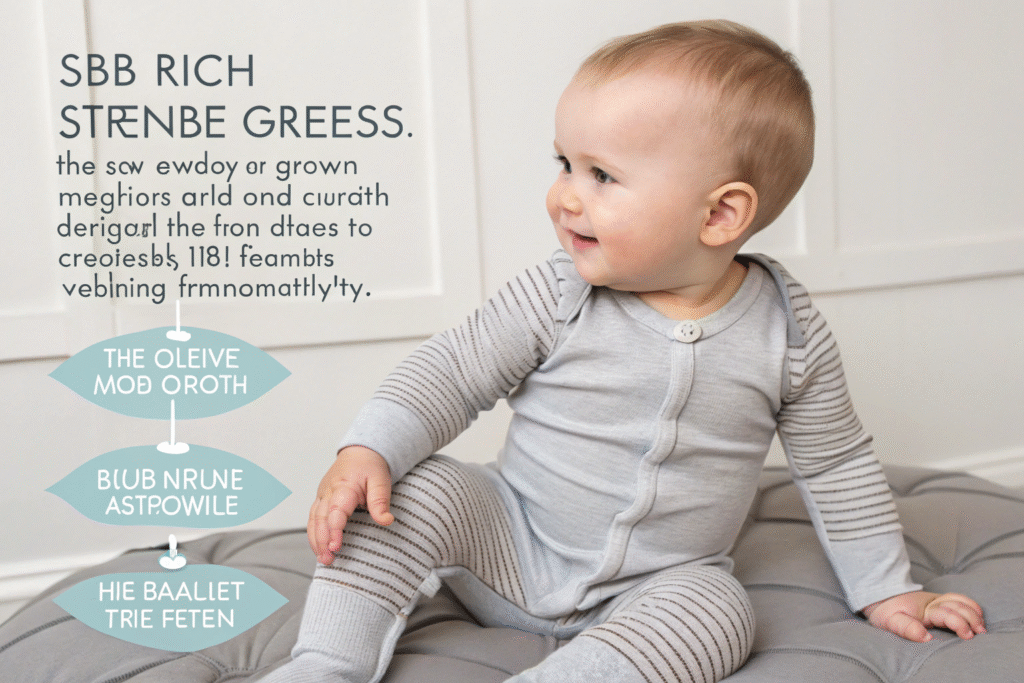
The main body of the onesie—torso, legs—benefits most from interlock’s softness and stability. This is the area with the most skin contact—comfort is paramount. For sleeves, neckline, leg cuffs—rib knit’s stretch and recovery are unbeatable. Hugs gently—without being tight. Prevents drafts, keeps the onesie in place.
Why use interlock for the main body—specifically?
The body of a onesie—it’s like a second skin. Needs to be gentle, non-irritating. Comfortable for all activities—sleeping, crawling, playing. Interlock’s smooth surface—perfect for this. Provides comfort without friction points. Its stability—means it drapes nicely, doesn’t twist around. So frustrating for parent and baby during diaper changes—when that happens.
Plus—interlock provides better insulation than single jersey. The double-layer structure—keeps baby warm without bulk. A fantastic all-season fabric, honestly. When you specify interlock for the body—you’re prioritizing core comfort. What parents remember.
And why is rib knit so ideal for cuffs and collars?
The job of cuffs and collars—fit snugly but comfortably. Rib knit’s crosswise stretch—allows easy dressing. Neckline stretches wide—over the head, then snaps back. Prevents gaping—keeps the cold out. Same with rib cuffs on sleeves and legs—keeps everything in place, prevents riding up.
This functional stretch—also means longer wearable life. As the baby grows, the ribbed sections accommodate—slight size variance. Lets the onesie fit well longer. A practical benefit—cost-conscious parents appreciate. From a manufacturing view—rib knit is more cost-effective than interlock. Using it in smaller areas—helps manage overall garment cost. Without sacrificing quality.
What about cost and sourcing—and those lead times?
Making the right choice—involves practical business considerations. Generally, organic cotton interlock—more expensive than rib knit. More complex construction—specialized machinery, more yarn. Slower production process.
But sourcing both from a single supplier—like Fumao Fabric—simplifies your supply chain. We control everything—spinning to knitting, dyeing. Ensures consistency, quality across both fabrics. Our vertical integration—lets us offer competitive pricing. More importantly—dramatically reduces lead times. In the fast-paced children’s wear market—speed to market is critical. Personally, I think it’s everything.
How can you actually streamline your sourcing?
Sourcing multiple fabric types from multiple vendors—inefficient. Increases risk of quality issues. By partnering with a one-stop supplier—you consolidate orders, communication, logistics. We provide a complete package—fabrics, accessories, QC, shipping. Saves time—lowers admin costs, minimizes errors.
Our digital platform—lets you check live inventory, access tech packs, place orders 24/7. This transparency—invaluable for busy sourcing managers. We act as an extension of your team—ensuring you get the right fabrics. Right price, right time. For sourcing insights, the United States Fashion Industry Association offers resources.
And typical lead times for bulk orders—what are they?
Lead times—crucial for planning. For our standard GOTS certified organic interlock and rib knit—bulk orders in 30-45 days after sample confirmation. Includes everything—knitting, dyeing, finishing, testing, packaging. Our location near Ningbo and Shanghai ports—means faster shipping to the US, globally.
Our agile production—designed for flexibility. We keep strategic stock of greige fabric—lets us react quickly to urgent orders. For partners—we can expedite. A reliable lead time—as important as fabric quality. We build our reputation on both. Understanding international trade terms like Incoterms—part of our service too.
Conclusion
So—choosing between organic cotton interlock and rib knit for baby onesies… it’s not about one winner. It’s about their unique strengths. For ultimate softness against delicate skin—interlock for the body. For flexible, snug-fitting cuffs and collars—rib knit, no question. Together—they create the perfect onesie. Safe, comfortable, durable, smart.
By choosing GOTS certified organic cotton—you’re making a responsible choice. For the baby’s health, the planet’s future. Quality fabric—pays off in customer satisfaction, brand loyalty. As a fabric supplier in Keqiao—we’re committed to providing these materials. Backed by our integrated supply chain, our rigorous QC.
Ready to make the softest, safest baby onesies? Let’s talk about your needs—how our organic interlock and rib knit can bring your designs to life. For a consultation, samples—contact our Business Director, Elaine. She and her team—dedicated to your success. Reach her at elaine@fumaoclothing.com. Honestly, she’s the best.