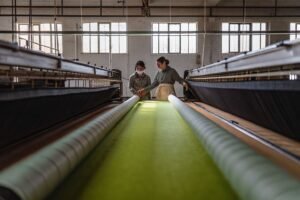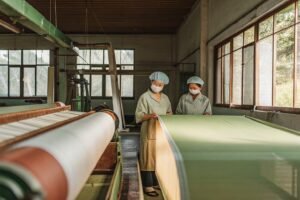
As an experienced textile manufacturer from Keqiao’s fabric hub, I’ve witnessed how dye selection impacts final products. Choosing incorrectly leads to fading, damage, and client dissatisfaction.
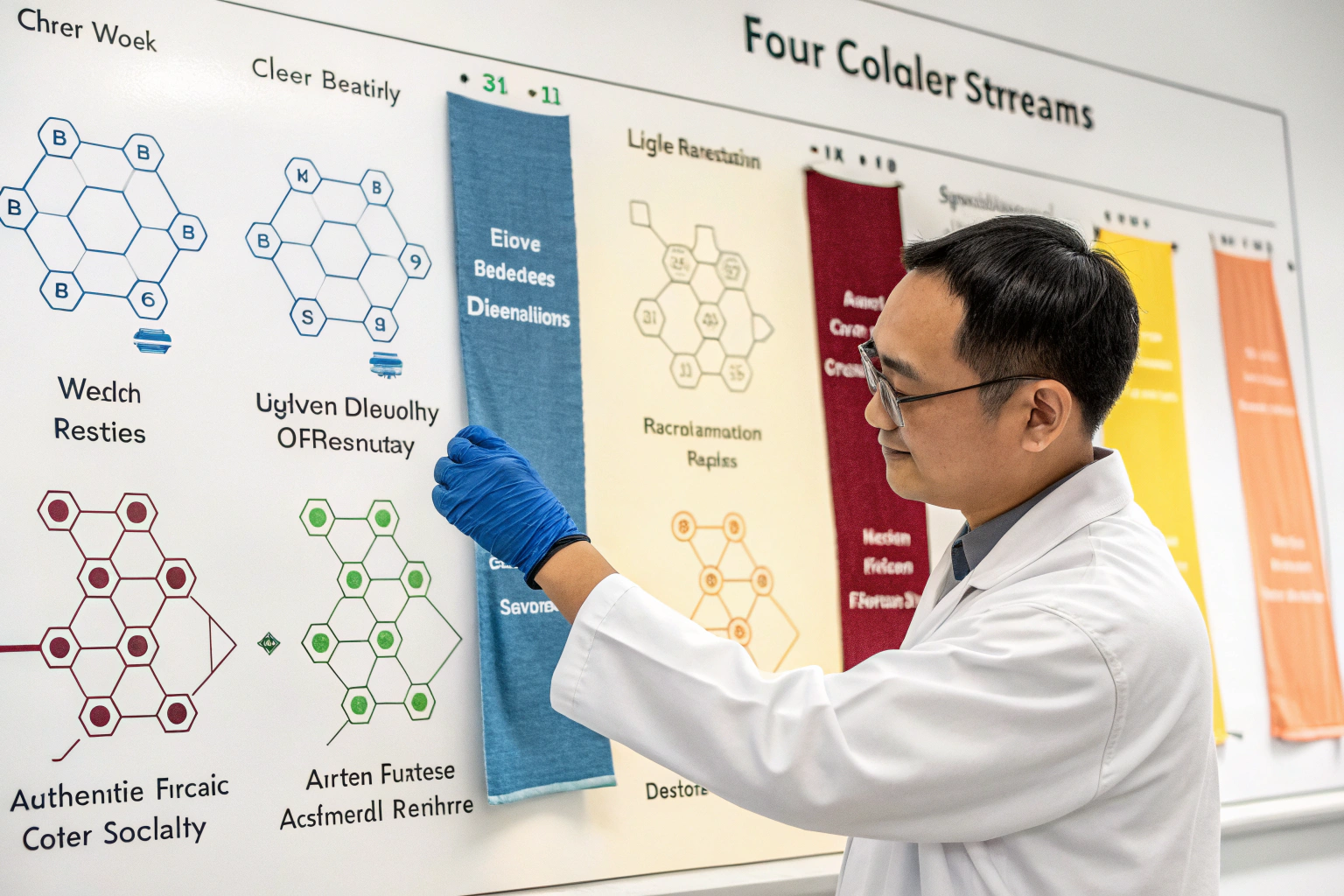
These four dye categories differ in chemical structure and fiber compatibility. Each creates distinct bonds with materials, producing varied color fastness, vibrancy, and application needs.
Knowing these distinctions helps sourcing professionals select appropriate materials. This knowledge directly influences product appearance, longevity, and performance.
Why Select Reactive Dyes for Natural Textiles?
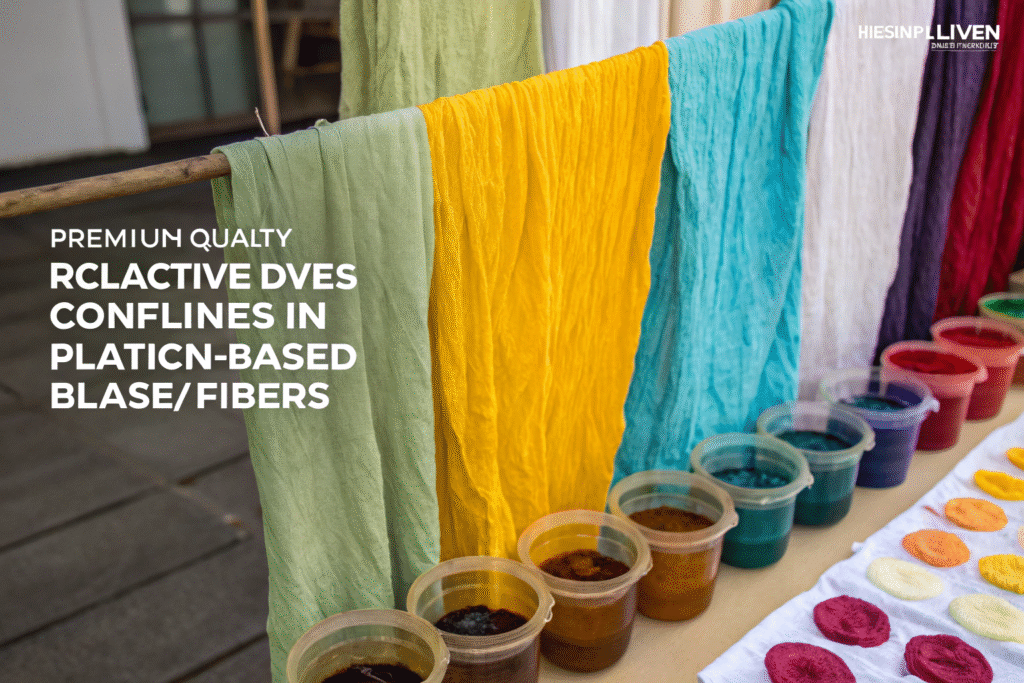
Reactive dyes represent the premium choice for plant-based fibers including cotton and linen. Their naming derives from forming permanent molecular connections with fabric.
This chemical bonding delivers outstanding laundering durability. Unlike superficial coloring, reactive dyes integrate into fiber composition. The method demands controlled alkaline environments and complete rinsing to eliminate excess dye.
How Do Reactive Dyes Bond with Cellulose?
These dyes work optimally with natural plant fibers because such materials contain molecular sites for covalent bonding. The created connection proves so durable that hue becomes inherent to cloth. This explains why premium cotton items preserve brilliance through repeated cleaning. Our certified testing facility regularly examines these connections to verify global standard compliance.
How Durable Are Reactive Dyes?
Reactive dyes demonstrate superior laundering resilience compared to basic direct dyes. Though light resistance varies by formulation, the molecular bonding guarantees exceptional endurance. Adequate post-dyeing cleansing remains vital for achieving maximum color stability. For purchasers wanting bright, lasting shades on organic textiles, reactive dyes deliver optimal quality-performance balance.
What Makes Disperse Dyes Suitable for Synthetics?
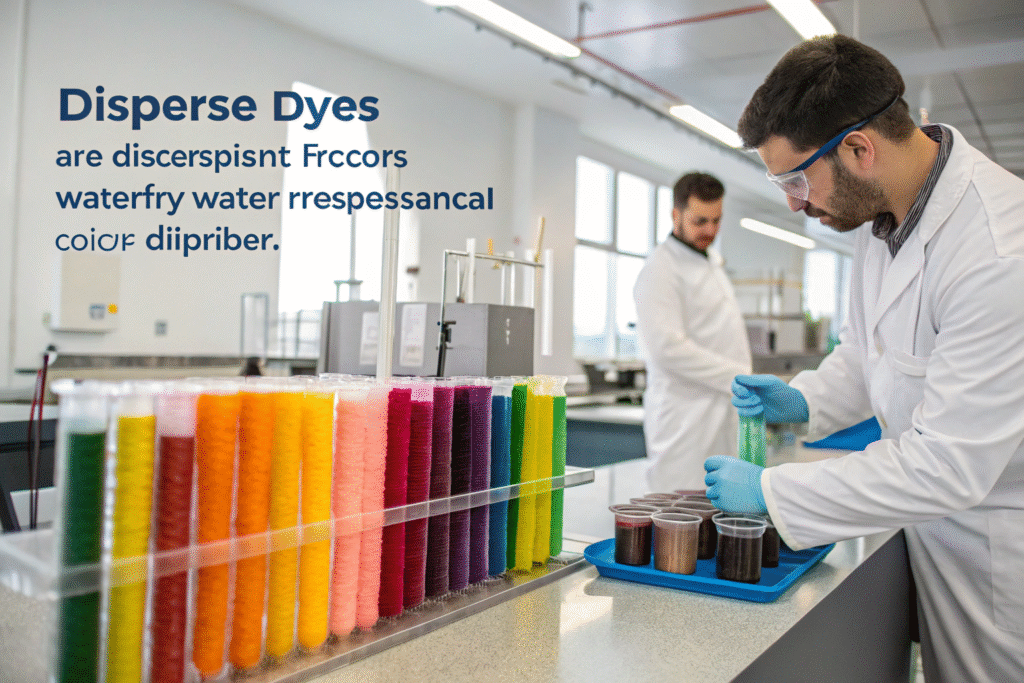
Disperse dyes specialize in coloring water-resistant artificial fibers like polyester. These non-water-soluble colorants apply through specialized suspension techniques.
Coloration happens under elevated heat and pressure, making synthetic materials expand. Dye particles then gasify and permeate the fiber center, becoming mechanically secured during cooling.
Why Are Disperse Dyes Effective for Polyester?
Polyester fabric needs particular coloring methods owing to its crystalline nature. Disperse dyes function by dissolving into polymer structures under thermal activation. The heated procedure guarantees profound, permanent shading with remarkable sun exposure and cleaning durability. This explains why sportswear preserves its chromatic integrity during strenuous activity.
Can Disperse Dyeing Be Eco-Conscious?
Contemporary advancements include carrier-free coloring and reduced-energy processes that lessen ecological effects. We’ve effectively implemented these techniques with reprocessed polyester, matching our environmental pledges. These sophisticated approaches preserve chromatic quality while reducing ecological impact.
How Do Acid Dyes Create Vivid Hues?
Acid dyes produce the deep, radiant colors connected with animal-derived fibers like silk. These water-compatible colorants need acidic settings to generate ionic attachments.
The coloring method employs acid solutions where dye elements attract to positively charged fiber locations. This generates magnificent colorations that amplify the inherent elegance of premium materials.
When to Use Acid Dyes?
Silk textiles and wool materials contain molecular groups that turn positively charged in acid conditions, forming ideal connection points for acid dyes. The outcome is extraordinary color richness that complements these textiles’ natural sheen. Our meticulous processing maintains delicate textures while accomplishing bright, enduring shades.
Can Acid Dye Longevity Be Enhanced?
Though visually impressive, certain acid dyes need post-processing to improve cleaning durability. Methods like metallic complex formation and positive-charge fixatives considerably increase endurance. We apply these techniques to guarantee premium garments retain their visual appeal through extended usage.
When to Opt for Vat Dyes for Extreme Endurance?
Vat dyes symbolize the peak of color permanence, perfect for uses demanding maximum durability. The traditional indigo blue denim represents the most familiar vat dyeing example.
These non-soluble pigments experience chemical transformation to become water-compatible before use. Following fiber absorption, oxidation reconverts them to insoluble form, perpetually locking shade inside the fabric.

What Provides Vat Dyes’ Exceptional Permanence?
The ultimate insoluble pigment fragments trapped inside plant-derived fibers offer unequaled opposition to cleaning, sunlight, and chemicals. This makes vat dyes excellent for professional workwear and outdoor fabrics where color consistency proves essential.
Are Other Vat Dyes Available Beyond Indigo?
While Indigo controls denim manufacturing, additional vat dyes provide diverse color possibilities with comparable premium durability. These options deliver complete penetration and uniform coloring for applications requiring utmost endurance standards beyond classic denim looks.
Conclusion
Choosing appropriate dye types depends completely on your material composition and performance expectations. Each dye classification provides unique benefits that must correspond to particular application demands.
At Fumao Textiles, we merge technical knowledge with integrated production to supply perfectly colored fabrics for all uses. Our quality assurance ensures uniform outcomes satisfying highest industry requirements.
Prepared to develop textiles with ideal coloring? Reach our Business Director Elaine at elaine@fumaoclothing.com to explore how we can actualize your fabric concepts with professional dyeing solutions.