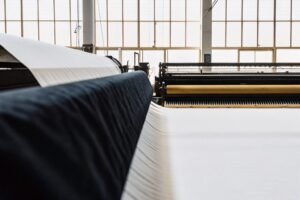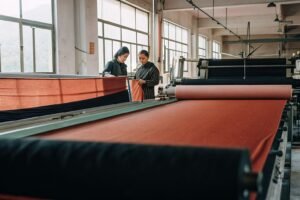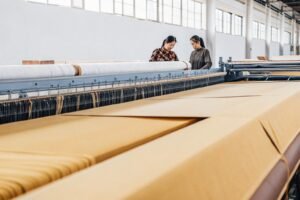
As a fabric supplier with over 20 years of experience, I’ve witnessed firsthand how payment terms significantly impact business relationships and operational success. For large fabric orders, financial logistics prove equally crucial as physical logistics, particularly for American clients like Ron who prioritize clarity and efficiency in financial transactions. These professionals require effective cash flow management while maintaining a consistent supply of high-quality materials, making understanding credit terms essential for successful sourcing operations.
Supplier credit terms essentially function as a form of trade credit, enabling buyers to purchase fabrics immediately while deferring payment according to pre-negotiated schedules. This financial mechanism becomes particularly vital for bulk purchases because it bridges the critical cash flow gap between ordering materials and selling finished garments. Consequently, large volume orders typically involve percentage-based payments—often 30-50% upfront with the balance due against shipping documents—or 30 to 60-day payment windows post-shipment. This systematic approach not only provides necessary financial flexibility but also establishes trust, thereby forming the foundation for sustainable buyer-supplier partnerships.
Understanding these term nuances becomes fundamental to smooth sourcing operations since they directly influence budgeting accuracy, production planning efficiency, and overall financial health. Therefore, let’s systematically examine how these terms operate within practical textile sourcing contexts.
What are typical payment terms for bulk fabric orders?
When sourcing thousands of meters of fabric, establishing clear financial agreements represents the initial critical step. Based on our extensive experience with US clients, payment predictability consistently ranks equally important with delivery reliability. Consequently, the primary objective involves structuring mutually protective terms that ensure uninterrupted project progression without financial complications.
The most prevalent structure for new clients involves percentage-based payment schedules, typically requiring 30% to 50% deposit upon order confirmation. This deposit mechanism serves dual purposes: first, it enables raw material procurement like organic cotton or recycled polyester; second, it secures production scheduling across our weaving and dyeing facilities. Subsequently, the remaining balance generally becomes due either pre-shipment or against Bill of Lading copies. For established partners demonstrating consistent payment history, we progressively introduce flexible options like Net 30 terms, allowing full payment within 30 days post-invoice date following shipment.

Why is a deposit usually required for large orders?
Deposit requirements extend beyond mere formalities, functioning as binding commitments that initiate entire production cycles. For instance, when placing bulk orders like 10,000 meters of custom-dyed linen, immediate resource allocation becomes necessary. This process involves reserving testing capacity at our CNAS-certified lab, securing scheduling at partner dyeing facilities, and purchasing specialized yarns. Therefore, deposits operate as supplier safeguards against initial costs while simultaneously reserving dedicated production capacity for buyers. Ultimately, this financial instrument transforms purchase promises into concretely scheduled, actionable production floor projects.
How do letters of credit secure large transactions?
For exceptionally large orders exceeding $100,000, Letters of Credit (LCs) emerge as prevalent secure instruments. Essentially, LCs constitute bank-to-bank payment guarantees triggered upon fulfillment of predetermined conditions. These conditions undergo meticulous documentation within LC agreements and typically involve presenting crucial shipping documents like Bills of Lading, commercial invoices, and packing lists. The operational sequence begins with buyer banks issuing LCs to supplier banks, followed by goods shipment and document presentation to supplier banks. Provided documents demonstrate full LC term compliance, buyer banks execute payments. This methodology substantially reduces mutual risks since payments become contingent upon suppliers providing verifiable contract fulfillment evidence. For deeper understanding of standardized procedures, consult the International Chamber of Commerce.
How can I negotiate better credit terms with fabric suppliers?
Credit term negotiation fundamentally revolves around trust-building and reliability demonstration. Rather than simply requesting improved conditions, successful negotiators position themselves as low-risk, high-value partners. From our Keqiao headquarters perspective, clients securing optimal terms consistently exhibit transparent communication and established track records of punctual payments.
Negotiation leverage systematically increases with each successfully completed order. We recommend initiating relationships with standard terms during initial purchases. When deposits and final balances receive prompt payment, positive payment histories develop naturally. Consequently, upon returning for subsequent larger orders, clients possess solid foundations for requesting enhanced terms—potentially reduced deposits (20% versus 30%) or extended payment windows (Net 45 versus Net 30). Consistency remains paramount since we demonstrate greater willingness to extend favorable credit to buyers proving financial integrity across multiple transactions. Additionally, order volume commitments serve as powerful leverage tools, as guaranteed large annual volumes provide confidence for offering increasingly competitive financial arrangements.

What factors influence a supplier’s credit decision?
Credit decisions never occur within vacuums; multiple concrete factors collectively determine term offerings. Most significantly, company credit history and financial stability undergo thorough evaluation, sometimes involving verification services like SGS. Simultaneously, order value and volume substantially influence negotiations, since $200,000 orders naturally command greater attention and flexibility than $5,000 transactions. Relationship duration represents another critical consideration, as demonstrated loyalty typically receives reciprocal rewards. Finally, industry positioning and market reputation significantly impact risk assessment, whereby established brands or companies with solid garment industry track records generally qualify for extended credit facilities.
Can larger order volumes improve my payment terms?
Volume commitments unquestionably enhance payment term negotiations. When buyers guarantee large quantities, production optimization becomes achievable through continuous weaving machine operations, bulk raw material purchases (like Tencel™ or recycled polyester) at preferential pricing, and streamlined logistics planning. These operational efficiencies generate measurable cost savings, portions of which we willingly share through improved pricing or flexible payment structures. For example, annual volume commitments with quarterly shipments might qualify for straight Net 60 terms across all shipments, substantially improving cash flow management capabilities.
What are the risks of different fabric payment terms?
All financial arrangements inherently carry bilateral risks requiring transparent acknowledgment. Buyers primarily face supplier default risks regarding delivery specifications, whereas suppliers risk producing and shipping goods without receiving final payments. Therefore, well-structured payment plans deliberately mitigate these risks through balanced term structures.
The following table summarizes risk distributions across common payment methods:
| Payment Method | Risk for Buyer | Risk for Supplier |
|---|---|---|
| 100% Advance Payment | Highest risk of non-delivery or substandard quality. | No financial risk. |
| T/T (Telegraphic Transfer) 30%/70% | Risk remains if 70% balance is paid before receiving goods. | Risk of non-payment for the balance after production. |
| Letter of Credit (L/C) | Risk of discrepancies in documents delaying payment. Complex to handle. | Risk of non-payment if documents do not strictly comply with LC terms. |
| Open Account (Net 30, 60) | Highest risk of non-payment after goods are received. | Highest risk of non-payment after shipment. |

How can I protect my company when paying upfront?
While deposit payments frequently prove unavoidable, companies can implement protective measures. Initially, conduct comprehensive supplier due diligence by verifying business licenses, analyzing Alibaba client testimonials, and requesting factory audit reports when possible. Subsequently, initiate relationships with smaller trial orders to assess reliability and quality before committing to major purchases. Additionally, ensure contracts contain detailed specifications covering fabric composition, weight, colorfastness, and safety standards, while explicitly outlining remediation protocols for quality failures identified during inspections. For supplementary guidance, the U.S. Department of Commerce provides international business practice resources.
What happens if I need to cancel an order?
Cancellation policies constitute critical contractual components with significant financial implications. If orders cancel after production initiation, incurred costs typically become non-recoverable. For example, cancellations occurring after yarn procurement and weaving commencement for custom jacquard fabric generally result in deposit forfeiture covering sunk costs. Should fabric production complete before cancellation, full payment liability usually applies. Specific penalties progressively escalate according to production stages during cancellation timing, making clear contractual communication and scenario documentation essential for dispute prevention.
How do tariffs and logistics affect final fabric costs?
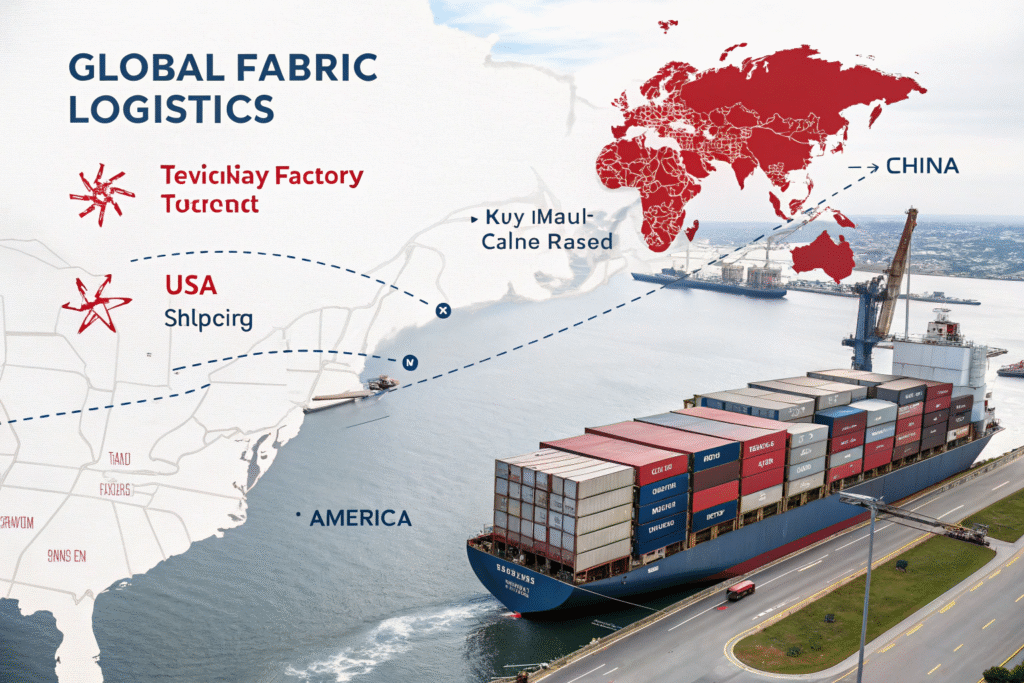
Fabric price per meter represents merely one component within total cost calculations. Accurate bulk purchase costing requires incorporating logistics expenses and, crucially for US buyers, tariff implications. Savvy importers like Ron recognize that efficient supply chains and intelligent tariff management present significant savings opportunities.
Tariffs constitute direct import country impositions, with US rates varying according to specific fabric types and origins. Although we ship from China, our extensive Harmonized System (HS) code knowledge enables advisory services regarding applicable duty rates. This expertise proves particularly valuable for items potentially qualifying for lower duty categories through alternative product classifications or materials. Furthermore, logistics expenses—including shipping, insurance, and port fees—typically increase landed costs by 15-30%. Consequently, Incoterm selection becomes critically important, with FOB (Free on Board) frequently recommended since it maintains buyer control over main shipping legs while enabling freight forwarder flexibility for potential rate advantages.
Who is responsible for tariffs and shipping costs?
Cost and risk responsibilities during transportation derive directly from contracted Incoterms® rules. Under EXW (Ex Works) agreements, buyers assume all costs and logistics from factory doors, including export formalities, main carriage, insurance, and import tariffs. With FOB (Free on Board) terms, supplier responsibilities and costs terminate upon goods loading at origin ports, leaving buyers accountable for main ocean freight, insurance, and all destination charges including tariffs. For simplified approaches, CIF (Cost, Insurance, and Freight) options involve supplier arrangement and payment for ocean freight and insurance to destination ports, though buyers retain tariff responsibilities and final delivery costs. Understanding these rules proves fundamental for accurate landed cost calculations, with updated Incoterms® rules available through the International Chamber of Commerce.
Can you help with customs clearance for the USA?
As exporters, we manage Chinese export customs clearance while preparing and providing all necessary US clearance documentation, including Commercial Invoices, Packing Lists, and Certificates of Origin. Although we cannot function as US Customs Brokers, our century-spanning export experience across 100+ countries ensures document accuracy and compliance, thereby streamlining broker operations. We meticulously specify correct HS codes, fabric compositions, and values—critical elements for seamless customs clearance processes and avoidance of US port delays or penalties.
Conclusion
Navigating supplier credit terms for bulk fabric purchases involves strategic processes balancing financial flexibility against risk management. From standard T/T payments to secure Letters of Credit, optimal selections depend on order volumes, supplier relationships, and risk tolerance levels. Remember that terms frequently become negotiable as trust develops through consistent successful transactions, while comprehensive cost understanding—from deposits through tariffs—remains essential for accurate budgeting and profitable sourcing ventures.
If seeking reliable fabric partners offering transparent credit terms alongside integrated weaving-to-shipping services, we provide ideal solutions. Our financial stability and decades of experience ensure trustworthy supplier relationships for large-scale projects. For payment plan structuring discussions regarding your next high-quality fabric bulk order, please contact Business Director Elaine at elaine@fumaoclothing.com. Let’s collaboratively weave success into your next collection.