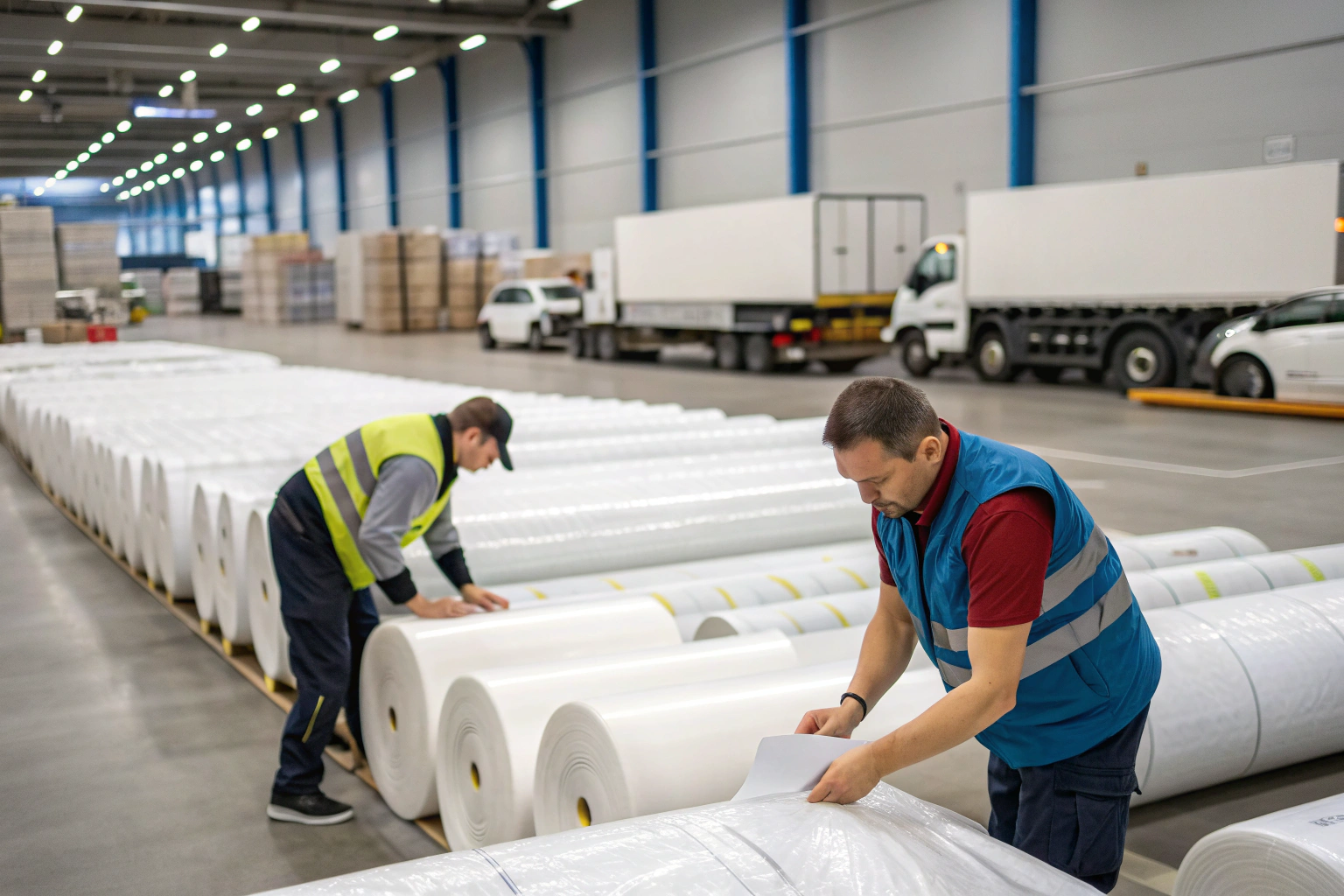
As a fabric supplier with over two decades of experience shipping to the U.S., I understand that delays can disrupt your entire production schedule and impact your bottom line. Consequently, you need a partner who treats your timeline as seriously as you do. Therefore, managing lead time is not just about shipping; it’s about establishing a seamless, predictable process from order to delivery.
The key to managing fabric lead time from China to the USA lies in partnering with a supplier that has an integrated supply chain, offers transparent logistics options, and proactively navigates customs and tariffs. As a result, this holistic approach minimizes delays at every stage, ensuring your fabric arrives on time, every time. Ultimately, it’s about control, not just hope.
Let’s break down the specific strategies that give you back control over your timeline and costs.
What are the key stages in fabric production lead time?
Understanding the production timeline is the first step to managing it. Although many buyers focus only on the shipping date, the real journey begins the moment you place your order. For this reason, a transparent supplier will break down each phase for you.
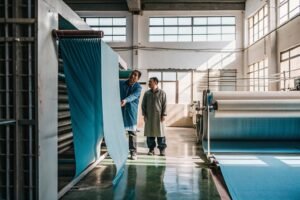
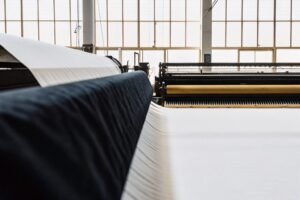
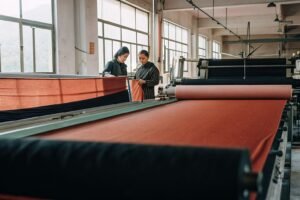
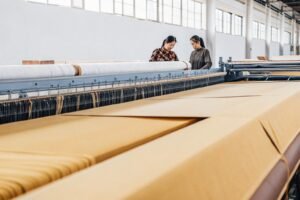
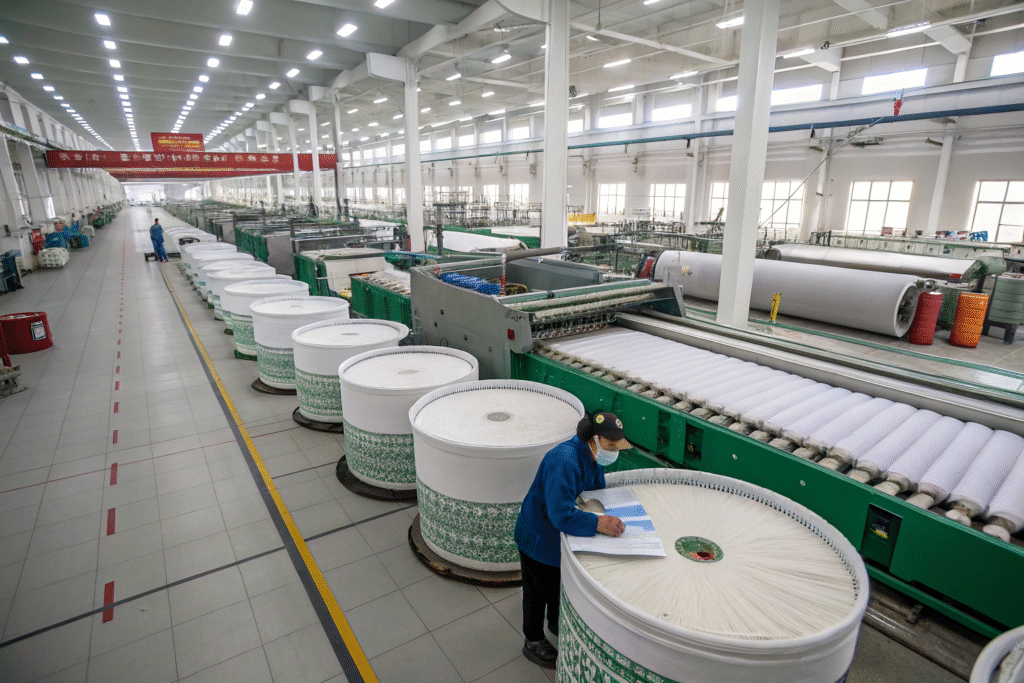
The fabric production lead time consists of several consecutive stages: raw material sourcing, weaving or knitting, dyeing and finishing, and final quality inspection. Since each stage has its own timeline, bottlenecks at any point can cause significant delays. Therefore, a supplier with in-house or tightly coordinated partner factories, like our setup in Keqiao, can synchronize these stages efficiently.
How does in-house production control speed up the process?
When a supplier controls most production stages, it eliminates the need to coordinate with multiple external vendors. As a direct result, this control drastically reduces communication gaps and waiting times. For instance, at Fumao, our large-scale weaving factory and cooperative dyeing and printing plants are all within the Keqiao textile cluster. This proximity consequently allows for real-time updates and rapid movement of materials between stages. If a potential issue is spotted during weaving, our quality control team can flag it immediately, thereby preventing a batch of flawed fabric from moving to the dyeing stage and wasting more time. This integrated approach is precisely why we can achieve a 48-hour sample development time.
What role does agile R&D play in meeting deadlines?
Agile Research and Development is not just about innovation; it’s equally about problem-solving under time constraints. Our 20+ R&D experts are integrated into the production process. When a client needs a specific functional fabric, like a moisture-wicking textile, the R&D team works concurrently with the production team. They can therefore quickly approve lab dips and test small batches without halting the production line for other orders. This parallel processing, supported by our CNAS-certified lab, ensures that development does not become a bottleneck but rather an accelerator for the entire project.
How to choose the best shipping method from China?
Selecting a shipping method is a critical trade-off between speed and cost. Since the wrong choice can either inflate your expenses or derail your production schedule, you need clear data to make an informed decision.
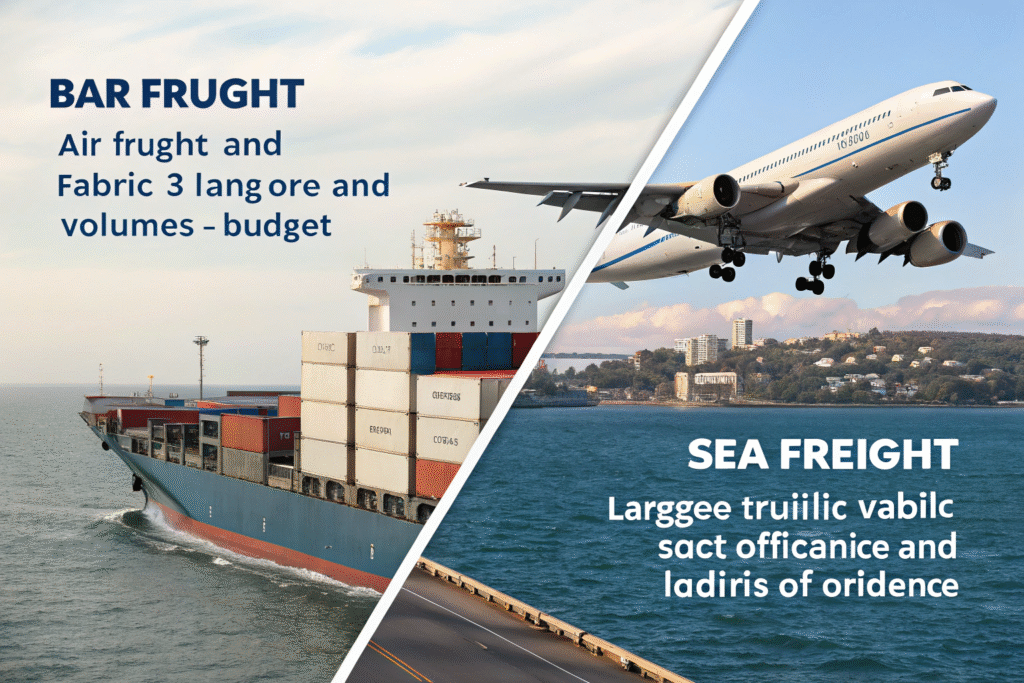
The best shipping method depends on your budget, fabric volume, and urgency, with air freight being the fastest and sea freight the most cost-effective for large volumes. Accordingly, for most of our clients, we recommend a strategic mix. Specifically, for urgent sample batches or small quantities, air freight is ideal. Conversely, for full container loads (FCL) for bulk orders, sea freight is the standard.
When should you use air freight versus sea freight?
The decision matrix is straightforward. Specifically, use air freight when the time value of the goods exceeds the high shipping cost. This is commonly the case for high-value, low-volume fabrics like premium cashmere or for last-minute orders to prevent a production line stoppage. In contrast, sea freight is economical for high-volume, low-urgency orders, such as seasonal stock for cotton or polyester blends. Therefore, we help clients analyze this by providing real-time sailing schedules and transit times from major ports like Ningbo and Shanghai to key U.S. hubs like Los Angeles and Long Beach.
How can consolidated shipping save you money?
For Small and Medium-sized Enterprises (SMEs) that don’t require a full container, Less than Container Load (LCL) or consolidated shipping is a perfect solution. In this process, multiple clients’ shipments are consolidated into one container, thereby sharing the cost. We manage this process for our clients through our logistics partnerships. Furthermore, we ensure that fabrics with similar handling requirements are grouped together, and we provide advanced tracking information. As a result, this method provides the economy of sea freight without the need for a massive order volume, making it an excellent choice for small-batch inventory for emerging brands.
Can you avoid US tariffs on fabric imports?
Tariffs are a major cost concern for American importers. However, the good news is that with the right knowledge and documentation, you can legally minimize or even avoid these duties, thereby improving your total landed cost.
Yes, you can avoid or reduce US tariffs by understanding specific Harmonized System (HS) codes, utilizing provisions like the de minimis rule, and sourcing certain fabric types that are not subject to additional duties. Consequently, it’s a matter of proactive classification and documentation, not luck.

What is the role of correct HS code classification?
Every fabric type has a specific HS code, which is a universal number that determines the tariff rate. Because an incorrect code can lead to overpaying, fines, or customs holds, correct classification is crucial. For example, the duty for a woven cotton fabric is different from a knitted polyester. Therefore, our professional QC and shipping team is trained to correctly classify every shipment according to the U.S. International Trade Commission’s database. We subsequently provide a detailed commercial invoice with the precise HS code, description, and value, which streamlines the customs clearance process for our clients and prevents costly delays and surprises.
Are certain fabrics like recycled polyester exempt?
Some product categories can benefit from preferential treatment. Although broad tariffs exist, fabrics classified under certain HS codes may be exempt. Furthermore, there is a growing trend of duty reductions or exemptions for eco-friendly and recycled materials. As a result, our eco-friendly innovations, such as recycled polyester and organic cotton, are not only good for the planet but can also be more favorable from a tariff perspective. We therefore guide our clients on how sourcing these sustainable options can align with both their brand values and cost-saving strategies.
How does a supplier ensure on-time delivery?
Ultimately, your fabric’s arrival time hinges on your supplier’s reliability. Specifically, a supplier’s internal systems and commitment are what transform promises into on-time deliveries.
A reliable supplier ensures on-time delivery through robust internal systems: end-to-end project management, real-time order tracking, and strategic logistics partnerships. As a direct outcome, this operational excellence provides you with visibility and predictability.
Why is a dedicated QC team critical for timeline adherence?
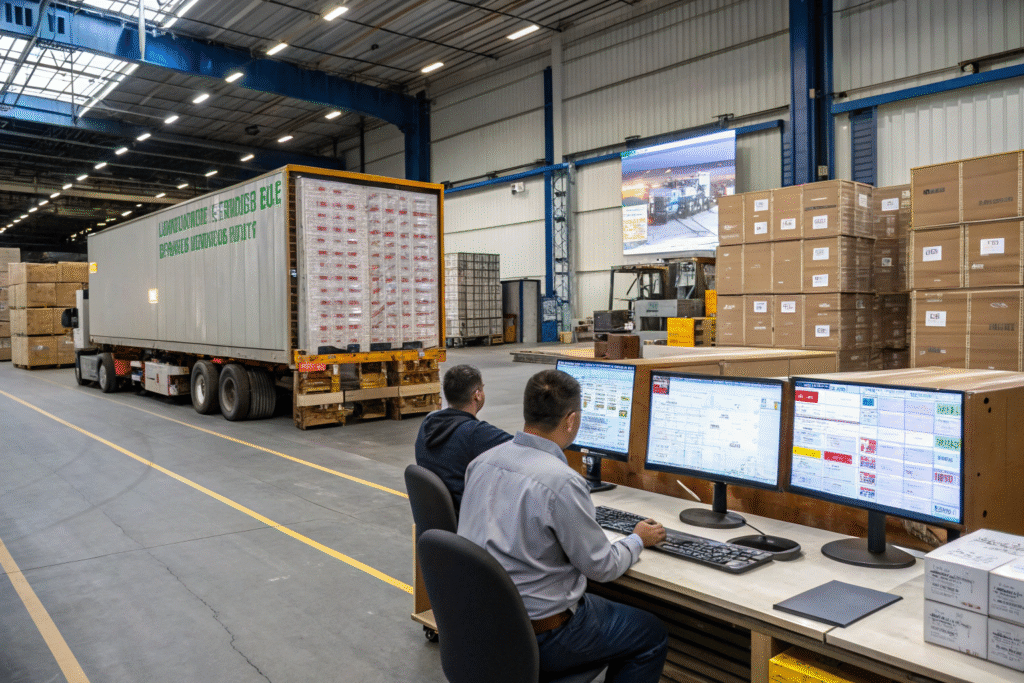
A dedicated Quality Control team is your first line of defense against delays. Specifically, our QC team inspects the fabric at multiple stages: after weaving, after dyeing/printing, and before packing. This "quality gate" process therefore ensures that issues are caught and rectified early. For instance, a single quality failure discovered at the final inspection could mean re-running the entire production, consequently causing weeks of delays. By investing in rigorous, multi-stage quality control processes, we maintain a 98% client pass rate, which directly translates to a reliable and predictable timeline.
What is the advantage of digital tracking from yarn to ship?
Transparency is power. For this purpose, we provide our clients with digital tracking, often using QR codes, that gives them real-time insight into their order’s status. As a result, you can see when the raw materials (like organic cotton yarn) are sourced, when the fabric is on the loom, when it passes inspection, and when it’s loaded onto the ship. This level of detail consequently eliminates the need for constant status-checking emails and allows you to plan your own production schedule with confidence, knowing exactly where your goods are at all times.
Conclusion
In summary, managing fabric lead time from China to the USA is a multi-faceted challenge, but it is entirely manageable. The fundamental solution lies in choosing a partner with a transparent and integrated supply chain, one that offers flexible logistics, expertly navigates customs, and leverages technology for full visibility. Ultimately, it’s about moving from reactive worry to proactive management. By focusing on these key areas, you can consequently turn a complex international supply chain into a reliable, streamlined extension of your own business.
If you are tired of unpredictable delays and want a fabric partner who guarantees clarity and reliability, let’s talk. We at Fumao Fabric are committed to weaving not just quality textiles, but also trust and timeliness into every order. Therefore, for a direct conversation on how we can manage your next fabric shipment seamlessly, please contact our Business Director, Elaine, at elaine@fumaoclothing.com. Let us help you ensure your next collection arrives on time and on budget.