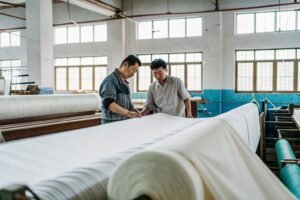
Certification systems have become critical in the global textile industry. With growing consumer awareness of safety and sustainability, buyers increasingly demand proof that fabrics are free from harmful substances and responsibly produced. OEKO-TEX® certification is one of the most trusted international standards that meets this need.
OEKO-TEX certification is a global system that verifies textiles are tested for harmful substances, produced under environmentally sound conditions, and safe for human use.
This article explains the background, certification types, testing criteria, and industry importance of OEKO-TEX.
What does OEKO-TEX mean?
OEKO-TEX® is a registered trademark owned by the International Association for Research and Testing in the Field of Textile and Leather Ecology. Established in 1992 by research institutes in Austria and Germany, it has grown into a worldwide certification network.
The system ensures that textiles meet stringent requirements for consumer safety and ecological responsibility.

How did OEKO-TEX certification start?
The label was introduced to respond to increasing concerns about toxic chemicals in clothing. Over time, it has become one of the most widely adopted textile certifications. Learn more from the official OEKO-TEX website and textile history insights.
Why is OEKO-TEX globally trusted?
OEKO-TEX criteria are updated annually to incorporate new scientific data and global regulations. The certification now covers products sold in more than 100 countries. For details, see OEKO-TEX annual updates and textile compliance standards.
What are the main OEKO-TEX certifications?
OEKO-TEX offers a family of certifications, each addressing specific requirements.
The different labels verify product safety, chemical management, and sustainable production across the supply chain.

STANDARD 100 by OEKO-TEX®
One of the most recognized certifications, STANDARD 100 ensures textiles are free from harmful substances at every stage, including threads, buttons, and zippers. Learn more at STANDARD 100 overview and SGS textile testing services.
MADE IN GREEN by OEKO-TEX®
This label confirms that the textile has been tested for harmful substances and manufactured in environmentally friendly, socially responsible facilities. More details at MADE IN GREEN program and Textile Exchange initiatives.
ECO PASSPORT by OEKO-TEX®
This certification focuses on chemicals, dyes, and auxiliaries used in textile production. See ECO PASSPORT criteria and chemical safety insights.
LEATHER STANDARD and STeP
LEATHER STANDARD applies OEKO-TEX testing to leather goods. STeP (Sustainable Textile & Leather Production) certifies entire facilities for sustainable and socially responsible practices. Learn more at LEATHER STANDARD and STeP certification.
What substances does OEKO-TEX test for?
Testing is the foundation of OEKO-TEX certification.
The process covers hundreds of regulated and unregulated substances that may harm human health.

Which chemicals are included?
OEKO-TEX testing includes:
- Illegal substances such as banned azo dyes
- Regulated chemicals like formaldehyde and pentachlorophenol
- Substances of concern such as certain phthalates and PFAS
- Parameters related to human health, including pH and colorfastness
The full restricted list is available at OEKO-TEX criteria and ECHA regulations.
How often is the list updated?
The Restricted Substances List (RSL) is revised annually to reflect new legislation and research. See OEKO-TEX yearly updates and REACH compliance.
Why is OEKO-TEX important for the textile industry?
OEKO-TEX provides benefits across the textile supply chain.
It enhances consumer confidence, improves brand credibility, and facilitates global trade.

How does OEKO-TEX protect consumers?
Consumers are assured that certified fabrics are safe for direct skin contact, even in sensitive categories like baby clothing or bedding. More details at OEKO-TEX STANDARD 100 benefits and Consumer Reports on fabric safety.
Why is it valuable for brands and manufacturers?
Brands gain credibility and better market access, while manufacturers meet global buyers’ requirements. Learn more at textile certification guide and sustainable textile practices.
How does OEKO-TEX compare to other certifications?
The textile industry relies on multiple certifications, each with different scopes.
OEKO-TEX emphasizes product safety, GOTS focuses on organic content, and Bluesign prioritizes chemical management in production.

What is the difference between OEKO-TEX and GOTS?
GOTS (Global Organic Textile Standard) certifies organic fiber content and eco-friendly processing. OEKO-TEX focuses primarily on harmful substance testing. Learn more at GOTS official site and organic fabric overview.
How does Bluesign differ?
Bluesign ensures chemical input stream management during production. OEKO-TEX, by contrast, certifies finished products. See Bluesign certification and chemical use in textiles.
Conclusion
OEKO-TEX certification has established itself as a benchmark for textile safety and responsibility. It guarantees that fabrics are free from harmful substances, tested against global standards, and manufactured responsibly.
For consumers, it provides confidence. For brands, it enhances credibility. For manufacturers, it ensures compliance and easier access to international markets.
At Shanghai Fumao, we provide OEKO-TEX certified fabrics across cotton, polyester, and blended categories. Our supply chain integrates sustainable practices and strict quality control. For bulk sourcing or tailored fabric development, please contact our Business Director Elaine at elaine@fumaoclothing.com. We ensure fast sampling, reliable production, and seamless global logistics.