In today’s wellness-driven textile market, customers are asking for more than comfort—they want fabrics that actively support skin health and thermoregulation. That’s where aloe vera coated fabric comes in.
If you’re sourcing advanced textiles for loungewear, sleepwear, activewear, or bedding, temperature-regulating aloe vera fabric can deliver both functional benefits and strong consumer appeal.
This guide explains how aloe coating works, what to look for in suppliers, how to test performance, and where to source verified materials in bulk for skin-contact textile applications.
What Is Aloe Vera Coated Fabric and How Does It Work?
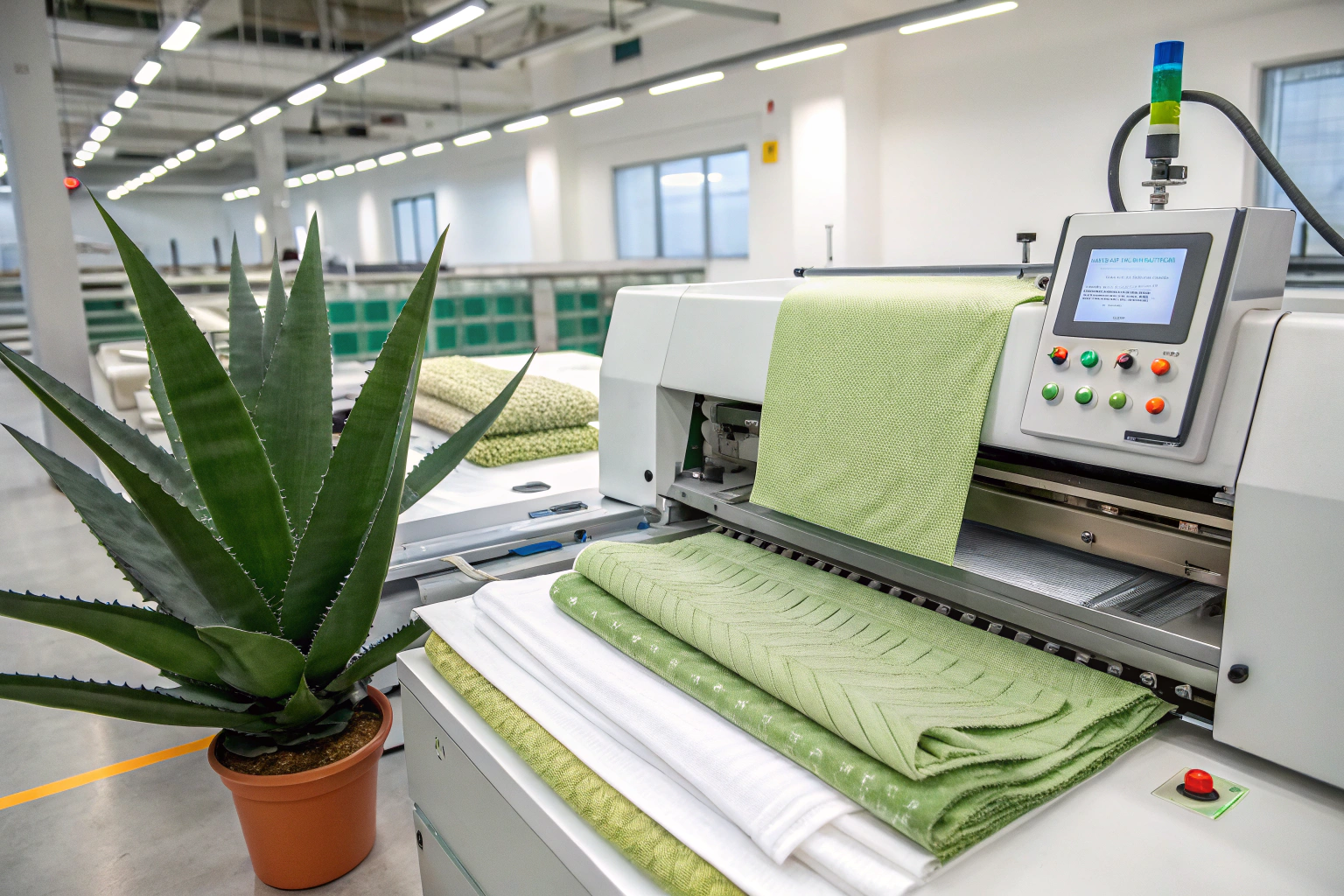
Aloe vera coated fabric involves the application of aloe-based microcapsules or emulsions onto the textile surface. These coatings are designed to retain moisture, regulate body temperature, and soothe skin upon contact.
The aloe infusion creates a skin-friendly layer that adapts to body heat and humidity, offering long-term softness and cool-touch sensation—especially useful in base layers and bedding.

How Is the Coating Applied?
Most aloe vera textiles use microencapsulation or emulsified finishes, added during the dyeing or finishing stage. This allows controlled release of aloe compounds when the fabric is worn or touched.
Popular techniques include:
- Pad-dry-cure coating with aloe emulsions
- Microcapsule spray coating for release upon friction
- Foam application for thicker textile substrates
According to Schoeller Textil, aloe-based finishes can be bonded with binder resins to enhance wash durability up to 30 washes.
What Thermoregulation Benefits Does It Offer?
Aloe vera naturally retains water and regulates surface evaporation. When infused into fabrics, it helps:
- Cool the skin when body heat rises
- Retain warmth when ambient temperatures drop
- Reduce moisture friction during sweating
- Soothe sensitive or irritated skin
That’s why aloe-infused fabric is ideal for babywear, bedding, and next-to-skin apparel. It also supports sleep quality through natural cooling and moisture balance.
What Fabric Types Work Best with Aloe Coating?
Aloe coatings adhere best to cellulosic or semi-synthetic fabrics, particularly those that are hydrophilic or bio-based, allowing better binding and moisture regulation.
Knit structures made from cotton, modal, bamboo, and Tencel™ are ideal substrates for aloe coating due to their absorbency and breathability.

Best Fabric Structures for Aloe Finishing
| Fabric Type | Structure | Use Case | Benefits for Coating |
|---|---|---|---|
| Cotton Jersey | Single knit | T-shirts, innerwear | High moisture absorption |
| Modal Rib | Rib knit | Sleepwear, loungewear | Smooth hand, retains aloe |
| Bamboo Terry | Loop knit | Babywear, bathrobes | Soft + high surface area |
| Tencel Woven | Plain/twill | Sheets, pillowcases | Excellent breathability |
| Poly/Spandex | Warp knit | Sportswear base layers | Aloe coating + stretch |
We at Fumao Fabric offer pre-tested aloe finishes for both woven and knit constructions in 160–280gsm ranges, with optional antibacterial or cooling add-ons.
Does Fabric Color or GSM Affect Coating Efficacy?
Yes. Light-colored, midweight fabrics hold aloe coatings better, especially in natural fibers. Very dark dyes or heavy GSM (>350gsm) fabrics may require pre-treatment or double coating to ensure proper bonding and release.
Where Can You Source Aloe-Coated Fabrics in Bulk?
Despite growing demand, aloe-coated fabrics are still a niche product—so working with a supplier who understands both functional finishing and global compliance is crucial.
China, particularly the Keqiao region, is one of the largest sources of aloe vera infused fabrics with scalable output and advanced finishing equipment.

Does Fumao Fabric Offer Aloe Coated Options?
Yes. At Fumao Fabric, we develop aloe-coated textiles using:
- Aloe vera microcapsules from certified plant extract partners
- Customized coating protocols (pad-dry-cure, foam finish, micro spray)
- Lab testing for wash durability and moisture regain
- Co-blends with bamboo, modal, cotton, polyester, and Tencel
We currently supply aloe-treated fabrics for sleepwear, maternity products, bedding kits, and activewear brands in the EU, US, and Southeast Asia.
You can find similar offerings from Lenzing and niche mills like Cosmotex for reference, though MOQ and delivery times may vary.
What Is the MOQ and Lead Time?
For common aloe finishes on cotton or bamboo:
- MOQ: 300 meters per color
- Lead time: 12–16 working days
- Add-on: Anti-bacterial or cooling combo coating available
For custom GSM or base fabric blends, MOQ starts from 800m per spec, and lead time extends to 18–22 days, depending on lab dip and finish complexity.
How to Test the Functionality of Aloe Fabric?
Functionality claims—especially when tied to skincare or thermoregulation—need scientific validation. Retailers and brand buyers will ask for wash durability, cooling rate, and moisture absorption tests.
At Fumao Fabric, we test aloe-coated fabrics in our CNAS-certified lab with ISO and AATCC protocols.

Which Tests Validate Aloe Functionality?
- AATCC 195 – Liquid moisture management
- ISO 17617 – Skin contact safety
- AATCC 201 + 204 – Cooling rate & dry time
- Wash durability – 10, 20, 30 cycle retention tests
- Moisture regain – % aloe content after conditioning
We also offer QR-based traceability for each coated batch, so buyers can verify the finish type, coating date, and lab results.
Do Aloe Finishes Lose Effect After Washing?
Yes, over time. Most aloe coatings last 10–25 washes, depending on the binder and base fiber. For longer effect, request dual crosslinking agents or microcapsule embedding.
You can also combine aloe finishes with phase-change materials (PCM) for enhanced temperature regulation, as explored by Outlast Technologies.
Conclusion
Aloe vera coated fabric combines softness, skincare benefits, and adaptive thermoregulation—making it a valuable textile solution for wellness-driven apparel and home goods.
At Fumao Fabric, we specialize in functional coatings like aloe, bamboo charcoal, silver ion, and PCM cooling. Our vertical production and in-house lab support ensure you receive high-performance, traceable, and scalable aloe-treated textiles for global markets.
Ready to launch your next sleepwear, bedding, or wellness textile line with aloe coating? Contact our Business Director Elaine at elaine@fumaoclothing.com to request swatches, lab test data, and MOQ pricing today.