
Mosquitoes aren’t just annoying—they’re dangerous. Outdoor brands and fabric buyers are increasingly prioritizing anti-mosquito textiles as demand for camping, hiking, and outdoor activities surges worldwide. The rise in vector-borne diseases and the eco-tourism boom has made mosquito-repellent fabric technologies a critical talking point for every outdoor gear supplier and brand sourcing from Asia.
Anti-mosquito treated fabrics offer reliable protection against insect bites while maintaining breathability, durability, and outdoor suitability. Whether it’s permethrin-coated nylon or botanical-treated cotton blends, the right textile choice helps outdoor brands meet both safety and comfort standards.
At Fumao Fabric, we’ve developed multiple anti-mosquito solutions for clients building tents, hammocks, hiking shirts, and sleeping gear. Let’s explore the best available options and how you can choose the right one for your market segment.
What Insect-Repellent Treatments Are Commonly Used?
The most common anti-mosquito fabric technologies fall into two categories: synthetic chemical treatments and plant-based alternatives. Each has its advantages, depending on your application, safety requirements, and target consumer base.
Permethrin-based coatings, microencapsulated repellents, and plant oil treatments like citronella or geraniol are widely used in outdoor fabrics today.
What Is Permethrin and Why Is It Popular?
Permethrin is a synthetic pyrethroid insecticide approved by the EPA and WHO. It mimics compounds found in chrysanthemum flowers and is extremely effective against mosquitoes, ticks, and flies. Applied through heat-bonding or microencapsulation, permethrin-treated fabrics can last for up to 50 washes.
It’s the go-to choice for military uniforms, safari gear, and brands like ExOfficio or Insect Shield. However, it’s not suitable for infants or brands that market fully organic or toxin-free.
Are There Any Natural or Botanical Treatments?
Yes. For eco-conscious buyers or baby brands, botanical repellents are increasingly popular. We’ve tested blends made from citronella, eucalyptus, and lavender essential oils in our CNAS-certified lab. While they are less durable than permethrin, they offer a non-toxic and biodegradable option that aligns with green marketing values.
Some clients pair botanical sprays with fabrics like bamboo viscose, modal, or organic cotton to maintain a soft, breathable handfeel. Just note that re-application may be needed every few washes unless microencapsulated.
Which Fabrics Perform Best with Mosquito-Repellent Finishes?
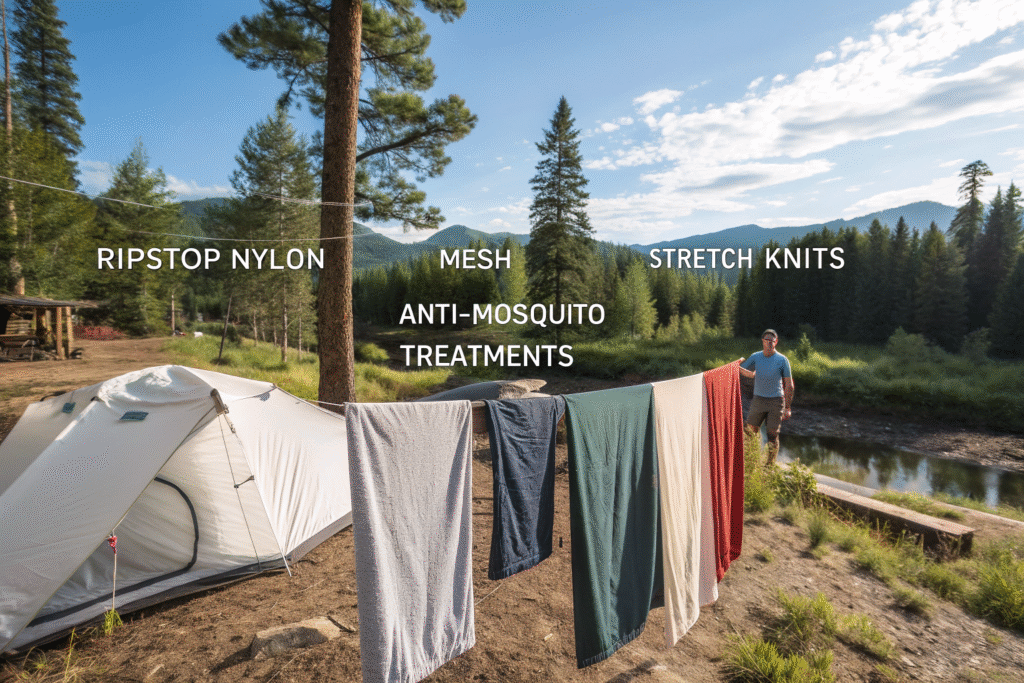
Not all fabrics bond well with repellents. A key factor in product development is choosing the right substrate that balances repellency, breathability, and durability. Fabrics like ripstop nylon, polyester, and cotton-nylon blends are often the best bases for anti-mosquito finishes.
Lightweight, tightly woven synthetic fabrics are ideal for long-lasting treatment retention, while cotton and blends allow for natural treatments and comfort.
What Are the Best Options for Clothing and Outerwear?
For jackets, shirts, and trousers, we recommend stretch-woven nylon, polyester interlock, or twill blends. These structures offer skin coverage and wick moisture effectively. Permethrin can be bonded into their fibers via exhaust dyeing or post-finishing. For babywear or skin-sensitive lines, we suggest using GOTS-certified cotton with encapsulated botanical finishes.
Explore textile guides from Textile Exchange and AATCC for more finishing durability insights.
What About Tent and Hammock Applications?
For tents, sleeping bags, and hammock bases, 210T polyester taffeta, oxford weave nylon, and parachute fabric are most commonly treated. Their tight constructions prevent mosquito penetration, and they hold permethrin well.
We often recommend ripstop textures with waterproof and UV coatings, ensuring year-round protection. To upgrade further, Fumao Fabric also provides multi-functional coatings like FR or UV + mosquito in one lamination.
How Long Does Mosquito Protection Last on Fabric?
Durability depends on the treatment type, fabric structure, and washing frequency. While some repellents last just a few washes, advanced formulations can remain active for over 40 laundry cycles or 6 months of field use.
Permethrin-treated synthetics offer the longest lifespan—up to 70 washes in lab conditions—while natural oil finishes typically require refreshment after 5–10 washes.
How Can You Improve Longevity?
Using microencapsulation technology allows for gradual release of repellent with wear and washing. Encapsulated citronella and permethrin extend effectiveness by 3x over surface-applied sprays. Cross-linking binders and heat-curing steps also help improve adhesion.
Some clients add repellency renewal sprays at the retail level or offer aftercare kits, like those found from Sawyer Products or Coghlan’s.
Are There Wash Care Guidelines?
Yes. Avoid using fabric softeners and opt for gentle detergents. For permethrin-treated gear, do not dry clean. Many treatments come with a QR-code linked wash guide—a service we offer clients through our digital backend. This builds customer trust and extends fabric life.
How Can I Source Anti-Mosquito Fabrics in Bulk?
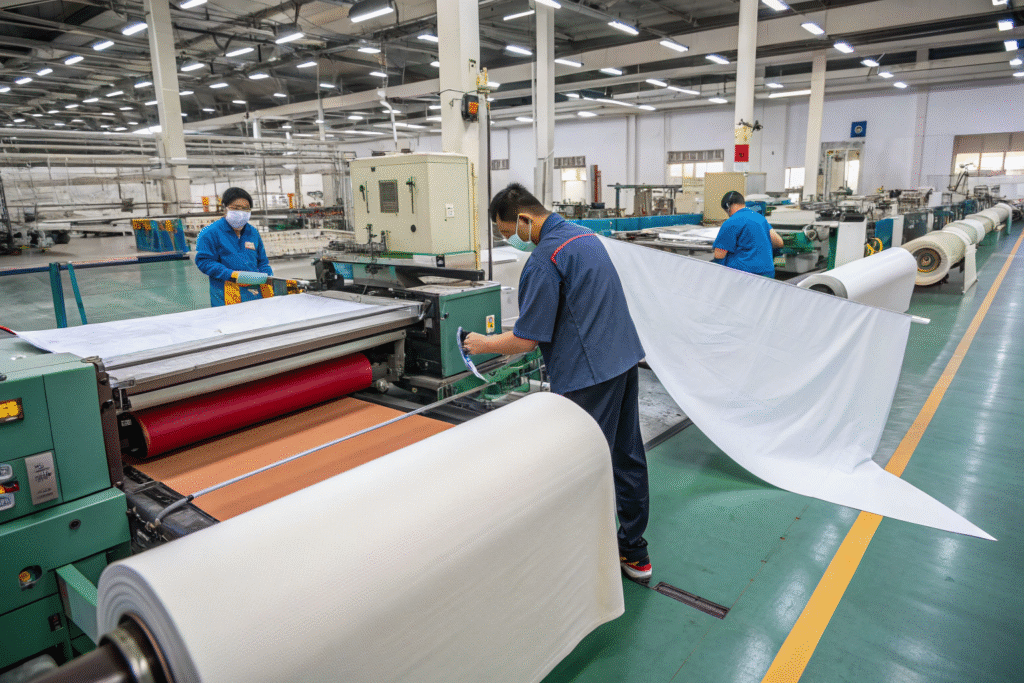
At Fumao Fabric, we provide OEM/ODM mosquito-repellent fabric solutions for outdoor and workwear brands across the U.S., EU, and Southeast Asia. With our integrated dyeing, coating, and finishing capacity, we offer custom treatments based on fiber type, end-use, and compliance needs.
We support small-MOQ development, lab testing, and real-time traceability with SGS and CNAS-certified performance reports.
What Certifications and Tests Are Required?
Anti-mosquito fabric performance is typically tested using WHO cone tests, AATCC 30, and ISO 6330 wash simulation protocols. We offer these through certified labs in Shaoxing and Hangzhou. Ask your supplier for:
- Repellency efficacy reports
- Wash-cycle resistance proof
- Biocompatibility certificates (especially for skin-contact items)
You can learn more about these tests via Intertek or SGS.
What’s the MOQ and Lead Time?
Our typical MOQ starts at 500 meters per color for treated fabrics. Lead times range from 15–25 days depending on the complexity of the finish. Strike-offs and testing samples can be prepared in 3–5 days.
We also support seasonal programs and private-label projects, including print-on-velour or mesh with embedded mosquito-repellent coatings.
Conclusion
The demand for anti-mosquito camping fabrics is growing fast. Whether your target market values technical protection, eco-conscious solutions, or multi-functional performance, there’s a treatment-fiber combo that fits. From synthetic permethrin coatings for rugged adventure gear to botanical finishes for eco-brands, Fumao Fabric helps you tailor every textile to your exact brand vision.
As a global supplier with a dedicated R&D team and full in-house finishing capacity, we are ready to support your mosquito-repellent product line—fast and reliably. To begin sourcing, developing, or testing your anti-mosquito fabric collection, contact our Business Director Elaine at elaine@fumaoclothing.com today. Let’s co-create outdoor fabrics that keep comfort in and mosquitoes out.








