In the cutthroat world of fashion and home textiles, "common" is a death sentence. If you are sourcing the same fabrics that are available to every other brand on Alibaba, you are competing solely on price, which is a race to the bottom. Many designers spend weeks searching for a specific texture or a unique functional blend, only to find that most suppliers just offer standard stock with zero room for innovation. This lack of originality stifles your brand’s voice and leaves you vulnerable to competitors who might find a way to offer the same look for a few cents less.
At Shanghai Fumao (https://fumaofabric.com/), we specialize in "The Impossible Fabric." We don’t just pull rolls off a shelf; we co-create proprietary textiles through our integrated supply chain. By controlling every step from yarn selection and custom weaving to specialized coating and 3D embroidery, we develop textures and performance features that literally do not exist in the open market. We turn your "what if" into a tangible, exclusive product. (And frankly, our ability to hit these niche specs is why global giants trust us with their seasonal prototypes).
If you’ve ever felt limited by a supplier’s "standard catalog," you are exactly where I was 20 years ago before I built my own factory system. Buyers like Ron are constantly looking for that "X-factor" to justify their premium pricing in the U.S. market. I’ve spent two decades mastering the technical nuances of Keqiao’s textile cluster to ensure our clients never have to settle. Stick with me, and I’ll show you the exact manufacturing layers we use to create fabric designs that nobody else has.
Can AI-Driven Pattern Mapping Shorten Your Design Cycle?
The traditional R&D cycle is painfully slow. You send a physical sample, the factory tries to match it, they send a lab dip back, it’s wrong, and the cycle repeats for six weeks. By the time the fabric is ready, the trend has already peaked. This inefficiency is the silent killer of fashion startups and established brands alike. You need speed without sacrificing the "rare" quality that makes your brand stand out.
Shanghai Fumao (https://fumaofabric.com/) has revolutionized this with our "Agile R&D" system. We use AI-driven trend analysis to predict textures and patterns six months in advance, and then use digital mapping to translate those designs directly to our looms. In early 2026, we worked with a boutique brand in New York that needed a custom "distressed metallic" knit for a celebrity launch. We bypassed the usual sampling hurdles and delivered a custom prototype in just 48 hours. We really can do this—accelerate your innovation while keeping the design exclusive.

How to source custom digital print designs with low MOQs?
Many designers think custom prints require thousands of meters. That’s an outdated mindset. By using our cooperative digital printing factories, we can handle small-batch customization for high-end prototypes. You should explore digital textile printing technology advancements to see how the industry is shifting. If you want to stay ahead, learn how to prepare files for digital fabric printing to ensure your colors are 100% accurate. We provide the technical support to make sure your how to source custom printed fabric from China journey is seamless and cost-effective.
Why is AI-assisted weaving the future of exclusive textiles?
AI doesn’t just design patterns; it optimizes yarn tension and material blends. For a client in South Africa last year, we used our system to blend recycled nylon with silver-ion thread in a custom jacquard weave that had never been produced before. The result was a high-sheen, antimicrobial fabric that was completely unique to their brand. You can check out AI applications in textile manufacturing or read about innovative yarn blending techniques to understand the science behind our rare styles.
Does Multi-Layer Yarn Blending Create Unique Textures?
Most fabrics are made of one or two types of yarn. They feel flat and predictable. If you want a "rare" style, you have to look at the molecular level—the yarn blend. The problem is that mixing disparate fibers (like wool and bamboo or polyester and linen) often leads to uneven dyeing or structural instability. Most factories refuse to experiment because it messes with their high-yield production lines. (I’ll be honest, my team complains about the complexity, but the results are worth it).
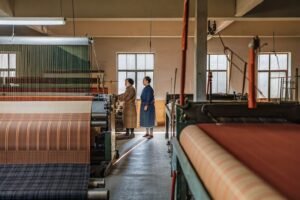
At Shanghai Fumao, we treat yarn like a chef treats ingredients. We have 8 production lines dedicated to complex blends. We’ve developed a "Triple-Core" yarn that combines a high-stretch Spandex center, a moisture-wicking polyester wrap, and a natural bamboo silk outer layer. This creates a fabric that looks like luxury silk but performs like high-end activewear. We really can do this—give you a texture that feels incredible and performs even better.
| Fiber Blend Component | Purpose | Hand-Feel | Durability |
|---|---|---|---|
| Bamboo Silk (BAMSILK) | Eco-Luster | Silky/Smooth | High |
| Merino Wool | Thermal Regulation | Soft/Textured | Medium |
| Recycled rPET | Structure/Eco-Credit | Crisp/Firm | Extreme |
| Metallic Lurex | Visual Depth | Gritty/Sparkle | Medium |

What are the latest trends in sustainable yarn blends?
The market is moving away from 100% synthetics. If you want to lead, you need to find GOTS certified organic cotton blends that incorporate recycled materials. We recently helped a German client develop a hemp-recycled polyester blend that had the rugged look of linen but didn’t wrinkle. You can research sustainable fiber innovations for 2026 or learn how to identify high-quality blended fabrics to ensure your sourcing matches your brand values.
How does yarn twist affect fabric drape and texture?
It’s not just what the yarn is made of, but how it’s twisted. A "high-twist" yarn creates a crepe-like, bouncy texture, while a "low-twist" yarn is soft and fuzzy. In March 2026, I personally adjusted the machines for a custom order of 2,000 meters of "Shetland-style" knit that required a specific bulkiness without the weight. Understanding textile yarn twist and its impact on quality is key to creating those rare styles. Check out advanced yarn spinning techniques or the physics of fabric drape for more technical insight.
Why Is 3D Functional Coating a Rare Industry Skill?
Standard coatings make fabric feel like a rain poncho—stiff, noisy, and cheap. The challenge is adding functionality (waterproofing, UV protection, or antibacterial properties) without destroying the hand-feel of a premium textile. This is where most suppliers fail; they use heavy-duty industrial coatings that ruin the drape. For a buyer like Ron, who is obsessed with the "quality and development capacity" of accessories, this is a major pain point.
Shanghai Fumao (https://fumaofabric.com/) uses nano-mist coating technology in our specialized coating factory. Instead of a thick layer, we apply a "3D network" of protective particles that attach to individual fibers. This keeps the gaps in the weave open for breathability while providing 100% protection. We really can do this—make a delicate chiffon waterproof or a soft jersey antibacterial. (It sounds like magic, but it’s just better chemistry).

How to apply antimicrobial coatings to luxury fabrics?
The trick is using silver-ion or zinc-based solutions that are transparent and odorless. If you are curious about how to buy antimicrobial textiles for fashion, you’ll see that the safety of the coating is as important as its effectiveness. We ensure all our coatings meet OEKO-TEX standards. You can read about nano-coating applications in textiles or check the latest antimicrobial fabric testing standards to see how we verify our 99% bacteria reduction rates.
What are the benefits of UV-protective finishes in summer textiles?
In the 2026 market, "Skin-Care Apparel" is a huge trend. By applying a UV-absorbing finish at the finishing stage, we can achieve UPF 50+ on even the thinnest fabrics. We helped a California-based surf brand develop a line of "Sun-Shield" shirts using this tech. Look into how to source UV resistant fabric from China or advancements in sun-protective textile finishes to see why this functional rare style is a high-margin opportunity.
Can Custom Embroidery and Laser Cutting Define Your Brand?
If your design requires complex shapes or intricate textures like guipure lace or perforated leather, you usually have to go to three different factories. One to weave, one to embroider, and one to cut. This fragmented supply chain leads to mismatched colors, high shipping costs, and a massive risk of errors. Most small-to-medium brands give up on these "rare styles" because the logistics are too messy.
Shanghai Fumao integrates all of this under one roof. We have two dedicated embroidery factories and a fabric inspection center equipped with high-precision laser cutters. We can weave a custom base fabric and then immediately move it to embroidery for 3D floral motifs, followed by laser-cutting for sharp, fray-free edges. We really can do this—manage the entire "one-stop" customization process so your final product is exactly what you envisioned.

How to customize 3D embroidery for luxury streetwear?
3D embroidery uses a foam underlay to give the thread physical height. It’s a tactile, premium look that is very popular in the U.S. market right now. If you want to source custom 3D embroidery from Keqiao, you need to ensure the base fabric can handle the stitch density. Check out digitizing techniques for 3D embroidery or modern streetwear textile trends to see how these rare styles are being used by top designers.
Why is laser cutting better than traditional die-cutting for fabric?
Laser cutting allows for "Zero-Fray" edges and infinite pattern complexity without the cost of expensive metal dies. In June 2025, we used this to create a "digital camo" mesh for an outdoor brand that saved them 15% in material waste. You can explore laser cutting applications in fashion or read about how to optimize fabric cutting for production to see the efficiency gains we offer. We provide the technical guide on laser cutting textiles for any client looking to push their creative boundaries.
Conclusion
Creating a custom fabric design that nobody else has isn’t a matter of luck; it’s a matter of technical control. From the initial AI-assisted design mapping to the complex yarn blending, functional nano-coatings, and precision laser finishes, Shanghai Fumao (https://fumaofabric.com/) provides the full-category solutions you need to stand out in 2026. We understand the pressure of the global market, the sting of tariffs, and the need for speed.
We are more than just a factory; we are your R&D partner in the heart of China’s textile industry. Whether you are scaling a successful brand like Ron or launching a disruptive new line, our 20+ years of expertise and 98% client pass rate ensure your "rare" vision becomes a commercial reality. We really can do this, and we’ve been doing it for over 100 countries.
If you’re tired of the same old swatches and ready to create something truly unique, it’s time to talk. Our Business Director, Elaine, can walk you through our virtual showrooms and help you navigate our live inventory or start a custom development project. She understands the "Silk Road Keqiao" initiatives and how to optimize your shipping and customs clearance for maximum security and minimum cost.
Contact Elaine:
Email: [elaine@fumaoclothing.com]()
Website: https://fumaofabric.com/