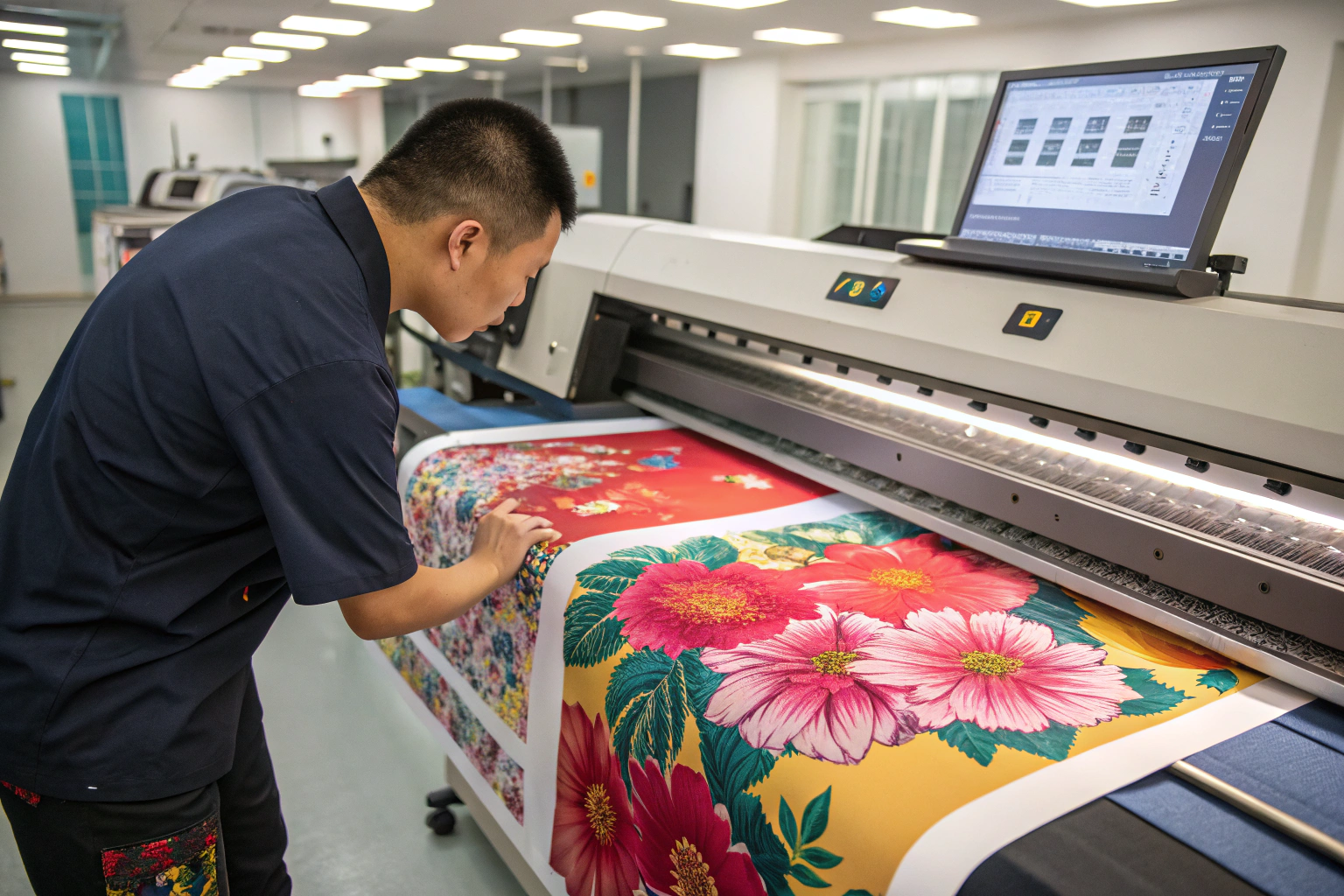
I have been in the garment manufacturing business for over twenty years. I have seen printing technology change dramatically. When I started, screen printing was the only option for most fabrics. It was slow. It was expensive for small runs. It had limitations on color and detail. Then digital printing came. It changed everything. Now a brand can print a photograph-quality design on fabric. They can do small runs. They can change designs quickly. But I have learned something important. The best digital printer in the world will not produce a good result on the wrong fabric. The fabric base is everything. Choose the wrong fabric, and your beautiful design will look blurry, dull, or washed out. Choose the right fabric, and the design will pop with color and sharpness.
The best fabric base for high-quality digital printing depends on your end use, but polyester and polyester blends generally produce the sharpest, most vibrant results for most applications. Polyester accepts dye-sublimation printing, which embeds the ink into the fiber itself. This creates colors that are bright, durable, and resistant to washing. Cotton is excellent for water-based pigment or reactive printing, offering a soft hand feel and natural look. Silk provides luxury and exceptional color depth but requires careful handling. The "best" fabric is the one that matches your printing method, your design requirements, and your garment’s intended use.
This is what I want to share with you today. I am a factory owner who has printed millions of yards of fabric digitally. I know which fabrics work and which do not. I will walk you through the best fabric bases for digital printing. I will use real examples from my own production floor.
What Are the Different Digital Printing Methods for Fabric?
Before you choose a fabric, you need to understand the printing method. Different methods work better on different fabrics.

How Does Dye-Sublimation Printing Work?
Dye-sublimation is the most common digital printing method for polyester. The design is printed onto special paper. Then heat and pressure transfer the ink from the paper to the fabric. The ink becomes a gas and bonds with the polyester fibers.
I had a client from New York in 2022. They wanted to print a very detailed, colorful design on leggings. They tried direct-to-fabric printing on cotton. The colors were dull. The fine lines were blurry. I suggested dye-sublimation on polyester. The difference was dramatic. The colors were bright and saturated. The fine details were sharp. The client was amazed. They switched all their activewear to sublimation printing.
Here are the key facts about dye-sublimation:
| Factor | Description |
|---|---|
| Best fabric | 100% polyester or high-polyester blends |
| Color quality | Excellent, very bright and saturated |
| Durability | Very good, ink bonds with fibers |
| Hand feel | Soft, no added texture |
| Limitations | Only works on polyester |
How Does Reactive Printing Work?
Reactive printing is used for natural fibers like cotton and linen. The ink chemically reacts with the fiber. It becomes part of the fabric.
A client from San Francisco wanted to print a watercolor design on cotton dresses. They tried sublimation. It did not work because cotton does not accept sublimation ink. We used reactive printing instead. The colors were soft and beautiful. They looked like real watercolor on the fabric.
Here are the key facts about reactive printing:
| Factor | Description |
|---|---|
| Best fabric | Cotton, linen, rayon, viscose |
| Color quality | Good to excellent, natural looking |
| Durability | Very good, bonds with fibers |
| Hand feel | Soft, no change to fabric feel |
| Limitations | Requires washing after printing |
How Does Pigment Printing Work?
Pigment printing is the most versatile method. It works on almost any fabric. The ink sits on top of the fabric and is fixed with heat.
A client in Chicago needed to print small runs on different fabrics. Cotton, polyester, blends. They did not want to use different methods for each. Pigment printing was the answer. The quality was not as high as sublimation on polyester. But it was consistent across all fabrics.
Here are the key facts about pigment printing:
| Factor | Description |
|---|---|
| Best fabric | Almost any fabric |
| Color quality | Good, but less bright than sublimation |
| Durability | Moderate, can fade with washing |
| Hand feel | Can feel slightly stiff |
| Limitations | Lower wash fastness |
At Shanghai Fumao, we offer all three printing methods. We help clients choose the right method for their fabric and design.
Why Is Polyester the Best for Dye-Sublimation Printing?
Polyester is the king of digital printing for a reason. It works perfectly with dye-sublimation. The results are stunning.

What Makes Polyester Ideal for Sublimation?
Sublimation ink bonds with polyester at a molecular level. The ink becomes part of the fiber. It does not sit on top. This means the print will not crack, peel, or fade easily.
I had a client from Texas who printed activewear on polyester. They washed the garments 50 times. The colors were still bright. The design was still sharp. They tried the same design on a cotton-poly blend. The colors faded faster. The edges blurred. The 100% polyester was superior.
Here is why polyester works so well:
| Property | Benefit |
|---|---|
| Synthetic fiber | Accepts sublimation ink |
| Heat resistance | Withstands high transfer temperatures |
| Low moisture | No interference with ink bonding |
| Smooth surface | Sharp print detail |
What Polyester Fabrics Work Best for Different Garments?
Different polyester fabrics are suited for different garments. For activewear, use moisture-wicking polyester. For fashion, use polyester crepe or satin. For swimwear, use polyester-spandex.
A client in Florida makes swimwear with digital prints. They use a polyester-spandex blend. The fabric stretches. The print stretches with it. The colors do not crack or fade in salt water or chlorine.
Here are recommended polyester fabrics:
| Fabric Type | Best For | Print Quality |
|---|---|---|
| Polyester jersey | T-shirts, dresses | Excellent |
| Polyester crepe | Blouses, dresses | Excellent |
| Polyester satin | Luxury garments | Excellent |
| Polyester-spandex | Activewear, swimwear | Excellent |
| Polyester chiffon | Flowing tops, scarves | Very good |
At Shanghai Fumao, we stock many polyester fabrics for sublimation printing. We can recommend the right one for your garment.
How Does Cotton Perform for Digital Printing?
Cotton is the most popular natural fiber. It is soft, breathable, and comfortable. But it requires a different printing method than polyester.

What Printing Method Works Best for Cotton?
Reactive printing is the best method for cotton. The ink bonds with the cotton fibers. The result is a print that is soft, durable, and has excellent color.
A client from Seattle makes high-end t-shirts with artistic prints. They use reactive printing on combed cotton. The prints are beautiful. The colors are rich but natural-looking. The fabric remains soft. There is no plastic feel.
Here is how cotton performs:
| Property | Performance |
|---|---|
| Color brightness | Good, natural looking |
| Detail sharpness | Very good |
| Wash fastness | Good to excellent |
| Hand feel | Soft, no change |
| Best for | T-shirts, casual wear, children’s wear |
What Are the Limitations of Cotton for Digital Printing?
Cotton has limitations. It does not work with sublimation. The colors are not as bright as polyester. The prints may fade slightly faster than sublimation on polyester.
A client in Boston wanted neon bright colors on cotton. The reactive print could not achieve the same brightness as sublimation on polyester. The client was disappointed. I explained that cotton has a different color profile. They accepted the natural look. Their customers loved the soft, natural feel.
At Shanghai Fumao, we are honest about cotton’s limitations. We help clients choose the right fabric for their color expectations.
What About Blends and Other Natural Fibers?
Blends and other natural fibers offer unique properties. They can be good options for digital printing, but with considerations.

How Do Cotton-Polyester Blends Perform?
Cotton-poly blends are common. They offer a balance of comfort and durability. But they can be tricky for digital printing.
I had a client from Denver who wanted to print on a 50/50 cotton-poly blend. Sublimation would only work on the polyester portion. Reactive would only work on the cotton portion. The result was a print that looked faded. The client was unhappy. We switched to pigment printing. The result was acceptable, but not as good as 100% polyester or 100% cotton.
Here is how blends perform:
| Blend Ratio | Best Printing Method | Result |
|---|---|---|
| 80% cotton / 20% poly | Reactive or pigment | Good |
| 50% cotton / 50% poly | Pigment only | Moderate |
| 80% poly / 20% cotton | Sublimation | Very good |
How Do Linen, Rayon, and Silk Perform?
Linen gives a natural, textured look. Rayon is soft and drapes well. Silk is luxurious. All can be printed digitally with reactive dyes.
A client in New York printed silk scarves with reactive dyes. The colors were deep and rich. The silk maintained its luxurious feel. The scarves sold for high prices. The client made a good profit.
Here is how other natural fibers perform:
| Fiber | Printing Method | Quality | Best For |
|---|---|---|---|
| Linen | Reactive | Good | Summer shirts, dresses |
| Rayon/Viscose | Reactive | Very good | Blouses, dresses, linings |
| Silk | Reactive | Excellent | Scarves, luxury blouses |
| Hemp | Reactive | Good | Eco-friendly apparel |
At Shanghai Fumao, we print on all these fabrics. We have experience with each one.
How Do You Choose the Right Fabric for Your Design?
The best fabric depends on your design, your garment, and your customer. There is no single answer. You need to match the fabric to your needs.

What Design Characteristics Should Guide Your Choice?
Bright, neon colors work best on polyester with sublimation. Soft, watercolor designs work well on cotton with reactive printing. Photographic images need sharp detail, which polyester provides.
A client in Los Angeles wanted to print a photographic image of a sunset. They tried cotton first. The details were blurry. The colors were dull. They switched to polyester with sublimation. The sunset looked like a photograph. The colors were stunning.
Here is a decision guide:
| Design Type | Best Fabric | Best Method |
|---|---|---|
| Photographic | Polyester | Sublimation |
| Neon/bright colors | Polyester | Sublimation |
| Watercolor | Cotton | Reactive |
| Artistic/illustration | Cotton or poly | Reactive or sublimation |
| Small text/details | Polyester | Sublimation |
What Garment Considerations Should Guide Your Choice?
The garment’s use matters. Activewear needs stretch and moisture-wicking. Polyester-spandex is best. Casual t-shirts need softness and breathability. Cotton is best. Luxury blouses need drape and feel. Silk or rayon is best.
A client in Chicago made yoga pants. They needed four-way stretch and moisture-wicking. They used polyester-spandex with sublimation printing. The pants performed well. The prints stayed bright.
Here is a garment guide:
| Garment Type | Recommended Fabric | Printing Method |
|---|---|---|
| Leggings, activewear | Polyester-spandex | Sublimation |
| T-shirts, casual tops | Cotton or cotton-poly | Reactive or pigment |
| Swimwear | Polyester-spandex | Sublimation |
| Dresses (casual) | Cotton or rayon | Reactive |
| Dresses (fashion) | Polyester crepe or silk | Sublimation or reactive |
| Scarves | Silk or polyester satin | Reactive or sublimation |
At Shanghai Fumao, we help clients work through these decisions. We show samples. We explain trade-offs. We want you to make the right choice.
Conclusion
The best fabric base for high-quality digital printing depends on your needs. Polyester is the best for bright, sharp, durable prints using dye-sublimation. It is ideal for activewear, swimwear, and any garment where color vibrancy is the priority. Cotton is the best for soft, natural-looking prints using reactive dyes. It is ideal for t-shirts, casual wear, and children’s wear. Blends and other fibers like silk and rayon offer unique properties for specific applications.
There is no single "best" fabric. There is only the best fabric for your design, your garment, and your customer. You need to understand the printing methods. You need to test samples. You need to see the results for yourself.
I have seen brands succeed by choosing the right fabric for their digital prints. I have seen brands struggle by choosing the wrong fabric. The difference is knowledge and testing. Do not assume that a beautiful design will look beautiful on any fabric. Test first. Then produce.
At Shanghai Fumao, we have extensive experience with digital printing on all fabric types. We can help you choose the right fabric for your designs. We can produce samples. We can guide you through the process.
If you are considering digital printing for your next collection, I invite you to talk to us. Let us discuss your designs. Let us recommend the best fabric for your needs.
You can contact our Business Director, Elaine, directly. She can walk you through our digital printing capabilities. She can show you samples on different fabrics. She can help you make the right choice. Her email is: elaine@fumaoclothing.com. Let us bring your designs to life on the perfect fabric.