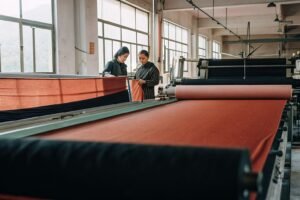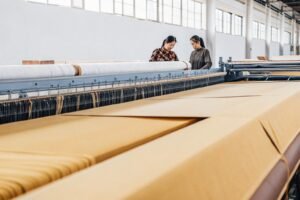
I have been exporting garments to Europe for over fifteen years. I have worked with buyers from Germany, France, the UK, Italy, and the Netherlands. And I can tell you, European buyers are different from American buyers. They ask different questions. They require different documentation. They have different standards. When I first started exporting to Europe, I thought the requirements would be similar to the US market. I was wrong. I learned quickly that European buyers take certifications very seriously. They do not just ask for them. They verify them. They audit them. They require them on every shipment. The brands that succeed in the European market are the ones that understand this from the start.
European buyers actually require certifications that focus on chemical safety, environmental responsibility, and supply chain transparency. The most commonly required certifications are OEKO-TEX Standard 100, REACH compliance, GOTS (Global Organic Textile Standard), and various social compliance audits like BSCI or SMETA. Unlike some other markets where certifications are optional, European buyers treat them as mandatory. Without these certifications, you cannot access the European market.
This is what I want to share with you today. I am a factory owner who has navigated European certification requirements for years. I know which certifications are actually required and which are optional. I will walk you through the essential certifications. I will use real examples from my own export experience. By the end, you will have a clear understanding of what European buyers expect.
What is the most essential certification for chemical safety?
The most essential certification for European buyers is OEKO-TEX Standard 100. I have never had a European buyer who did not ask for it. It is the foundation of chemical safety compliance in the European market.
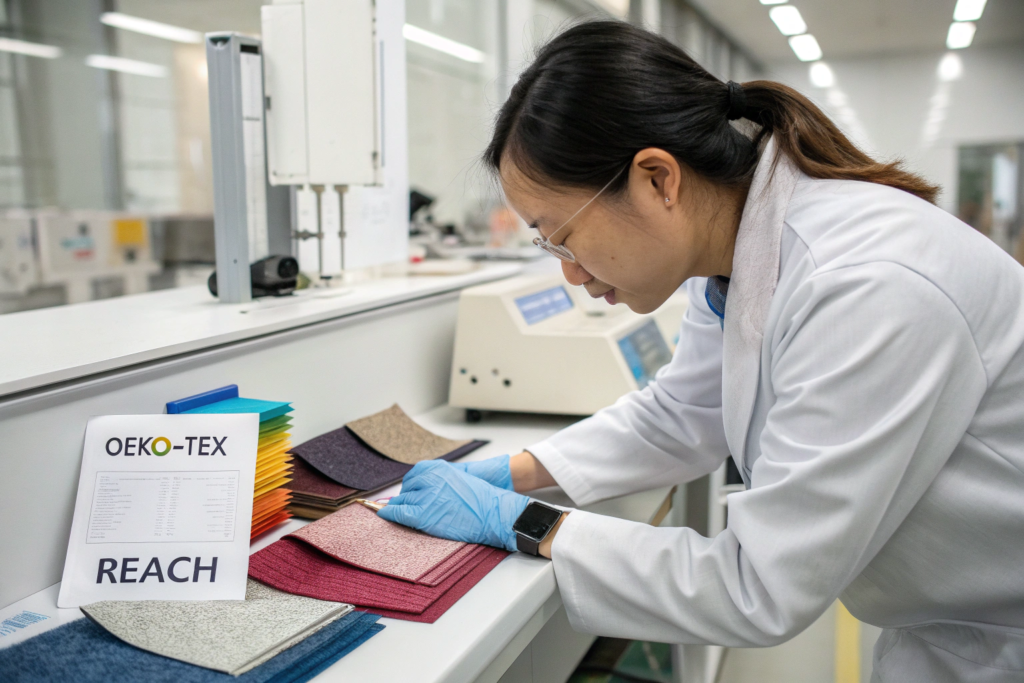
What does OEKO-TEX Standard 100 cover?
OEKO-TEX Standard 100 is a certification system for textile products. It tests for harmful substances. The certification covers everything from raw materials to finished garments. It checks for substances that are banned or regulated by European law.
I remember a German buyer who visited our factory in 2021. They were launching a new line of children’s sleepwear. The first question they asked was not about price. It was about OEKO-TEX. They asked to see our certificate. They asked which product class we were certified for. They asked how often we were audited. They explained that for children’s sleepwear, they needed Product Class I certification. That is the strictest level. It is for baby and infant products.
We had Product Class I certification. We showed them our certificate. They verified it online with the OEKO-TEX database. They were satisfied. We got the order. If we did not have that certification, they would not have considered us.
Here are the four OEKO-TEX product classes:
| Product Class | Target Products | Testing Strictness |
|---|---|---|
| Class I | Babies and infants (up to 36 months) | Most strict. Highest safety standards. |
| Class II | Products with direct skin contact | Very strict. For most adult clothing. |
| Class III | Products without direct skin contact | Moderate. For outerwear, jackets. |
| Class IV | Home textiles, decorative materials | Standard. For curtains, upholstery. |
How do European buyers verify OEKO-TEX compliance?
European buyers do not just take a certificate at face value. They verify it. They check the certificate number on the OEKO-TEX website. They look at the issuing institute. They check the validity dates. They sometimes request test reports.
A French buyer in 2022 asked for more than just the certificate. They wanted to see the lab reports for the specific fabric we were using. They wanted to know which chemicals were tested. They wanted to see the results. We provided all of this. It took time. But it built trust. They became a long-term client.
At Shanghai Fumao, we maintain OEKO-TEX Standard 100 certification for all product classes. We keep all test reports on file. We are ready to share them with any European buyer. This has opened many doors for us.
What chemical regulations do European buyers enforce?
Beyond OEKO-TEX, European buyers require compliance with REACH. REACH stands for Registration, Evaluation, Authorization, and Restriction of Chemicals. It is a European Union regulation. It applies to all products sold in the EU.
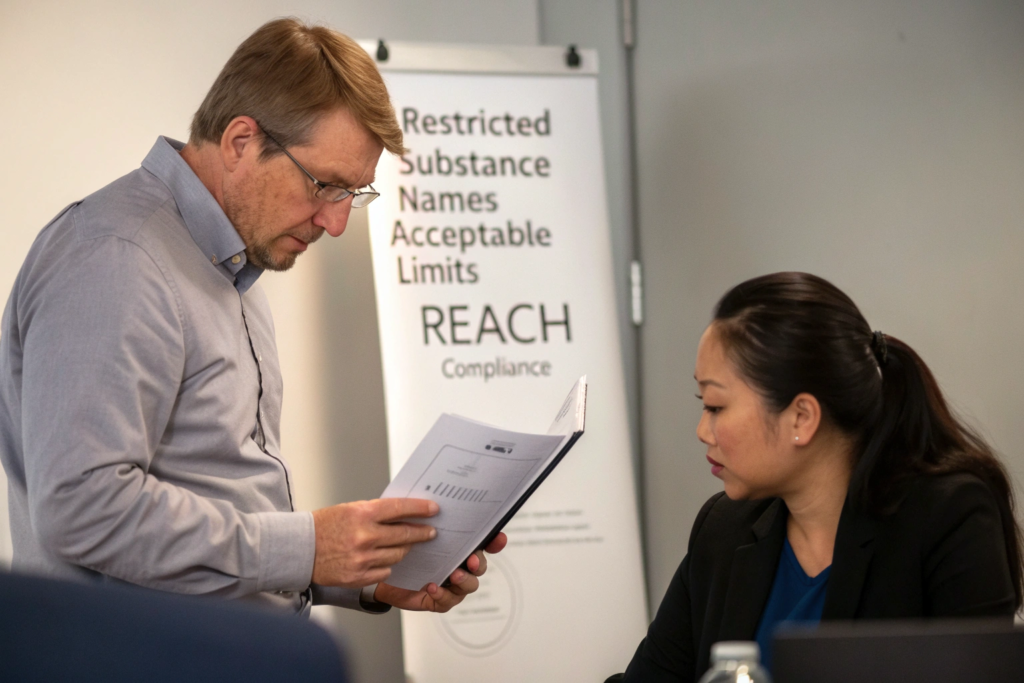
What is REACH and why do buyers require it?
REACH is a law. It is not optional. If you sell textiles in Europe, your products must comply with REACH. The regulation lists substances that are restricted or banned. These include certain dyes, flame retardants, and finishing chemicals.
I had a client from the Netherlands in 2020. They were very specific about REACH. They sent me a list of restricted substances. They asked me to confirm that our production did not use any of them. They asked for a signed declaration. They also asked for test reports from an accredited lab.
We already had OEKO-TEX certification. But REACH compliance is separate. OEKO-TEX covers many of the same substances. But European buyers want explicit confirmation of REACH compliance. We provided the declaration and the test reports. The client was satisfied.
Here are the key restricted substances under REACH for textiles:
| Substance Category | Examples | Restriction |
|---|---|---|
| Azo dyes | Certain colorants | Banned if they release carcinogenic amines |
| Phthalates | Plasticizers in prints | Restricted in children’s products |
| Formaldehyde | Finishing agents | Strict limits based on product type |
| Heavy metals | Lead, cadmium, nickel | Strict limits, especially for accessories |
| PFAS | Water-repellent finishes | Increasingly restricted |
How do you prove REACH compliance?
Proof of REACH compliance is not a single certificate. It is a combination of documentation. For most buyers, a signed declaration from the factory is sufficient for standard products. But for sensitive products like children’s wear or products with special finishes, they want test reports.
At Shanghai Fumao, we maintain a restricted substance list. We train our suppliers to avoid banned chemicals. We test our fabrics regularly. We keep all test reports. When a European buyer asks for REACH compliance, we provide:
- A signed declaration of compliance
- Test reports for relevant restricted substances
- Our supplier certifications for dyes and chemicals
This documentation satisfies 95% of our European clients.
What certifications do European buyers require for organic textiles?
When European buyers want organic textiles, they do not accept self-declared organic claims. They require GOTS certification. GOTS stands for Global Organic Textile Standard.

Why is GOTS the standard for organic in Europe?
GOTS is the most respected organic certification in Europe. It covers the entire supply chain. From the farm to the finished garment. It requires organic fiber content. It also requires environmental and social criteria. A GOTS certified product is truly organic. It is not just a marketing claim.
I remember a Swedish buyer in 2023. They wanted a line of organic cotton t-shirts. They asked for GOTS certification. I explained that we work with GOTS certified suppliers. We can produce GOTS certified garments. They asked to see our GOTS certificate. They asked to see our transaction certificates for the fabric. They asked to see our audit report. We provided everything. The order was placed.
If we had said "we use organic cotton" without GOTS, they would not have bought from us. In Europe, organic means GOTS.
Here is what GOTS certification covers:
| Aspect | What GOTS Requires | Verification Method |
|---|---|---|
| Fiber content | Minimum 95% certified organic fiber | Transaction certificates from farm to factory |
| Chemical use | Only approved inputs for dyeing and finishing | Annual audit of chemical inventory |
| Environmental management | Wastewater treatment, energy efficiency | On-site inspection |
| Social criteria | Fair wages, safe working conditions | Social audit |
| Traceability | Chain of custody from field to garment | Transaction certificates for each step |
How does GOTS differ from other organic claims?
There are other organic claims. Some brands say "made with organic cotton." This means only a percentage of the fiber is organic. European buyers are skeptical of these claims. They prefer full GOTS certification because it is verifiable.
A client from Denmark explained this to me. They said, "Our customers are educated. They know what GOTS means. They trust it. If we use a weaker standard, they will ask questions. We cannot risk that."
At Shanghai Fumao, we are GOTS certified. We maintain separate storage for organic materials. We keep detailed records. We undergo annual audits. This allows us to serve European organic buyers with confidence.
What social compliance certifications do European buyers require?
European buyers care about how workers are treated. They require social compliance audits. The most common are BSCI and SMETA.

What is BSCI and why do European buyers require it?
BSCI stands for Business Social Compliance Initiative. It is a European organization. It sets standards for working conditions. Many European retailers require their suppliers to have BSCI audits.
A German buyer in 2022 asked for our BSCI audit report. They wanted to see the grade. They wanted to see any non-conformities. They wanted to see how we addressed them. We had a BSCI audit from the previous year. Our grade was B. The buyer was satisfied.
BSCI audits cover:
- Working hours and wages
- Child labor and forced labor
- Health and safety
- Freedom of association
- Management systems
What is SMETA and how is it different?
SMETA is another social audit standard. It stands for Sedex Members Ethical Trade Audit. It is similar to BSCI but with some differences. Some European buyers prefer SMETA. Some accept both.
A UK buyer in 2023 asked for SMETA. They said their corporate policy required SMETA audits. We arranged a SMETA audit. We shared the report. The buyer accepted it.
Here is a comparison of social audit standards:
| Standard | Primary Region | Focus | Common Buyers |
|---|---|---|---|
| BSCI | Europe | Comprehensive social compliance | German, French, Dutch retailers |
| SMETA | Global | Ethical trade, 4-pillar audit | UK brands, multinational corporations |
| SA8000 | Global | Most rigorous social standard | High-end European brands |
| WCA | Global | Workplace conditions assessment | Various European buyers |
At Shanghai Fumao, we maintain both BSCI and SMETA audits. We are transparent about our working conditions. We welcome audits. We have nothing to hide. This has helped us build trust with European buyers.
How do you prepare for European buyer certification requirements?
The key to handling European buyer requirements is preparation. You cannot get certifications overnight. They take time. They take investment. They take systems.

How long does it take to get these certifications?
Each certification has a different timeline. Here is what I tell my clients who want to sell to Europe:
| Certification | Preparation Time | Audit Process | Total Timeline |
|---|---|---|---|
| OEKO-TEX | 1-2 months | Testing of samples | 2-3 months |
| REACH compliance | Continuous | Depends on testing needed | Ongoing |
| GOTS | 3-6 months | On-site audit, documentation review | 4-8 months |
| BSCI | 1-2 months | On-site audit | 2-3 months |
| SMETA | 1-2 months | On-site audit | 2-3 months |
If you are starting from zero, you need at least 6 to 12 months to get all the certifications European buyers require.
What documentation should you maintain?
European buyers will ask for documentation. You need a system to provide it quickly. Here is what we maintain:
- Certificates: Current certificates for OEKO-TEX, GOTS, BSCI, etc.
- Test reports: Lab reports for fabric tests, chemical tests
- Transaction certificates: For organic materials, showing chain of custody
- Audit reports: Full reports from all social audits
- Supplier certifications: Certificates from fabric and trim suppliers
- Declarations: Signed declarations of compliance for REACH, etc.
We keep all of this in a digital folder. When a buyer asks, we can send it within hours. This speed builds confidence.
At Shanghai Fumao, we have invested in these systems. We maintain all the certifications that European buyers require. We are ready for any audit. We are ready to share any document. This is why European brands trust us.
Conclusion
European buyers require certifications. This is not optional. It is the price of entry to the European market. The essential certifications are OEKO-TEX Standard 100 for chemical safety, REACH compliance for chemical regulation, GOTS for organic textiles, and BSCI or SMETA for social compliance.
When I first started exporting to Europe, I did not understand this. I lost opportunities because I did not have the right paperwork. I learned. I invested in the systems. I got the certifications. Now, European buyers trust us. They know we understand their requirements. They know we can provide the documentation they need.
If you are a brand looking to sell to Europe, you need a factory that has these certifications. You cannot get them yourself. Your factory must have them. When you choose a factory, ask about these certifications. Ask to see the certificates. Ask to see the audit reports. Verify them. This will save you time and prevent problems later.
At Shanghai Fumao, we have all the certifications that European buyers require. We have OEKO-TEX Standard 100 for all product classes. We are REACH compliant. We are GOTS certified for organic production. We have BSCI and SMETA audits. We maintain all documentation. We are ready for European buyers.
If you are looking for a factory that can meet European certification requirements, I invite you to talk to us. Let us show you our certificates. Let us discuss how we can help you access the European market.
You can contact our Business Director, Elaine, directly. She can walk you through our certifications. She can explain our compliance systems. She can help you understand what documentation you need for your European buyers. Her email is: elaine@fumaoclothing.com. Let us help you succeed in Europe.