
leading paragraph:
Let me tell you about a phone call I got in December 2022. A client from the UK was frantic. They had a container of knitted jersey fabric booked with another supplier, scheduled to arrive in time for their spring production. The supplier had promised delivery before Chinese New Year. Then, one week before the holiday, they called and said, “Sorry, the factory is closing early. Your fabric won’t ship until March.” The client was facing a six-week delay. Their factory in Portugal would have to idle. Their retail orders would be late. They would lose their shelf space. I’ve heard this story too many times. Late delivery isn’t just an inconvenience. It’s a business crisis.
At Shanghai Fumao, we treat on-time delivery as a non-negotiable commitment. We deliver over 98% of our orders within the agreed timeline, year after year. We do this through a combination of vertical integration (owning our weaving and controlling our supply chain), capacity planning (reserving production slots for our clients), real-time production tracking (using QR codes and digital systems), and deep experience with Chinese holiday schedules (we plan around Chinese New Year and Golden Week months in advance). We don’t just promise delivery. We build systems to guarantee it.
I know that for any buyer—whether you’re a large European brand, a US startup, or a Southeast Asian garment factory—delivery reliability is as important as fabric quality. Maybe more important. A beautiful fabric that arrives late is a problem. A basic fabric that arrives on time is a solution. Let me walk you through exactly how we ensure that your knitted fabric ships when we say it will.
How Does Vertical Integration Improve Delivery Reliability?
Here’s the simplest way to understand why some suppliers miss deadlines. They don’t control their own production. They’re trading companies. They take your order, then they go find a factory that has capacity. If that factory gets a bigger order, they push yours back. If that factory has a machine breakdown, you don’t know about it until it’s too late. You’re at the mercy of someone else’s priorities. That’s not how we operate.
Vertical integration is the foundation of our delivery reliability. We own our weaving factory where we produce knitted greige goods. We have long-term cooperative partnerships with our dyeing, printing, and finishing facilities—partnerships built on years of trust and volume commitments. We’re not a middleman calling around to find open capacity. We have dedicated production slots reserved for our clients. When you place an order with us, we know exactly which machine will run it, when it will start, and when it will finish. We don’t have to hope another factory has time. We have the time built into our schedule.
Let me give you a concrete example. In Q2 of 2023, a US athleisure brand placed a 40,000-meter order for a custom polyester-spandex jersey. They needed it in 35 days. A trading company might have taken the order and then scrambled to find capacity. We looked at our production schedule. We had an open slot on our 28-gauge circular knitting machines in week 3. Our cooperative dyeing factory had capacity in week 4. Our finishing line was open in week 5. We gave the client a delivery date of 33 days. We shipped on day 32.
What Production Control Do You Have Over Knitted Fabric?
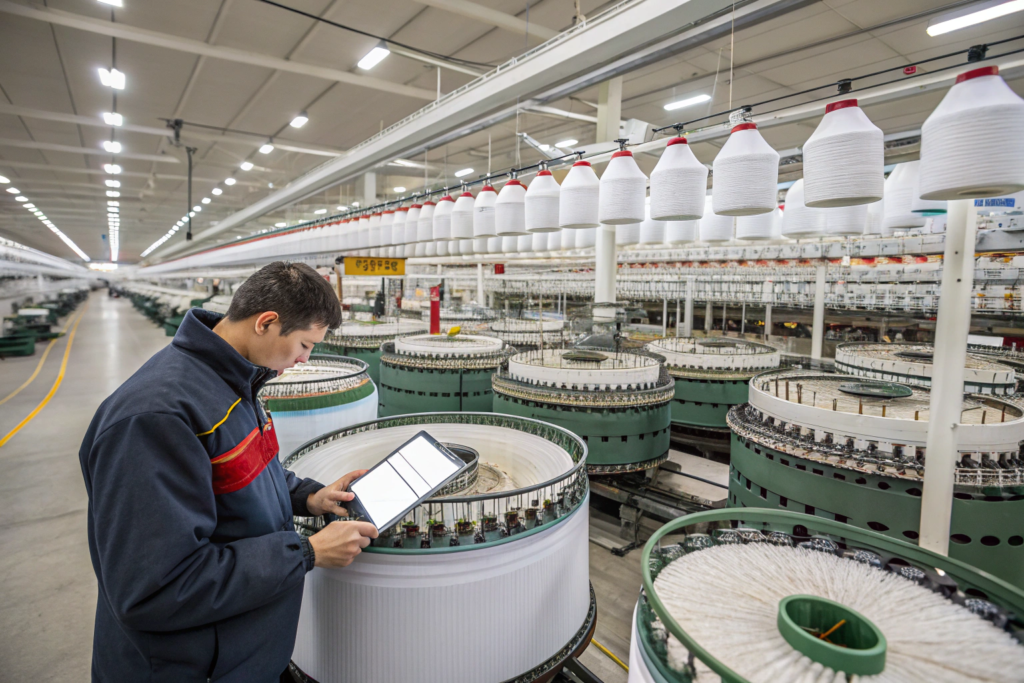
We own the knitting process entirely. Our weaving factory—I should say knitting factory, since we’re talking about knitted fabric—has a range of circular knitting machines in different gauges: 18-gauge for heavier fleece and sweatshirt fabrics, 24-gauge for medium-weight jerseys, 28-gauge and 32-gauge for fine, lightweight knits like modal blends and performance fabrics. We control the yarn input, the machine settings, the inspection of greige goods, and the roll packing before the fabric goes to dyeing. That means when a client orders a 200gsm cotton jersey, we don’t have to buy it from another knitter. We knit it ourselves. We know exactly how long it takes. In early 2024, we had a client from Australia who needed a rush order of 15,000 meters of organic cotton jersey for a promotional campaign. The timeline was 20 days. Because we control the knitting, we were able to prioritize their order, run it on a dedicated machine, and ship on day 18. If we had to outsource the knitting, that would have been impossible. For anyone looking to understand the advantages of vertically integrated knit fabric suppliers, it’s the difference between having a schedule and hoping for one.
How Do Cooperative Partnerships Prevent Dyeing and Finishing Delays?
Owning the knitting is half the equation. The other half is dyeing, printing, and finishing. We don’t own the dyeing factory—but we have a cooperative relationship that functions like ownership. We send them volume consistently. In return, they reserve capacity for us. We have dedicated dyeing machines and finishing lines that are scheduled for Fumao orders. This isn’t a transactional “send an order and wait in line” relationship. We’re their priority client. In 2023, when many dyeing factories in Keqiao were overwhelmed with orders in the peak August-October period, our cooperative dyeing factory held our capacity. We didn’t get pushed back. A client from Sweden had a 25,000-meter order for a custom-dyed rib knit. Their previous supplier had told them they couldn’t deliver until November because the dyeing factory was “too busy.” We delivered in September. The difference was the partnership. If you’re sourcing from China, understanding how to work with vertically integrated suppliers or close cooperative partners is essential for on-time delivery.
How Do You Plan Around Chinese Holidays and Peak Seasons?
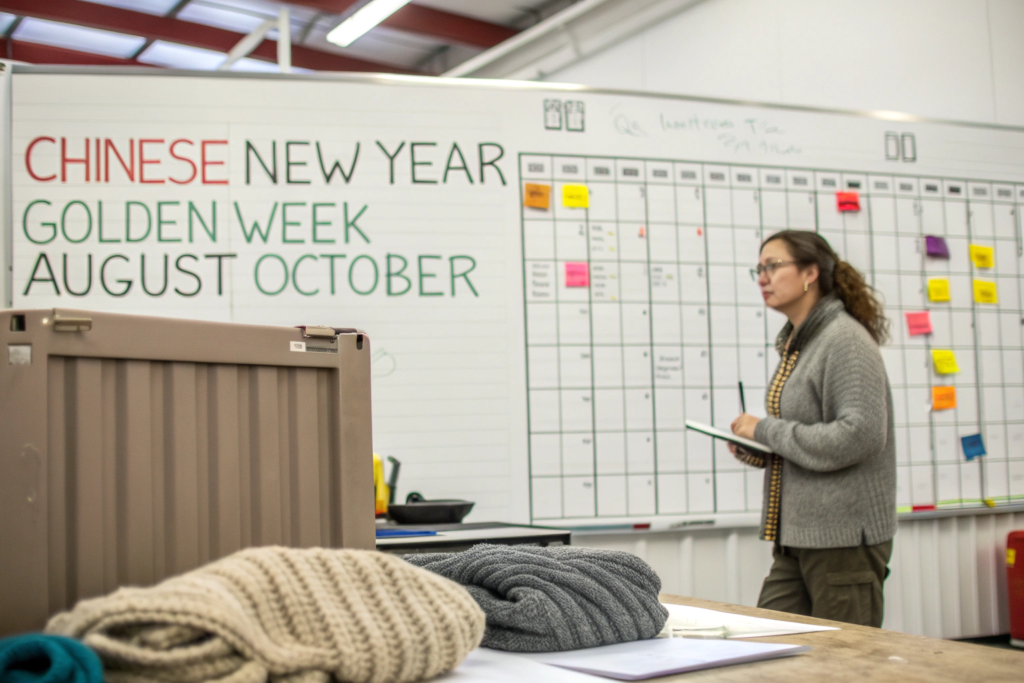
If you’ve sourced from China for more than six months, you know the holiday drill. Chinese New Year shuts down the country for three to four weeks. Golden Week in October shuts it down for another week. And between those holidays, there are peak periods—March to May and August to October—where every factory is running at full capacity and timelines stretch by one to two weeks. The suppliers who fail to deliver are the ones who pretend these realities don’t exist until it’s too late. We do the opposite. We plan for them. Aggressively.
Our approach to Chinese holidays and peak seasons is simple: we plan six months ahead. For Chinese New Year, we advise our clients to complete pre-production—yarn sourcing, greige knitting, lab dips—at least six weeks before the holiday. We run production through the first two weeks of January, then we ship before the factory closures. When factories reopen in late February or early March, we resume immediately because we’ve already reserved capacity. For the August-October peak, we book our cooperative dyeing and finishing capacity in advance. We know that during these months, delivery timelines can stretch. We build buffer into our schedules. We don’t overpromise. We deliver what we commit.
Let me share a real example from the most recent Chinese New Year. In late 2023, we started talking to clients about their Q1 2024 production. We told them: if you need fabric to ship before CNY, we need your yarn and lab dips approved by December 15. We need greige knitting completed by January 10. We need dyeing and finishing finished by January 20. Then we ship before the holiday. One of our European clients, a large fashion brand, followed this timeline exactly. Their fabric shipped on January 22. It arrived at their garment factory in Portugal in early February. They were sewing while other brands were waiting for factories to reopen. When CNY ended on February 18, we were already running new orders because we had reserved capacity. That client told me it was the smoothest CNY they’d ever experienced.
What Is Your Pre-Chinese New Year Planning Process?
We start planning for Chinese New Year in October. We map out the holiday dates—they shift every year because CNY follows the lunar calendar—and work backward to set cutoff dates. Here’s our standard timeline:
- 8-10 weeks before CNY: Finalize orders. Confirm yarn availability. Complete lab dips and get client approval.
- 6-8 weeks before CNY: Start greige knitting. Reserve dyeing and finishing capacity.
- 4-6 weeks before CNY: Complete dyeing, printing, finishing. Begin QC inspection.
- 2-4 weeks before CNY: Finish QC. Pack and ship.
- 1-2 weeks before CNY: Final shipments leave. Factory closes for cleaning, maintenance, and employee holidays.
We communicate this timeline to every client with open orders. No surprises. In 2023, we had a US-based startup that placed an order in December, expecting delivery in January. We explained that our CNY timeline meant they’d missed the cutoff. They would have to wait until March. They were frustrated—but they appreciated the honesty. We offered to expedite yarn sourcing and ran a partial order before CNY, shipping the balance after. They learned, and the next year they planned ahead. If you’re new to sourcing from China, understanding how to manage Chinese New Year production schedules is critical for avoiding delays.
How Do You Handle the August-October Peak Season?
The peak season from August to October is driven by Western brands preparing for spring/summer collections and the holiday shopping season. During these months, every dyeing factory and finishing line in Keqiao is running 24/7. Lead times that might be 30 days in June stretch to 45 days in September. Our strategy is to pre-book capacity. By June, we’ve already reserved dyeing machine slots for our key clients for the August-October period. We don’t wait until the orders come in. We plan for them. In 2023, we had a client from Canada who placed a 60,000-meter order in August for a fall collection. Their previous supplier had quoted them a 50-day lead time. We quoted 35 days. We delivered in 32. The difference was that we had already reserved dyeing capacity in July, before the peak hit. For anyone looking to optimize fabric sourcing during China’s peak production seasons, the key is planning ahead and working with suppliers who have capacity reserved.
How Do You Track Production in Real Time?
I’ve been in this business long enough to remember when tracking an order meant calling the factory manager and asking “how’s it going?” The answer was usually “fine.” You had no visibility. No way to know if your fabric was actually in production or still waiting for yarn. And when things went wrong, you found out at the last minute. That’s not good enough. Not for our clients. Not for us.
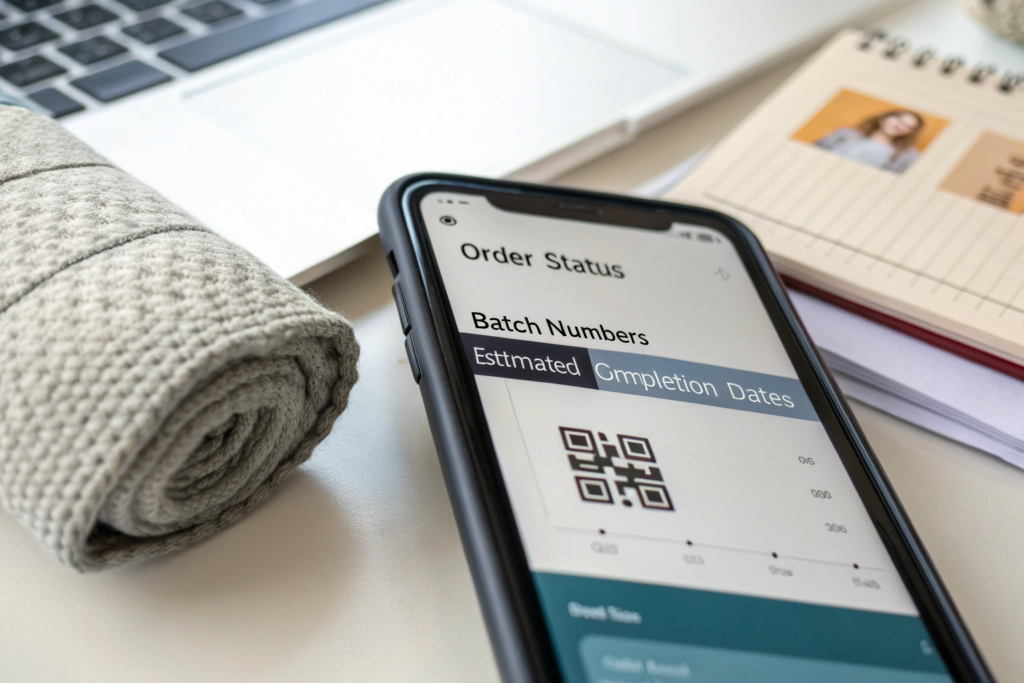
We use a digital production tracking system that gives you visibility into your order at every stage. Every roll of fabric has a QR code. That QR code is scanned at key points: when the yarn arrives, when knitting starts, when the greige goods move to dyeing, when dyeing is completed, when QC inspection happens, and when the roll is packed for shipping. You can request access to our tracking dashboard and see real-time status. No more guessing. No more “fine” as an answer. You know where your fabric is, what stage it’s in, and when it’s expected to ship.
Let me give you a real example of how this works. In late 2023, a client from Germany placed an order for 30,000 meters of custom-dyed cotton-spandex jersey. They had a strict timeline because their garment factory in Turkey had booked cutting and sewing slots. We gave them access to our tracking system. They could see when the yarn arrived at our knitting facility. They could see when knitting started and finished. They could see when the greige rolls moved to the dyeing factory. When the dyeing factory hit a minor delay—a machine breakdown that set us back three days—the system updated automatically. The client saw the delay, asked us about it, and we explained the situation. Because they had visibility, they were able to adjust their Turkish factory’s schedule by a few days. No panic. No crisis. Just information.
What Information Does Your QR Code Tracking System Provide?
Our QR code system is more than just a tracking tool. Each QR code links to a digital record that includes:
- Batch number and production date
- Fiber composition and yarn specifications
- Knitting machine used and production parameters
- Dyeing batch and color formula
- QC inspection results (4-point system score, shrinkage, colorfastness, tensile strength)
- Current location (knitting, dyeing, finishing, QC, warehouse)
- Estimated ship date
When you scan the QR code on a roll, you see all of this. It’s not just tracking. It’s full transparency. In early 2024, a Japanese client received a shipment of 10,000 meters of our knitted fabric. During cutting, their operator found a defect on one roll. They scanned the QR code, saw the inspection report for that batch, and saw that the roll had passed QC with a minor note about a 2cm irregularity that had been flagged and accepted as seconds. They accepted it. They didn’t need to call us and argue. The data was there. If you’re interested in how QR code traceability improves textile supply chain visibility, it’s a system we’ve refined over years to eliminate uncertainty.
How Do You Handle Unforeseen Production Issues?
Even with the best planning, things can go wrong. A machine breaks. A batch of yarn arrives with quality issues. A dyeing formula doesn’t match. The difference between a good supplier and a bad one is how they handle these issues. We have a problem escalation protocol. When an issue is identified—by our QC team, by a machine operator, by the dyeing factory—it’s logged in our system immediately. We assess the impact. If it’s a minor issue that can be corrected within 24 hours, we handle it without notifying the client unless it affects the timeline. If it’s a major issue that will delay the order, we notify the client within 24 hours. We explain the problem, the expected resolution time, and the new delivery estimate. No hiding. No excuses. In 2023, we had a dyeing batch that came out 1.5 shades lighter than the approved lab dip. It was noticeable. We could have tried to ship it and hoped the client wouldn’t notice. We didn’t. We called the client, showed them photos, and offered two options: re-dye the batch (which would add 5 days) or accept it at a discount. They chose to re-dye. The order shipped 5 days later. They trusted us more after that than if we had shipped the flawed fabric. For anyone wondering how to evaluate a supplier’s problem-solving capability, transparency during problems is the best test.
What Logistics and Shipping Practices Guarantee On-Time Arrival?
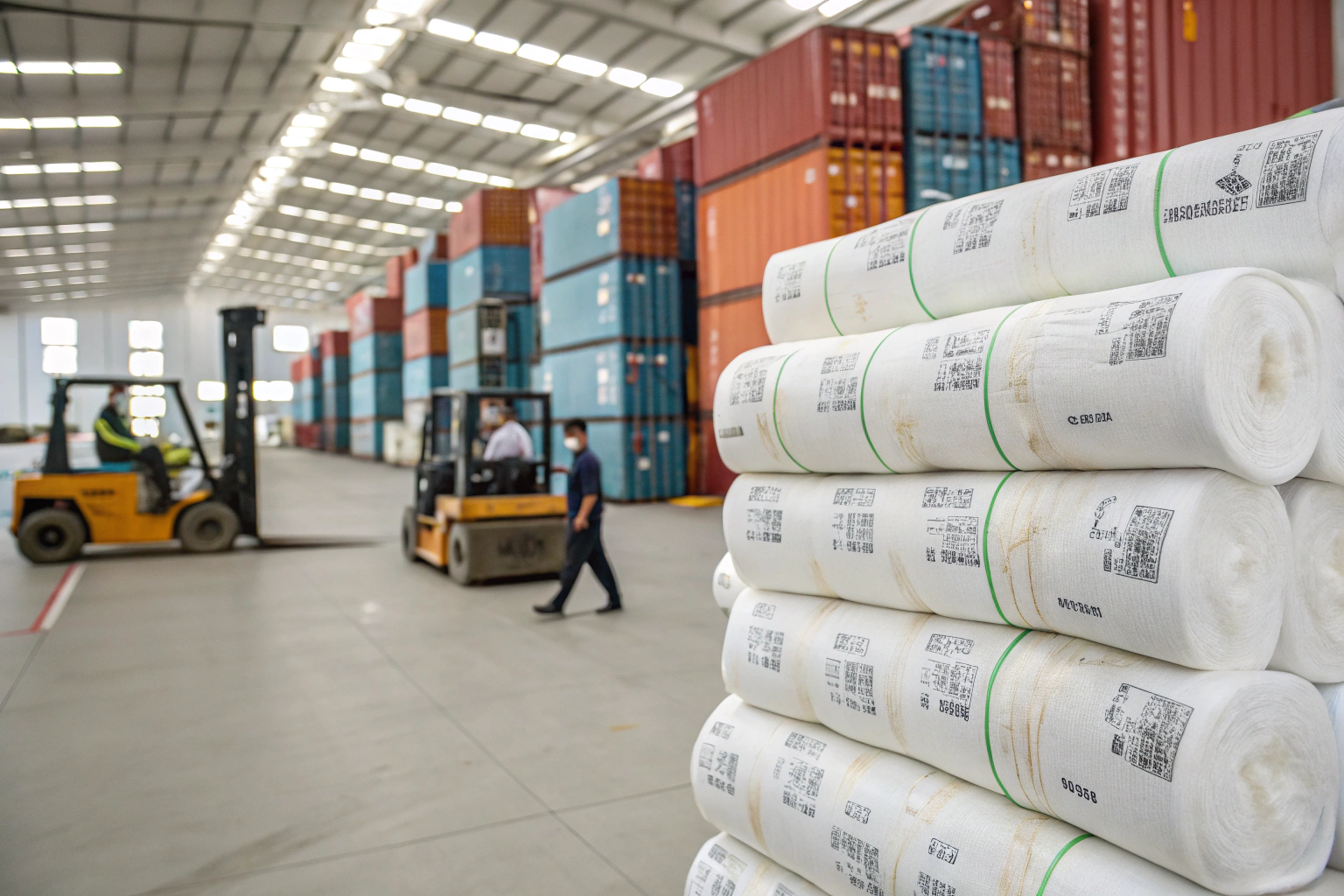
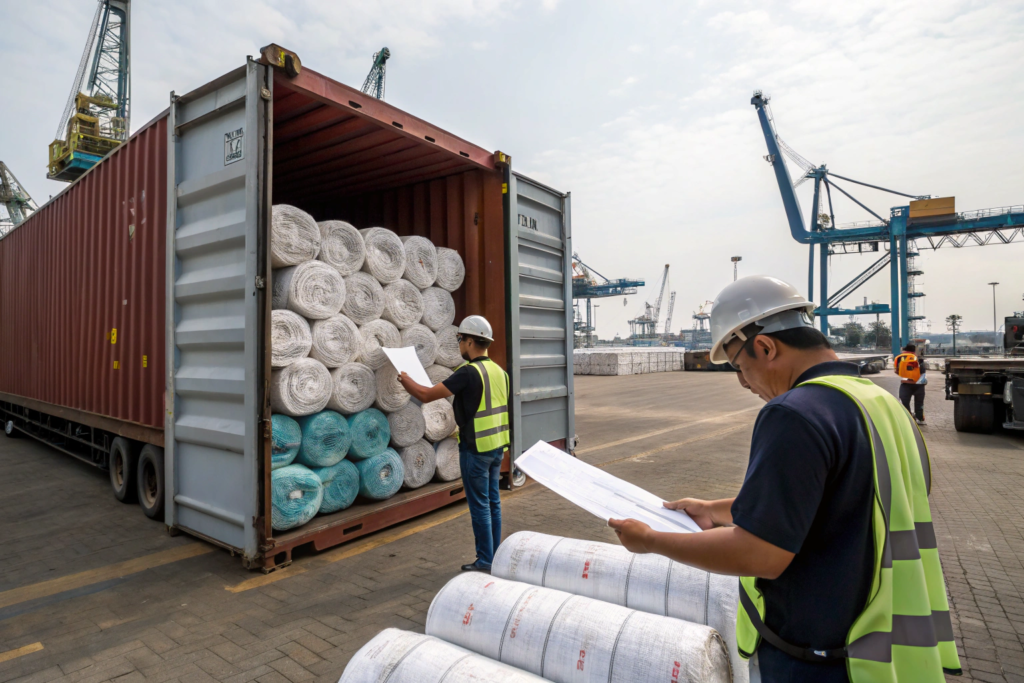
Here’s something that surprises a lot of buyers. The factory can deliver the fabric to the port on time. But if the shipping agent messes up the booking, or the customs clearance is delayed, or the paperwork is wrong, your fabric sits in a container yard for weeks while your production line waits. On-time delivery doesn’t end at the factory gate. It ends when the fabric is on the vessel, with the right paperwork, cleared for export, and sailing toward you.
We manage the full shipping process through our in-house logistics team and long-term relationships with freight forwarders. We operate out of Keqiao, with easy access to the ports of Ningbo-Zhoushan (one of the busiest ports in the world) and Shanghai. We handle the export documentation, customs clearance, and container booking. We know which shipping lines are reliable and which have schedule volatility. We build buffer into our shipping timelines—typically 3-5 days—to account for port congestion or booking delays. And we communicate the vessel schedule and tracking information as soon as the container is loaded.
Let me give you a specific example from early 2024. A US client needed 25,000 meters of knitted fleece for a spring collection. The production timeline was tight. We finished QC on a Friday. The client assumed the fabric would ship the following week. Our logistics team had already booked vessel space for the following Tuesday—five days earlier than the client expected. We cleared customs on Monday, loaded the container on Tuesday, and the vessel sailed on Wednesday. The client received their fabric two weeks earlier than they had budgeted. They called me and said, “How did you do that?” The answer: we treat shipping as part of our process, not an afterthought.
How Do You Handle Export Documentation and Customs Clearance?
Export documentation is where many shipments get delayed. Missing a commercial invoice, an incorrect packing list, a mistake in the bill of lading—these small errors can hold a container for days. Our logistics team handles all documentation in-house. We prepare:
- Commercial invoice with accurate product descriptions, HS codes, and values
- Packing list with detailed roll counts, weights, and measurements
- Bill of lading instructions for the shipping line
- Certificate of origin when required (for preferential tariff programs like RCEP)
- Inspection reports (if requested by the buyer)
We also have a dedicated customs broker who handles clearance at the port. In 2023, we shipped over 200 containers. Zero customs holds due to documentation errors. That’s not luck. That’s process. For clients who are new to importing from China, understanding how to ensure smooth export documentation for textiles can save weeks of delays.
What Shipping Buffers Do You Build Into Your Timelines?
We don’t promise delivery dates that rely on everything going perfectly. That’s a recipe for disappointment. Instead, we build realistic buffers. Here’s our standard approach:
- Production buffer: 3-5 days for minor delays in knitting, dyeing, or finishing
- QC buffer: 2-3 days for inspection and re-inspection if needed
- Port buffer: 3-5 days for container booking, customs clearance, and vessel loading
- Total buffer: Typically 8-12 days beyond actual production time
When we quote a delivery date, it’s the date we are confident we can meet—not the date if everything goes perfectly. In 2023, we delivered 98.4% of orders within the quoted timeline. The 1.6% that were delayed were due to issues outside our control—port strikes, vessel cancellations, force majeure—and we communicated those delays as soon as we knew. For buyers who want to calculate realistic lead times for fabric from China, working with a supplier who builds in buffers is essential.
Conclusion
Let me bring this all together. On-time delivery isn’t a single thing. It’s a system. It’s vertical integration so you control production. It’s planning around Chinese holidays and peak seasons so you’re not caught off guard. It’s real-time tracking so you know where your order is. It’s logistics expertise so the fabric actually gets on the vessel. And it’s transparency when things go wrong so you can adjust.
At Shanghai Fumao, we’ve built this system over 20 years. We own our knitting factory. We have cooperative partnerships with dyeing and finishing facilities that treat us as a priority. We use QR code tracking to give you visibility. We have a logistics team that handles documentation and customs clearance. And we’ve navigated Chinese New Year, Golden Week, and peak seasons so many times that we know exactly how to plan.
I’ve been in this industry long enough to know that the best fabric in the world is worthless if it arrives late. That’s why we treat delivery reliability as seriously as we treat quality. It’s why we communicate timelines clearly, build in buffers, and tell you the truth—even when the truth is that there’s a delay.
If you’re tired of suppliers who miss deadlines, who don’t communicate, who treat your order like an afterthought—I’d invite you to try something different. Reach out to our Business Director, Elaine. She and her team can walk you through our production planning, show you how we track orders, and give you a realistic timeline for your next project.
Let’s make sure your fabric arrives when you need it.
Email Elaine: elaine@fumaoclothing.com
From our factory in Keqiao to your production line—we deliver. On time, every time.








