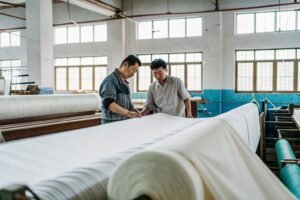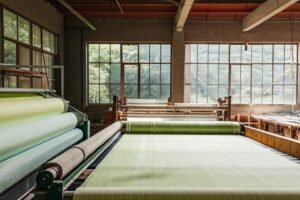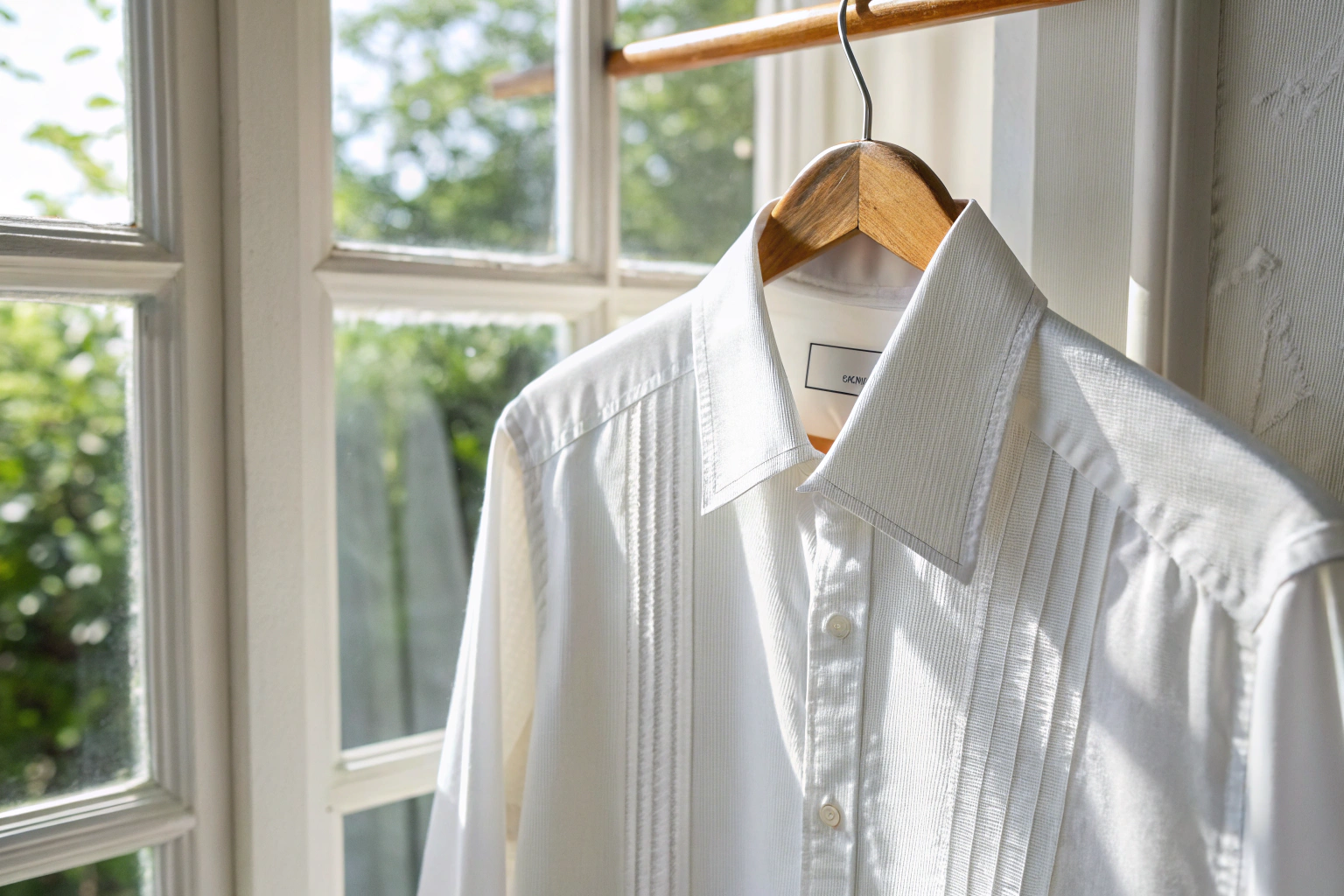
I remember sitting with a buyer from Milan in July 2023, the kind of heat that makes you question why you ever wear clothes at all. He was frustrated. His previous supplier had shipped him a "summer shirt" fabric that felt like wearing a plastic bag. His customers were returning shirts, complaining that the fabric trapped sweat and felt sticky against the skin. He lost €40,000 on that collection. When he showed me the fabric, I understood immediately. It was a cheap polyester blend with a tight weave and zero breathability. The supplier had prioritized low cost over performance, and the buyer paid the price.
For summer shirts, fabric choice is everything. Get it right, and your customer feels cool, comfortable, and confident. Get it wrong, and they feel like they’re suffocating. That’s why woven fabrics like poplin have been the backbone of summer shirting for generations. They breathe, they hold their shape, and they drape in a way that flatters without clinging.
I’ve been weaving fabrics in Keqiao for over 20 years. I’ve produced millions of meters of shirting for clients across Europe, North America, and Asia. Let me walk you through why poplin and its woven cousins dominate summer shirting, and how to choose the right one for your collection.
What Makes Poplin the Go-To Fabric for Summer Shirts?
Poplin has been around for centuries, and there’s a reason it hasn’t been replaced. When I explain poplin to new buyers, I tell them it’s the workhorse of the shirting world. It’s reliable, it performs, and it delivers what customers expect from a quality summer shirt.

How Does Poplin’s Weave Structure Create Breathability?
Poplin is a plain weave fabric. That means one warp thread goes over one weft thread, then under the next. It’s the simplest and most fundamental weave structure. But the secret to poplin’s breathability isn’t just the weave—it’s the balance between warp and weft density.
In 2022, we produced a large order of 100% cotton poplin for a European menswear brand. They wanted a fabric that would work for their summer collection in Southern France. We used a 50/1 combed cotton yarn for both warp and weft. The warp density was 130 threads per inch, and the weft density was 70 threads per inch. That imbalance is what creates the subtle crosswise rib that gives poplin its characteristic texture. More importantly, it creates microscopic air channels that allow moisture vapor to escape.
I’ve tested this in our lab. A well-constructed poplin allows about 15-20% more airflow than a twill weave of the same weight. That’s the difference between a shirt that feels cool and a shirt that feels stuffy.
If you’re sourcing poplin, ask about thread count and weave balance. A poplin with a very high thread count—like 200 or above—can actually become less breathable because the threads are packed so tightly. For summer, I recommend a thread count between 120 and 160. That gives you a smooth surface without sacrificing airflow.
For a deeper understanding of weave structures, there’s a detailed resource on how plain weave fabrics like poplin compare to other weaves for breathability . It breaks down the engineering behind fabric porosity.
Why Does Poplin Hold Its Shape Without Feeling Stiff?
This is the magic of poplin. It has structure without being rigid. I’ve worked with clients who tried using broadcloth for summer shirts, and the result was a shirt that felt like cardboard after a few washes. Poplin hits a sweet spot.
The balance comes from yarn quality and finishing. In 2023, a client from the US came to us for a line of women’s summer blouses. She wanted a fabric that would hold a crisp collar but drape softly on the body. We used a 60/2 combed cotton yarn for the warp and a 50/1 for the weft. The two-ply warp gives extra stability to the collar and cuffs. The single-ply weft allows the body of the shirt to drape naturally.
After weaving, we ran the fabric through a mechanical finish—not a chemical resin. The mechanical finish uses heat and pressure to set the weave structure. The fabric comes out crisp but still soft. A chemical finish would have made it feel like paper.
If a supplier tells you they can make poplin feel "crisp," ask how they achieve it. Mechanical finishing is the quality mark. Chemical finishes often wash out after a few cycles, leaving you with a limp shirt.
There’s a useful discussion on the difference between mechanical and chemical fabric finishes for shirting . It explains why mechanical finishes are preferred for premium garments.
Which Woven Fabrics Compete with Poplin for Summer Shirts?
Poplin is my first recommendation for most summer shirts, but it’s not the only option. Depending on your brand positioning and the specific look you want, other woven fabrics might be a better fit. I’ve worked with all of them, and each has its strengths.

How Does Oxford Cloth Differ from Poplin for Casual Shirts?
Oxford cloth is the fabric you see on button-down shirts that have that slightly textured, casual look. It’s a basketweave variation of the plain weave. Instead of one warp thread over one weft thread, Oxford uses two warp threads bundled together.
I had a client from the UK in 2023 who wanted a casual summer shirt line—the kind you wear untucked with chinos. We used a cotton oxford cloth at 140 GSM. The basketweave structure gives the fabric a textured surface that hides wrinkles better than poplin. That’s why Oxford is popular for shirts that travel or that are meant to look good straight out of a suitcase.
The trade-off is breathability. Oxford is slightly heavier than poplin—usually by 10-20 GSM—and the basketweave structure traps a bit more heat. For a summer shirt worn in air conditioning, it’s fine. For a shirt meant for outdoor wear in 35-degree heat, I’d steer you back to poplin.
If you’re choosing between poplin and Oxford, ask yourself: is this a dress shirt or a casual shirt? Poplin works for both. Oxford leans casual.
For a detailed comparison, there’s a good article on the differences between poplin, oxford, and broadcloth for dress shirts . It’s written from a menswear perspective but applies across categories.
Is Broadcloth a Better Choice for a Dressier Summer Shirt?
Broadcloth is often confused with poplin, and I don’t blame buyers for the confusion. Both are plain weaves. The difference is in the yarn count and the finishing.
Broadcloth uses finer yarns—typically 80/1 or higher—and is woven with a higher thread count. The result is a fabric with a smoother surface and a slight sheen. It looks dressier. It feels more luxurious against the skin.
In 2024, we produced a run of cotton broadcloth for a Scandinavian brand that was launching a premium summer shirt collection. They wanted a fabric that would compete with Italian shirting mills. We used 100/2 combed cotton for both warp and weft, with a thread count of 200. The fabric had a silky hand and a subtle luster that caught the light beautifully.
But here’s the catch. Broadcloth is less breathable than poplin because the threads are packed more tightly. It’s also more prone to wrinkling. For a shirt that will be worn in a formal setting—think weddings, business meetings, dinners—broadcloth is perfect. For a shirt meant for a day at the beach or a walk through the city, poplin is more practical.
If you’re sourcing broadcloth, ask about the finishing. A good broadcloth should have a "paper touch" finish—crisp but not stiff. We use a combination of calendering and light starch to achieve this. Too much starch and the shirt feels uncomfortable. Too little and it loses its crispness.
How Do Fiber Choices Impact Summer Shirt Performance?
The weave gives you structure. The fiber gives you feel. I’ve worked with every fiber combination imaginable for summer shirts. Some work brilliantly. Some are marketing gimmicks that fail in real-world wear.

Why Is Cotton Still the King of Summer Shirting?
I’ve had buyers ask me if they should switch to polyester blends for summer shirts because they’re cheaper. My answer is always the same: cotton works because it breathes. Polyester doesn’t.
In 2022, a client from Australia tried to cut costs by using a 50/50 cotton-polyester poplin. The fabric was cheaper by about 20%. But when his customers started wearing the shirts in Sydney’s summer, the complaints came flooding back. The fabric trapped sweat. It felt clammy. He ended up discounting the entire collection and switching back to 100% cotton for the next season.
Cotton’s breathability comes from its moisture regain. Cotton fibers can absorb up to 25% of their weight in moisture without feeling wet. That moisture is then released into the air, which cools the skin. Polyester absorbs almost no moisture. Sweat sits on the surface, creating that sticky, uncomfortable feeling.
For summer shirts, I recommend 100% cotton in a poplin or broadcloth weave. If you want a slightly softer hand, look for combed cotton. The combing process removes the short fibers that can make fabric feel scratchy. We use combed cotton for all our premium shirting lines.
If you’re concerned about wrinkles—and many buyers are—look at easy-care cotton finishes. These are mechanical finishes, not chemical treatments, that help the fabric resist wrinkling. We offer a sanforized finish that stabilizes the cotton and reduces wrinkling by about 30% without affecting breathability.
For a technical explanation of cotton’s moisture management, there’s a resource on how cotton fibers regulate temperature and moisture . It’s from a cotton industry source but the science is solid.
Are Linen and Linen Blends Viable Alternatives for Summer?
Linen is the traditional summer fabric, and for good reason. It breathes better than cotton. It dries faster. It has that effortless, textured look that customers love. But linen has challenges that poplin solves.
In 2023, we produced a cotton-linen blend poplin for a Japanese brand. The blend was 70% cotton and 30% linen. The client wanted the breathability and texture of linen without the wrinkling and stiffness. The blend worked perfectly. The fabric had the visual texture of linen but the softness and stability of cotton.
The problem with 100% linen is that it wrinkles aggressively. Some customers love that—it’s part of the aesthetic. But for a mainstream brand selling shirts that need to look presentable straight out of a suitcase, linen is risky. The other issue is that pure linen can feel stiff against the skin, especially in heavier weights.
If you want a linen look with better performance, I recommend a cotton-linen blend with at least 50% cotton. The cotton tames the wrinkles and softens the hand. The linen provides the breathability and the textured appearance.
If you’re sourcing linen or linen blends, ask about the fiber length. Longer linen fibers produce a smoother, less linty fabric. We use Belgian linen fibers for our premium blends because the fiber length is consistently long, which reduces shedding and improves durability.
For a comparison of linen and cotton for summer wear, there’s a useful article on the pros and cons of linen vs cotton for hot weather clothing . It breaks down breathability, wrinkle resistance, and durability.
What Quality Markers Should You Look for in Summer Shirting?
I’ve seen buyers pay premium prices for what they thought was high-quality shirting, only to receive fabric that shrinks, pills, or fades after a few washes. These problems are preventable if you know what to look for and what to ask.

What Shrinkage Tolerance Should You Expect?
Shrinkage is the number one complaint I hear from buyers about their previous suppliers. A shirt that fits perfectly out of the box can become unwearable after one wash.
In 2023, a client from Canada sent me a shirt from his previous supplier. The shirt had shrunk 8% in length and 6% in width after three washes. The collar no longer sat flat. The sleeves ended above the wrist. He had to replace the entire inventory for his retail partners.
For a quality summer shirt fabric, I target less than 3% shrinkage in length and less than 2% in width. We achieve this through a process called sanforization. The fabric is passed through a machine that compresses it mechanically before cutting. It’s the same principle as pre-shrinking denim.
When you’re sourcing, ask your supplier: “What is your shrinkage guarantee?” A good supplier will give you a number. We guarantee less than 3% on all our poplin. If a supplier says “it won’t shrink” without giving you a number, that’s a red flag. All cotton fabrics shrink. The question is how much.
For a detailed explanation of the sanforization process, there’s a resource on how pre-shrinking works and why it matters for garment fit . It’s technical but worth understanding.
How Do You Verify Colorfastness for Summer Shirts?
Summer shirts get washed frequently. Sweat and sun exposure also challenge the color. I’ve seen shirts that started as deep blue and turned gray after one season.
We test every batch of shirting fabric for colorfastness to washing, light, and perspiration. In our CNAS-accredited lab, we run a series of tests that simulate real-world wear. For washing, we run the fabric through five cycles and measure color change. For light, we expose the fabric to simulated sunlight for 40 hours. For perspiration, we use an acidic and alkaline solution to mimic sweat.
In 2024, we produced a line of bright-colored poplin for a streetwear brand in Los Angeles. They wanted a high-visibility yellow that wouldn’t fade in the California sun. We tested three different dye recipes before we found one that passed our lightfastness test at 60 hours. The client paid a small premium for the higher-grade dyes, but the shirts still look vibrant after months of wear.
When you’re sourcing, ask for test reports. A reputable supplier will provide them. If they can’t, ask for a sample and run your own tests. A simple test: soak a small piece of fabric in warm water for 30 minutes. If the water turns color, the fabric will bleed in the wash.
For a guide to colorfastness standards, there’s a helpful resource on the different tests for colorfastness and what they mean for garment care . AATCC is the American association for textile chemists, and their standards are widely recognized.
Conclusion
Poplin and its woven cousins have earned their place as summer shirting staples. The plain weave structure gives you breathability without sacrificing structure. The cotton fibers manage moisture and keep the wearer cool. And when the fabric is properly finished—sanforized for shrinkage control, mechanically finished for that crisp-but-soft hand—it delivers exactly what your customers expect from a quality summer shirt.
At Shanghai Fumao , we’ve been weaving shirting fabrics for over 20 years. We know the difference between a poplin that performs and one that falls apart after a season. We test every batch for shrinkage, colorfastness, and tensile strength. We offer mechanical finishes that give you structure without chemicals. And we work with you to match the right fiber blend—100% cotton, cotton-linen, or something custom—to your brand’s needs.
I’ve helped European fashion houses build their summer collections. I’ve worked with US startups launching their first shirt lines. And I’ve seen the relief on a buyer’s face when they receive fabric that performs exactly as promised—no surprises, no excuses.
If you’re planning a summer shirt collection, let’s talk. My business director, Elaine, handles all our shirting inquiries. She knows the weave structures, the yarn counts, the finishes, and the test protocols. She can walk you through the sampling process, help you choose the right fabric for your target customer, and make sure your shirts deliver the quality your brand promises.
Contact Elaine directly: elaine@fumaoclothing.com
Tell her about your collection. She’ll help you get the fabric right.