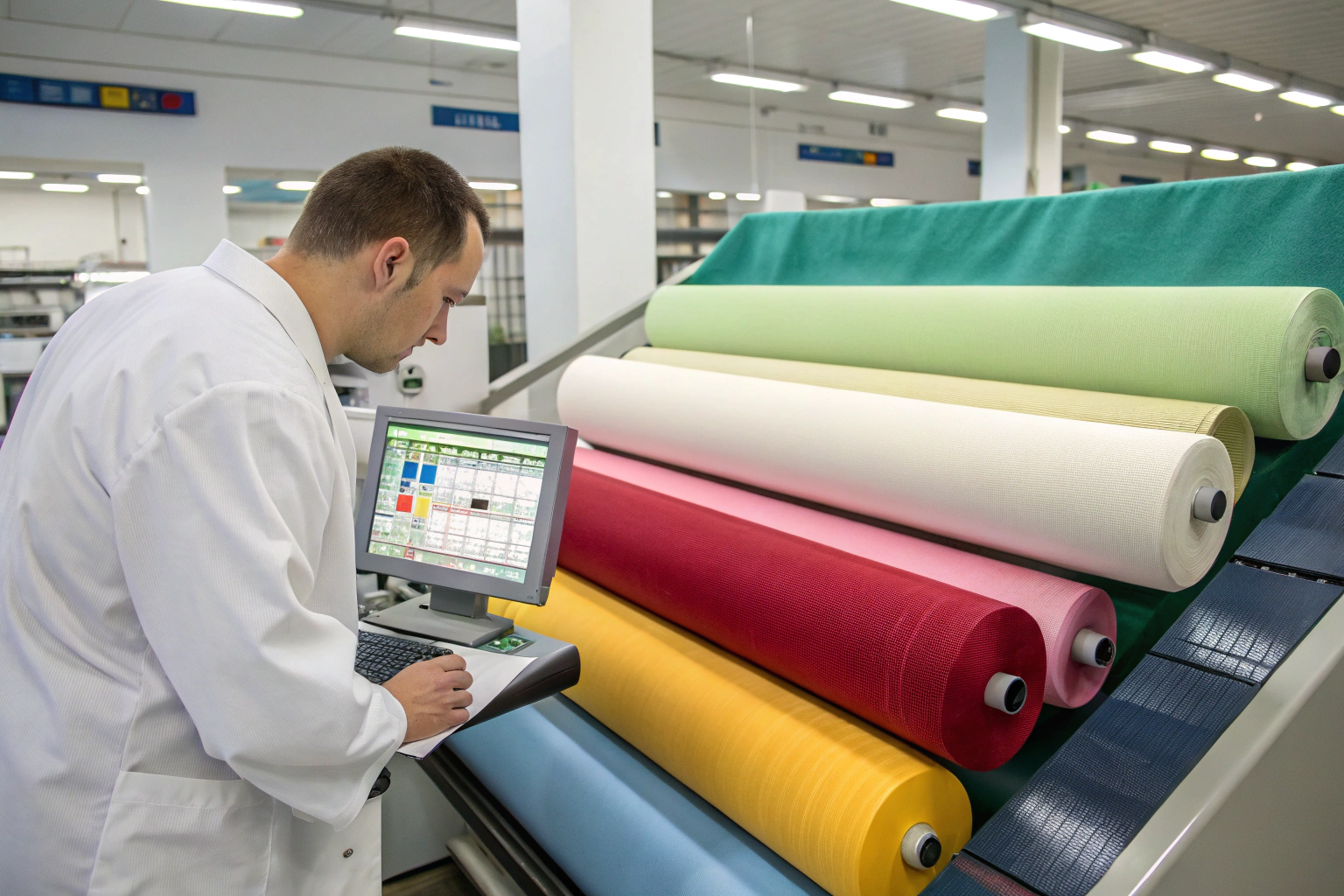
I’ll never forget the call that came in from a client in Milan. They’d received 15,000 meters of beautiful woven shirting in what was supposed to be a consistent navy blue. But when they unrolled the fabric, they found that rolls from the beginning of production were noticeably different from rolls at the end. The color variation was subtle but unmistakable—and in luxury shirting, subtle is enough to ruin a collection. They had to reject the entire order, and both sides lost.
That call taught me something I’ve never forgotten: color consistency isn’t just a quality issue—it’s the difference between a successful collection and a catastrophic failure. In large woven fabric orders, color variation can hide in plain sight, only revealing itself when garments are cut and sewn together.
Let me walk you through exactly how to ensure color consistency in large woven fabric orders. I’ll share the systems we use, the tests that matter, and the questions you must ask before production starts.
What Causes Color Variation in Woven Fabric Production?
Before you can prevent color variation, you need to understand where it comes from. The causes are multiple, and they compound.
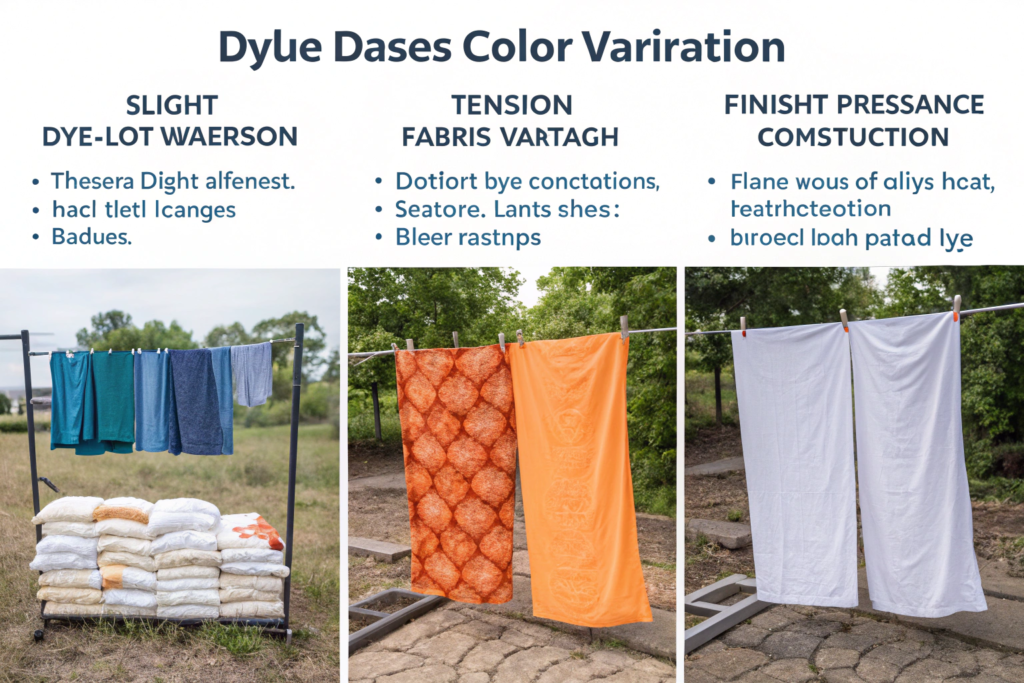
Dye lot variation is the most common source. Dye is manufactured in batches, and even with precise quality control, slight variations between batches are inevitable. If your large order requires multiple dye lots, those slight differences can become visible.
Fabric construction variations affect dye uptake. If the weaving tension varies across the order—tighter in some areas, looser in others—the fabric will absorb dye differently. What looks like color variation may actually be construction variation affecting how color appears.
Finishing inconsistencies change color perception. Heat setting, calendaring, and other finishing processes affect how light reflects from the fabric surface. If finishing varies across rolls, the same dye can look different.
Water quality matters more than most buyers realize. Dyeing requires consistent water chemistry. If water source or treatment varies during production, dye uptake can shift.
Timing between production runs creates risk. If your large order is produced over weeks, conditions change—temperature, humidity, even the dye technician’s experience level. Each variable affects color.
A German client once had color variation traced to a simple cause: the factory had switched water sources midway through production. The new water had different mineral content, and the dye reacted differently. No one had thought to check.
Why Do Different Dye Lots Create Visible Differences?
Understanding dye chemistry helps explain why variation happens.
Dye formulations are complex mixtures of chemicals. Even with precise recipes, slight variations in raw materials, mixing time, or temperature during manufacturing create microscopic differences. These differences are invisible in the dye itself but become visible when applied to fabric.
The human eye is incredibly sensitive to color differences, especially in neutrals and pastels. A variation that measures tiny on a spectrophotometer can be obvious to a trained observer. Navy blue, charcoal, and beige are particularly unforgiving.
Different dye classes behave differently. Reactive dyes (for cotton) are generally more consistent than direct dyes. Vat dyes (for dark colors) can be very stable but require precise application. Understanding which dye class your fabric uses helps predict consistency risks.
The solution isn’t eliminating dye lot variation—it’s managing it. Smart buyers specify that all fabric for an order must come from the same dye lot. This may require the factory to produce enough dye for the entire order upfront, which takes planning but eliminates lot-to-lot variation.
A French luxury brand requires a single dye lot for every order over 1,000 meters. They know it costs more and requires longer lead times, but they also know their customers notice color differences.
How Does Fabric Construction Affect Color Perception?
This is one of the most misunderstood aspects of color consistency.
The same dye on different fabric constructions will look different. A twill weave reflects light differently than a plain weave, so the same color looks different. This is expected and acceptable.
The problem is when the same construction varies within an order. If some rolls are woven tighter than others, they’ll reflect light differently, making the color appear to vary even though the dye is identical.
Yarn variation matters too. If yarn count varies—thicker here, thinner there—the fabric surface changes, affecting how light interacts with color. What looks like color variation may actually be yarn variation.
Finishing compounds this. Calendaring flattens the fabric surface, increasing luster and darkening appearance. If calendaring pressure varies across rolls, color consistency varies.
The solution is rigorous process control throughout production, not just in dyeing. A factory that maintains consistent weaving tension, yarn quality, and finishing parameters produces fabric that holds color consistently even before dyeing.
A Japanese client once rejected fabric that looked perfectly consistent to our eyes. Under their specialized lighting, they could see subtle variation caused by tension differences during weaving. Their quality standards taught us to look beyond the dye.
What Standards Should You Specify for Color Tolerance?
Without clear standards, color acceptance becomes subjective. "This looks different" isn’t a specification. You need numbers.
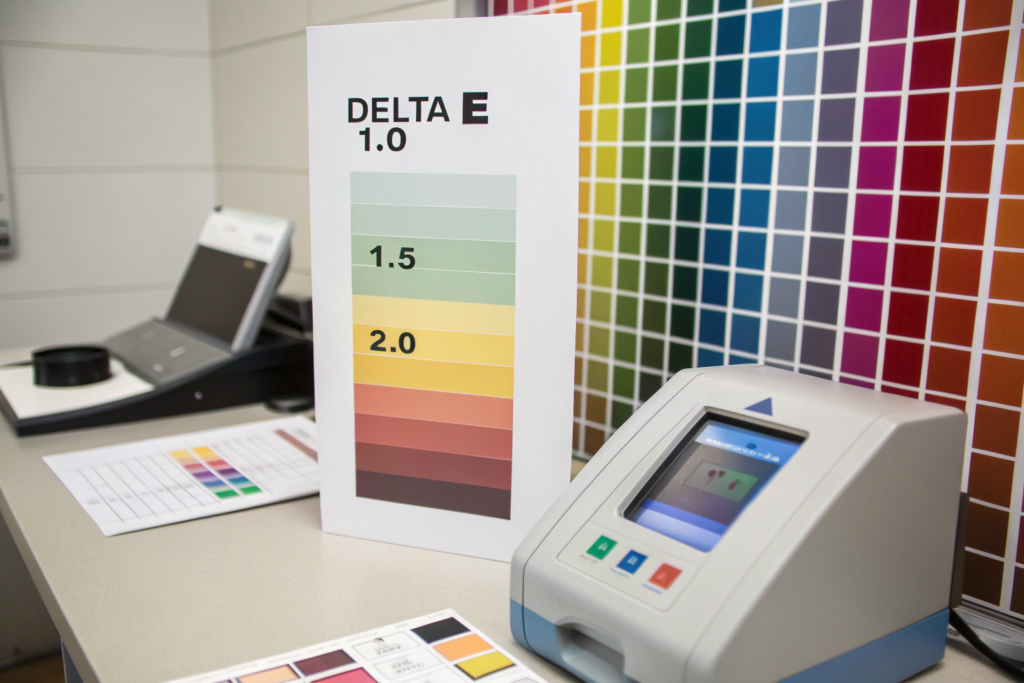
Delta E (dE) is the standard measurement of color difference. It quantifies the difference between two colors on a scale where 1.0 is barely perceptible to the trained eye, and 2.0 is clearly visible to most observers.
For premium products, specify dE ≤ 1.0. This means the color variation is essentially imperceptible. This standard applies to luxury brands, high-end uniforms, and any product where color perfection matters.
For commercial products, dE ≤ 1.5 is typical. Minor variation may be visible under close inspection but won’t affect the overall appearance of finished goods. Most apparel falls in this range.
For basic products, dE ≤ 2.0 may be acceptable. Variation is visible but not extreme. This applies to products where price matters more than perfection.
Light source matters enormously. Colors look different under different lighting. Specify the light source for evaluation: D65 (daylight), TL84 (store lighting), or A (incandescent). A color that matches under one light may mismatch under another.
A Swedish brand specifies dE ≤ 1.0 under D65 and TL84 for all their products. They know that what looks good in their studio must look good in stores and daylight.
How Do You Set Realistic Color Tolerance Targets?
Perfection is expensive. Understanding what’s achievable helps you set targets.
Fiber type affects achievable tolerance. Natural fibers like cotton and wool have more inherent variation than synthetics. Expecting dE 1.0 in cotton is reasonable; expecting it in linen is harder because the fiber itself varies.
Color affects tolerance achievability. Neutrals (gray, beige, navy) are hardest to match consistently. Bright colors (red, royal blue) are easier because slight variations are less noticeable. Pastels fall in between.
Volume affects feasibility. A 500-meter order can be produced from a single dye lot, making tight tolerances achievable. A 50,000-meter order may require multiple lots, making dE 1.0 across all fabric unrealistic.
End use guides tolerance. Garments that will be sold as separates (where each piece stands alone) can have looser tolerances than garments sold as sets (where pieces must match).
A US brand learned to match tolerance to product. Their matching sets require dE 1.0. Their individual pieces allow dE 1.5. The specification matches the product requirement.
What’s the Difference Between Lab Dip Approval and Bulk Production?
This distinction causes more problems than almost any other.
Lab dips are small samples dyed under ideal conditions. They show what’s possible, not what’s typical. Approving a lab dip means "this color is directionally correct," not "bulk will match exactly."
Bulk production involves larger volumes, different equipment, and more variables. Even with perfect lab dip approval, bulk may shift slightly. The key is controlling that shift within tolerance.
The solution is bulk approval before full production. Smart buyers approve lab dips, then request a bulk sample—fabric from the actual production run, not a lab sample. Only after bulk sample approval does full production proceed.
This adds time but prevents disasters. A bulk sample caught a color shift that would have ruined a 20,000-meter order for a Canadian brand. The lab dip had approved; the bulk revealed that production conditions were different.
A UK brand now requires bulk samples for every color in every order. Their on-time delivery rate hasn’t suffered because they build the time into schedules. Their rejection rate has dropped to near zero.
What Quality Control Processes Ensure Color Consistency?
Systematic quality control prevents variation from reaching your warehouse.
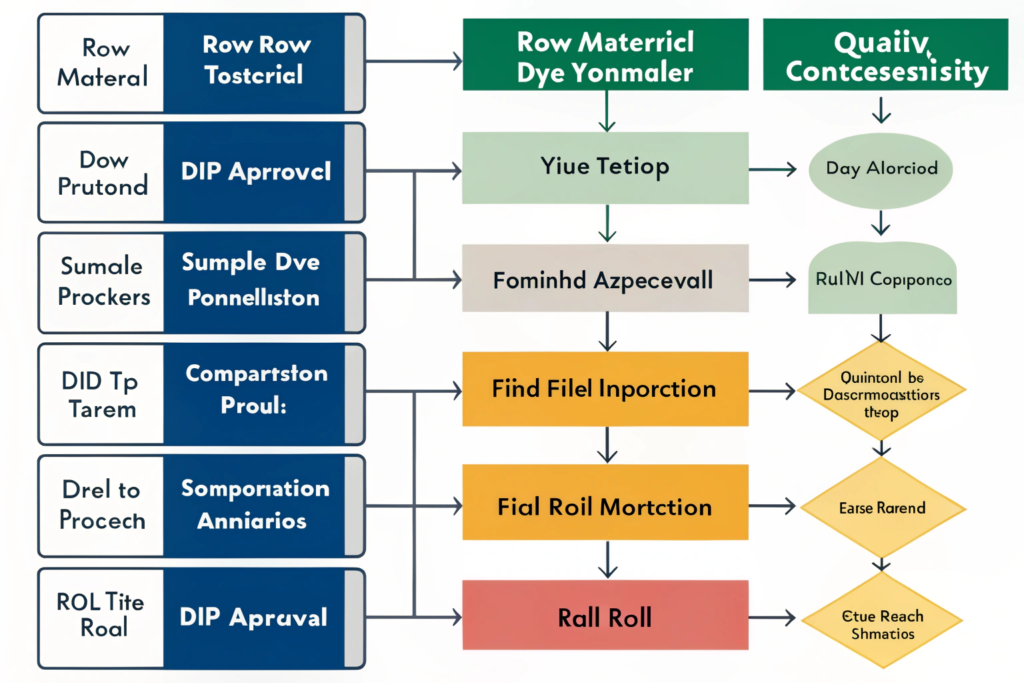
Raw material testing comes first. Yarn must be consistent because variation here magnifies later. Check yarn count, twist, and shade before weaving.
Dye formulation control ensures consistency at the source. Precise weighing, mixing, and documentation prevent batch-to-batch variation. Modern factories use computerized dispensing for accuracy.
Lab dip approval sets the target. Multiple dips may be needed to hit the precise color. Approve against physical standards, not just digital references.
Bulk sample approval verifies production conditions. Run a short production lot, dye it, and evaluate against standards. Only when bulk matches lab dip does full production proceed.
In-process monitoring catches drift before it becomes disaster. Take samples from the beginning, middle, and end of production. Test each against standards. If drift occurs, adjust before more fabric is dyed.
Final inspection compares roll to roll. Every roll should be checked against a master standard and against other rolls. Any roll outside tolerance is quarantined.
A Spanish client requires photographs of every roll alongside the master standard. They keep a digital record that has resolved multiple disputes about whether variation existed.
How Do You Monitor Color During Production?
Continuous monitoring prevents surprises.
Sample at fixed intervals. Every 500-1000 meters, take a sample and measure against standards. This catches drift early, when correction is still possible.
Use both visual and instrumental evaluation. Instruments provide numbers; trained eyes catch what numbers miss. The combination is powerful.
Document everything. Record measurements, sample locations, and any adjustments made. This creates a traceable record if questions arise later.
Adjust proactively. If measurements show drift toward tolerance limits, adjust before exceeding them. Waiting until fabric is outside tolerance wastes production.
Communicate with buyers. For critical orders, share monitoring data. A client who sees that color is consistent throughout production gains confidence.
A Dutch brand receives weekly color monitoring reports during production of their large orders. They’ve caught potential issues early multiple times, allowing adjustments before fabric shipped.
What Inspection Should Happen Before Shipment?
Final inspection is your last chance to catch problems.
Check every roll against the master standard. Use standardized lighting (typically D65) and trained inspectors. Compare each roll side-by-side with the standard.
Compare rolls to each other. Lay rolls from different production stages next to each other. If variation exists, it will show.
Measure with instruments. Spectrophotometer readings provide objective data to support visual inspection. Document readings for each roll.
Flag any roll outside tolerance. Don’t ship it. Either re-dye (if possible) or separate for other uses.
Document everything. Create a report showing each roll’s measurements, photos, and inspection status. Share with the buyer as part of shipping documentation.
A Swiss client requires a color consistency report with every shipment: photos of each roll next to the standard, spectrophotometer readings, and inspector sign-off. They’ve never received an off-color order.
How Do You Handle Color Variation When It Occurs?
Despite best efforts, variation sometimes happens. How you handle it determines whether the relationship survives.
Document the issue immediately. Photos, videos, measurements—capture everything. The more evidence you have, the clearer the discussion.
Contact the supplier immediately. Don’t wait. Early communication allows more options for resolution.
Understand the extent. Is it one roll or the whole order? Minor variation or dramatic difference? The scope determines the solution.
Explore options together. Can off-shade rolls be re-dyed? Can they be used for different products (linings, less visible components)? Can the supplier offer a discount to make them acceptable?
Be reasonable in resolution. A supplier who made a good-faith effort deserves a fair outcome. Demanding full refund for minor variation that doesn’t affect use damages relationships.
Learn for next time. What caused the variation? How can it be prevented? Use the experience to improve future orders.
A French client once received fabric with slight variation between rolls. Instead of rejecting, they worked with us to sort rolls by shade and use them in different styles where variation wouldn’t be noticeable. The relationship strengthened because we solved together.

When Should You Accept vs Reject Off-Color Fabric?
The decision requires judgment, not just rules.
Accept when variation is within agreed tolerance. If you specified dE 1.5 and fabric measures dE 1.4, it’s acceptable even if you wish it were closer. Your specification was the agreement.
Accept when variation won’t affect finished goods. If off-shade rolls can be used for different styles, or if garments will be sold separately rather than as sets, variation may be manageable.
Accept when re-dyeing would damage fabric. Some fabrics can’t withstand re-dyeing without losing hand feel or strength. In those cases, negotiation may be better than rejection.
Reject when variation exceeds tolerance and affects use. If you specified matching sets and rolls don’t match, rejection is appropriate.
Reject when variation is extreme. Fabric that’s clearly the wrong color, regardless of tolerance, should be rejected.
The key is clear communication. Explain your decision, provide evidence, and work toward resolution.
A German client once rejected fabric that was technically within tolerance but visually unacceptable for their luxury market. They explained their position, provided photos showing why it wouldn’t work, and worked with us on a solution. We found a different buyer for that fabric and re-ran their order correctly.
How Do You Prevent Recurrence?
Every problem is a learning opportunity.
Identify root cause. Was it dye lot variation? Process drift? Communication failure? Don’t stop at symptoms.
Document the learning. Add to your quality manual, your training materials, your supplier requirements.
Update specifications if needed. Did tolerance need to be tighter? Did approval process need another step?
Share with suppliers. Good suppliers want to improve. Share what went wrong and what would prevent recurrence.
Build into future contracts. Specify lessons learned as requirements for future orders.
A Swedish brand maintains a "lessons learned" database from every quality issue. When ordering similar fabric again, they reference past problems and specify preventions. Their recurrence rate is near zero.
What Questions Should You Ask Before Ordering Large Quantities?
The time to prevent color variation is before production starts. Ask these questions:
"Will all fabric come from the same dye lot?" If not, how will you ensure lot-to-lot consistency? Multiple lots require extra care.
"What is your process for maintaining color consistency during production?" Look for systematic monitoring, not hope.
"Can you provide bulk samples before full production?" This single step prevents most color disasters.
"What tolerance standard do you use?" Make sure it matches your needs. Don’t assume.
"How do you compare rolls during final inspection?" Each roll should be checked against standards and against others.
"What happens if variation is found?" Clear procedures protect both sides.
A Canadian brand sends these questions with every RFQ. Suppliers who answer clearly and confidently get orders. Those who hedge or avoid don’t.

How Do You Verify a Factory’s Color Control Capabilities?
Beyond questions, verification matters.
Ask about equipment. Spectrophotometers, standardized lighting, computerized dye dispensing—these indicate serious color management.
Ask about training. Who performs color evaluation? How are they trained? How is their accuracy verified?
Ask about documentation. Can they provide color measurement records from past orders? Good factories keep records.
Ask about standards. Do they use physical standards or just digital? Physical standards are more reliable.
Visit if possible. Seeing the lab, meeting the technicians, observing the process builds confidence.
A Japanese client sends their quality manager to audit new suppliers’ color control systems before placing first orders. The visit reveals more than any questionnaire.
What Goes into a Color Consistency Contract Clause?
Protect yourself with clear contractual language.
Specify tolerance standard: "Color variation shall not exceed Delta E 1.5 when measured under D65 illumination, using a calibrated spectrophotometer, compared to the approved master standard."
Specify approval process: "Production shall not begin until bulk samples have been approved in writing. Bulk samples shall be from the actual production run, not lab dips."
Specify inspection rights: "Buyer or their representative may inspect fabric during production and before shipment. Rolls failing inspection may be rejected."
Specify remedy for non-conformance: "Fabric exceeding specified tolerance may be rejected at buyer’s option. Supplier shall bear cost of replacement and any related shipping."
Specify documentation: "Supplier shall provide color measurement data for each roll, showing readings against master standard."
A US brand includes these clauses in every purchase contract. They’ve never had to enforce them because the clarity prevents problems.
Conclusion
Color consistency in large woven fabric orders is achievable—but it requires planning, communication, and systematic quality control. It doesn’t happen by accident.
The key principles:
- Understand what causes variation: dye lots, construction differences, finishing variables
- Set clear tolerance standards appropriate to your product
- Require bulk samples before full production
- Monitor continuously during production
- Inspect thoroughly before shipment
- Document everything
- Handle problems collaboratively when they occur
At Shanghai Fumao, color consistency is a core competency. Our CNAS-accredited lab maintains calibrated spectrophotometers and standardized lighting. Our technicians are trained and tested regularly. Our processes require bulk sample approval before production, in-process monitoring, and roll-by-roll final inspection.
We provide color measurement data with every shipment—each roll’s readings against the master standard. Clients can see exactly what they’re receiving before fabric arrives.
We’ve learned that color consistency isn’t just about avoiding problems. It’s about building trust. Clients who know they can rely on our color quality can focus on their designs, their marketing, their sales. The fabric becomes one less thing to worry about.
Whether you’re ordering 500 meters or 50,000 meters, we have the systems to ensure your colors are consistent, roll to roll, order to order.
Contact our Business Director, Elaine, today to discuss your woven fabric needs. She and her team will explain our color control processes, answer your questions, and ensure your order meets your expectations. Email her directly at: elaine@fumaoclothing.com. Let’s get your colors right, every time.