I still get angry thinking about 2017. A New York-based designer we’d worked with for two years called me, devastated. She’d spent months developing an exclusive jacquard pattern with us, launched her collection to rave reviews, and then discovered identical fabric selling on Alibaba for half the price. Someone in our supply chain had leaked her design. We traced it to a subcontractor who’d kept samples and sold them. That phone call changed everything about how we handle intellectual property. We lost a client that day, but we gained a mission.
Protecting intellectual property when sourcing custom fabrics from China requires a multi-layered approach combining legal agreements, supply chain control, selective information sharing, and partner vetting. No single measure provides complete protection, but together they create a system where leaks become difficult, traceable, and costly for anyone who attempts them.
Let me be completely honest with you. IP theft happens in China. It also happens in Italy, in the US, and everywhere else textiles are made. The difference is that in China, the scale and speed of copying can be devastating. But here’s what I’ve learned after two decades—the suppliers who steal designs are usually the ones with nothing to lose. The serious mills, the ones building long-term relationships with major brands, protect client IP because our business depends on trust. The key is knowing how to find us and how to work with us securely.
What legal protections actually work when sourcing from China?
Every designer asks about contracts, and every lawyer has an opinion. But the reality of legal protection in China is more nuanced than most Westerners understand. Chinese contract law has strengthened significantly over the past decade, but enforcement still depends heavily on relationship and reputation. Understanding this landscape helps you structure agreements that actually matter.
The foundation is a well-drafted confidentiality agreement and design ownership contract, preferably in both English and Chinese with equivalent legal force. The Chinese version matters because Chinese courts interpret contracts based on the Chinese text. We always provide clients with bilingual agreements and encourage them to have the Chinese version reviewed by local counsel. In 2019, a British brand’s lawyer caught a translation discrepancy that would have limited their ownership rights—the English said "exclusive worldwide rights" while the Chinese said "exclusive rights in China." We corrected it immediately, but without that review, they’d have had a weak contract.

Should you register your designs with Chinese authorities?
Yes, absolutely, for any design with significant commercial value. China operates a registration system for textile designs that provides stronger protection than relying on copyright alone. Registration costs relatively little—typically a few hundred dollars—and creates a public record of your ownership. If you need to enforce rights later, having a registration certificate streamlines the process dramatically.
The catch is timing. Registration takes 3-6 months, which doesn’t help for fast fashion collections. But for signature prints or signature fabrics you’ll use across multiple seasons, it’s worth the investment. We guide clients through the registration process and provide documentation needed for applications. In 2021, a French luxury brand registered three of their custom jacquards through our recommended IP agent. When a copycat appeared six months later, they had the legal standing to demand takedowns and design registration for fabric protection in China damages from the infringing mill.
The other option is using the China Customs IP Protection system. Once you register your design with Customs, they can seize counterfeit goods at borders. This is particularly valuable if you suspect copies might be exported. Several of our clients have used this successfully to block shipments of knockoff fabrics destined for their own markets.
What contract clauses are essential for fabric development agreements?
Beyond basic confidentiality and ownership, include these specific provisions:
First, a clear definition of what constitutes "your design." Is it the pattern? The color combination? The fiber blend? The construction method? Vague definitions create loopholes. We specify exactly what elements are protected.
Second, restrictions on sample retention. Our agreements require that all samples, strike-offs, and development materials be returned or destroyed after project completion, with certification of destruction. This prevents the "forgotten sample" problem that led to that 2017 leak.
Third, liquidated damages clauses that specify financial penalties for breach. Chinese courts are more likely to enforce these if they’re reasonable—typically 2-3 times the contract value. The existence of a clear penalty deters essential contract clauses for fabric sourcing subcontractors who might otherwise gamble on stealing designs.
Fourth, audit rights allowing you or your representatives to inspect facilities and records related to your production. This deters unauthorized additional production runs.
Finally, choice of law and arbitration provisions. Many foreign brands prefer arbitration in Hong Kong or Singapore rather than litigation in mainland China. We accept this because it builds trust, even though it’s more complex for us.
How can you control your supply chain to prevent design leaks?
Contracts are paper. Supply chain control is physical. The most effective IP protection comes from limiting who touches your designs and when. This requires thinking differently about how you structure production relationships.
The ideal scenario is working with a vertically integrated supplier who controls all production stages internally. At Shanghai Fumao, we operate our own weaving, dyeing, printing, and finishing, with embroidery and coating through closely managed partners. This means your design never leaves our ecosystem. There’s no handoff to unknown subcontractors, no samples sitting in multiple facilities, no communication gaps where leaks happen.
For complex designs requiring specialized processes we don’t control internally, we bring those partners into our secure workflow. They sign our confidentiality agreements, work with our designated staff, and deliver materials directly to us rather than handling client communications. This creates a "cone of silence" around your project.
What information should you withhold during early development?
Share progressively, not all at once. Early discussions need only general concepts—"I’m looking for a burnout velvet with metallic effect in jewel tones." This lets suppliers assess feasibility without revealing specific colors, exact patterns, or collection themes.
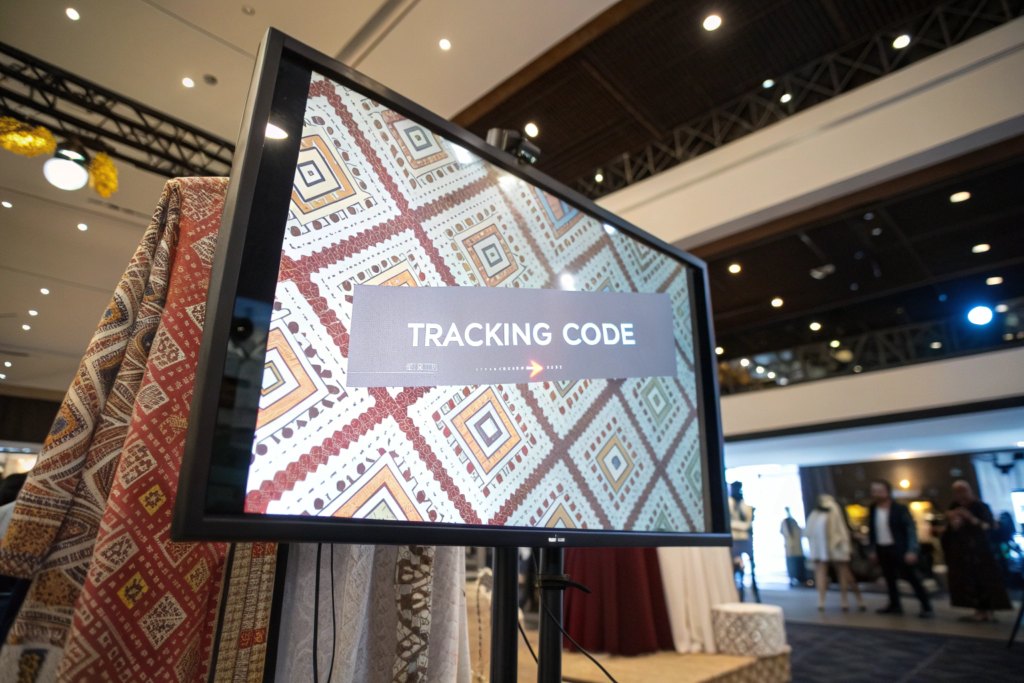
Once you’ve selected a partner, share mood boards and color direction but hold back final pattern files until agreements are signed. Share full-resolution artwork only when production begins, and consider adding digital watermarks or tracking codes that identify leaks if files appear elsewhere.
We had a client in 2022 who took this to another level. They sent us pattern files split into three parts over three weeks, each with different digital signatures. When a copy appeared online, they could trace which part leaked and when. It turned out their own London office had been compromised, not our facility. The information security for fashion design sourcing tracking system proved their IP was safe with us while revealing their own vulnerability. That transparency strengthened our relationship.
How do you vet subcontractors who must touch your designs?
When we must use subcontractors—for specialized embroidery, for example—we apply the same standards we require for ourselves. They must sign identical confidentiality agreements. They must work only with designated fabric, not retain samples. They must allow unannounced inspections.
We also limit their visibility. A subcontractor doing embroidery might receive only the sections of fabric requiring embroidery, not full rolls. They see the pattern area but not the full design context. This makes it harder to reconstruct the complete product.
In 2020, we discovered an embroidery partner keeping "reference samples" of client work in their showroom. They weren’t selling them, just showing capabilities to potential customers. But those samples could be photographed and copied. We terminated the relationship immediately and now audit partner vetting subcontractors for IP protection in textile manufacturing facilities specifically for sample retention practices. This cost us a convenient partner but preserved client trust.
How do you build relationships with suppliers who prioritize IP protection?
The best protection isn’t legal or technical—it’s relational. Suppliers who see you as a long-term partner will protect your designs because your success is their success. Suppliers who view you as a one-time transaction have no such incentive. Building these relationships requires intentional effort and mutual investment.
Start by being a good partner yourself. Pay on time, communicate clearly, and respect the supplier’s processes. In 2018, after our leak disaster, we committed to becoming the kind of supplier designers could trust. We invested in secure facilities, trained staff on IP handling, and created systems to track every sample. But we also started being more selective about clients—we needed partners who valued IP protection as much as we did.

What signals indicate a supplier takes IP seriously?
Look for physical and procedural evidence. Do they have secure sample storage? Are design areas restricted? Do employees understand confidentiality requirements? Can they describe their process for handling proprietary materials?
Ask about their client base. Suppliers working with major luxury brands have already been vetted by the most demanding IP protectors in the industry. They’ve survived audits from LVMH, Kering, and Richemont. That experience shapes their operations.
Request references from other designers who’ve done custom work with them. Call those references and ask specific questions: Did your designs appear elsewhere? How did they handle samples? What happened when the project ended?
In 2023, a Los Angeles-based designer spent two hours on video calls with us before placing her first order. She asked about our subcontractor management, our digital security, our sample destruction protocols. She later told us she’d eliminated three other Chinese mills because they couldn’t evaluating fabric supplier IP protection practices answer these questions clearly. She’s now one of our best clients, and we appreciate her thoroughness—it shows she values what we’ve built.
How can smaller designers get attention from top-tier mills?
This is a real challenge. The mills with the best IP protection often prioritize large clients with high volumes. Smaller designers get shuffled to sales staff who may not understand IP concerns. But there are strategies to bridge this gap.
First, work through intermediaries who already have relationships. Sourcing agents who specialize in high-end production can introduce you to appropriate mills and vouch for your seriousness. We work with several agents who pre-screen designers and prepare them to be good clients.
Second, be prepared and professional. Have clear tech packs, realistic timelines, and reasonable budgets. Mills are more willing to invest in protecting IP for clients who seem likely to succeed and order again. A disorganized designer with vague requirements raises red flags—if they’re not serious about their own business, why should we be serious about protecting their designs?
Third, consider starting with stock fabrics that you customize through finishing rather than full custom development. This exposes less IP initially while building relationship. Once trust is established, you can small designer strategies for IP protection in China move to more complex custom work. Several of our long-term partners started this way—sampling our stock fabrics, ordering small runs, then gradually introducing custom developments as our relationship deepened.
What digital tools help track and protect your fabric designs?
Technology offers new ways to protect IP that didn’t exist a decade ago. From digital watermarking to blockchain traceability, these tools create accountability and make leaks traceable. Understanding what’s available helps you build a comprehensive protection strategy.
Digital watermarking embeds invisible information in your design files that can be detected even in photographs of finished fabric. Companies like AlpVision and Digimarc offer solutions specifically for textiles. When a leaked design appears online, you can scan images to identify which client’s file was compromised and when. We’ve implemented this for several clients who consider it essential insurance.
Can blockchain really help with fabric IP protection?
Blockchain’s role is often overstated, but for specific applications it’s genuinely useful. The key is creating an immutable record of design creation and transactions. If you register your design on a blockchain platform at the moment of creation, you have timestamped proof that can establish priority in disputes.
More practically, blockchain can track fabric through the supply chain. Each roll receives a unique digital identifier recorded on a distributed ledger. As the fabric moves through weaving, dyeing, finishing, and cutting, each transaction is recorded. If excess fabric appears on the gray market, you can trace which production run it came from and hold the responsible party accountable.
In 2022, we piloted a blockchain traceability system with a German activewear brand. Every meter of their custom compression fabric carried a QR code linked to blockchain records showing production date, facility, and quality tests. When a small quantity appeared on a resale site, they could verify it was authentic overrun from a specific batch—and blockchain for fashion supply chain traceability then investigate how it left the supply chain. The system didn’t prevent the leak, but it made investigation faster and more certain.
What role does digital rights management play for textile designs?
For digital pattern files, standard DRM tools can control access and usage. PDFs can be password-protected with expiration dates. High-resolution files can be watermarked with client information. File access can be logged and monitored.
We use a secure client portal for all design file transfers rather than email, which is easily forwarded. The portal tracks who accesses which files, when, and from where. If a file appears where it shouldn’t, we have an audit trail.
For a particularly sensitive project with a celebrity athleisure brand in 2023, we used encrypted files that required two-factor authentication to open and expired after 30 days. The files also contained forensic watermarks visible only under specific analysis. The brand’s legal team told us they’d never worked with a supplier who digital tools for protecting fashion intellectual property invested so heavily in digital security. That reputation now brings us other security-conscious clients.
Conclusion
Protecting intellectual property when sourcing custom fabrics from China isn’t about finding a magic solution. It’s about building a system—legal agreements that actually work, supply chain control that limits exposure, relationships with partners who share your values, and digital tools that create accountability. No single element provides complete protection, but together they make your designs far safer than most designers ever achieve.
At Shanghai Fumao, protecting client IP isn’t just a policy—it’s the foundation of our business. After that painful loss in 2017, we rebuilt our entire operation around security. Our facilities have controlled access and restricted areas. Our staff receives regular training on confidentiality. Our subcontractors are vetted and monitored. Our digital systems track every file and sample. We’ve invested millions in becoming the kind of partner designers can trust with their most valuable creations.
If you’re ready to develop custom fabrics with a partner who takes your IP as seriously as you do, reach out to our Business Director, Elaine. She can walk you through our security protocols, introduce you to clients who’ve trusted us with their signature designs, and help you develop a protection strategy that fits your specific needs. Contact Elaine at [elaine@fumaoclothing.com]() to start a conversation about keeping your designs safe. Let’s build something extraordinary together—and keep it yours.