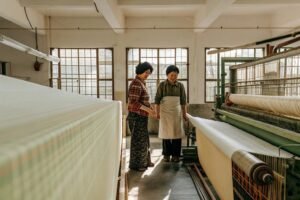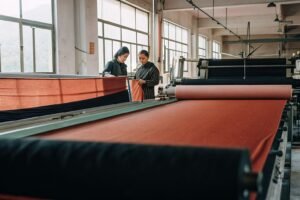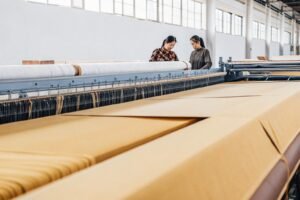
I got a WhatsApp message from a small business owner in Austin, Texas last month.
Her name is Sarah. She runs a small Etsy shop making baby carriers. She was buying organic cotton canvas from a US distributor at $12.50/yard. Her profit margin was 12%. She found similar fabric on Alibaba for $4.80/yard.
She asked me: "This seems too good to be true. What am I missing?"
I told her: "You are missing the other 17 costs."
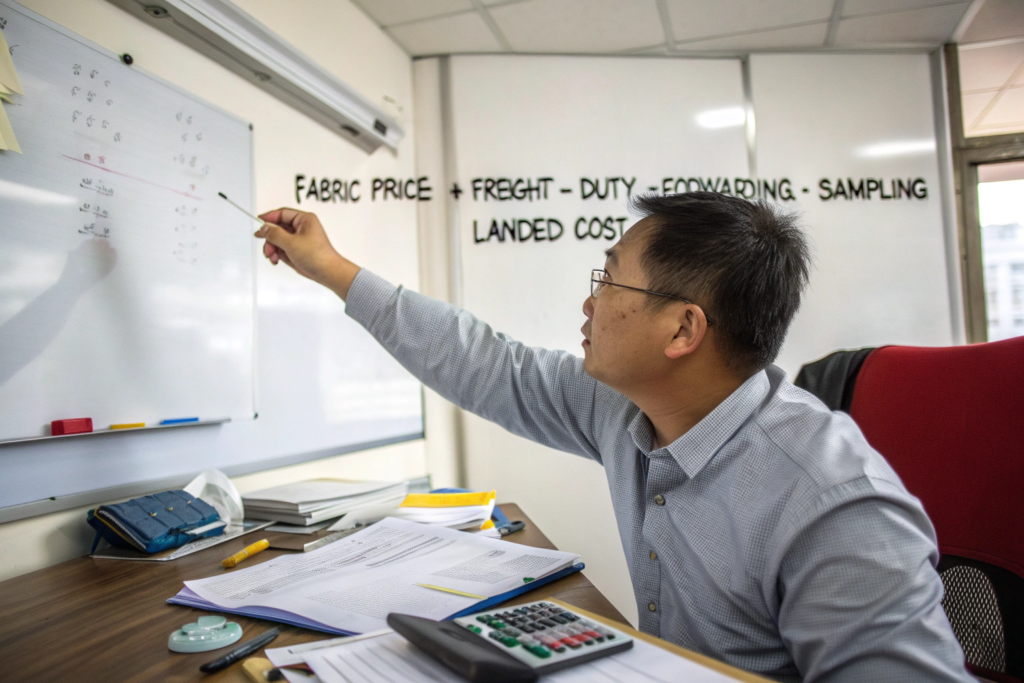
The fabric price is not the fabric cost. There is shipping, freight forwarding, customs clearance, duties, warehousing, quality control, payment fees, currency fluctuation, and the risk of buying from a supplier 7,000 miles away who you have never met.
But here is the truth: Small businesses can successfully import fabric from China. Thousands do it every year.
In 2026, it is easier than it was in 2016. But it is also riskier.
I have been selling fabric to small businesses since 2009. My first international client was a one-woman handbag brand in Vancouver. She ordered 200 yards of linen. She paid by PayPal. She was terrified.
Today, she orders 15,000 yards per year. She has never visited China. We have never met in person. But we talk every month.
Let me tell you what actually works for small importers. Not the Alibaba tutorials. The real logistics, real costs, and real mistakes.
What Are the Real Costs of Importing Fabric from China?
The biggest mistake small importers make: They multiply the Alibaba price by the exchange rate and think that is the cost.
It is not.
Here is the real cost breakdown for a typical small fabric import order (500 yards, 2026 pricing):
| Cost Component | Calculation | Amount (USD) |
|---|---|---|
| Fabric FOB price | $3.50/yard × 500 yards | $1,750 |
| Sampling cost (pre-production) | 1 time, amortized | $85 |
| Ocean freight (LCL) | $45/CMB × 2 CBM | $90 |
| Freight forwarder fees | Documentation, handling | $120 |
| US Customs clearance | Broker fee | $150 |
| Duties (Section 301 exclusion status) | 7.5%–25% of FOB | $131–438 |
| Harbor maintenance fee | 0.125% of FOB | $2 |
| Merchandise processing fee | 0.3464% of FOB | $6 |
| Trucking to your door | Local drayage | $85 |
| Payment wire fees | Bank charges (2 sides) | $45 |
| Currency hedging loss | 0.5–1.5% typical | $18 |
| Total Landed Cost | $2,482–$2,789 | |
| Effective cost per yard | $4.96–$5.58 |
That $3.50 fabric actually costs $5.27 on average. Sarah’s $4.80 Alibaba fabric? Probably $6.50–7.00 landed.
I am not saying don’t import. I am saying calculate correctly.
What is Section 301 and how does it affect small fabric importers in 2026?
Section 301 tariffs are still active. But the exclusion process has changed.
Current status (February 2026):
| Fabric Type | 301 Tariff Rate | Exclusion Status |
|---|---|---|
| 100% cotton woven | 7.5% | No exclusion |
| 100% polyester woven | 7.5% | No exclusion |
| Wool blends | 25% | No exclusion |
| Silk | 25% | No exclusion |
| Linen | 7.5% | No exclusion |
| Knitted fabrics | 7.5% | No exclusion |
| Technical/industrial | Case by case | Exclusion possible |
In 2022–2024, many apparel fabrics were eligible for retroactive exclusions. Those exclusions expired.
In 2025, USTR announced a new exclusion process for "strategic materials." If your fabric is used for medical textiles, PPE, or certain industrial applications, you can apply.
For most small businesses importing standard cotton or polyester: You will pay 7.5%.
Our advice:
- Use HTSUS 9903.88.03 (the current Chapter 99 heading for China-origin textiles)
- Work with a customs broker who specializes in textiles — not a generalist
- Do not assume your supplier will cover tariffs — they won’t
The USTR Section 301 exclusion process changes frequently. We subscribe to updates. We notify our US clients immediately.
At Shanghai Fumao, we provide full HTS classification recommendations. We do not guarantee duty rates. We do provide the documentation you need to file correctly.
Should I ship by air or by sea for my first small order?
Sea. Always sea for fabric.
Here is the comparison:
| Shipping Method | Transit Time | Cost (500 yards) | Risk Level |
|---|---|---|---|
| Ocean LCL (Less than Container) | 25–35 days | $90–150 | Low |
| Ocean FCL (Full Container) | 25–35 days | $1,800–2,500 | Low (but too much volume) |
| Air freight | 5–7 days | $450–800 | High (cost) |
| Express (DHL/FedEx) | 3–5 days | $900–1,500 | Very High |
In 2021, a Canadian startup ordered 300 yards of organic cotton by DHL Express.
Shipping cost: $1,240. Fabric cost: $1,050. They paid more for shipping than for fabric.
They never ordered again.
My rule: If your order is under 200 kg (approx 400–600 yards depending on weight), ship LCL ocean. If it is under 50 kg, ship by air. Never use express couriers for fabric unless it is an emergency sample.
Air freight tip: Consolidate with other buyers. Some forwarders offer "buyers consolidation" — multiple small shipments from different suppliers packed into one air pallet. Cost per kg drops 30–40%.
The LCL shipping guide for small textile importers is essential reading. We recommend Flexport for tech-savvy importers. For smaller volumes, local freight forwarders are often cheaper.
How Do I Find Reliable Fabric Suppliers in China?
Alibaba is not the problem. How you use Alibaba is the problem.
In 2018, a Australian swimwear brand found a supplier on Alibaba. Gold supplier. 5 years. Verified. Great reviews.
They ordered 800 meters of nylon/spandex. Paid 30% deposit. $2,400.
The fabric arrived. It was 40% lighter weight than spec. The stretch recovery was 68% vs promised 92%. The color was wrong.
The supplier refused to refund. Alibaba mediation took 4 months. The brand won. The supplier had already closed their Alibaba store and reopened under a new name.
This happens every day.
Here is our supplier verification checklist:
| Verification Step | What To Do | Red Flag |
|---|---|---|
| Business License | Request PDF, verify company name matches bank account | Different name on invoice |
| Factory visit (virtual) | Video call, ask to see looms/dyeing machines | "Our factory is in another province" |
| Third-party audit | SGS, Intertek, or Bureau Veritas report | Refuse to share or "audit next month" |
| Sample quality | Pay for samples via PayPal or Alibaba Trade Assurance | Free samples, pay shipping only (often fake) |
| Payment terms | 30% deposit maximum for first order | 50%+ deposit required |
| Communication | Technical questions answered specifically | Vague answers, "we can do everything" |
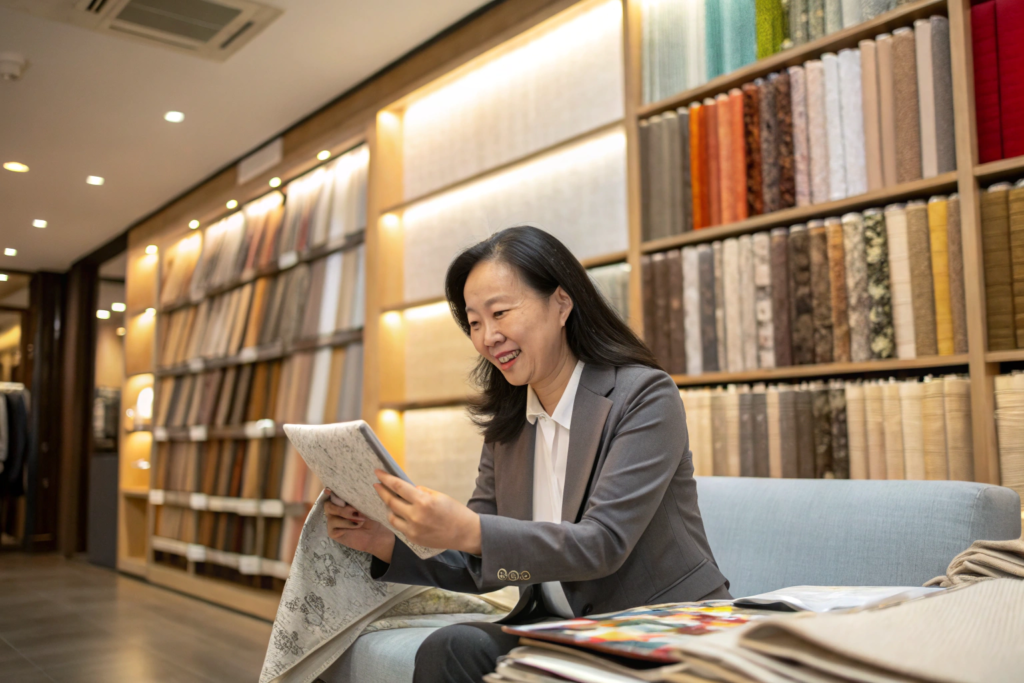
What is the difference between a trading company and a factory—and does it matter?
Yes. It matters enormously for small businesses.
Trading company: Buys from multiple factories, adds markup, speaks English, handles export. May never touch your fabric.
Factory: Owns the looms, knitting machines, dyeing equipment. Controls quality, delivery, and price.
Which is better for you?
| Factor | Trading Company | Factory |
|---|---|---|
| Minimum order quantity | Lower (500–1,000 yards) | Higher (3,000+ yards) |
| English communication | Excellent | Variable |
| Product range | Wide (multiple fabric types) | Narrow (specialized) |
| Quality control | Variable | Direct control |
| Price | +15–30% markup | Best price |
| Sample development | Fast | Slower |
In 2019, a UK hat brand insisted on working only with factories.
They found a cotton canvas factory. Minimum: 5,000 yards per color. They needed 800 yards. The factory said no.
They came back to us (we are a manufacturer, but we also offer small-order programs). We charged 18% more than factory price. They paid it.
My advice for small businesses:
| Order Size | Recommended Supplier Type |
|---|---|
| < 500 yards | Trading company or specialized small-order mill |
| 500–2,000 yards | Manufacturer with small-order program |
| 2,000+ yards | Direct factory |
At Shanghai Fumao, we are a factory. But we operate a "Small Business Direct" program. Minimums: 200 yards for stock colors, 500 yards for custom dye. Price: higher than our bulk customers. Service: white-glove. We explain every step.
How do I verify a supplier is real without flying to China?
You don’t need to fly. You need to video call.
In 2020, COVID stopped all international travel. We started doing virtual factory tours for every new client.
Here is what we show them:
- The weaving/knitting floor — Live video, machines running
- The dyehouse — Not stock footage. Actual machines.
- The QC lab — Testing equipment, current samples
- The warehouse — Rolls with their order numbers visible
- The office — Real people, real desks
If a supplier refuses a live video call, hang up.
Also verify:
- Business license — Ask for the PDF. Check the "business scope" includes textile manufacturing.
- Export license — Required in China for all exporters.
- Bank account name — Must match business license exactly. If different, it is a trading company using someone else’s license.
Third-party audits: For orders over $5,000, spend the $400–600 for a SGS or Intertek audit. They will visit the factory, verify the equipment, and check order history.
We are audited annually by SGS for our US and EU clients. We share reports freely. If a supplier hides behind "confidentiality," they have something to hide.
The SGS supplier audit program for textile factories is transparent. We recommend it for any first order over $10,000.
What Are the Minimum Order Quantities for Small Fabric Importers?
Minimums are the biggest barrier for small businesses.
Factory minimums: 3,000–5,000 yards per color. Sometimes per style.
Trading company minimums: 1,000–2,000 yards per color.
Your budget: 300 yards.
In 2016, we lost hundreds of small business clients because we refused to lower our minimums.
Then we realized: Small businesses today are big businesses tomorrow.
Now we offer tiered minimums:
| Fabric Category | Stock Colors | Custom Colors | Custom Development |
|---|---|---|---|
| Cotton canvas/duck | 50 yards | 200 yards | 500 yards |
| Polyester jersey | 100 yards | 300 yards | 800 yards |
| Nylon/spandex | 100 yards | 300 yards | 800 yards |
| Linen/rayon blends | 50 yards | 200 yards | 500 yards |
| CORDURA®/technical | 200 yards | 500 yards | 1,000 yards |
| Custom prints | 500 yards | 500 yards | 1,000 yards |
Are these profitable for us? Barely. But we keep the sample yardage in stock. We dye custom colors in small batches using our sample dyeing machine.
We charge more: +20–40% vs our bulk prices. Small businesses pay it because the alternative is 5,000 yards.
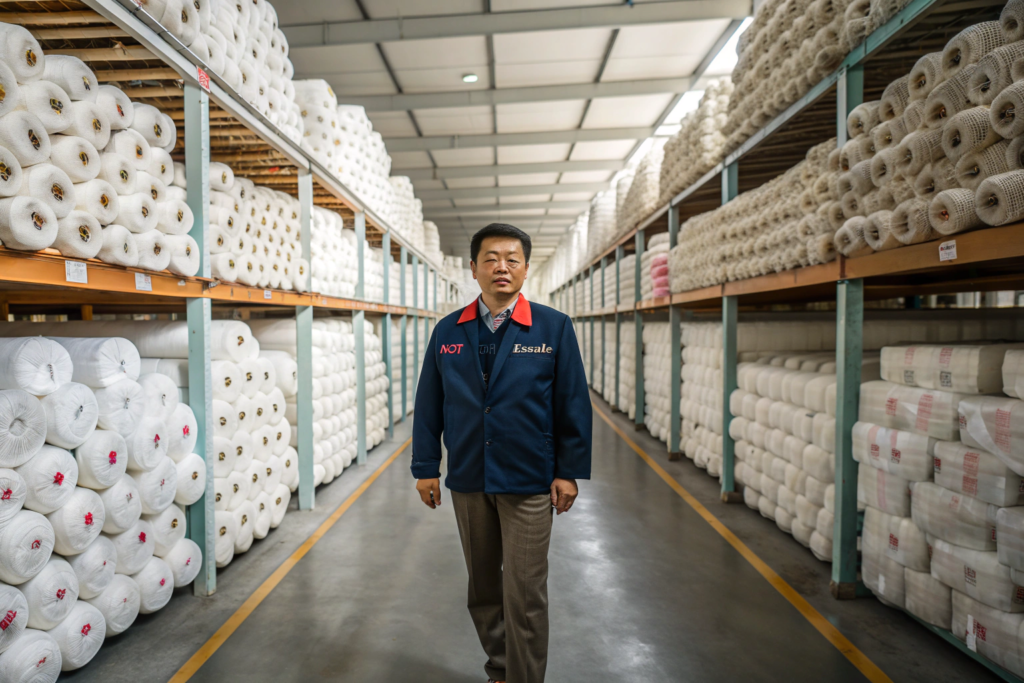
Can I combine multiple colors into one order to meet minimums?
Yes. Most mills will allow this.
In 2022, a Canadian yoga brand needed 4 colors: 150 yards each. Total: 600 yards.
Our minimum per color: 300 yards. Total required: 1,200 yards.
They asked: "Can we order 600 yards total, 4 colors, at a 20% premium?"
We said yes.
Here is how to negotiate minimums:
| Scenario | What To Ask For |
|---|---|
| Multiple colors, one fabric construction | "Can we combine colors to meet total yardage?" |
| One color, multiple shipments | "Can we order 500 yards now, commit to 1,000 yards over 6 months?" |
| Stock color, custom width | "Can we take stock greige and slit to your width?" |
| Sample yardage | "What is your maximum sample length? We will pay express shipping." |
The worst answer is "no." The best answer is "yes, with surcharge."
We almost always say yes with surcharge. The surcharge covers our inefficiency. Small businesses understand this.
What is the smallest order you have ever shipped?
22 yards.
2017. A textile design student in London. She needed organic cotton sateen for her graduation collection. 22 yards. 4 colors.
We said no initially. She emailed me personally. She explained her project. She sent photos of her designs.
I said yes. We charged 3x our normal price. She paid by PayPal. We shipped DHL.
She graduated. She got a job at a major fashion house in Paris. Three years later, she became a senior fabric buyer.
Her first bulk order: 12,000 yards of organic cotton twill.
That 22-yard order cost us $140 in labor and shipping. We lost money. We gained a client for life.
Small businesses: You are not small. You are pre-big.
How Do I Handle Quality Control and Defects?
Defects happen. Even in premium mills.
In 2015, we shipped 800 meters of linen to a New York handbag designer. Our QC missed a 12-meter section with weft bar variation. She cut 40 bags. The color variation was visible. She had to scrap them.
She emailed me at 11 PM New York time. She was crying.
We refunded the entire order. $3,600. We paid return shipping. We lost money. We kept the client.
She still orders from us. 10 years later.
Here is how small businesses should handle quality control:
| Order Value | Recommended QC Method | Cost |
|---|---|---|
| < $1,000 | Supplier photos/video, trust | $0 |
| $1,000–$5,000 | Third-party inspection at origin | $250–350 |
| $5,000–$20,000 | Pre-shipment inspection + lab testing | $400–600 |
| > $20,000 | In-line inspection + pre-shipment | $800–1,200 |
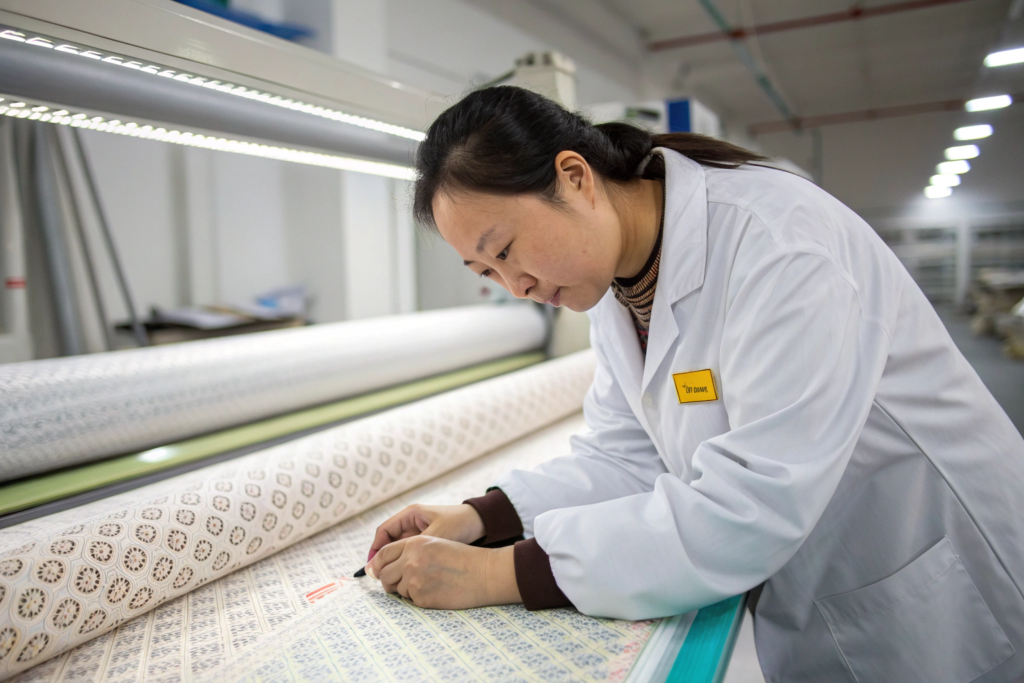
Should I hire a third-party inspection company?
Yes. For orders over $2,000, yes.
In 2019, a Australian swimwear brand skipped inspection to save $280.
The fabric arrived. 1,200 meters. 15% had pin holes from improper stentering. Unusable.
The supplier offered 10% discount. $420. The brand paid $2,800 in wasted freight and duties.
A $280 inspection would have caught the defect in China. The supplier would have replaced the fabric before shipment.
We recommend:
| Inspection Company | Best For | Typical Cost |
|---|---|---|
| SGS | Large orders, rigorous | $400–600 |
| Intertek | Mid-size, fast reporting | $350–500 |
| QIMA | Small orders, digital platform | $250–400 |
| Local Keqiao inspectors | Very small orders, cash payment | $150–250 |
We work with all of them. We do not resist inspections. We welcome them.
If a supplier refuses third-party inspection, cancel the order.
The QIMA fabric inspection checklist is publicly available. We recommend clients use it even if they don’t hire QIMA.
What are the most common fabric defects I should look for?
Here is our internal defect classification:
| Defect Type | Cause | Acceptable Level |
|---|---|---|
| Weft bars/shading | Yarn lot variation, dyeing | Zero in same roll |
| Holes | Mechanical damage | Zero |
| Slubs | Yarn quality | Specified in contract |
| Stentering marks | Heat-setting misalignment | Zero on face fabric |
| Oil stains | Machine maintenance | Zero |
| Color variation roll-to-roll | Dye lot mismatch | Delta E < 1.0 |
| Shrinkage > spec | Finishing error | Zero |
For small businesses: The most common defect you will receive is "off-shade."
Always order a "lab dip" before bulk production. Cost: $50–100. The supplier dyes a 0.5m sample to your color. You approve it. You keep the physical swatch.
When bulk fabric arrives, compare it to the lab dip under daylight. If it doesn’t match, reject it.
We have never rejected a client’s shade complaint when they kept the lab dip. We have rejected many when they said "I don’t have the physical swatch, but I think it’s different."
At Shanghai Fumao, we retain 1 meter of every approved lab dip for 5 years. If a client loses their swatch, we still have ours.
What Payment Methods Are Safe for Small Importers?
Never wire money to a personal bank account.
In 2020, a US pet product brand wired $4,800 to a supplier’s "manager’s personal account."
The supplier stopped responding. The brand never received fabric. The bank could not reverse the wire.
The supplier is still operating under a different company name.
Here are your payment options, ranked by safety:
| Method | Safety Level | Cost | Speed |
|---|---|---|---|
| Alibaba Trade Assurance | High | 0–2% | Instant |
| Letter of Credit (L/C) | Very High | $200–400 | 3–5 days |
| PayPal | Medium | 4–7% | Instant |
| Credit card (via platform) | High | 2–4% | Instant |
| Bank wire (T/T) | Low | $25–50 | 1–2 days |
| Western Union | Zero | High | Instant |
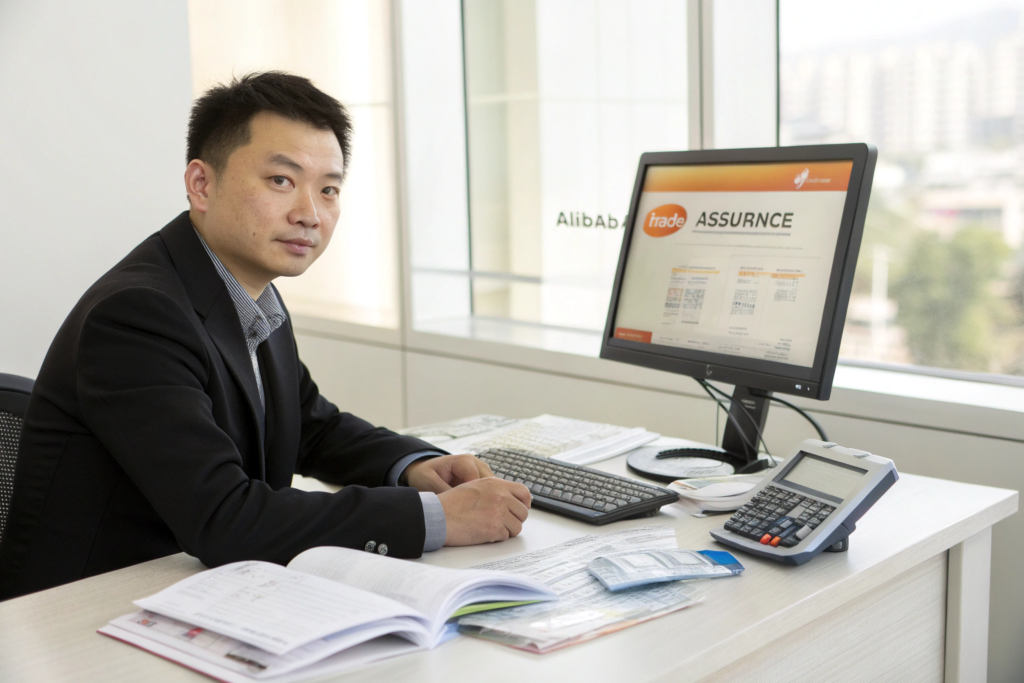
What is Alibaba Trade Assurance and should I use it?
Yes. For first orders, yes.
Trade Assurance is Alibaba’s escrow service:
- You pay Alibaba
- Alibaba confirms receipt
- Supplier ships fabric
- You confirm receipt
- Alibaba pays supplier
If the fabric doesn’t arrive or is significantly defective, Alibaba holds the funds.
Limits: Maximum coverage is usually $50,000 per order.
Cost: Free for buyers (supplier pays 0.5–2% fee).
In 2023, a German client used Trade Assurance for a $7,200 order.
The fabric arrived. Color was wrong. The supplier refused to refund.
The client opened a dispute on Alibaba. They submitted photos, the lab dip, and the communication record.
Alibaba ruled in their favor. Refunded $6,800 within 2 weeks.
Without Trade Assurance, they would have lost everything.
Our advice: Use Trade Assurance for any first order. For repeat orders with trusted suppliers, wire transfers are fine.
What is the typical deposit percentage for fabric orders?
30% deposit, 70% balance before shipment.
This is standard. Do not pay 50% deposit for a first order.
In 2018, a Canadian clothing brand paid 50% deposit on a $14,000 order. $7,000.
The supplier delivered 2 weeks late. The fabric was 20% lighter weight. The brand rejected it.
The supplier offered 10% refund. $700. The brand demanded full deposit return. The supplier refused.
The brand spent $3,000 on lawyers. They got nothing. The supplier kept the $7,000.
Our payment terms for new clients:
| Order Value | Deposit | Balance |
|---|---|---|
| < $5,000 | 30% | 70% before shipment |
| $5,000–$20,000 | 30% | 70% before shipment |
| > $20,000 | 30% | 70% against BL copy |
For small businesses: If a supplier demands 50% deposit for a first order, ask for Trade Assurance. If they refuse, find another supplier.
How Do I Handle Logistics and Customs Clearance?
Freight forwarders are not all equal.
In 2019, a UK hat brand used the forwarder recommended by their supplier.
The forwarder charged $320 for documentation. Market rate: $120. They charged $85 for a "customs inspection fee." No such fee exists. They charged "port storage" for 5 days. The container arrived on Friday; they claimed Monday was "storage."
Total overcharge: $470.
The client was embarrassed. They felt they couldn’t complain because the forwarder was the supplier’s "partner."
Here is our advice:
- Get your own freight forwarder. Do not use the supplier’s forwarder unless you have no choice.
- Compare 3 quotes. Freight rates vary wildly.
- Ask for "all-inclusive" rates. No surprises at destination.
- Use a forwarder who specializes in textiles. They understand fabric classification.

What is FOB vs EXW vs CIF—and which should I choose?
This is the most confusing part for small importers.
| Incoterm | Supplier Responsibility | Buyer Responsibility | Best For |
|---|---|---|---|
| EXW (Ex Works) | None—fabric ready at their warehouse | Everything: trucking, export, freight, import | Advanced importers |
| FOB (Free on Board) | Truck to port, export clearance | Ocean freight, import | Most common |
| CIF (Cost, Insurance, Freight) | Everything to destination port | Import clearance, truck to door | Beginners |
My recommendation for first-time importers: FOB.
- Supplier handles the difficult part (export customs, trucking to port)
- You control the ocean freight (choose your own forwarder)
- You avoid supplier markup on shipping (which can be 30–50%)
In 2020, a client insisted on CIF because it seemed "easier."
The supplier quoted freight: $850. Our forwarder quoted $520. Same carrier, same transit time.
The client paid $330 extra for "convenience."
Now we tell clients: Get your own freight quote. Always.
What documents do I need to clear customs in the US?
For fabric imports, you need:
- Commercial Invoice — Value, quantity, fabric description
- Packing List — Rolls, weights, carton numbers
- Bill of Lading — Ocean freight contract
- Customs Bond — Required for entries over $2,500
- HTS Classification — Tariff code (your broker provides)
Optional but recommended:
- Fabric test reports — If questioned about fiber content
- OEM certificate — If importing for your own brand
- Section 301 exclusion documentation — If applicable
Most small businesses use a customs broker. Cost: $100–200 per entry.
Do not file your own customs entry for fabric. The HTS codes are complex. One wrong digit can trigger an exam and 2-week delay.
The US Customs textile import requirements are clearly documented. We share this link with every US client.
Conclusion
Starting to import fabric from China in 2026 is easier than ever. But the risks are the same as 2006.
The fabric price is not the cost. The supplier’s Alibaba page is not their factory. The 30% deposit is not a guarantee.
I have made every mistake in this article.
I have wired deposits to suppliers who disappeared. I have shipped fabric with weft bars that I missed in QC. I have recommended freight forwarders who overcharged my clients. I have quoted FOB when the client needed DDP.
Those mistakes cost me clients. They cost me money. They cost me sleep.
But they also taught me how to serve small businesses better.
Today, at Shanghai Fumao, we do not treat small importers as "small."
We offer 50-yard minimums on stock colors. We accept PayPal for first orders under $1,000. We provide HTS classification recommendations for every fabric. We do live video factory tours every week. We keep lab dips for 5 years.
We are not the cheapest supplier on Alibaba. We are not the fastest.
But we are the most transparent.
So if you are Sarah in Austin, or the textile student in London, or the one-woman handbag brand in Vancouver—talk to us.
Email Elaine, our Business Director, directly: elaine@fumaoclothing.com.
Tell her what fabric you need. Tell her what quantity you can afford. Tell her what budget you have. Tell her your launch date.
She will connect you with our small business division. We will pull the stock fabric swatches. We will calculate the real landed cost—including duty, freight, and QC. We will send you a PayPal invoice for 30% deposit.
We won’t promise you the lowest fabric price. We will promise you honest communication, fair minimums, and no surprises.
Because every small business importer was once a first-time importer.
We remember being first-time exporters. We remember being scared.
We will help you.