Every traveler knows the frustration: you arrive at your destination, unpack your suitcase, and find your favorite shirt wrinkled beyond wearability. Or you’re halfway through a two-week trip with only a carry-on, desperately wishing your clothes could be washed in a hotel sink and dry by morning. The fabric of your clothing determines whether you travel in comfort and style or spend your trip battling wrinkles, odors, and bulky luggage.
The best fabrics for travel-friendly clothing are those that combine wrinkle resistance, moisture-wicking, quick-drying, odor control, and packability without sacrificing comfort or appearance. The top performers are merino wool, nylon blends, polyester performance fabrics, Tencel lyocell, and specialized travel-friendly cotton blends. Each offers distinct advantages depending on your destination, activities, and personal comfort preferences.
Understanding the science and characteristics of these fabrics will transform how you pack and what you wear on the road.
What Properties Define a Truly Travel-Friendly Fabric?
Before examining specific fibers, it is essential to understand the specific performance criteria that make a fabric suitable for life on the road. Not all travel fabrics are created equal, and the best choice always depends on your specific journey.

Why Is Wrinkle Resistance the Top Priority for Most Travelers?
Few things make a traveler look disheveled faster than deep creases that set into fabric during transit. Wrinkle resistance is determined by a fiber’s elasticity and recovery. Natural fibers like 100% linen and cotton have poor recovery; they bend and hold that shape. Synthetics like nylon and polyester, and some treated natural fibers, have excellent memory, meaning they bounce back to their original form after being compressed. Blended fabrics—such as a cotton-polyester blend or a wool-nylon blend—often offer the ideal balance: the natural fiber provides breathability and comfort, while the synthetic adds structure and wrinkle recovery. For travelers, this means arriving at your destination ready to go, without hunting down an iron or steaming in a bathroom.
How Do Moisture Management and Drying Speed Affect Your Trip?
If you travel light, you will wash clothes in hotel sinks. Quick-drying fabric is not a luxury; it is a necessity. The speed at which a fabric dries depends on its hydrophobicity (water resistance) and fiber density. Polyester and nylon are hydrophobic; they repel water and dry rapidly. Cotton is hydrophilic; it absorbs water and holds it, taking hours or even overnight to dry fully. Moisture-wicking is equally important for comfort, especially in warm climates or during active travel. This technical property pulls sweat away from your skin to the fabric’s surface, where it evaporates quickly, keeping you dry and cool. This is why performance fabrics dominate the travel apparel market.
What Are the Top-Performing Travel Fabrics and Their Ideal Uses?
Each travel-friendly fabric has a distinct personality and purpose. Knowing when to choose merino over nylon or Tencel over polyester will help you build a versatile, high-functioning travel wardrobe.

Why Is Merino Wool Considered the Ultimate Travel Fabric?
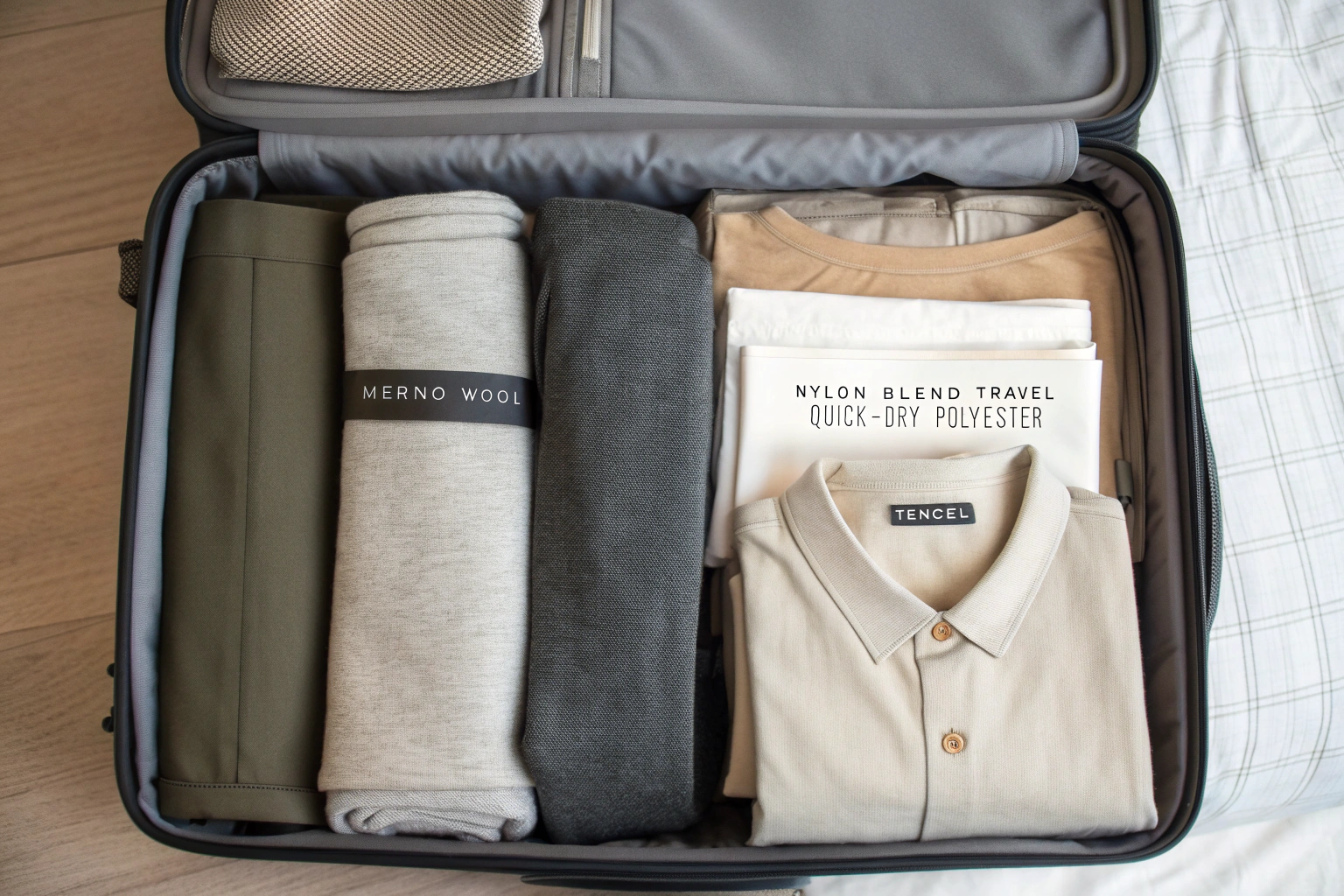
Merino wool is the undisputed champion of travel textiles, particularly for base layers, socks, and sweaters. Unlike traditional wool, merino fibers are exceptionally fine—usually under 20 microns—making them soft and non-itchy against the skin. Its superpowers are thermoregulation (keeping you warm in cold and cool in heat) and natural odor resistance. Merino fibers absorb and trap odor-causing bacteria within their structure, releasing them only during washing. You can wear a merino shirt for days—even weeks—without noticeable smell. It is also wrinkle-resistant and moisture-wicking. The only drawbacks are higher cost and lower durability than synthetics; pure merino is prone to pilling and requires gentle care. Many travelers opt for merino-nylon blends, which maintain odor resistance while adding strength.
What Makes Nylon and Polyester Blends So Reliable?
Nylon and polyester are the workhorses of travel clothing. They are lightweight, extremely durable, wrinkle-proof, and dry in hours. Modern fabric technology has transformed these synthetics from the shiny, unbreathable fabrics of the past into sophisticated textiles. Polyester microfiber can mimic the hand-feel of cotton or silk while offering superior performance. Nylon-spandex blends provide four-way stretch, making them ideal for hiking pants, leggings, and travel jeans that move with you. Their primary weakness is odor retention; synthetic fibers are oleophilic, meaning they absorb oils and the odors trapped within them. A polyester shirt after a sweaty day will smell significantly worse than merino. Solutions include fabrics treated with permanent odor-control technologies (like Polygiene or silver-ion treatments) or simply accepting that synthetics need more frequent washing.
Where Does Tencel Lyocell Fit in a Travel Wardrobe?
Tencel lyocell is a rising star in sustainable travel apparel. Made from wood pulp in a closed-loop process, it is biodegradable, breathable, and exceptionally soft. Its flat fiber surface reflects light, giving it a beautiful, subtle sheen and draping elegantly. Tencel is moderately wrinkle-resistant—better than linen but not as flawless as nylon—and dries faster than cotton. It is an excellent choice for dresses, blouses, and lightweight pants where you want elevated style with functional benefits. However, it lacks the durability and odor resistance of merino or the stretch of spandex blends.

Is There a Place for Cotton and Linen in Travel?
Yes, but with caveats. Cotton is comfortable, breathable, and familiar, but it absorbs water like a sponge, dries slowly, and wrinkles easily. For short trips with checked luggage and hotel irons, fine. For carry-on only or humid destinations, avoid it. If you must bring cotton, choose cotton-polyester blends or wrinkle-resistant treated cotton. Linen is beautiful for hot-weather destinations but emerges from a suitcase looking like crumpled parchment. Linen-rayon blends retain the aesthetic and breathability of linen while offering significantly better wrinkle recovery.
How Do You Choose the Right Fabric Combinations for Your Trip?
Building a cohesive travel wardrobe is about strategic layering and selecting fabrics that complement each other across different activities and climates.

What Fabric System Works for Multi-Climate Trips?
For trips spanning varied climates, adopt a three-layer system. Your base layer (next to skin) should be merino wool or a high-quality synthetic for moisture management and odor control. Your mid-layer (insulation) can be a merino sweater, a lightweight fleece, or a Tencel button-down, depending on temperature. Your outer layer (protection) should be a packable nylon or polyester shell that is windproof and water-resistant. This system is adaptable, compressible, and covers everything from city evenings to mountain hikes.
How Do You Identify High-Quality Travel Fabrics When Shopping?
Read labels carefully. Avoid high percentages of cotton in pants or dresses meant for heavy travel use. Look for nylon-spandex blends in bottoms; 90-95% nylon with 5-10% spandex offers ideal stretch and recovery. For merino, verify micron count (under 20 is premium) and consider blends with nylon (around 20-30%) for durability. For synthetics, look for recycled polyester and blended fabric constructions that combine different fibers for balanced performance. When in doubt, perform the scrunch test: grip a handful of fabric for ten seconds, then release. If it springs back without creases, it will travel well.
Conclusion
The best travel-friendly fabrics are those that liberate you from the constraints of traditional luggage. They allow you to pack less, move more freely, and face the unpredictability of travel with confidence. Merino wool offers unparalleled odor resistance and thermoregulation. Nylon and polyester blends provide durability, stretch, and rapid drying. Tencel brings sustainable softness and drape. By choosing garments made from these high-performance fibers and blending them strategically, you can build a compact, versatile wardrobe that serves you faithfully from city streets to mountain trails.
If you are a brand or retailer looking to develop a line of travel-friendly apparel using premium performance fabrics, we have the manufacturing expertise to bring your vision to production. At Shanghai Fumao Clothing, we specialize in custom garment manufacturing with advanced textiles, including merino blends, recycled synthetics, and sustainable fibers. For inquiries about developing your travel apparel collection, please contact our Business Director, Elaine, at elaine@fumaoclothing.com. Let’s create clothing that takes people places.