
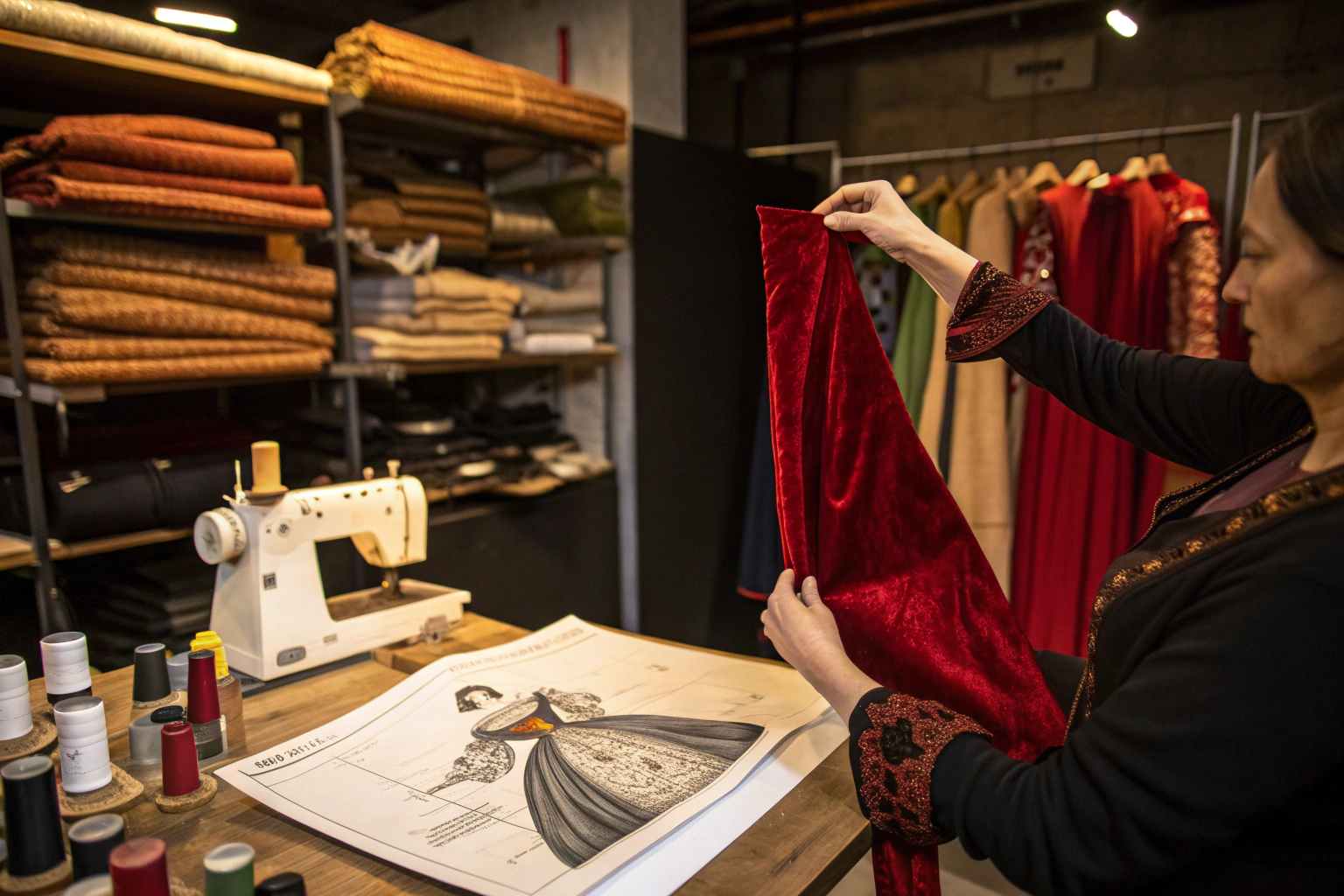
Finding the right fabric for costume and theater productions is one of the most difficult challenges facing costume designers and production managers. Unlike standard fashion manufacturing, theater demands fabrics that perform under hot stage lights, withstand rigorous movement and quick changes, read authentically to a distant audience, and often need to be sourced quickly and in relatively small quantities.
Sourcing fabric for costume and theater productions requires a multi-channel approach. Start by identifying specialized theater fabric suppliers who stock performance-oriented textiles. Supplement these with deadstock and vintage fabric vendors for unique, authentic period materials. For custom needs or large ensembles, consider working directly with textile mills or wholesale manufacturers who can produce specific yardage in desired fibers and colors. A successful sourcing strategy combines these channels with clear communication of your specific technical and aesthetic requirements.
The process is fundamentally different from sourcing for everyday apparel. Let’s break down the unique needs of costume fabric and the most reliable pathways to finding exactly what you need.
What Makes Costume Fabric Sourcing Unique?
Sourcing for theater and costume is not the same as sourcing for retail fashion. The performance context creates a set of demands that are often contradictory and always specific.
How Do Stage Conditions Dictate Fabric Choice?
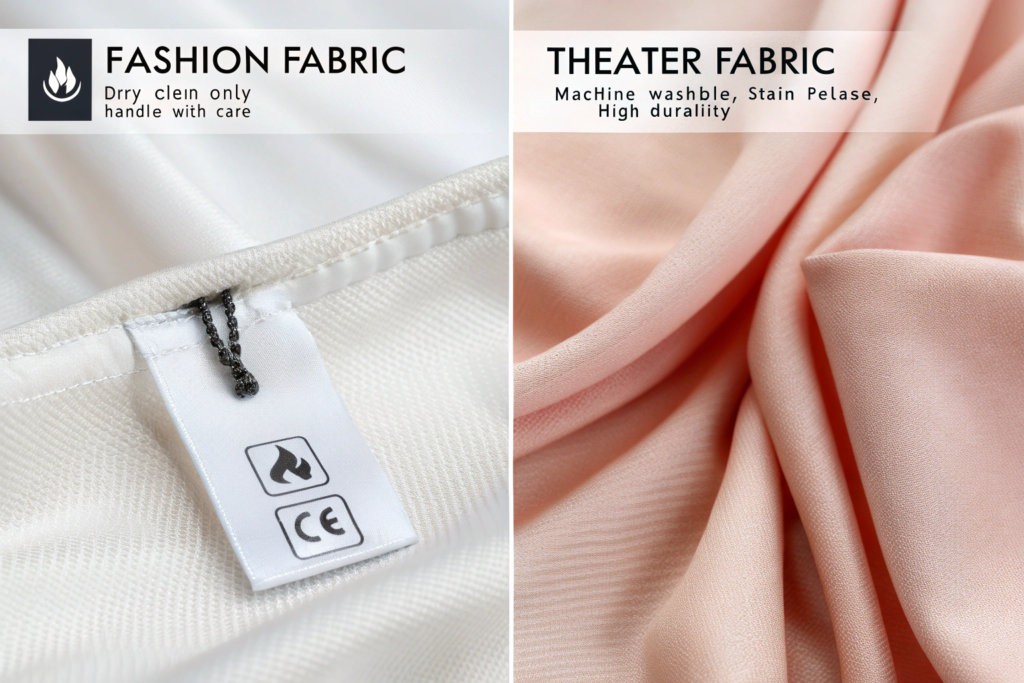
Theater fabrics must survive extreme conditions. Stage lights generate intense heat, so synthetic fabrics that melt or scorch easily—like standard polyester or acrylic—can be dangerous. Natural fibers like cotton, wool, and silk are often preferred for their breathability and heat tolerance. For shows requiring quick changes, fabrics need to slide on and off easily without snagging. For dance-heavy productions, mechanical stretch or added spandex is essential for mobility. A beautiful silk charmeuse might be perfect for a film costume, but on stage, it will wrinkle instantly under hot lights and show every drop of actor sweat. You often need a fabric that looks like silk but performs like polyester, which requires knowing where to find engineered synthetic suedes, matte jersey, and other performance textiles.
Why Do Period Productions Require Special Sourcing?
Creating authentic historical silhouettes demands fabrics with specific weight, drape, and body. A 1950s circle skirt requires fabric with substantial crispness and volume, like a heavy cotton or a taffeta. Regency gowns need lightweight, fluid fabrics like cotton lawn or fine wool challis. Modern mass-market fabrics are often too soft or flimsy to hold these period shapes. This forces designers to search for deadstock fabrics (leftover rolls from previous eras), vintage textiles, or work with mills to recreate specific constructions. This search for authenticity and structural integrity is a defining challenge of theatrical costuming.
What Are the Best Sources for Costume Fabric?
No single vendor can meet all theater needs. A smart sourcing strategy diversifies across several types of suppliers, each with distinct strengths.
Where Can You Find Specialized Theater and Performance Fabrics?
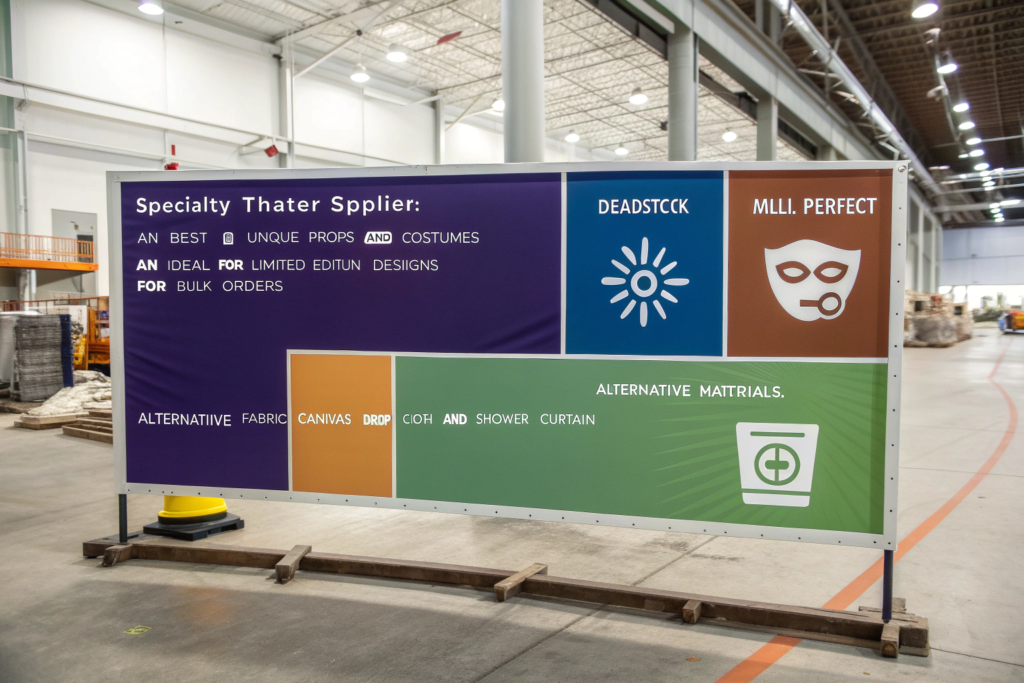
A handful of vendors have built their business around the unique needs of theater and costume shops. Companies like Sy Fabrics, Mendel’s Far-Out Fabrics, and Rose Brand are legendary in the industry. They stock items specifically for stage use: stretch velour for body suits, commando cloth for durable pants, metallics, sheers, and a wide range of stage-weight satins and taffetas that hold shape and reflect light beautifully. These vendors understand theatrical terminology and can advise on appropriate substitutions. This is almost always your best first stop.
How Do Deadstock, Vintage, and Wholesale Suppliers Fit In?
For unique period pieces or to reduce environmental impact, deadstock fabric suppliers are invaluable. These vendors sell overstock or discontinued rolls from fashion houses and mills. Each fabric is often limited in quantity, perfect for one-off costumes or small ensembles. Websites like Fabric Mart specialize in this model. Vintage and second-hand fabric from estate sales or eBay can provide authentic period textiles impossible to reproduce. For large chorus ensembles requiring 50+ yards of the same fabric, going directly to a wholesale fabric mill or importer is the most cost-effective route. This requires ordering full rolls (often 30-60 yards per color) and longer lead times, but the per-yard cost drops significantly.
What Are the Technical and Logistical Challenges in Costume Fabric Sourcing?
Even when you find the right fabric, getting it production-ready for the stage involves additional steps and considerations.
Why Are Flame Retardancy and Pre-Treatment Essential?
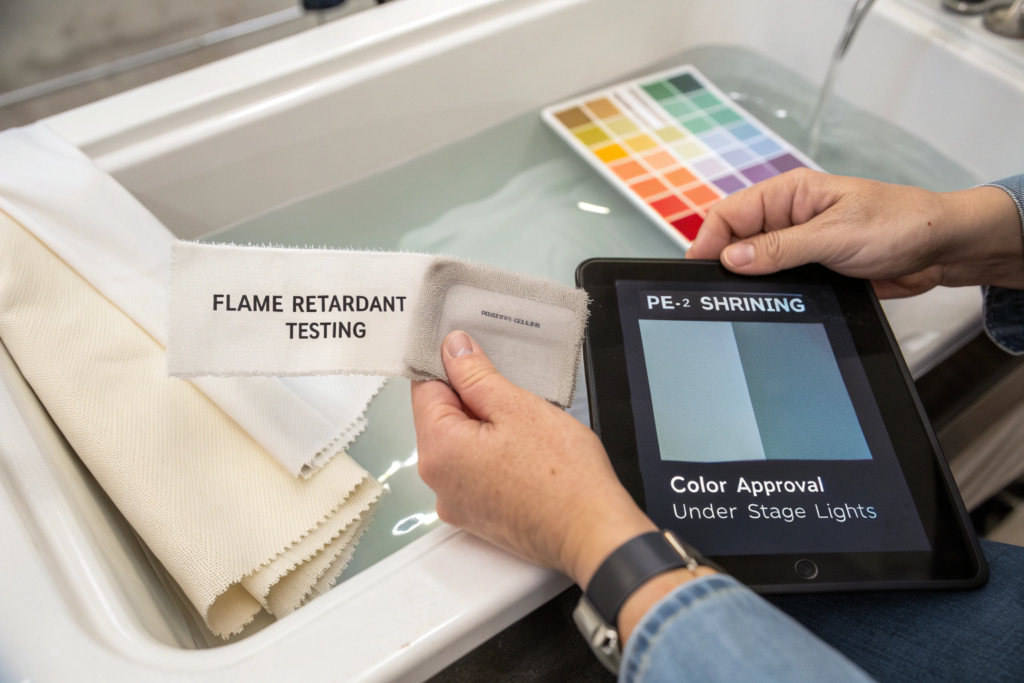
This is a non-negotiable safety requirement in professional theater. Most fabrics are not inherently flame-resistant. Flame retardant (FR) treatment must be applied, either by purchasing pre-treated fabric or sending finished costumes out for treatment. This changes the hand-feel and drape slightly, so testing on swatches first is critical. Additionally, pre-shrinking is vital. Costumes cannot shrink during a run. Washable fabrics should be washed and dried before cutting; dry-clean-only fabrics should be steamed. Factoring in this pre-production time is a common oversight for designers new to theater.
How Do You Communicate Needs to Suppliers Who Don’t Know Theater?
A fabric vendor may not understand what "good drape for a bias-cut gown" or "body for a structured bodice" means. You must translate theatrical needs into technical specifications. Instead of saying "I need this to look like 1940s rayon," say: "I need a fabric with 4-6 ounces per square yard weight, a soft, fluid hand, matte finish, and at least 15% mechanical stretch." Providing specific weight (GSM/oz) , fiber content, width, and stretch percentage eliminates ambiguity. If you cannot find an exact match, ask for plaited fabrics or substrate blends that combine an aesthetic face fiber with a performance base.
Conclusion
Sourcing fabric for costume and theater productions is a specialized skill that blends artistic vision with technical pragmatism. It requires knowing where to look—from dedicated theatrical suppliers and deadstock vendors to wholesale mills—and how to communicate your needs in precise, measurable terms. It demands planning for essential pre-treatments like flame retardancy and pre-shrinking. Most importantly, it requires flexibility and creativity, knowing when to source an authentic vintage textile and when to engineer a modern performance fabric to look the part.
Success in this field means building a diverse network of suppliers and understanding that the best costume fabric is not always the most expensive or the most authentic; it is the one that looks perfect under the lights, moves beautifully with the actor, and survives the rigors of the stage.
If your production company or costume house is seeking a reliable manufacturing partner for custom headwear and fabric sourcing, we are ready to assist. At Shanghai Fumao Clothing, we have extensive experience working with performance and costume specifications. For inquiries about custom costume hat production or fabric sourcing support, please contact our Business Director, Elaine, at elaine@fumaoclothing.com. Let us help bring your stage vision to life.








