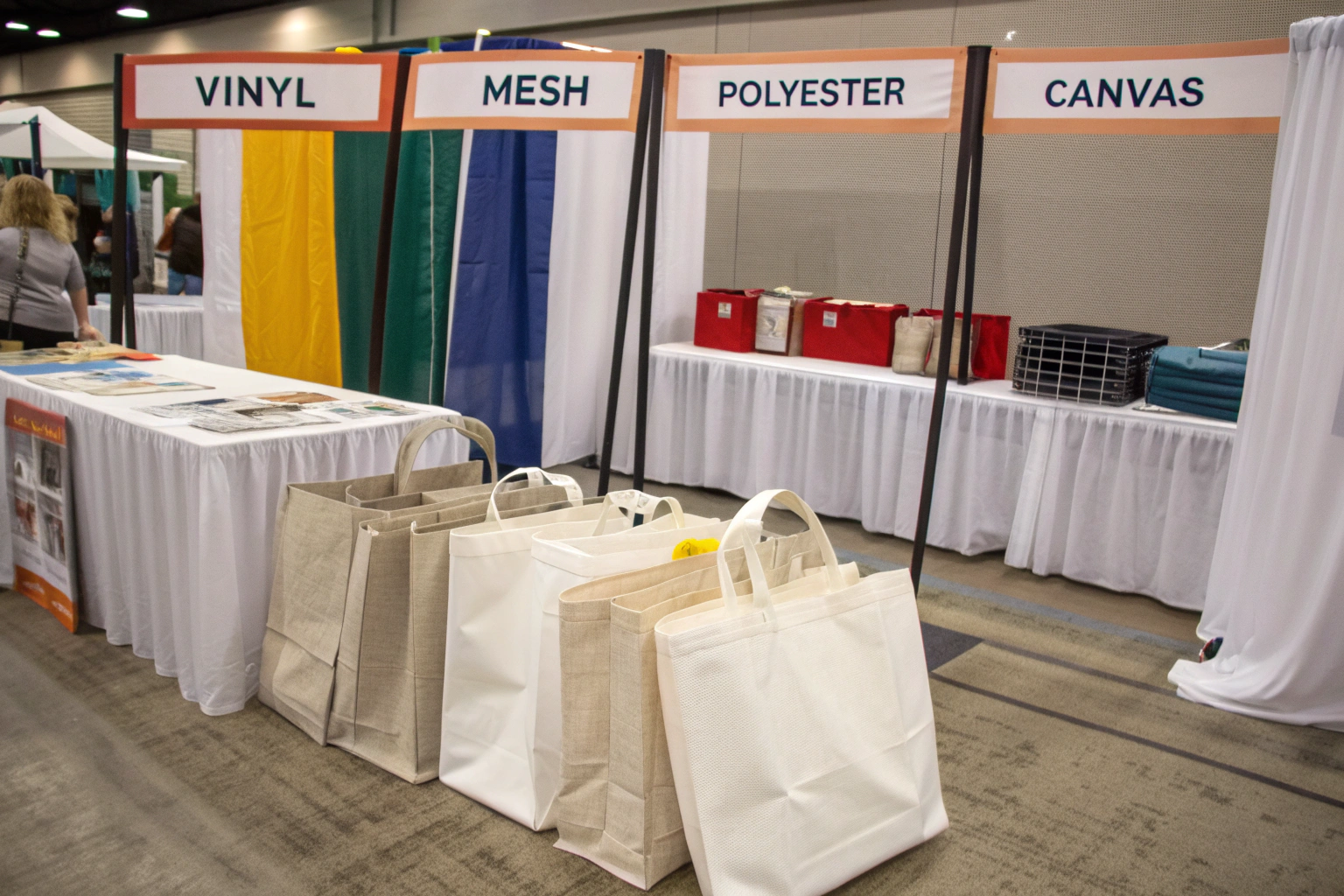
You’re planning a major product launch, a corporate festival, or a trade show booth. You need banners that won’t sag in the wind, tablecloths that resist red wine stains, and tote bags that attendees will actually reuse. But when you start looking, you’re bombarded with options: "vinyl," "mesh," "polyester," "canvas"—all at wildly different price points. How do you choose fabrics that look professional, survive the event, and don’t blow your entire marketing budget?
Sourcing for events is a unique challenge. It’s not about everyday durability; it’s about short-term impact, ease of logistics, and cost-per-impression. The "best" fabric is the one that delivers maximum visual and functional impact for the duration of the event, while being easy to install, transport, and potentially store for reuse. It’s a calculated balance between spectacle and practicality.
At Shanghai Fumao, we supply fabrics for everything from Olympic-sized stage backdrops to custom-branded giveaways. The key is matching the material’s physical properties to the specific stress of the application: UV exposure for outdoor banners, flame resistance for indoor draping, and wash durability for reusable items. Let’s build a strategic framework to navigate this specialized market.
What are the primary fabric types for banners and signage?
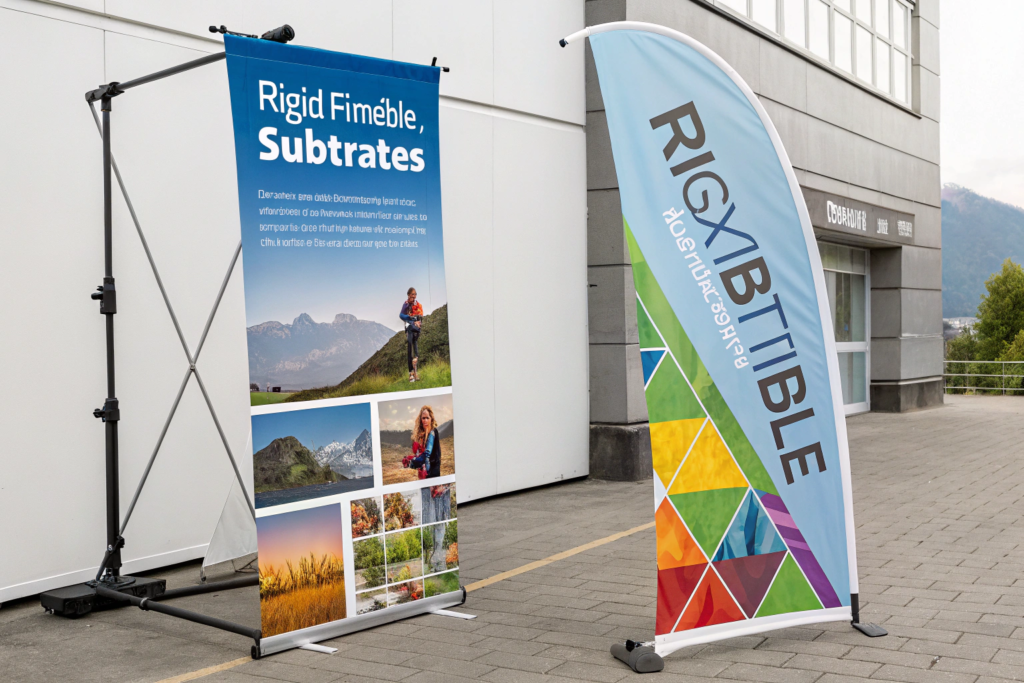
When your brand message needs to be seen from across a convention hall or withstand a week outdoors, the fabric choice is critical. It’s a battle against gravity, weather, and time. The two dominant categories here are rigid, printable substrates for tensioned graphics and flexible, portable substrates for hanging banners and flags.
The decision tree starts with a simple question: Is this for a permanent/ semi-permanent tensioned installation, or a portable, reusable banner?
What are the pros and cons of vinyl vs. fabric mesh?
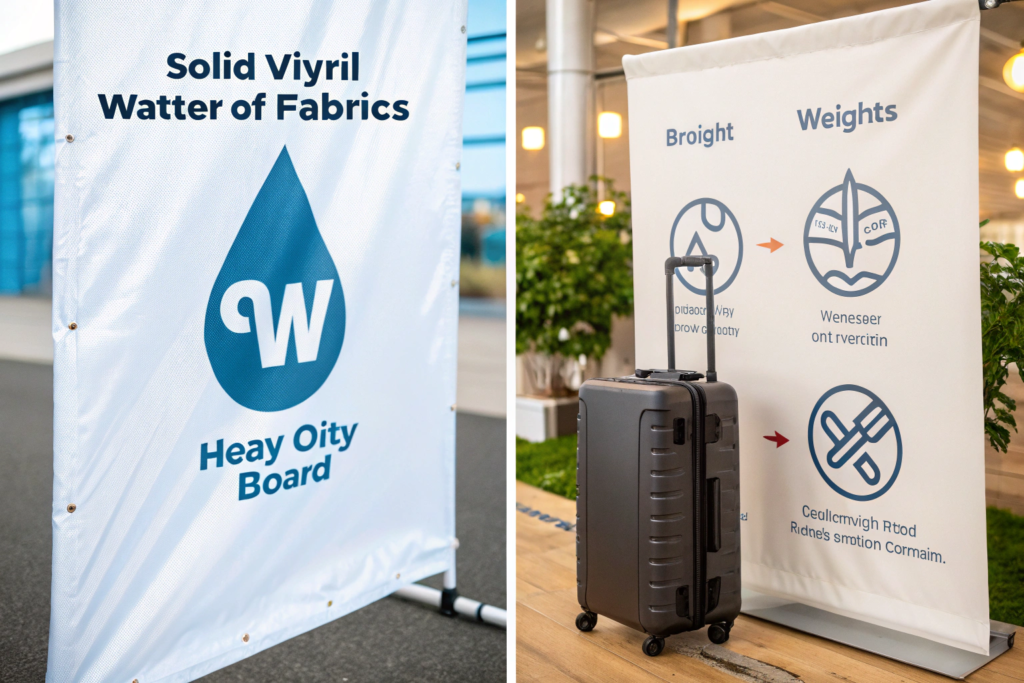
- Solid Vinyl (e.g., 13oz or 18oz): The traditional workhorse for outdoor banners.
- Pros: Excellent color vibrancy (especially for solid blocks of color), 100% waterproof, very durable against tears, and low cost. Can be solvent-printed for outdoor longevity.
- Cons: Heavy and bulky to ship/store, not breathable (can act like a sail in wind unless perforated), has a plastic feel, and is not eco-friendly (PVC-based).
- Best For: Long-term outdoor storefront banners, heavy-duty trade show graphics where wind isn’t a major factor, or when budget is the primary constraint.
- Polyester Mesh (Knitted): Fabric with tiny perforations (e.g., 70/30 mesh = 70% fabric, 30% hole).
- Pros: Wind-resistant (air passes through), much lighter than vinyl, easier to handle and install, and packs smaller. Accepts vibrant dye-sublimation printing.
- Cons: Not fully waterproof (water can seep through), image is less crisp up close due to the mesh holes, slightly less durable against punctures.
- Best For: Large-scale building wraps, outdoor event fencing, stage backdrops where wind load is a concern, and any banner over 20 sq. meters.
For a major sports event, we supplied heavy-duty knitted mesh for perimeter fencing graphics. The wind resistance was non-negotiable for safety, and the lightweight nature made installation over miles of fencing feasible.
Why is frontlit vs. backlit fabric a critical choice?
This determines how your graphic will be illuminated, fundamentally changing the fabric specification.
- Frontlit Fabric: Designed to be viewed under ambient or front-facing lights. This can be a matte or satin-finish polyester scrim, vinyl, or canvas. The goal is high opacity and color accuracy under normal light.
- Backlit Fabric: Designed to be illuminated from behind. These fabrics are translucent or semi-translucent.
- Standard Backlit: A lightweight, woven polyester that glows evenly when backlit. Perfect for lightboxes, illuminated signs, and trade show displays.
- Blockout Backlit: Has a blackout layer laminated to the back to prevent light bleed and make colors appear more vibrant and true from the front, even in daylight. Essential for high-end retail displays.
Always specify the viewing condition to your supplier. Printing a frontlit design on a backlit fabric (or vice versa) will result in poor color fidelity and a wasted print.
What fabrics work best for table covers, drapes, and linens?
This category is all about aesthetics and practicality under event conditions. Fabrics must look lush and professional, resist stains and wrinkles, and be easy to launder or clean between uses. The feel and drape of the fabric directly communicate the quality of the event.
Here, synthetic fibers reign supreme because of their durability, colorfastness, and resistance to crushing.
Is polyester satin or spandex jersey better for tablecloths?
- Polyester Satin (or Satin-Like Fabrics): The industry standard for a reason.
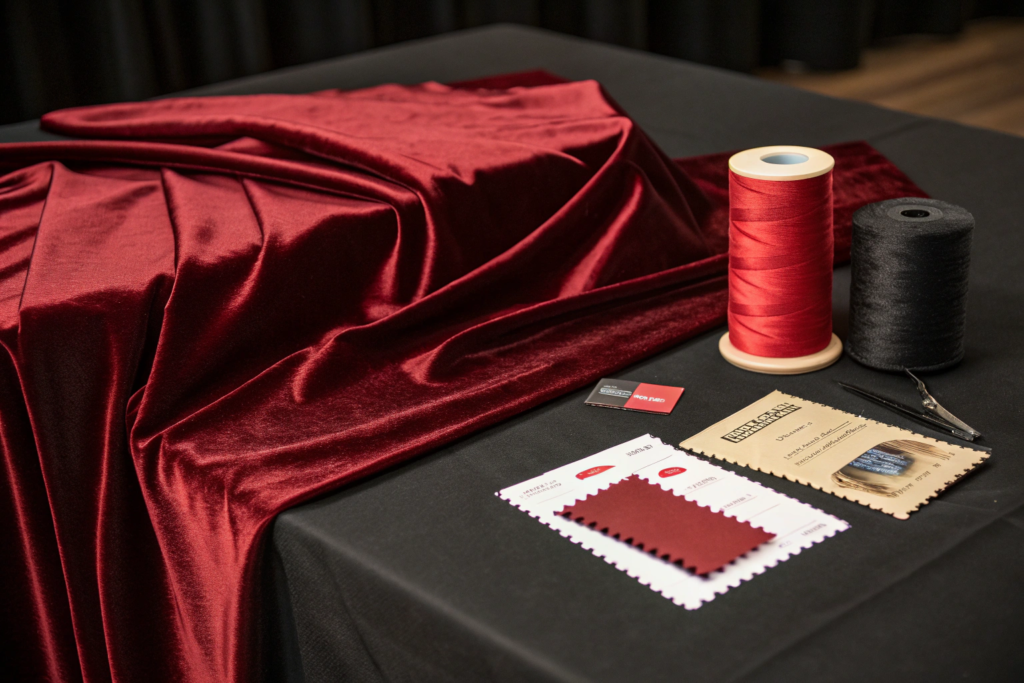
- Pros: Has a luxurious, high-sheen finish that looks elegant. Wrinkle-resistant, stain-resistant (especially with a Teflon or similar finish), and inexpensive. It’s also colorfast and can be dyed to exact brand Pantones.
- Cons: Can snag if abused. The sheen can look cheap if the fabric quality is low.
- Key Spec: Look for heavyweight tablecloth satin (e.g., 120 GSM or higher) for better drape and durability. Always order a sample to check the hand and sheen level.
- Spandex Jersey (Stretch Knit): Used for "spandex table covers" – a fitted, sleek look.
- Pros: Provides a tight, custom, wrinkle-free "skin" over tables, stages, or furniture. Very modern and high-impact.
- Cons: More expensive than satin, requires precise measurement and sewing, can be difficult to install on complex shapes.
- Best For: High-end product launches, tech events, or stage design where a seamless, tailored look is desired.
For a global tech conference, we provided custom-dyed, heavyweight polyester satin in the company’s exact blue for hundreds of banquet tables. The fabric was treated with a stain release finish, allowing for quick cleanup between sessions.
What are the requirements for flame-retardant (FR) drapes and fabrics?
This is a legal and safety imperative for any fabric hanging indoors at a public event (theatres, conferences, exhibitions).
- The Standard: Fabrics must meet local fire codes. In the US, this is often NFPA 701 (Standard Methods of Fire Tests for Flame Propagation of Textiles and Films). In Europe, it’s BS 5867 Part 2 or similar.
- How it’s Achieved: Either through inherently FR fibers (like certain modacrylics) or, more commonly for event drapes, through a chemical FR treatment applied to standard polyester or cotton.
- What to Ask Your Supplier: "Can you provide a certificate of compliance/test report for NFPA 701 or the relevant standard for this fabric batch?" Do not accept a generic statement; demand documentation.
- Care Instructions: Treated FR fabrics can lose their certification if washed improperly. They often require professional cleaning with specific detergents.
Never gamble with FR requirements. Venues will and should check certificates, and failure to comply can shut down your event.
How to choose fabrics for promotional giveaways (totes, shirts)?
Promotional fabrics live a double life. First, they must look great at the moment of receipt—vibrant print, appealing texture. Second, they must have enough inherent quality to be used repeatedly, becoming a walking billboard. The goal is to avoid the "single-use giveaway" that ends up in a landfill, which hurts both your ROI and your sustainability image.
The fabric choice here directly influences perceived value and longevity of your brand message.
What makes a good reusable tote bag fabric?
The tote bag is the poster child of promotional goods. Its fabric determines its usefulness and lifespan.
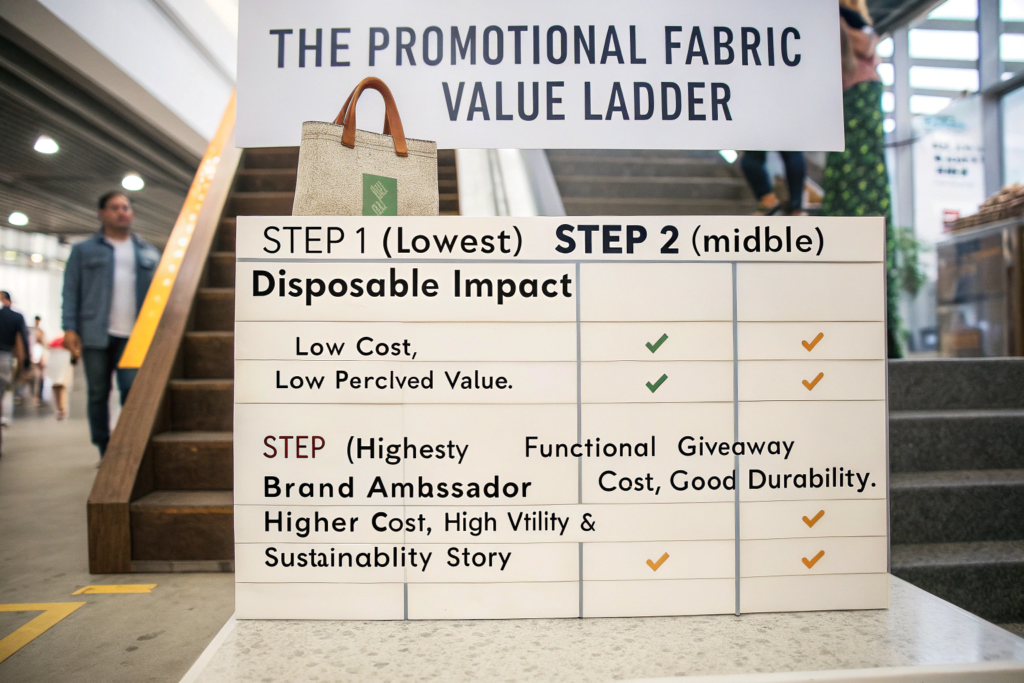
- Non-Woven Polypropylene (NWPP): The cheap, ubiquitous giveaway bag.
- Pros: Extremely low cost, lightweight, can be printed brightly.
- Cons: Not durable (rips easily), not eco-friendly (plastic-based, rarely recycled), feels disposable. Projects a low-value brand image.
- Cotton Canvas: The classic, sustainable choice.
- Pros: Natural, durable, biodegradable, has a premium feel. Can be washed repeatedly. Excellent for screen printing or embroidery. Offers a high perceived value.
- Cons: More expensive than NWPP, can shrink if not pre-shrunk, heavier.
- Recycled PET (rPET) Fabric: Made from recycled plastic bottles.
- Pros: Strong eco-story, durable, water-resistant, and can be woven to look like canvas or knitted for a softer feel. Often GRS-certified.
- Cons: Slightly more expensive than virgin polyester, but the marketing value often outweighs the cost.
The trend is decisively moving toward natural or recycled fabrics. A well-made cotton or rPET tote used 50 times has a far lower cost-per-impression than a NWPP bag used twice.
Which fabrics are ideal for event staff uniforms and shirts?
Staff apparel must be comfortable for long hours, look crisp, and withstand frequent washing.
- Performance Polos/Shirts: Moisture-wicking polyester or polyester-cotton blends are standard. Look for fabrics with anti-odor treatment and UV protection if staff are outdoors.
- T-Shirts: 100% cotton is comfortable but can shrink and wrinkle. A 50/50 cotton-polyester blend offers better shape retention, wrinkle resistance, and is often more cost-effective for large orders.
- Key for All: Color consistency across a large order is critical. Your supplier must be able to dye to a specific Pantone and guarantee batch-to-batch matching. Always order pre-production samples (PP samples) of the actual garment fabric.
For a multi-day outdoor festival, we supplied UV-protective, quick-dry polyester shirts for all crew. The fabric was light, kept them cool, and the logos remained vibrant despite sweat and sun exposure.
What are the cost and logistics considerations?
Event sourcing is as much about project management as it is about material science. You’re often working with fixed deadlines, complex shipping to temporary venues, and budget constraints. Smart planning in the sourcing phase prevents logistical nightmares and cost overruns on-site.
Your fabric decisions must be made with the entire lifecycle of the event material in mind: from production to installation to storage or disposal.
How to balance quality, quantity, and budget?
Events have a "cost-per-day" or "cost-per-attendee" calculus.
- Define the "Use Cycle": Is this a one-time use item (e.g., a banner for a single product launch)? Or is it reusable inventory (e.g., tablecloths, drapes, pop-up tents)?
- One-Time Use: Prioritize cost-effectiveness. A mid-weight vinyl or standard satin may be sufficient.
- Reusable Inventory: Invest in higher quality. Choose heavier satin, more durable mesh, or commercial-grade tent fabric. The higher upfront cost is amortized over many events.
- Order Quantities and MOQs: Fabric printing and dyeing have high setup costs. Consolidate all your fabric needs across the event (banners, tablecloths, staff shirts) with one supplier if possible. This can help you meet minimum order quantities (MOQs) and negotiate better pricing.
- Sample, Sample, Sample: Never finalize a fabric based on a digital swatch. Order physical samples of the exact material and print technique. Check color under both indoor and outdoor light.
What are the lead time and shipping realities?
Event deadlines are immovable. Your timeline must account for every step.
- Realistic Lead Time: From final artwork approval to goods at your door, budget 4-6 weeks minimum for custom printed/dyed fabrics made in Asia. This includes production, printing, quality control, and ocean freight. For complex items (like stretch covers), add more time.
- Shipping to Temporary Venues: This is a major hurdle. You often cannot ship directly to a convention center far in advance. Plan for:
- Consolidated Shipping: Ship all event materials together in one container to a local warehouse or your office.
- White Glove Services: For large installations (big stage backdrops, complex drapes), budget for the supplier or a local crew to handle delivery and installation on-site.
- Storage: Factor in the cost and plan for storing reusable items after the event.
We advise clients to create a master production calendar that works backward from the "Installation Day," building in buffers for every step, especially customs clearance.
Conclusion
Sourcing fabric for promotional and event materials is a discipline that merges marketing objectives with practical logistics. It requires a clear-eyed assessment of each item’s purpose: selecting tensioned vinyl or wind-resistant mesh for impactful signage; choosing stain-resistant satin or fitted spandex for elegant linens; and opting for durable, sustainable cottons or rPET for giveaways that extend your brand’s reach. Throughout this process, safety standards like flame retardancy are non-negotiable, and costs must be evaluated through the lens of reuse and cost-per-impression. Success hinges on meticulous timeline planning, from sampling and production through to complex shipping and on-site installation logistics.
By treating event fabrics as strategic marketing investments rather than disposable purchases, you ensure your brand is presented with maximum impact, professionalism, and efficiency, leaving a lasting positive impression on every attendee.
Ready to source fabrics that will make your next event unforgettable? At Shanghai Fumao, we specialize in the full spectrum of event textiles—from custom-dyed flame-retardant drapes and high-resolution printable meshes to premium promotional bag fabrics. We manage the complexity of production, compliance, and logistics, so you can focus on the event itself. Contact our Business Director, Elaine, to plan your event materials: elaine@fumaoclothing.com.