You’re investing in a suit that should command respect in a boardroom, hold its shape through a transatlantic flight, and look impeccable for years. You touch a fabric that feels luxurious, but will it pucker at the seams? Will it breathe during a summer wedding? With terms like "Super 100s," "worsted," and "fresco" swirling around, how do you cut through the marketing to find the objectively best fabric for your needs—whether you’re a tailor crafting a bespoke piece or a brand building a ready-to-wear line?
The "best" fabric is a precise alignment of fiber, weave, and finish engineered for a specific context of formality, climate, and durability. It’s not about a single magic number; it’s about the harmonious interplay between the drape of wool, the resilience of its twist, and the intelligence of its weave. Choosing wrong means a suit that looks cheap, feels uncomfortable, or wears out prematurely.
For over two decades at Shanghai Fumao, we’ve supplied suiting fabrics to tailors and brands worldwide. The difference between a good suit and a great one is often invisible to the eye—it’s in the yarn preparation, the density of the weave, and the subtleties of the finish. Let’s move beyond buzzwords and build a framework for selecting suit fabrics that perform as flawlessly as they present.
What are the foundation fibers and weaves for suiting?
The soul of a formal suit is wool. But not all wool is created equal. The journey from raw fleece to suiting fabric involves critical decisions about fiber length, yarn spinning, and weave structure that fundamentally determine the fabric’s hand, drape, and performance. Understanding this hierarchy is essential.
Beyond wool, certain blends and alternative fibers have earned their place in modern suiting. The goal is to match the inherent properties of the fiber to the demands of the suit’s intended use.
Why is worsted wool the undisputed king?
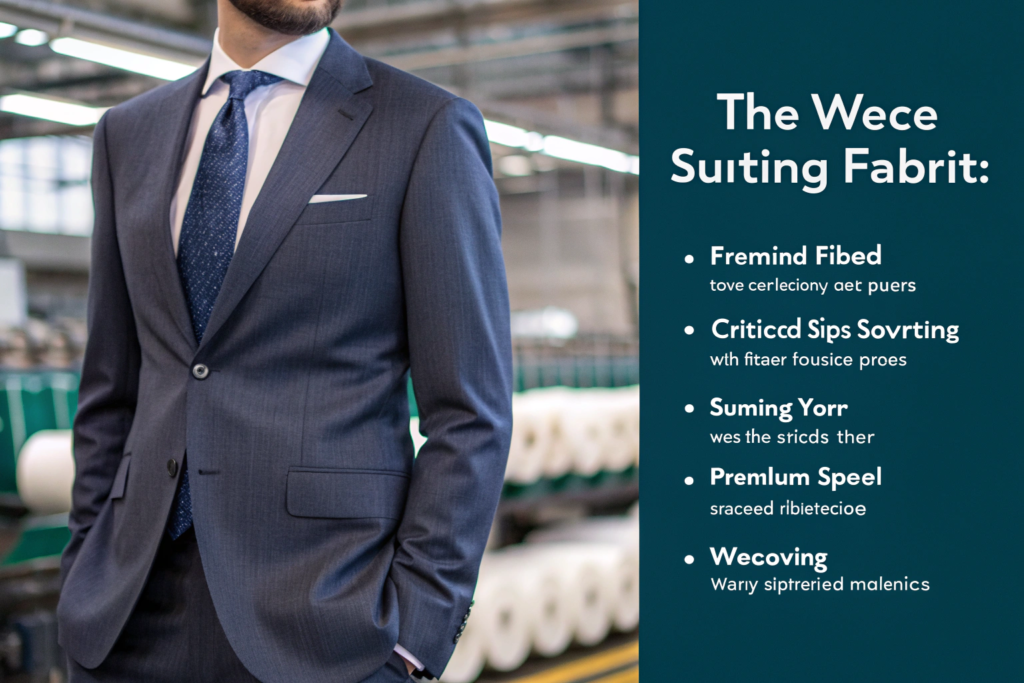
Worsted wool refers not to a type of wool, but to a specific, rigorous preparation process.
- The Worsted Process: Long-staple wool fibers are combed to align them perfectly parallel, then tightly twisted and spun into a smooth, strong, fine yarn. This creates a fabric that is:
- Smooth & Lustrous: With a clean, defined surface, not fuzzy.
- Durable & Resilient: Resists wrinkles and springs back to shape.
- Excellent Drape: Falls in clean, sharp lines.
- Super Numbers (S’s): This indicates the fineness of the yarn’s diameter (e.g., Super 100s, 120s, 150s). Higher numbers mean finer, softer, and more luxurious yarns. However, there’s a trade-off:
- Super 100s – 130s: The sweet spot for business and daily wear. Excellent balance of softness, durability, and wrinkle resistance.
- Super 150s – 180s: Ultra-luxurious, incredibly soft and light. Best for occasional wear (e.g., formal events) as they are more delicate and prone to shining with friction over time.
- The Trap: A high "S" number alone doesn’t guarantee quality. The fabric weight (in ounces or grams) is equally important. A robust Super 110s at 10-11oz will often make a more durable, year-round suit than a flimsy Super 150s at 7oz.
For a timeless, versatile business suit, a Super 110s – 120s worsted wool in a weight of 9-11oz (280-340 GSM) is the industry workhorse. It’s what we recommend to most of our corporate wear clients.
What are the roles of mohair, silk, and technical blends?
These fibers are used to modify and enhance the properties of wool.
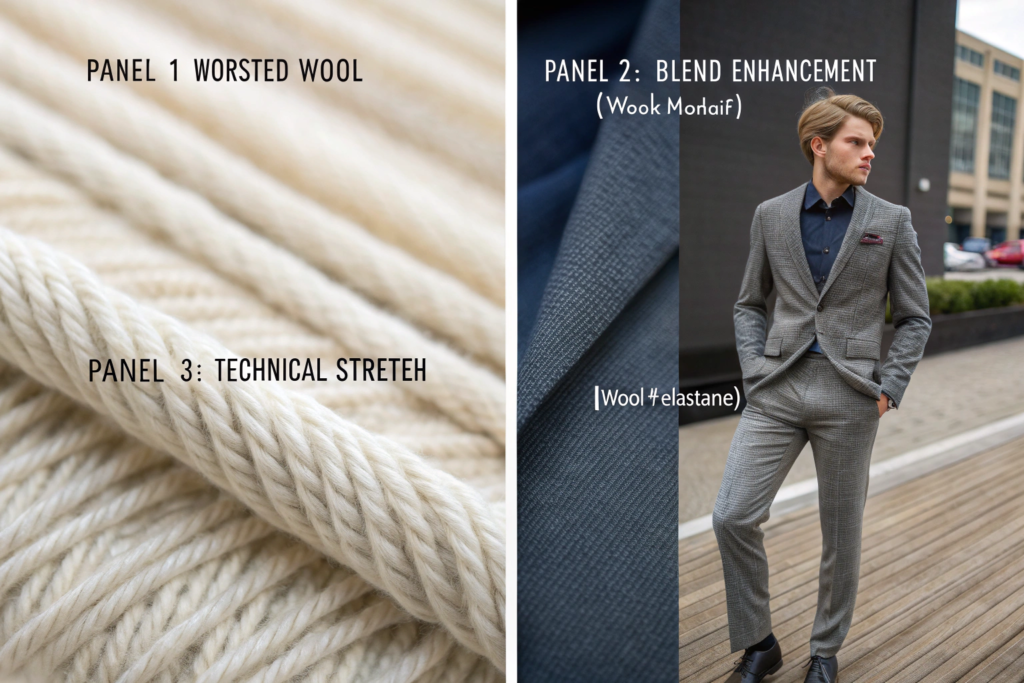
- Mohair (from Angora goats): Blended with wool (e.g., 10-30% mohair), it adds a distinctive silky luster, crispness, and incredible wrinkle resistance. It gives the fabric a "live" feeling and is a hallmark of high-end summer and tropical suiting.
- Silk: Adds a subtle sheen and luxurious hand. Typically blended in small percentages (5-15%) for added softness and richness. Pure silk suits are rare and reserved for very formal, evening-specific wear.
- Technical Blends (Elastane/Lycra): The inclusion of 1-3% elastane is now common in both premium and entry-level suits. It provides essential mechanical stretch for comfort and mobility without compromising the fabric’s appearance. This is no longer a "cheap" feature but a practical one for modern, active wearers.
- Vicuña & Cashmere: The pinnacle of luxury, offering unparalleled softness and warmth. These are for statement pieces, not daily drivers, due to extreme cost and delicacy.
A client’s request for a blend of wool and mohair for a travel blazer led us to develop a 85% Wool / 15% Mohair fabric with a 2% elastane core. The result was a blazer that could be packed in a carry-on, shaken out, and worn wrinkle-free—a perfect example of functional luxury.
How do weave patterns define a suit’s character and function?
The weave is the architectural blueprint of the fabric. It determines not only the visual pattern but also the texture, weight, breathability, and durability. Choosing the right weave is as important as choosing the right fiber. It’s the difference between a suit that looks sleek and one that looks soft, between one that’s cool in summer and one that’s warm in winter.
The three fundamental weaves—plain, twill, and satin—are the starting point, but their variations create the lexicon of suiting.
What are the classic suiting weaves: Twill, Plain, and Satin?
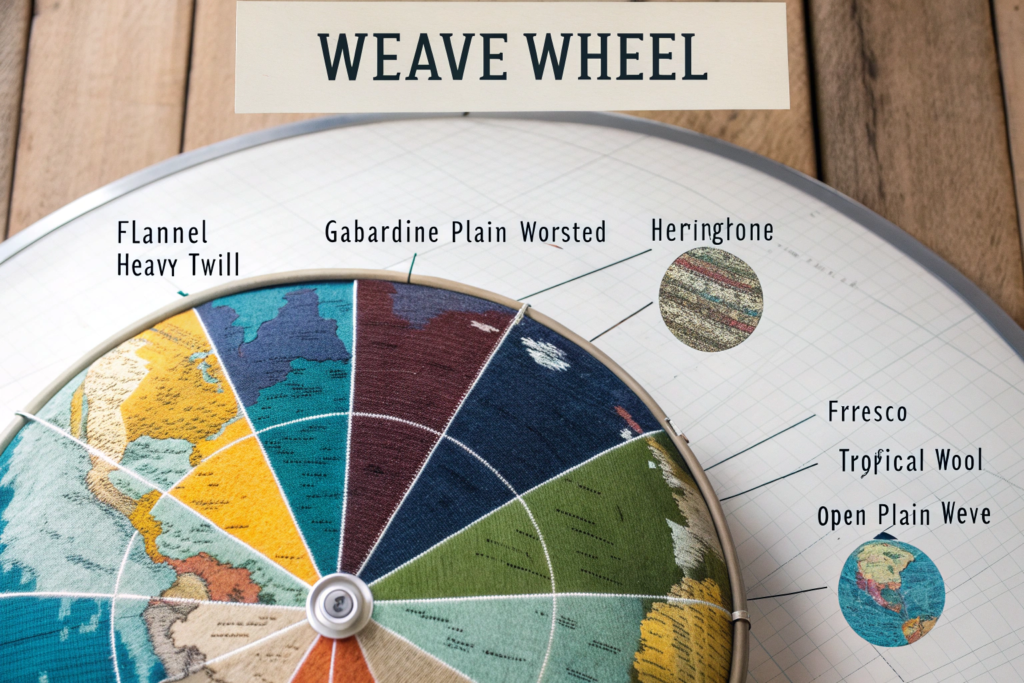
- Twill: Characterized by a diagonal rib. It is the most common suiting weave.
- Properties: Durable, drapes well, has a subtle surface interest, and hides stains/wrinkles better than plain weaves.
- Variations: Gabardine is a tight, steep-twill, hard-wearing and often rain-resistant. Herringbone is a broken twill creating a distinctive "V" or "zig-zag" pattern, adding visual texture. Houndstooth is a larger, broken check pattern.
- Plain Weave (a.k.a. Poplin): A simple over-under weave. Less common in traditional suiting but used in voile or tropical fabrics.
- Properties: Crisp, flat surface, but can crease more easily. Used in very lightweight, open constructions for maximum breathability.
- Satin Weave: Creates a smooth, lustrous surface by floating yarns over multiple threads.
- Properties: Luxurious sheen, but the floats can be prone to snagging. Used for formal evening wear (tuxedos) in Barathea or faille weaves, which are more durable variations.
What are the functional weaves for specific climates?
- Fresco & High-Twist Open Weaves: The ultimate warm-weather technology. Yarns are twisted under high tension, then woven in an open, porous structure.
- Properties: Extremely breathable, lightweight, and wrinkle-resistant. The open weave allows air to pass through, while the high-twist yarns act like springs, bouncing back to shape. They have a characteristic dry, crisp "nubbly" hand.
- Flannel: A plain or twill weave that has been brushed (napped) on one or both sides.
- Properties: Soft, fuzzy surface, excellent insulation, and a softer drape. Classic for winter suits. It conceals the weave pattern and has a matte, luxurious appearance.
- Moleskin & Cavalry Twill: Heavy, dense, brushed cotton or wool fabrics. Exceptionally durable and warm, traditionally for country/outdoor wear but used in rugged fashion blazers.
For a corporate client in Singapore, we developed a Super 110s wool fresco at a mere 8oz weight. The open, high-twist weave was the only way to achieve the necessary formality while ensuring wearer comfort in a tropical climate—a perfect marriage of weave and environment.
What defines the quality beyond the label?
A high Super number or a prestigious brand name can be misleading. True quality in suiting fabric is revealed through tangible, measurable characteristics that you can see and feel. It’s the difference between a fabric that looks expensive and one that performs as expensive over a decade of wear.
Discerning these qualities requires moving beyond the surface and understanding the markers of superior construction and finishing.
How to assess fabric hand, drape, and resilience?
These are the tactile and visual tests.
- The Hand Test: Crumple a corner of the fabric in your fist for 10 seconds, then release.
- High Quality: The fabric will spring back quickly with minimal, fine wrinkles.
- Low Quality: It will hold a deep crease and look rumpled.
- The Drape Test: Hold a length of fabric and observe how it falls.
- High Quality: It falls in a smooth, consistent, fluid curve—like a heavy curtain—not stiffly or in uneven folds.
- This is influenced by weight, yarn twist, and finish.
- The Resilience Test: Pull the fabric gently on the bias (diagonally). It should give slightly but snap back firmly. This indicates good yarn twist and weave density.
What are the measurable markers of construction quality?
These are the technical specs a reputable supplier should provide.
- Weight (GSM or oz/yd²): As critical as fiber fineness. A good year-round suiting weight is 280-340 GSM (9-11 oz). Summer suits: 230-280 GSM (7-9 oz). Winter suits: 340+ GSM (11+ oz).
- Thread Count (not always advertised): The number of warp and weft threads per square inch. A higher count generally indicates a tighter, smoother, more durable weave. It’s a better indicator of durability than Super number alone.
- Finishing: Premium fabrics undergo milling, decatizing, and pressing. Decatizing, in particular, uses steam and pressure to pre-shrink the fabric and set the finish, ensuring stability during tailoring and wear.
- Selvage (Selvedge): The finished edge of the fabric. A clean, tight, often branded selvage is a sign of attention to detail, though not a sole indicator of overall quality.
We provide a Fabric Specification Sheet with every suiting cloth, listing not just composition and weight, but also approved dry cleaning methods, shrinkage allowance (typically <3%), and recommended needle size for tailors. This level of detail is what professional buyers demand.
How to source suiting fabrics for different market segments?
Your sourcing strategy must align with your end customer. The fabric perfect for a $5,000 bespoke suit is not right for a $300 fast-fashion blazer. Understanding the tiered landscape of suiting fabric production—from luxury Italian mills to value-driven Asian producers—is key to making commercially sound decisions.
The choice isn’t just about quality; it’s about supply chain reliability, minimum order quantities (MOQs), and the ability to deliver consistency at scale.
What fabrics are appropriate for bespoke vs. ready-to-wear?
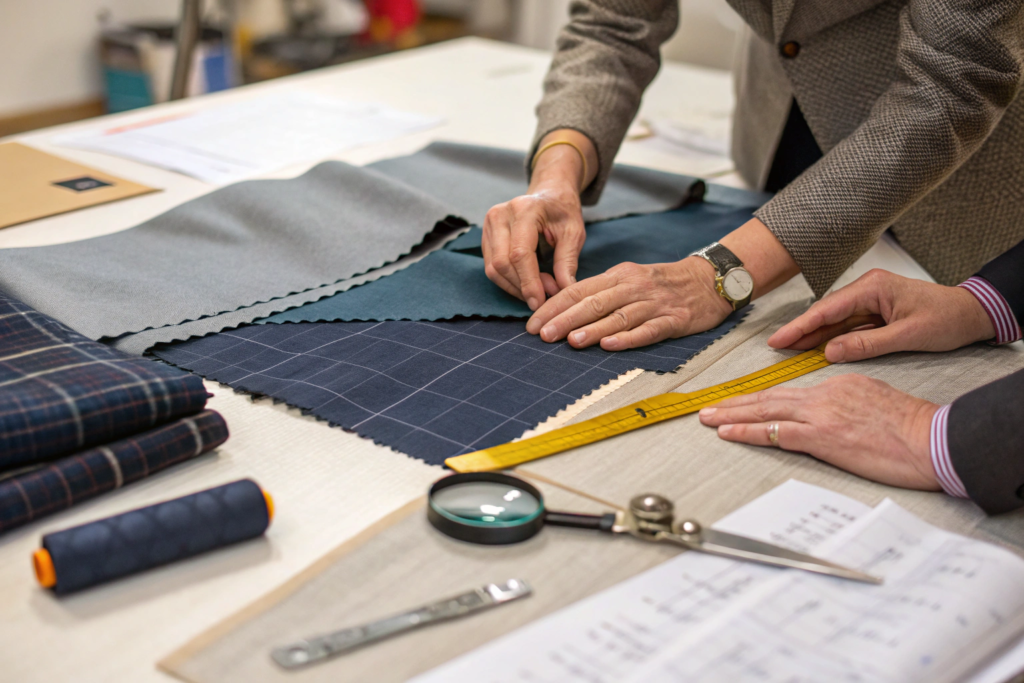
- Bespoke & High-End MTM (Made-to-Measure): Here, the fabric is the star. Sourcing focuses on luxury mill cloths from Italy (Loro Piana, Vitale Barberis Canonico), England (Holland & Sherry), and Japan. Fabrics are often unique, small-batch runs with exquisite finishing. MOQs are low (sometimes single rolls), but cost per meter is high. The emphasis is on exclusive patterns, rare fibers (vicuña, baby cashmere), and historical weaves.
- Ready-to-Wear (RTW) & Corporate Uniforms: This demands consistent quality, volume scalability, and cost efficiency. Sourcing shifts to larger, technical mills (like many in the Biella region of Italy or specialized mills in China and Japan) that can produce exceptional worsteds at scale. The focus is on perfecting core fabrics—navy and charcoal worsteds, staple patterns like pinstripes and birdseye—with rigorous quality control to ensure every batch matches. MOQs are higher (500-2000 meters per color/pattern), but the value is superior.
At Shanghai Fumao, we bridge this gap. We offer access to premium Italian mill stocks for our boutique clients, while our own production excels at delivering high-volume, consistent Super 100s-120s fabrics for RTW brands. For a global hotel chain’s uniform refresh, we supplied over 20,000 meters of a custom-dyed, durable Super 110s wool blend that met strict abrasion resistance standards—a project requiring scale that most luxury mills couldn’t touch.
How to navigate MOQs and lead times in suiting fabric?
Suiting fabrics are not commodities. Lead times are long, and MOQs are substantial.
- Stock Fabric: Buying from a mill’s or large supplier’s existing stock collection is the fastest and has the lowest MOQ (can be as low as 50-100 meters per design). This is ideal for testing a market or for small collections.
- Made-to-Order (Custom): Developing a custom color or weave involves 8-14 week lead times and MOQs of 1,000-5,000 meters per design. This is for established brands with confident forecasts.
- The Key is Forecasting: Successful brands plan their suiting fabric orders 6-9 months before the garment delivery date. The yarn sourcing and weaving alone can take 60-90 days.
A savvy strategy is to build a core fabric library of 5-10 proven, stock fabrics (e.g., navy plain, charcoal twill, grey herringbone) that form the backbone of your collection each season, and then augment with 1-2 statement custom fabrics.
Conclusion
Selecting the best fabric for formal suits and blazers is a nuanced exercise in applied textile science. It begins with the foundational choice of worsted wool and its preparation, enhanced by strategic blends with mohair or elastane for specific performance benefits. The character and climate-appropriateness are then defined by the weave—from the durable diagonal of twill to the breathable open structure of fresco. True quality is verified not by labels alone, but by tangible tests of resilience, drape, and measurable construction data like weight and finish. Finally, sourcing must be strategically aligned with the market segment, balancing the exclusivity of luxury mills for bespoke against the scalable consistency and value of specialized technical producers for ready-to-wear.
Mastering this process transforms fabric selection from a matter of aesthetic preference into a strategic decision that directly impacts the garment’s longevity, comfort, and perceived value. It is the invisible architecture upon which the visible art of tailoring is built.
Whether you are crafting a limited edition of bespoke masterpieces or sourcing the core fabric for a 10,000-unit blazer line, the principles of quality remain the same. At Shanghai Fumao, we provide the expertise and the materials across this spectrum. From curated selections of European mill cloths to our own high-performance worsteds engineered for scale, we are your partner in building suits that stand the test of time. Contact our Business Director, Elaine, to begin sourcing: elaine@fumaoclothing.com.