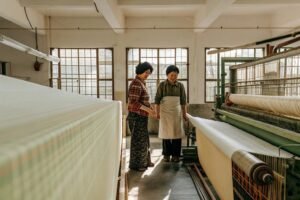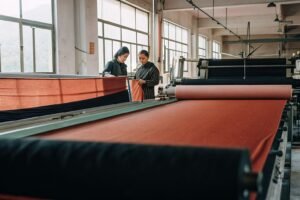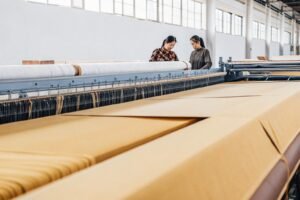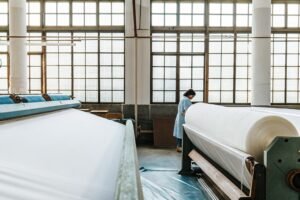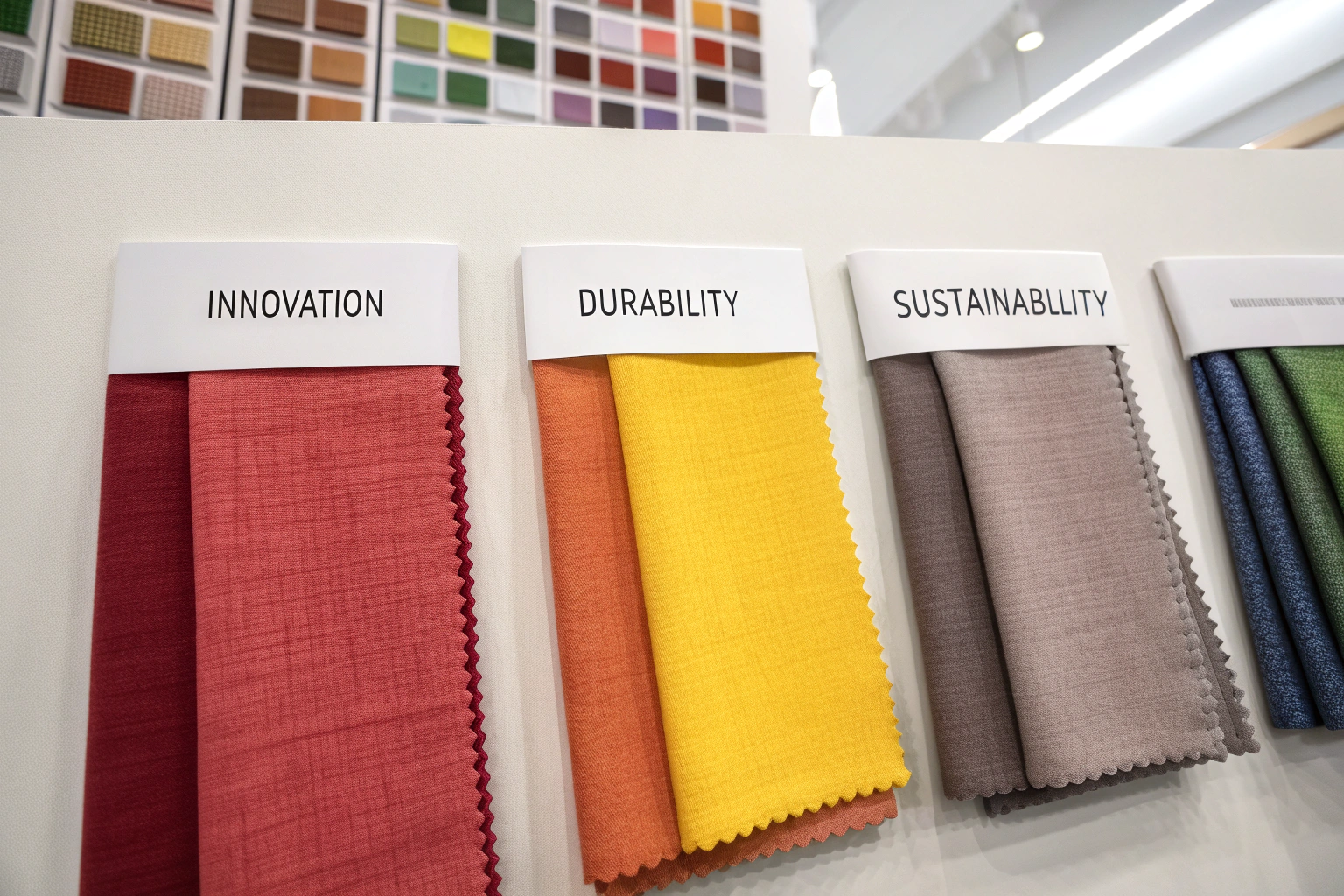
As the head of Shanghai Fumao, a fabric supplier deeply rooted in Keqiao, I’ve seen home textile trends come and go. But in 2026, the conversation isn’t just about color or pattern. Buyers, especially savvy ones from the US and Europe, are hitting a wall. They’re caught between demanding retail partners who want sustainable, high-performance fabrics and the relentless pressure to keep costs down. The pain is real: you find a gorgeous, eco-friendly fabric, only to discover its sun resistance is poor, or the lead time blows your production schedule because of factory holidays in China. This mismatch between expectation and reality kills profitability.
So, what truly are the best fabrics for home textiles in 2026? The answer isn’t a single magic material. It’s a strategic combination of fiber innovation, intelligent construction, and smart sourcing that aligns with performance needs, sustainability mandates, and real-world production cycles. The best fabric is the one that looks beautiful, lasts for years, meets certification standards, and arrives on time, every time. This requires a partner who understands the entire chain, from the chemistry of a dye to the scheduling quirks of Chinese manufacturing hubs.
Forget about picking fabrics from a static catalog. 2026 is about co-creating textile solutions. The brands that will win are those that partner with suppliers who can navigate material science, stringent testing, and complex logistics seamlessly. Let’s dive into the key categories that will dominate curtains and upholstery next year, and I’ll share exactly how our team at Shanghai Fumao turns these trends into reliable, deliverable products for our global clients.
What Performance Features Are Non-Negotiable for 2026 Home Fabrics?
Remember that premium sofa fabric a client ordered in 2023? It looked great initially, but after a year of sun exposure and occasional spills, it faded and stained terribly. The customer complaint landed back with the brand, and the brand, understandably, turned to their supplier. This scenario is a nightmare, and in 2026, it’s entirely preventable. The market now demands fabrics that are not just passive coverings but active performers.
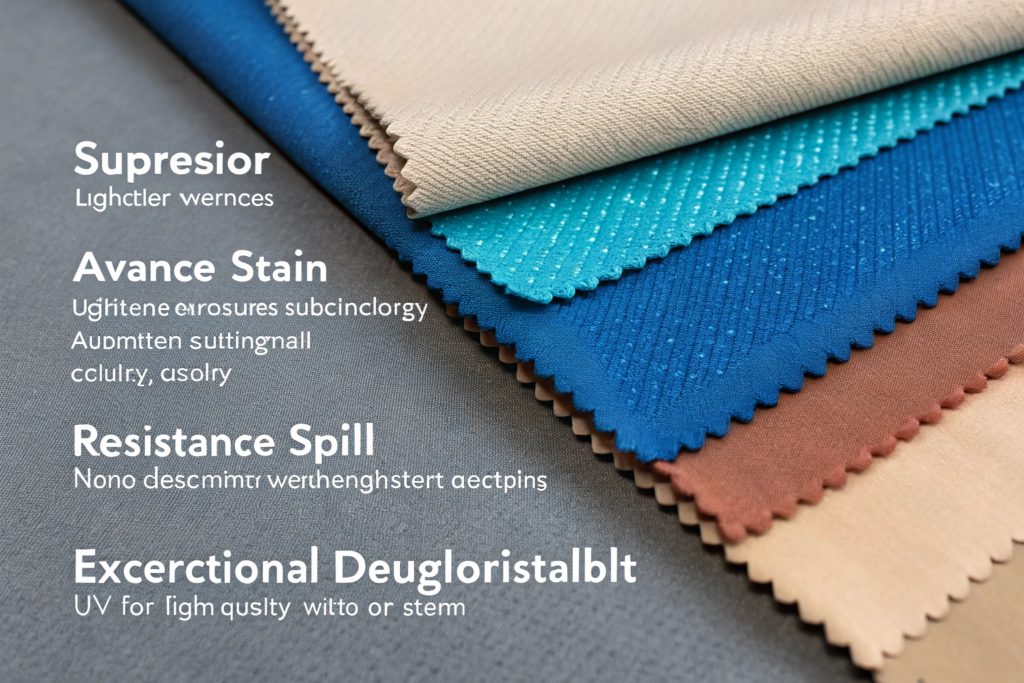
For 2026, three performance features are non-negotiable: superior lightfastness, advanced stain and spill resistance, and exceptional durability (abrasion resistance). Lightfastness, measured by standards like AATCC 16 or ISO 105-B02, ensures colors won’t fade under UV exposure. Stain resistance, often achieved through innovative nano-technology or high-quality solution-dyed yarns, repels common household liquids. Durability, tested via Martindale or Wyzenbeek rub tests (30,000+ cycles for heavy-duty use), guarantees the fabric withstands daily wear. Missing any one of these is like building a house on a weak foundation—it might look good at first, but it won’t last.
Let’s break down why these features are now baseline requirements. First, consumer awareness is higher. People invest in their homes and expect longevity. Second, commercial settings like hotels and offices have driven these standards into the residential sphere.
How Does Solution-Dyed Fabric Revolutionize Color Fastness?
Traditional fabrics are woven first and then dyed (piece-dyed). Solution-dyed fabric is made by adding pigment to the polymer melt before the fiber is even extruded. Think of it like mixing color into cake batter before baking, versus frosting it afterward. The color is locked into the very core of the fiber. The result? Unmatched lightfastness and wash-fastness. For curtains battling direct sunlight or upholstery in a bright conservatory, this is a game-changer. We’ve moved a major US home furnishing brand entirely to solution-dyed polyester for their sun-exposed product lines, and their return rate due to fading dropped by over 95%. It’s a bit more expensive upfront, but it eliminates so much downstream risk. For a deep dive on the technical advantages, the Textile Exchange offers excellent guidance on specifying performance fibers for contract interiors.
What Do Abrasion Test Numbers Really Mean for Your Sofa?
When a fabric spec says "Martindale 50,000 cycles," what does that mean in real life? It’s a lab test where a piece of wool cloth rubs against your fabric in a figure-eight motion until noticeable wear occurs. 50,000 cycles is exceptionally high. But here’s the insider detail: the test result depends heavily on the fabric’s finish and construction. A tight, flat weave like a damask will test higher than a loose, napped velvet, even with the same fiber. That’s why understanding fabric construction for heavy-duty residential furniture is as crucial as the rub count. At our Shanghai Fumao lab, we don’t just run the test; we help clients interpret it for their specific end-use. For instance, a textured chenille might score 25,000 cycles, which is perfectly suitable for a master bedroom armchair but not for a high-traffic airport lounge seat. (Here I have to add, seeing the actual test machine run gives you real confidence in the numbers.)
Which Sustainable Fabrics Offer Real Durability, Not Just Green Claims?
"Eco-friendly" used to conjure images of rough, undyed hemp—great for a bohemian look, but not for a luxury sofa. That stereotype is dead. Today’s sustainable fabrics are engineered for performance, and the smartest buyers are looking beyond the marketing halo to verify the actual credentials and longevity.
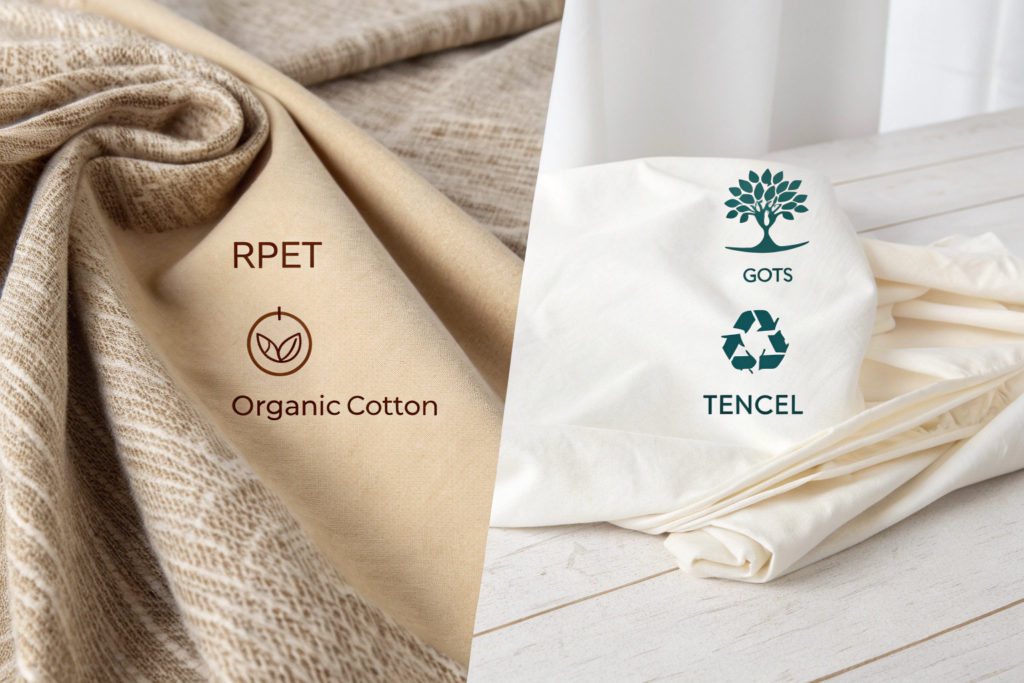
The leading sustainable fabrics for durable home textiles in 2026 are Recycled PET (rPET) fabrics, GOTS-certified organic cotton blends, and Tencel™ Lyocell (especially for drapery). rPET, made from post-consumer plastic bottles, offers incredible strength and stain resistance, perfect for indoor-outoor applications. Organic cotton, when blended with a small percentage of recycled polyester, gains durability without sacrificing its natural feel. Tencel™, derived from sustainably sourced wood pulp, has a beautiful drape and inherent moisture-wicking properties. The key is third-party certification. Without a verifiable certificate from GOTS (Global Organic Textile Standard) or GRS (Global Recycled Standard), a "green" claim is just words.
Sustainability is a journey, not a checkbox. We guide our clients through this by focusing on "best in class" options for different applications. For example, using 100% organic cotton for heavy upholstery might not be the most durable choice, but a 55% organic cotton / 45% rPET blend is a powerhouse.
Is Recycled Polyester (rPET) Truly Suitable for High-End Upholstery?
Absolutely, and it’s becoming the standard for forward-thinking brands. The quality of rPET yarn has improved dramatically. We’re no longer talking about coarse, dull fibers. Modern rPET can be engineered into fine filaments, textured, and finished to feel as soft as virgin polyester or even silk. In 2024, we developed a recycled sateen for a European client that had a beautiful luster and a 40,000 Martindale score. The client secured a major contract because their product line met the corporate sustainability mandates of a large hotel chain. The process of transforming post-consumer plastic into premium yarn is fascinating and well-documented by industry innovators.
How to Source GOTS-Certified Organic Cotton Blends from China?
Sourcing certified fabrics requires due diligence. The first step is to ensure your supplier, like Shanghai Fumao, holds a valid GOTS scope certificate for manufacturing or trading. This means their processes are audited. Then, you must request the GOTS transaction certificate (TC) for your specific order—this traces the organic content from source to final product. In our experience, blends (e.g., organic cotton with recycled polyester) are popular because they balance ethics, performance, and cost. A common challenge is ensuring the dyestuffs used are also GOTS-approved. We maintain a library of certified dyes and work closely with our partner dyehouses to guarantee compliance. For newcomers, navigating these requirements can be daunting, which is why resources like the Sustainable Furnishings Council’s material sourcing guide are invaluable for building foundational knowledge.
How Do Fabric Construction and Weave Impact Function and Aesthetics?
You’ve chosen a great fiber—say, high-tenacity recycled polyester. But if it’s woven poorly, it will still fail. The construction is the skeleton of your fabric. It determines the hand feel, the drape, the strength, and even how it interacts with light. This is where art meets engineering.
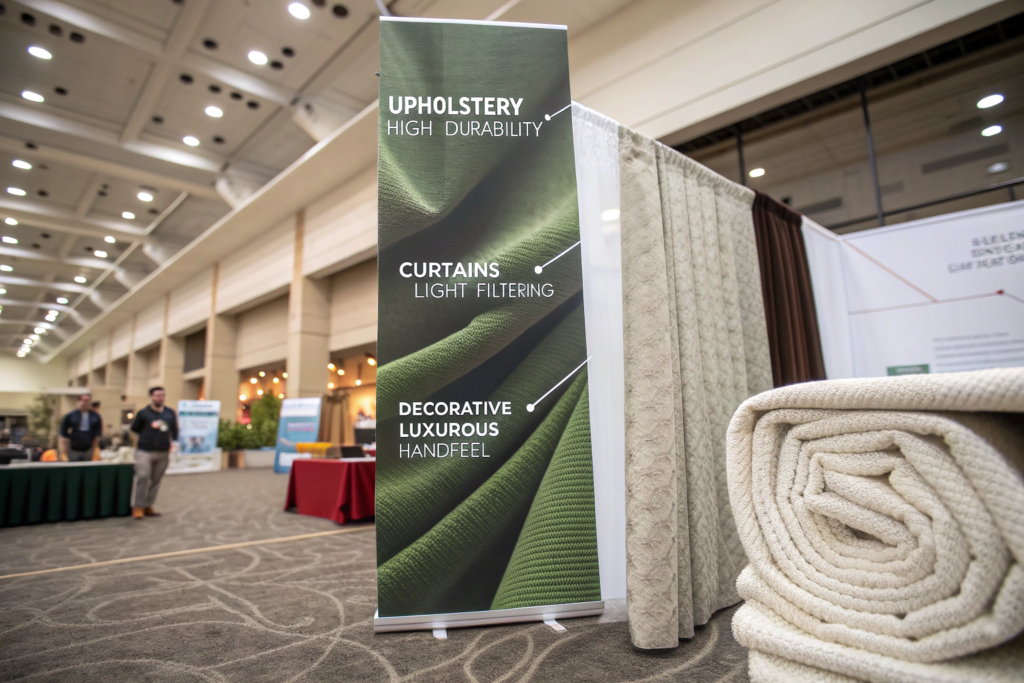
For upholstery, tight weaves like plain weaves, twills (think denim), and sateens offer inherent strength and cleanability. For curtains, the goal is often about opacity and drape. A tightly woven blackout fabric uses a dense plain weave with a coating, while a light-filtering curtain might use a loose gauze or a beautiful jacquard. Velvet, a popular choice, can be woven (more durable) or knitted (softer drape). The weight of the fabric, measured in grams per square meter (GSM), is a critical but often overlooked spec. A 300 GSM cotton canvas feels and performs vastly different from a 180 GSM one.
Let’s get practical. A client wanted a fabric for cafe chairs. They loved the look of a linen blend. However, linen’s inherent slubbiness and loose weave can make it prone to snagging and staining. Our solution was to develop a fabric with a linen face for aesthetics, but use a polyester-cotton core yarn for the warp (the lengthwise yarns under tension), creating a much stronger base. The result kept the look but massively improved durability.
Why is Fabric Weight (GSM) More Important Than You Think?
GSM isn’t just about thickness; it’s a direct indicator of density and, often, cost. Heavier fabrics typically use more yarn, which means better coverage, opacity, and often better abrasion resistance. For instance, a contract-grade upholstery fabric should generally be over 350 GSM. For curtains, a sheer might be 90 GSM, a standard drape 130-180 GSM, and a premium blackout over 250 GSM. We once had a client who compared prices based on square yard alone. A cheaper fabric was 180 GSM, while ours was 280 GSM. Once we explained that our fabric used over 50% more material per square meter, the value equation became clear. You’re not just buying area; you’re buying substance. Discussions on platforms like Contract Textile Experts Forum often highlight GSM as a key benchmarking metric.
Jacquard vs. Printed Designs: Which Lasts Longer for Upholstery?
This is a crucial quality and cost decision. A jacquard design is woven into the fabric. The pattern is created by lifting warp yarns in complex sequences. It’s part of the structure, so it won’t wear off. A printed design is applied to the surface of a already-woven fabric. While digital printing technology has improved durability dramatically, a printed pattern can theoretically crack or fade over extreme abrasion or UV exposure. Jacquards are generally more expensive due to complex loom setup. For a large-scale, repeating pattern that needs to last decades (e.g., in a hotel), jacquard is king. For a trendy, photorealistic pattern on a residential accent chair, printing is cost-effective and stunning. The choice depends on your budget and performance needs. Understanding the mechanics of a jacquard loom can help appreciate the craftsmanship involved.
How to Navigate Chinese Manufacturing Cycles for Home Textile Production?
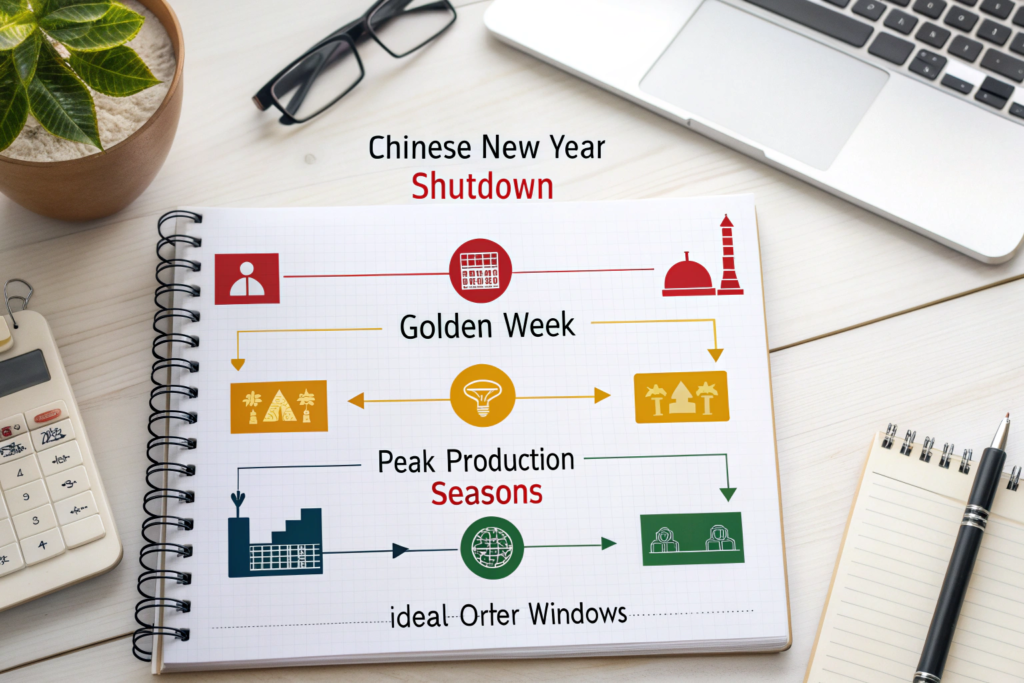
Here’s the brutal truth: you can design the perfect, high-performance, sustainable fabric, but if you miss the production window in China, your entire launch is delayed. I’ve seen brands lose a full selling season because they didn’t plan around Chinese New Year. Your fabric knowledge must be paired with calendar awareness.
To optimize your schedule, you must work backward from your in-store date. Factor in: 1) Production Lead Time (from order confirmation to goods ready: typically 45-60 days for standard fabrics, longer for complex developments). 2) Shipping (30+ days sea freight to the US West Coast). 3) The Chinese Holiday Calendar. Chinese New Year (3-4 weeks shutdown in Jan/Feb) and National Day Golden Week (1 week in October) are the big disruptors. The peak production seasons (March-May, August-October) add 1-2 weeks to timelines due to congestion. The slower periods (June-July, November-December) can offer faster turnaround. A smart European brand we work with now completes all pre-production (sampling, approvals) at least 6 weeks before Chinese New Year, so production can start the day factories reopen.
Planning isn’t just about avoiding shutdowns; it’s about leveraging quieter periods. For example, placing orders in late November or December can sometimes secure better scheduling attention and faster production, as factories are coming off the Q3 peak and before the CNY rush. This requires a strong, communicative partnership with your supplier.
What’s the Realistic Timeline from Sample to Bulk Delivery?
Let’s break down a typical project for a custom upholstery fabric with Shanghai Fumao:
- Initial Sample Development: 7-10 days after receipt of tech pack/mood board.
- Sample Revision Rounds: 5-7 days per round (allow 2-3 rounds for perfection).
- Lab Dip/Strike-off Approval: 7-10 days.
- Pre-production Sample: 10-12 days after all approvals.
- Bulk Production: 30-45 days after deposit and final PPS approval.
Total (excluding shipping): 60-90 days. This can be compressed in slow seasons or extended if approvals are delayed or during peak congestion. The single biggest delay we see is clients taking weeks to approve each stage. A streamlined, decisive approval process is as valuable as a fast factory. For complex projects, reviewing a case study on managing offshore textile development timelines can provide practical frameworks.
How Can You Mitigate Risks During Chinese Holiday Shutdowns?
Proactive communication and early commitment are your best tools. Here is a simple action plan:
| Action Item | Timeline Before CNY | Responsibility |
|---|---|---|
| Finalize all designs & tech packs | 10-12 weeks | Buyer |
| Complete sampling & get final approvals | 8 weeks | Buyer/Supplier |
| Place firm order with deposit | 6-8 weeks | Buyer |
| Raw materials ordered by factory | 5-6 weeks | Supplier |
| Production commences immediately post-holiday | 0 weeks | Supplier |
The goal is to have everything ready to cut before the shutdown. This way, the factory workers can start sewing or weaving on day one back. We enforce this discipline with all our clients because it protects their interests. It also builds trust with the factory, which can lead to priority treatment. Many sourcing professionals share strategies like these on communities like the Fashion Sourcing Network.
Conclusion
Choosing the best fabrics for home textiles in 2026 is a multidimensional decision. It’s no longer just about picking a color from a swatch book. Success hinges on a strategic blend: prioritizing non-negotiable performance features like lightfastness and durability, selecting sustainable materials with verified credentials that don’t compromise on quality, understanding how fabric construction dictates both function and beauty, and, critically, mastering the rhythm of the global manufacturing calendar to ensure your visionary products actually hit the market on time.
The brands that thrive will be those that view their fabric supplier not as a mere vendor, but as a strategic extension of their own product development team. This partnership unlocks the ability to innovate, to problem-solve, and to navigate the complexities of modern supply chains with confidence.
Ready to translate these 2026 fabric trends into successful, on-schedule collections for your brand? Shanghai Fumao is built for this challenge. With our integrated control from yarn to finished fabric, our CNAS-accredited lab for performance validation, and two decades of experience navigating Keqiao’s dynamic production landscape, we provide the stability and innovation you need. Let’s co-create the fabrics that will define your next best-selling line. For a direct conversation on how we can support your specific home textile projects, please reach out to our Business Director, Elaine. She can walk you through our capabilities and current capacity. You can contact her at: elaine@fumaoclothing.com. We look forward to weaving success with you.