
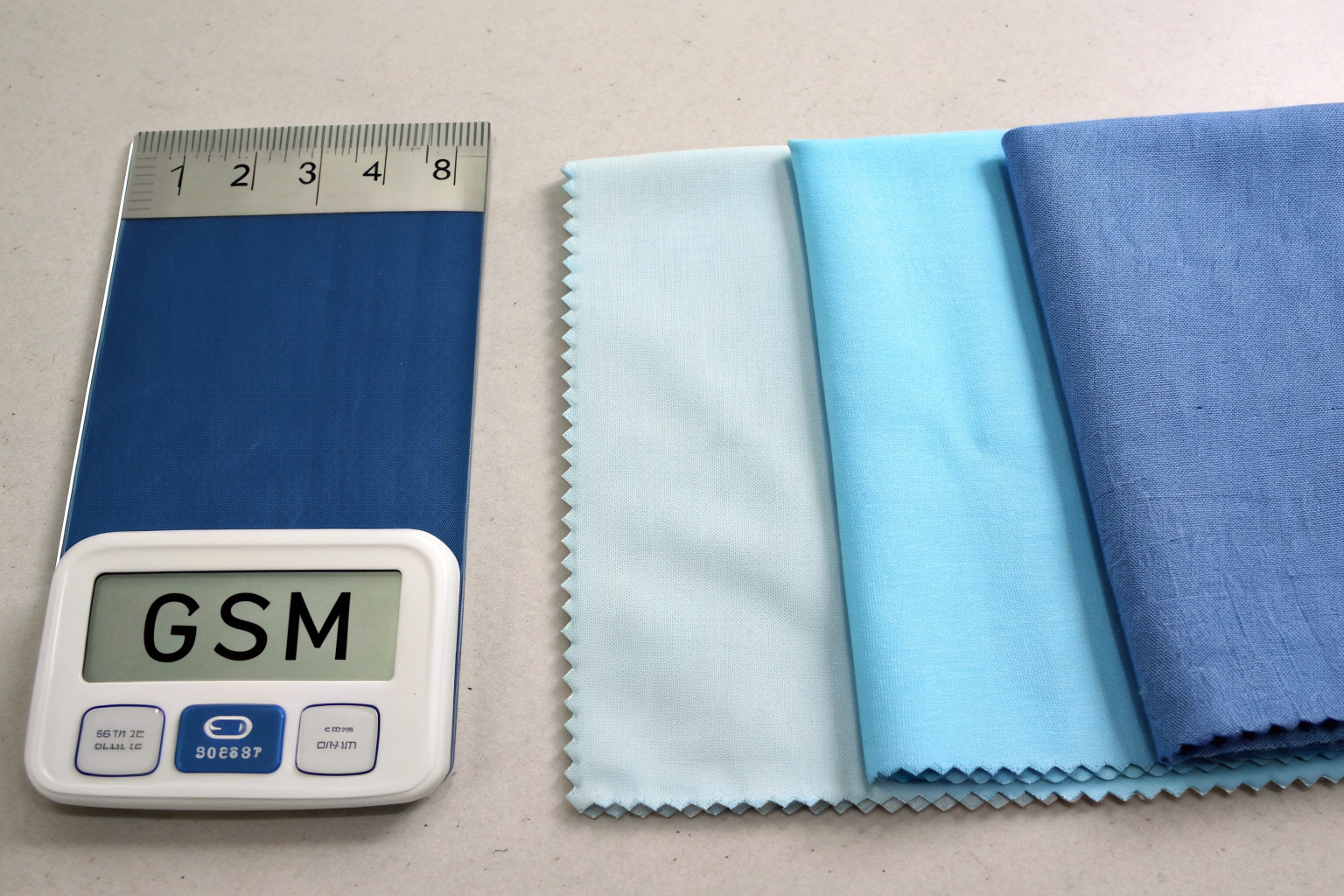
Let me tell you a story from the factory floor. Last year, a young entrepreneur from Berlin came to us with a dream. He wanted to create the "perfect" t-shirt—one that felt substantial but breathable, held its shape but moved with you. He showed me a sample he loved from a high-end brand. "I want this," he said. I felt the fabric, held it to the light, and asked my team to check. The report came back: 180 GSM, single jersey, 100% combed cotton. His eyes widened. "GSM? Is that why it feels so different from the cheap ones?" That moment, right there, is where so many brands stumble or soar. They chase colors, designs, and cuts but overlook the most fundamental spec that dictates a garment’s soul: its weight.
So, what is GSM, and why should you, a brand owner or designer, care deeply about it? GSM stands for Grams per Square Meter. It’s the objective, numerical measure of a fabric’s weight and density. Think of it as the fabric’s body mass index. It’s not a vague feeling of "light" or "heavy"; it’s a precise number that tells you how much yarn is packed into every square meter. This number directly dictates drape, durability, opacity, seasonality, and, crucially, cost. Understanding GSM is the difference between guessing and knowing, between a product that disappoints and one that delights. For instance, that Berlin entrepreneur’s perfect tee at 180 GSM sits in a sweet spot—substantial enough to avoid being sheer and to resist pilling, yet light enough for year-round comfort. A cheaper 130 GSM alternative would have been flimsy; a 220 GSM would have been too hot for summer. We helped him nail it on the first sample because we started with the right GSM.
This guide will demystify GSM. We’ll show you how to measure it, how it translates to real-world performance across different fabric types, and how to use this knowledge to make smarter sourcing decisions that align with your brand’s quality, cost, and customer expectations.
What Exactly is GSM and How Do You Measure It?
GSM is the bedrock of fabric specification. In my two decades at Shanghai Fumao, I’ve seen more sourcing mistakes stem from GSM confusion than almost anything else. A buyer thinks they’re getting a "medium weight" cotton, but without a number, "medium" to the factory could be 160 GSM, while the buyer envisioned 200 GSM. The result? A shipment of fabric that’s utterly wrong for the intended product. GSM removes that ambiguity. It’s a universal language.
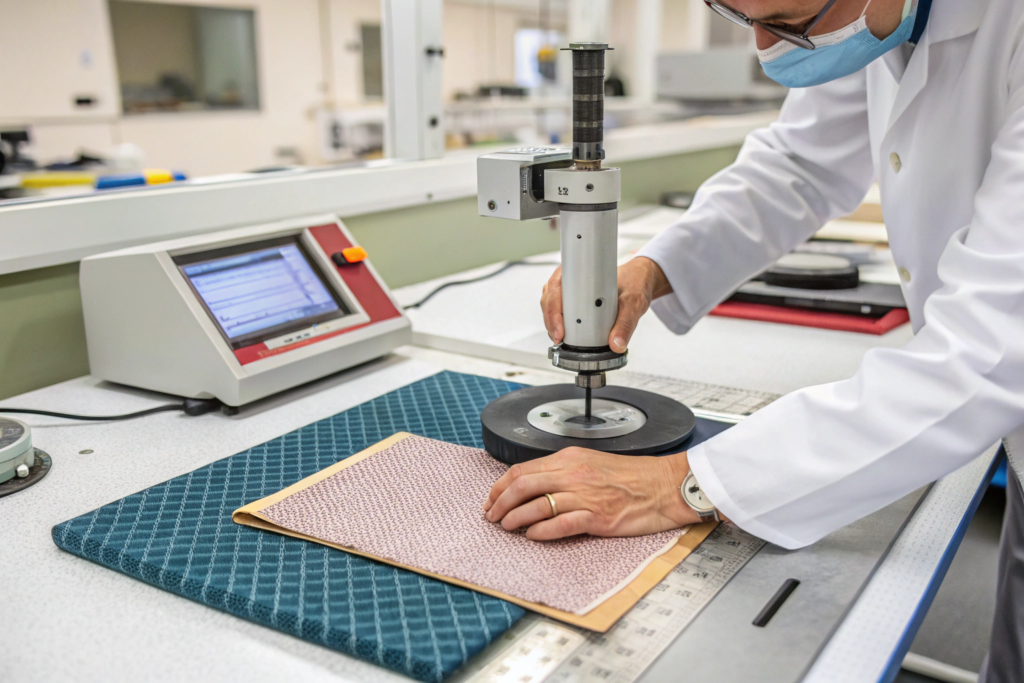
Technically, GSM is the weight in grams of one square meter of fabric. It’s measured by cutting a precise sample, often with a circular die cutter to ensure accuracy, and weighing it on a calibrated scale. The process is standardized (like in ASTM D3776), but here’s the insider knowledge: the reported GSM can vary. A reputable supplier like us will provide a lab test report. A less scrupulous one might give a "nominal" GSM that’s 10-15 grams lighter than the actual weight, saving them on yarn cost and undercutting honest competitors. Always, always ask for a test certificate. In 2023, we caught a major discrepancy for a Canadian client who was quoted 300 GSM fleece from another vendor. Our test showed the sample was only 275 GSM. That 25-gram difference meant a less cozy hoodie and a hidden cost saving for the supplier, not the buyer.
What’s the Difference Between GSM and Oz/Yd²?
You’ll often see fabric weight listed in two units: GSM (metric) and ounces per square yard (oz/yd²), common in the US. It’s crucial to know how to convert between them. 1 oz/yd² ≈ 33.9 GSM.
You can roughly convert by remembering:
- 5 oz/yd² ≈ 170 GSM
- 10 oz/yd² ≈ 340 GSM
Most of the global industry, especially in manufacturing hubs like China, uses GSM. When you’re sourcing, use GSM as your primary spec. It’s more precise and avoids confusion. For example, if you’re developing performance stretch fabrics for activewear, your tech pack should specify "GSM: 200 ±5" not just "medium weight." This precision allows any qualified supplier, anywhere, to meet your exact standard. We provide all our specs in GSM for this reason, though we can easily provide the ounce equivalent for our American clients.
How Do You Accurately Measure or Verify GSM?
Don’t have a lab? You can get a surprisingly good estimate. Here’s a practical method we sometimes use for quick checks:
- Cut a known area of fabric (e.g., 10cm x 10cm = 0.01 sq m).
- Weigh it accurately on a small gram scale.
- Calculate: (Weight in grams) / (Area in sq m) = GSM.
- Example: A 10cm x 10cm (0.01 m²) piece weighs 2 grams. GSM = 2 / 0.01 = 200.
However, for final verification and to avoid disputes, insist on a third-party or supplier-provided test report from a certified lab. The report should state the testing standard used. At Shanghai Fumao, our in-house CNAS-accredited lab includes GSM data on every fabric’s digital QC report, accessible via a QR code on the roll. This transparency is what builds long-term trust. A UK brand once told us this traceability feature was the deciding factor in choosing us over a cheaper option, as it de-risked their entire production run.
How Does GSM Impact Fabric Performance and Application?
GSM isn’t just a number; it’s a performance predictor. It tells you how the fabric will behave long before it’s cut and sewn. The relationship is generally straightforward: Higher GSM = Denser, Heavier, More Durable, Less Breathable. Lower GSM = Lighter, Softer, More Breathable, Less Durable.
But the magic (and the challenge) is in the context. A "high" GSM for silk chiffon (30 GSM) is a "very low" GSM for denim. That’s why you must evaluate GSM within a specific fabric category. Let’s break it down with a simple analogy: GSM is like the thread count for bedsheets, but for the entire fabric structure, not just the threads. It gives you the full picture of density.
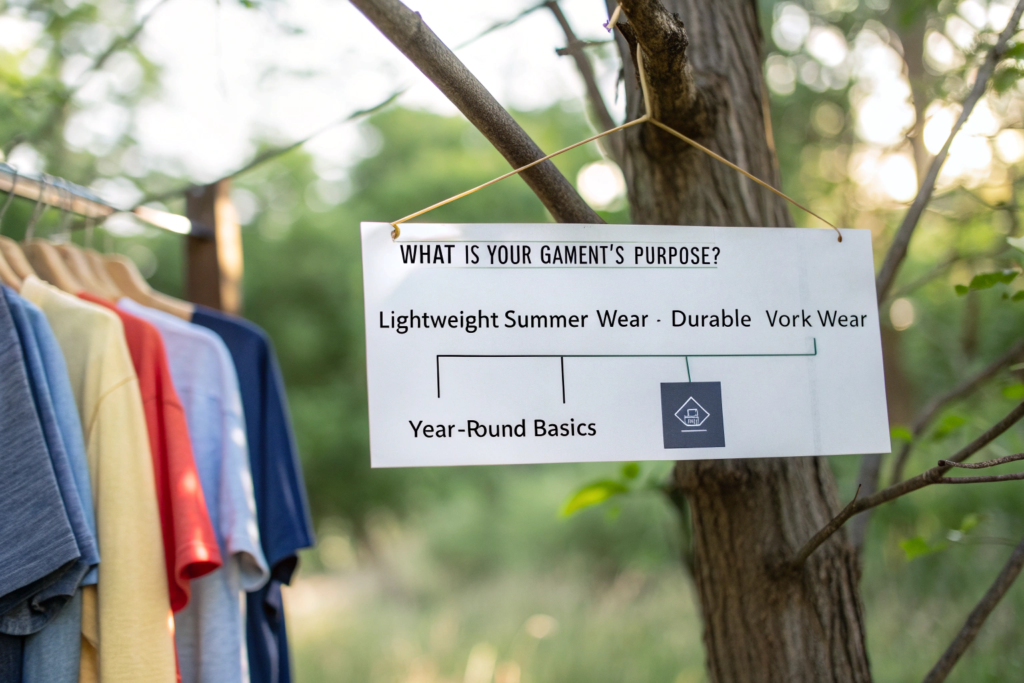
What GSM Range is Right for Common Garment Types?
This is your practical cheat sheet. These are typical ranges, but innovation constantly pushes boundaries.
| Garment Type | Common Fabric | Typical GSM Range | Why It Works |
|---|---|---|---|
| Lightweight Dresses, Linings, Sheers | Chiffon, Voile, Lightweight Cotton | 30 – 100 GSM | Achieves airy, flowing drape and transparency. |
| T-Shirts, Undershirts, Summer Tops | Jersey, Single Knit Cotton | 130 – 180 GSM | The sweet spot. Light enough for comfort, heavy enough for opacity and durability. Below 130 can feel cheap and be see-through. |
| Button-Down Shirts, Blouses | Poplin, Oxford, Lightweight Twill | 100 – 150 GSM | Provides crispness and structure without being stiff. |
| Heavy T-Shirts, Sweatshirts, Hoodies | French Terry, Fleece, Heavy Jersey | 250 – 400 GSM | Provides warmth, substance, and a premium feel. Hoodies often start at 300 GSM for a cozy hand-feel. |
| Denim Jeans | Denim (Various Weights) | 200 – 400+ GSM | 10-12 oz (340-400 GSM) is standard denim. 14+ oz (475+ GSM) is heavy, selvedge raw denim. |
| Outerwear, Workwear, Bags | Canvas, Duck Cloth, Twill | 300 – 600+ GSM | Provides extreme durability and wind resistance. |
A real-world case: An Australian surf brand wanted a new board short liner. They needed it to be quick-drying (low GSM) but not clingy or transparent (needed a minimum GSM). We developed a polyester micro-mesh fabric at 110 GSM. It was light enough to dry in minutes but dense enough in construction to provide the necessary modesty and comfort, solving their exact problem.
How Does GSM Affect Durability, Drape, and Seasonality?
Let’s connect the number to physical properties:
- Durability: Higher GSM fabrics have more yarn packed in, making them more resistant to abrasion, tearing, and pilling. A 220 GSM jersey will last significantly longer than a 140 GSM one with the same fiber. This is critical for children’s wear fabrics that must withstand repeated washing and rough play.
- Drape: Drape is how the fabric flows and falls. Low GSM fabrics have a fluid, flowing drape (think a silk skirt). High GSM fabrics have a stiffer, more structured drape (think a denim jacket). For a flowing viscose dress, you’d target 120-150 GSM. For a structured blazer, you might use a 280 GSM wool blend.
- Seasonality: This is intuitive. Low GSM = summer/spring. High GSM = fall/winter. But consider layering: a mid-weight (180-220 GSM) fabric can be year-round. A client making organic cotton knitwear for all seasons standardized on 190 GSM for their sweaters, making them versatile enough for cool summer evenings and winter layering.
- Opacity: A lower GSM fabric is more likely to be sheer. If you’re making white or light-colored garments, you must specify a GSM high enough to prevent see-through issues. We always advise clients on this during the sampling phase. (I have to add, getting this wrong is one of the most common and costly mistakes for new brands.)
How Does GSM Relate to Fabric Cost and Sourcing Decisions?
Here’s the business truth: GSM is a primary driver of your fabric cost. More grams per square meter means more raw material (yarn) is used. It’s that simple. Therefore, understanding GSM is essential for accurate costing and avoiding budget overruns. When a supplier gives you a price per meter, the GSM is a key variable. Two fabrics can look similar but have a 20% price difference because one is 180 GSM and the other is 220 GSM.
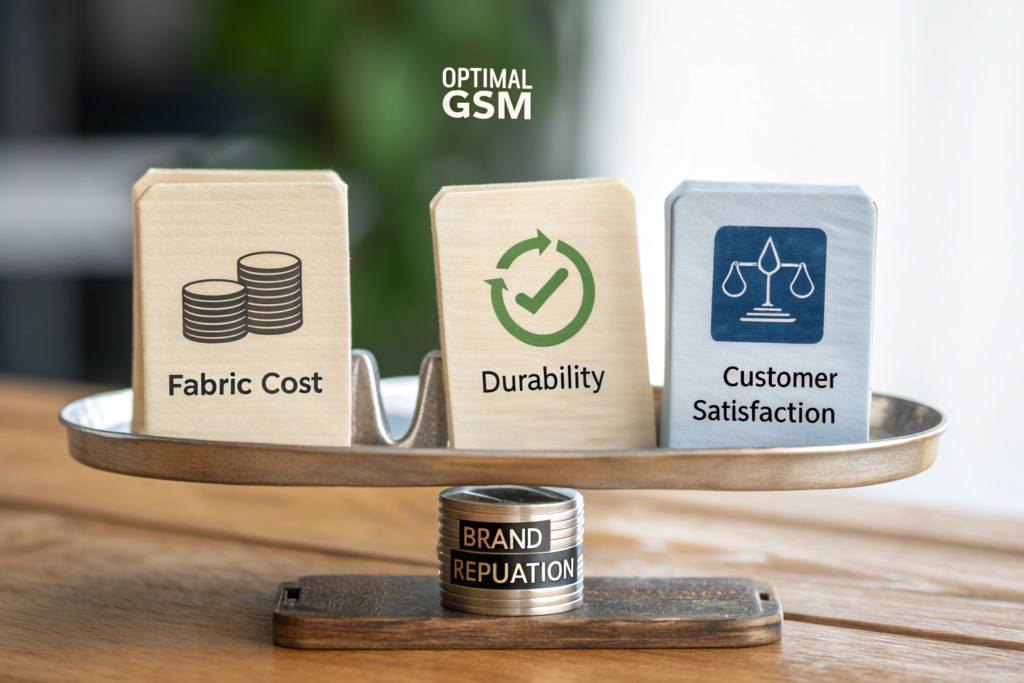
However, chasing the lowest GSM to save money is a classic false economy. A lighter fabric may lower your bill of materials (BOM), but it can lead to higher returns due to poor durability, negative customer reviews, and damage to your brand’s reputation for quality. The goal is to find the optimal GSM for your product and price point—the point where quality meets cost efficiency. At Shanghai Fumao, we often help clients run value-engineering exercises, comparing the cost/benefit of different GSM options to find their perfect balance.
Why is GSM a Key Factor in Fabric Pricing?
The cost calculation is direct. If the price of cotton yarn is $X per kilogram, then a 200 GSM fabric uses exactly twice the yarn of a 100 GSM fabric of the same type, roughly doubling the raw material cost. Add to this that weaving or knitting a heavier, denser fabric often runs slower on machines, adding a slight production cost premium.
When comparing quotes from different suppliers, always normalize for GSM. If Supplier A quotes $2.00/m for a 180 GSM cotton poplin and Supplier B quotes $1.80/m, ask Supplier B for the GSM. If it’s 150 GSM, then Supplier A is likely giving you better value for weight. You should calculate a rough cost per unit weight: Price / GSM. This levels the playing field. We encourage this transparency because we know our quality and consistency justify our price at a given GSM.
How Can You Avoid GSM-Related Sourcing Pitfalls?
- Never Spec Without a Number: Your tech pack must include a target GSM with a tolerance (e.g., 150 GSM ±5%). This is non-negotiable.
- Request Pre-Shipment Test Reports: Don’t wait for the container to arrive. Require the supplier to send a cutting from the bulk fabric and its GSM test report before final payment and shipping. We had a case where a client’s previous supplier shipped 5,000 meters of "200 GSM" fabric that tested at 185 GSM. The entire order was rejected. That won’t happen with a disciplined process.
- Understand "Shrinkage" vs. "Weight Loss": Some fabrics, especially terry and fleece, can lose weight after washing due to surface fiber loss. A 300 GSM fleece might finish at 290 GSM as a garment. Discuss this with your supplier to ensure the finished GSM meets your requirement.
- Beware of False Density: A fabric can achieve a higher GSM not through more yarn, but by using a thicker, lower-quality yarn or adding chemical fillers. This is why GSM must be evaluated alongside fiber quality and construction. Our expertise at Shanghai Fumao is in achieving optimal GSM with high-quality yarns, ensuring true durability, not just a number on paper.
How to Specify GSM in Your Tech Pack for Perfect Results?
Your tech pack is the contract between your design vision and the factory’s execution. A vague tech pack invites error; a precise one ensures success. The GSM specification is a cornerstone of that precision. It bridges the creative team ("I want it to feel substantial") and the production team ("We need to set the loom to X density").
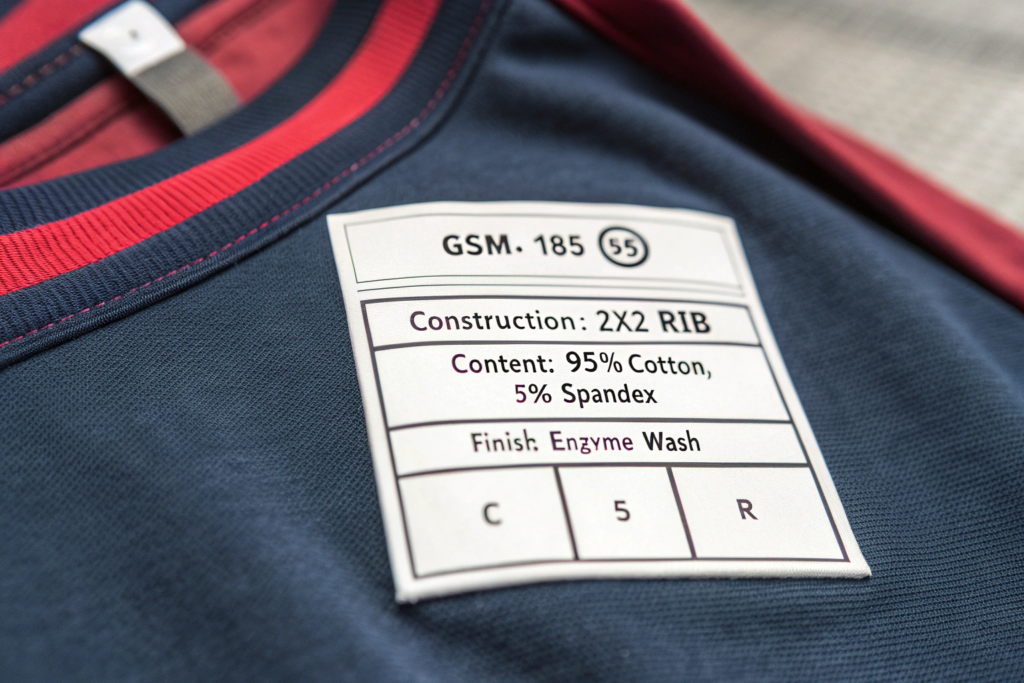
A perfect tech pack entry for fabric will include: Fiber Content, Construction, Width, Color/Finish, and Target GSM with Acceptable Tolerance. For example: "Fabric: 100% Combed Cotton, Single Jersey, 180 GSM (+/- 5%), 160cm width, White." This leaves no room for interpretation. I’ve seen this discipline turn chaotic sourcing into a smooth process. A Los Angeles-based streetwear brand we now work with standardized their entire line around three GSM values for knits, which dramatically simplified their sourcing and improved product consistency.
What is the Role of Tolerance in GSM Specifications?
No production process is perfect. Yarn thickness can have minute variations, and weaving tension can fluctuate slightly. Therefore, you must allow a reasonable tolerance. A common tolerance is ±5%. For a 200 GSM fabric, this means an acceptable range of 190-210 GSM.
Specifying too tight a tolerance (e.g., ±2%) can unnecessarily increase cost and lead to higher rejection rates, as the factory must work to an impractical standard. Specifying no tolerance or too wide a tolerance (e.g., ±10%) defeats the purpose of having a spec. Work with your supplier to agree on a fair, achievable tolerance based on the fabric type. Our quality control at Shanghai Fumao is built to consistently hit within a ±3-5% range, giving our clients peace of mind.
How Does GSM Interact with Other Fabric Specifications?
GSM doesn’t exist in a vacuum. It’s a result of three interconnected factors:
- Yarn Count (Ne, Nm, Tex): The thickness of the yarn. A finer yarn (higher count, like Ne 40) will need to be woven more densely to achieve the same GSM as a fabric made with a coarser yarn (lower count, like Ne 20).
- Construction (Weave/Knit Density): How tightly the yarns are packed together (ends per inch, picks per inch, courses per inch).
- Finish: Processes like sanding, brushing, or coating can add or remove minimal weight.
For example, to create a soft brushed fleece fabric, you might start with a 240 GSM knitted base cloth. After brushing, which pulls fibers to the surface, the finished GSM might reduce slightly to 230 GSM, but the hand-feel becomes much warmer and loftier. A good supplier will guide you through these interactions. We recently helped a homeware brand develop a new bedding line by balancing yarn count and weave density to achieve a target GSM that delivered the desired softness and breathability at a competitive cost.
Conclusion
Understanding GSM is not textile trivia; it’s a core competency for anyone serious about creating or sourcing quality apparel. It is the quantitative bridge between subjective feel and reproducible manufacturing. From influencing the drape of a dress to determining the heft of a hoodie, from impacting your bill of materials to predicting customer satisfaction, GSM is a number that carries immense weight.
Mastering it means moving from intuition to information. It empowers you to communicate clearly with suppliers, cost your products accurately, and, most importantly, deliver garments that consistently meet your quality standards and your customers’ expectations. It turns the art of design into a repeatable science of production.
Are you ready to source fabrics with confidence, knowing the exact weight and substance you’re getting? Partner with a supplier who values precision and transparency as much as you do. At Shanghai Fumao, we provide detailed, verified GSM data for every fabric, helping you make informed decisions and build better products. To discuss how we can supply the perfect weight fabric for your next collection, reach out to Elaine, our Business Director, at elaine@fumaoclothing.com. Let’s build substance into your designs.








