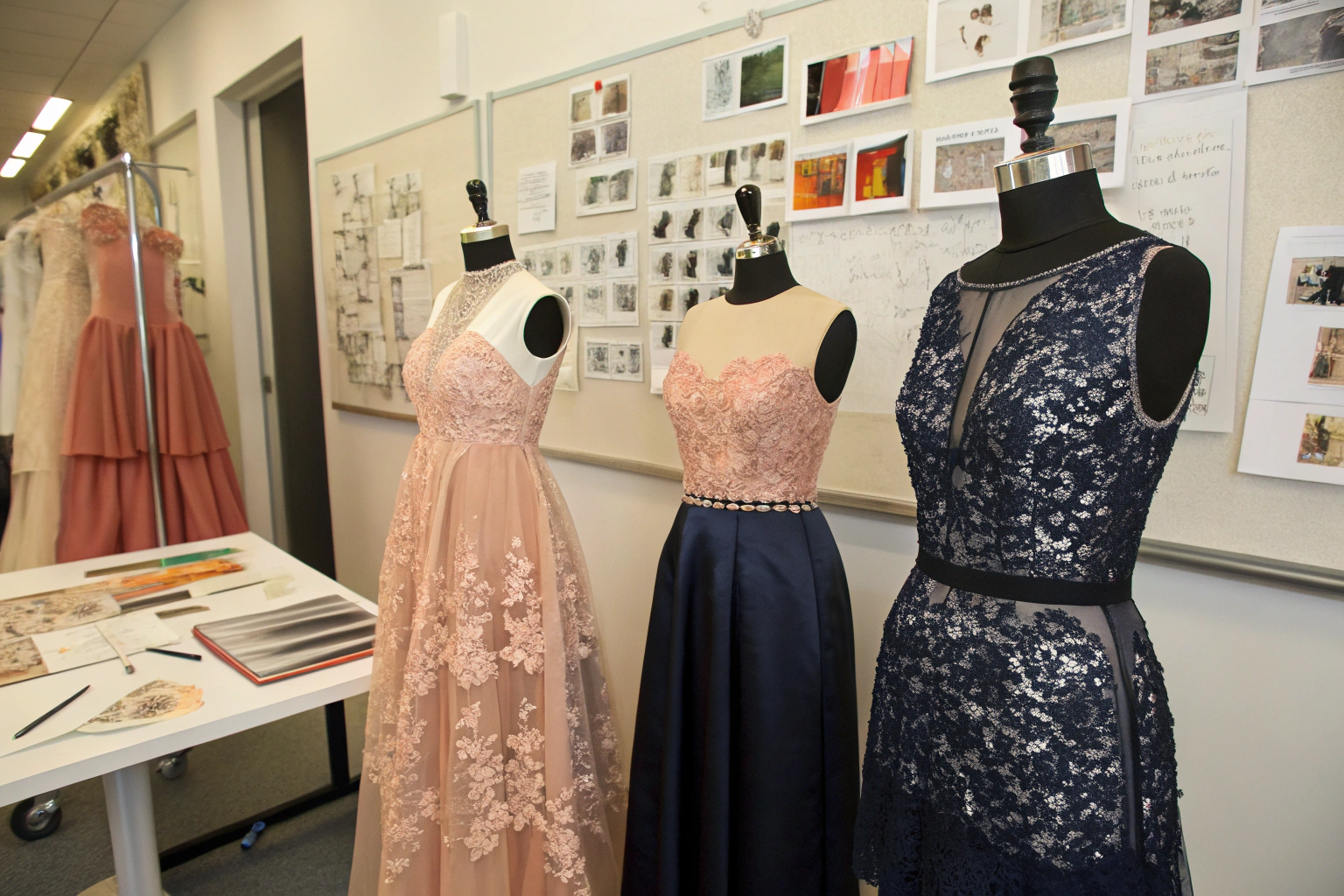
You have a stunning lace, but on its own, it feels incomplete—too sheer, too textured, or lacking structure. The magic happens when lace meets its perfect fabric partner. But combining lace with chiffon, satin, or tulle isn’t just about layering; it’s an act of textural alchemy that can elevate a design from pretty to profound. How do you master these combinations to create garments that are cohesive, comfortable, and commercially viable? The answer lies in understanding the functional role of each fabric and using strategic construction techniques to make them work as one.
Combining lace with other fabrics solves practical problems and unlocks creative potential. Chiffon gives lace a fluid, ethereal float. Satin provides a smooth, luxurious base that makes lace patterns pop with contrast. Tulle adds volume and a soft, diffused background that enhances lace’s delicacy. The goal is a symbiotic relationship where each fabric’s weakness is covered by the other’s strength, and their aesthetics harmonize. This requires careful consideration of weight, drape, opacity, and construction methods—get it wrong, and you have a bulky, uncomfortable, or poorly finished garment. Get it right, and you create a best-selling piece with exceptional perceived value.
Let’s dissect the principles and techniques for pairing lace with its most common and complementary partners.
What Are the Ground Rules for Combining Fabrics with Lace?
Before diving into specific pairings, establish foundational principles that apply to all combinations. Think of these as the "rules of engagement" for mixed-material design.
1. The Weight and Drape Harmony Rule.
Fabrics must move together. A heavy, stiff lace will not drape gracefully over a fluid, lightweight chiffon—it will buckle and pull. Conversely, a delicate lace will be swallowed and distorted by a heavy, structured fabric like denim. The key is to match the weight and drape characteristics. A medium-weight lace pairs well with a medium-weight satin. A lightweight lace needs an equally lightweight base like silk georgette or fine tulle. Test this by holding the fabrics together in your hand and letting them fall; they should cascade as a unified unit.
2. The Opacity and Purpose Principle.
Why are you combining fabrics? Is it for:
- Modesty/Support: Adding an opaque lining (satin, cotton) under sheer lace.
- Enhanced Beauty: Using a contrasting color or shine (satin under lace) to make the pattern stand out.
- Added Dimension: Layering tulle under lace to create volume and softness.
- Structural Reinforcement: Using a stable fabric as a "base" for lace appliqués.
Define the purpose first, and it will guide your opacity choice. A sheer lace over nude chiffon creates a skin-toned modesty layer that maintains the illusion of sheerness. The same lace over black satin creates a stark, dramatic contrast.
3. The Seam and Finish Imperative.
This is where production reality hits. Combining different fabrics multiplies sewing challenges. You must plan for:
- Seam Allowance Bulking: A lace + satin + lining seam can be very thick. Techniques like grading seams (trimming each layer to a different width) or using French seams for sheer combinations are essential.
- Differential Shrinkage: Fabrics shrink at different rates. You must pre-wash or steam all fabrics (including the lace) before cutting to prevent puckering and distortion after the first garment wash. This is a non-negotiable step we stress to all our clients at Shanghai Fumao.
- Edge Finishing: How will raw edges of layered fabrics be finished? Will the lace be appliquéd (raw edges turned under), or will layers be treated as one and bound together?
A resource like the University of Fashion’s lessons on sewing with difficult fabrics provides excellent visual tutorials on these advanced techniques.
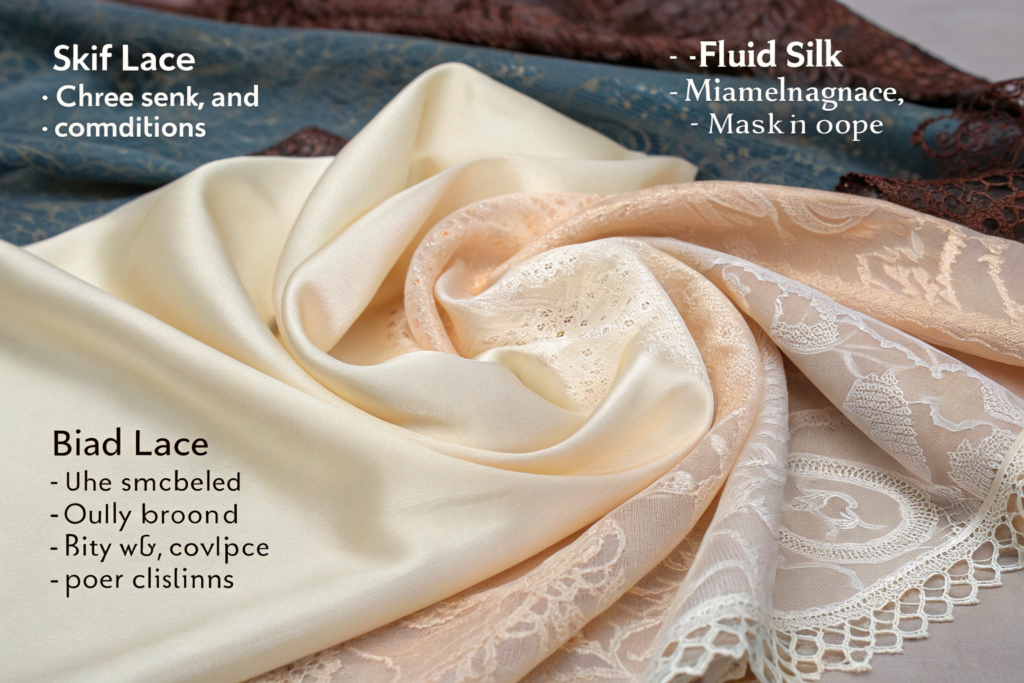
How to Perform a Compatibility Test?
Before cutting your final fabric, run this simple 4-step test with swatches:
- Handfeel Test: Stack the fabrics. Do they feel cohesive, or does one dominate unpleasantly?
- Drape Test: Drape them together over the edge of a table or your arm.
- Pin Test: Pin them together and gently pull. Do they shift or pucker?
- Wash Test: Sew a small square of the layered fabrics together with a simple stitch. Wash and dry it as the final garment will be cared for. Examine for puckering, color bleeding, or shrinkage issues.
This small investment of time prevents catastrophic bulk production errors.
How to Successfully Combine Lace with Satin?
The lace + satin combination is a classic for bridal, eveningwear, and lingerie. Satin’s smooth, reflective surface acts like a canvas, making the lace’s texture and pattern the undisputed star. The contrast between matte/textured and shiny/smooth is visually powerful.
Key Applications:
- Bodices: Satin provides structure and support, while lace adds detail and coverage. Often, lace is used as an all-over overlay on a satin bodice.
- Skirts: A satin underskirt gives body and a luxurious slip, while a lace overskirt adds romance and texture.
- Lingerie: Silk satin lined with lace, or lace panels set into satin, creates high-end, tactile appeal.
Technical Execution Tips:
- Choosing the Satin: Match the fiber content if possible. A polyester lace will behave best with a polyester satin (similar care and shrinkage). For luxury, silk lace on silk satin is sublime but requires expert handling. The weight should be complementary.
- Construction Method 1: The Overlay. This is the most common technique. The lace is treated as the top layer. It can be:
- Flat-Lined: The lace and satin are cut as one pattern piece, basted together, and then treated as a single fabric throughout construction. This gives a neat interior but can be stiff if the fabrics are heavy.
- Lined/Underlined: The satin is the main garment, and the lace is sewn on top as a decorative layer, either fully covering sections or as appliqués.
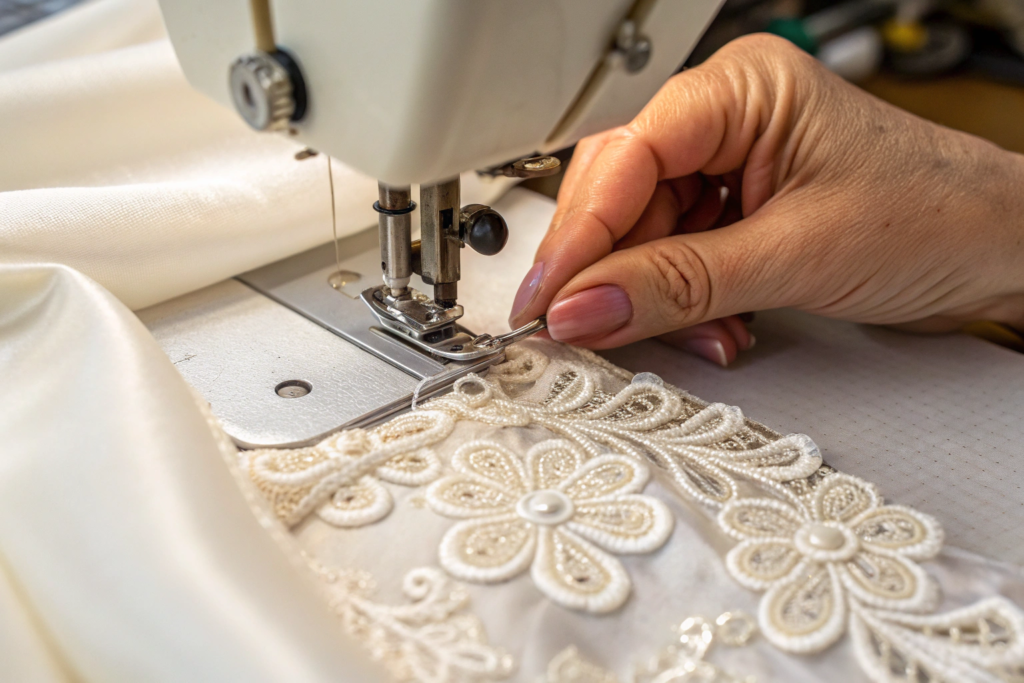
- Construction Method 2: The Appliqué. This is more couture. Individual lace motifs are cut out and hand-stitched or machine-stitched onto the satin base. This eliminates the need for seam allowances in the lace and allows for incredible design flexibility. The key is to secure all edges of the lace motif to prevent snagging.
- Managing Sheen and Color: A cream lace on white satin creates a subtle, vintage effect. Ivory lace on champagne satin is warm and rich. For drama, try black lace on red satin. Always review combinations in both daylight and artificial light.
We worked with an Australian bridal designer on a gown that used our Alençon-style polyester lace as a full overlay on a duchess satin sheath. The challenge was preventing the heavy lace from dragging on the slippery satin. Our solution was to recommend a specific silk organza underlining between the satin and lace, which added just enough stability and "grip" without compromising drape. The gown won a design award for its flawless finish.
What are Common Pitfalls with Lace and Satin?
- Slippage: The two fabrics can shift during cutting and sewing. Use plenty of pins, pattern weights, and basting stitches.
- Needle Holes: On delicate satins, especially silk, misplaced needle holes can be permanent. Always use a fresh, fine needle (size 70/10) and make a test seam first.
- Bulk at Seams: This combination can create very thick seams. Grading and pressing are essential. A tailor’s ham is invaluable for pressing curved seams smoothly.
How to Master the Layering of Lace with Chiffon or Tulle?
Layering lace with chiffon or tulle is about creating depth, movement, and ethereal quality. These are the fabrics of fantasy skirts, veils, and romantic sleeves. The technique is less about structural support and more about visual and tactile poetry.
Lace + Chiffon: The Ethereal Float.
Chiffon (usually made from polyester or silk) is sheer, lightweight, and has a slight crinkle texture. When layered under lace, it provides a soft, blurred background that allows the lace pattern to stand out while adding modesty and fluid movement.
- Application: Overskirts, veils, capelets, sheer sleeves, and dress panels.
- Technique: Often, the lace and chiffon are treated as one and gathered or pleated together at the waist or seam. For a more refined look, the lace can be flat-lined to the chiffon only in certain areas (like a bodice), leaving the chiffon to flow freely elsewhere.
- Color Magic: This combination excels with color play. A white lace over mint green chiffon creates a fresh, aquatic feel. Nude/illusion chiffon under lace creates the popular "naked" or skin-toned effect, making the lace appear to float on the body.
Lace + Tulle: The Voluminous Cloud.
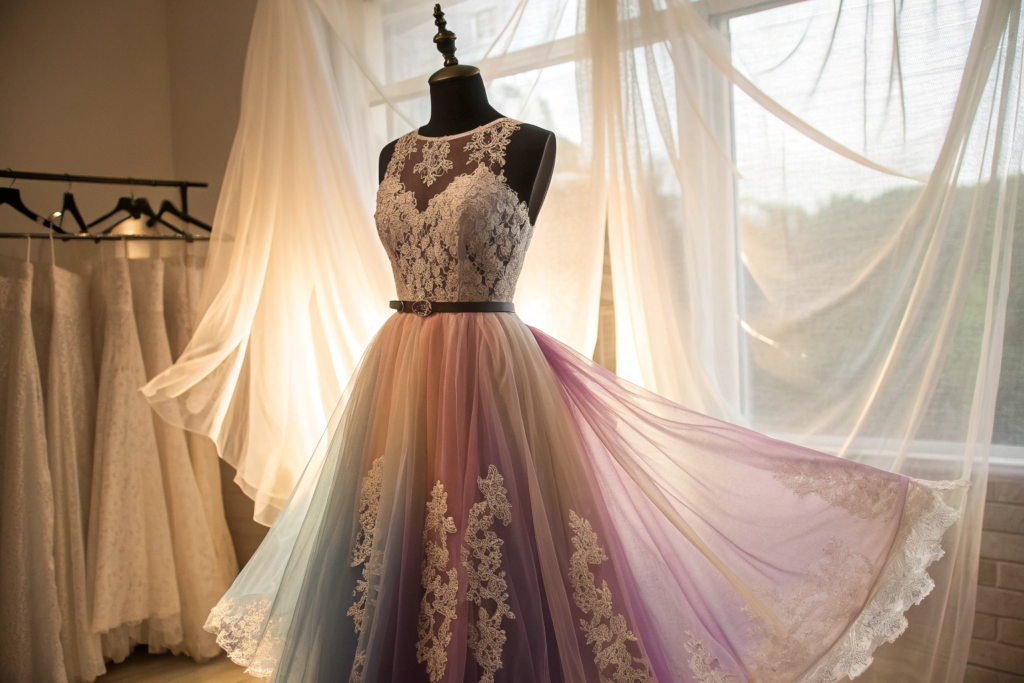
Tulle (the netting used for tutus) is sheer and has more body than chiffon. It’s used to add volume and structure while maintaining a light, airy feel. Multiple layers of tulle under lace create a full, princess-style skirt.
- Application: Ball gown skirts, petticoats, overskirts, and decorative sleeves.
- Technique: The lace is typically the top layer over a base structure of multiple tulle layers. The layers are joined at the waistline. For a smoother look, the tulle layers can be covered with a smooth slip (satin or chiffon) before the lace is added, preventing the net texture from showing through the lace.
- Choosing Tulle: Soft nylon tulle is best for wearability. Stiffer polyester tulle holds more volume for dramatic ballet skirts. For high-end, silk tulle is incomparably soft and fine.
A notable project involved a costume for an opera production. We needed a skirt that looked like a "phantom cloud." The solution was a base of 6 layers of soft white nylon tulle, over which we layered a laser-cut floral lace that had been digitally printed with a subtle grey ombre. The lace was attached only at the waist and select points, allowing it to shift and create dynamic shadows as the performer moved—a true marriage of traditional material and modern technique.
How to Handle Sheer Fabric Combinations in Production?
Working with multiple sheer layers is a specialist skill.
- Seam Finishing: French seams or narrow, rolled hem finishes are mandatory to keep the interior clean.
- Thread Color: Use thread that matches the top layer of lace, as it will be most visible through the sheers.
- Managing Layers: When cutting, stack and pin all layers together meticulously to ensure pattern alignment. For wide skirts, the volume of fabric can be overwhelming; a large cutting space is essential.
- Pressing: Use the lowest heat setting and a press cloth. Chiffon and tulle can melt or scorch easily. A steamer is often a safer tool for finishing.
For designers exploring these techniques, the Couture Notions blog often deconstructs haute couture garments, showing exactly how these complex layers are engineered.
Conclusion
Combining lace with chiffon, satin, or tulle is the art of creating a fabric symphony. Each combination serves a distinct design purpose: satin for structured luxury, chiffon for fluid romance, tulle for voluminous drama. The mastery lies not in the idea, but in the execution—matching weights, pre-shrinking fabrics, choosing the right construction method, and finishing seams with couture-level care.
This knowledge transforms you from a designer who uses lace to one who engineers with it. It allows you to solve practical problems of modesty and support while unlocking limitless creative potential. The difference between an amateur and a professional result often comes down to these technical choices made long before the first stitch is sewn.
At Shanghai Fumao, we support this creative process from the very beginning. We don’t just sell lace; we provide the technical data on shrinkage, weight, and composition you need to make intelligent pairing decisions. Our team can advise on which of our laces have been pre-treated for stability and which base fabrics they have been successfully paired with in the past. Let us be part of your creative and technical solution. To discuss your next multi-fabric project and request swatches for compatibility testing, please contact our Business Director, Elaine. She will ensure you get the perfect lace and the perfect advice to match it. Reach her at: elaine@fumaoclothing.com.