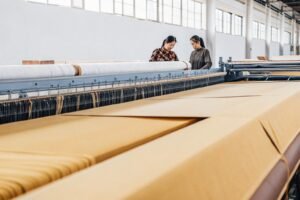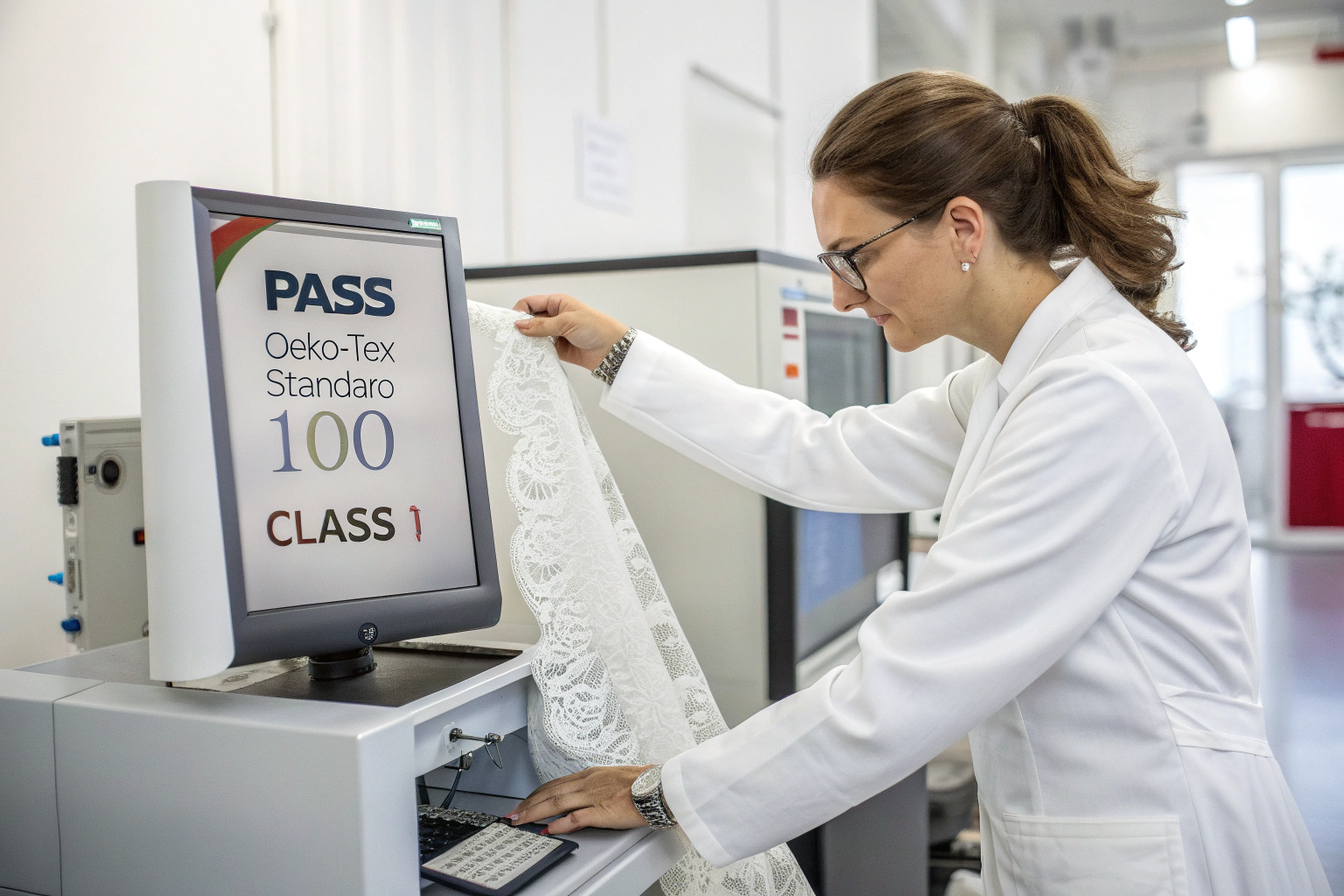
Imagine this: you’ve designed a beautiful lace-trimmed camisole. The samples are perfect. But after launch, customer emails start trickling in—"This gave me a rash." Your brand reputation takes a hit, and you’re left with unsellable inventory. The culprit? Hidden chemicals in an uncertified lace. For the growing market of consumers with sensitive skin or eco-conscious values, "hypoallergenic" is no longer a buzzword; it’s a strict requirement backed by science. So, how do you source Oeko-Tex certified lace fabric that you can trust completely? It’s not just about finding a supplier who has a certificate; it’s about verifying the entire chain of custody and understanding what that certification truly guarantees for sensitive skin.
Sourcing Oeko-Tex certified lace requires a proactive, verification-based approach. The Oeko-Tex Standard 100 label means the final fabric product has been tested by an independent institute for over 100 harmful substances—including pesticides, heavy metals, formaldehyde, and allergenic dyes—and falls within safe limits. For sensitive skin, you need Class I certification, which is the strictest level for articles intended for babies and toddlers, but is increasingly sought for all skin-contact apparel. The real challenge isn’t finding a supplier who claims to have it; it’s ensuring the certification is valid, specific to the exact lace you’re buying, and traceable back to the test report.
This guide will walk you through the practical steps, from verifying credentials to asking the right technical questions, ensuring the lace you source is as gentle as it is beautiful.
Why is Oeko-Tex Certification Non-Negotiable for Sensitive Skin?
Forget "itchy lace." The discomfort from non-certified fabrics is often a low-grade chemical burn or an allergic reaction. Sensitive skin lacks the robust barrier of normal skin, making it vulnerable to irritants that are legally present but biologically triggering. Oeko-Tex certification acts as a protective filter, systematically removing these risks from the final product.
The standard tests for substances in four categories:
- Illegal substances (e.g., certain azo dyes, nickel).
- Legally regulated but still harmful substances (e.g., formaldehyde, pentachlorophenol).
- Unregulated but known harmful chemicals (e.g., heavy metals like cadmium and lead).
- Parameters for skin-friendly pH levels and colorfastness.
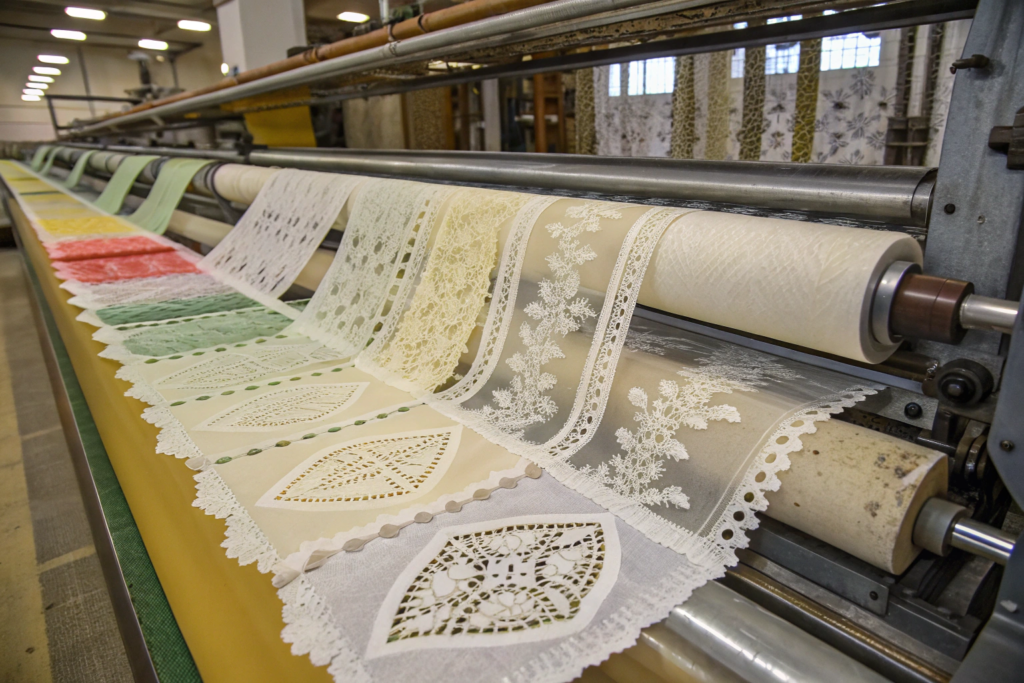
For lace, this is critically important because the production process is chemically intensive. From the cultivation or synthesis of fibers (where pesticides or monomer residues may linger), to dyeing and printing (using colorants and fixatives), to finishing (with softeners, stiffeners, or antimicrobial treatments)—each stage introduces potential irritants. A lace might feel soft initially, but harmful substances can leach out with sweat, heat, or friction. The Oeko-Tex test simulates these conditions, using artificial saliva and sweat solutions to extract chemicals, ensuring nothing harmful transfers to the skin even under real-world use.
What is the Difference Between Oeko-Tex and Other Certifications?
It’s crucial to distinguish between process standards and product standards.
- Oeko-Tex Standard 100 is a PRODUCT STANDARD. It tests the final product. It doesn’t dictate how the fabric is made, only that the end result is safe. This is your direct assurance for the consumer.
- GOTS (Global Organic Textile Standard) is a PROCESS STANDARD. It certifies the organic origin of fibers and regulates the entire environmental and social production chain. A fabric can be GOTS certified and Oeko-Tex certified, which is the gold standard (organic + safety-tested).
- REACH is a REGULATION, not a certificate. It’s the EU’s legal framework for chemical safety. Oeko-Tex compliance often helps meet REACH requirements.
For sensitive skin, Oeko-Tex Standard 100, Class I is your baseline safety net. It is the most recognized and rigorous consumer-facing label for finished product safety. A brand we worked with in Germany, specializing in dermatologist-approved lingerie, mandates that every component, including every meter of lace, must have a valid Class I certificate. This allowed them to market with absolute confidence, leading to a 25% premium price point and loyal customer base.
How Do You Decode an Oeko-Tex Certificate?
Any legitimate supplier should provide the certificate. Here’s what to check:
- Certificate Number: Look for it. It should be current (valid for one year, then retesting is required).
- Applicant/Company Name: Does it match your supplier or their direct mill?
- Product Description: It must describe the exact product you are buying, e.g., "100% Polyester Embroidered Lace, White" and not just "lace fabric." Broad certificates are a red flag.
- Article Number: This links the certificate to a specific SKU in the supplier’s inventory.
- Certification Class: It must state "Class I" for articles for babies and sensitive skin, or at minimum "Class II" for direct skin contact (like underwear).
- Testing Institute: Reputable institutes include Hohenstein, TESTEX, or SGS.
A resource like the official Oeko-Tex Buyer’s Guide is invaluable for understanding label credibility.
What Are the Best Lace Fibers and Constructions for Sensitive Skin?
Certification guarantees safety, but the innate properties of the fiber and construction determine ultimate comfort. The goal is to pair a certified-safe fabric with a physically non-irritating structure.
Top Fiber Choices (All must be Oeko-Tex Certified):
- Organic Cotton Lace: The benchmark. Its natural breathability and moisture absorption prevent the damp, warm environment where irritation can flourish. Look for long-staple or combed cotton laces for a smoother surface that reduces friction.
- Tencel™ Lyocell/Modal Lace: A superstar for sensitive skin. The fibers are extruded to be incredibly smooth at a microscopic level, reducing friction. They are also highly breathable and have excellent moisture management, pulling wetness away from the skin. In our tests at the Shanghai Fumao lab, Tencel laces consistently show superior results in skin-pH compatibility tests.
- Silk Lace: Naturally hypoallergenic and protein-based, high-quality silk is exceptionally gentle. Ensure it’s Oeko-Tex certified, as silk dyeing can involve heavy metals. It’s ideal for luxury, low-friction applications.
- High-Quality Polyester Lace: Don’t dismiss it outright. Modern, fine-filament polyester can be engineered to be very soft and smooth. The key is the yarn quality and finishing. It must be certified to ensure no harmful softeners or dye residues are present. Its advantage is durability and shape retention.
Avoid or Scrutinize: Laces with metallic threads (risk of nickel), heavy chemical burn-out effects, or those that feel stiff or have a plastic-like hand—these often have residual finishing chemicals.
What Lace Construction Minimizes Physical Irritation?
The construction must prevent micro-abrasions.
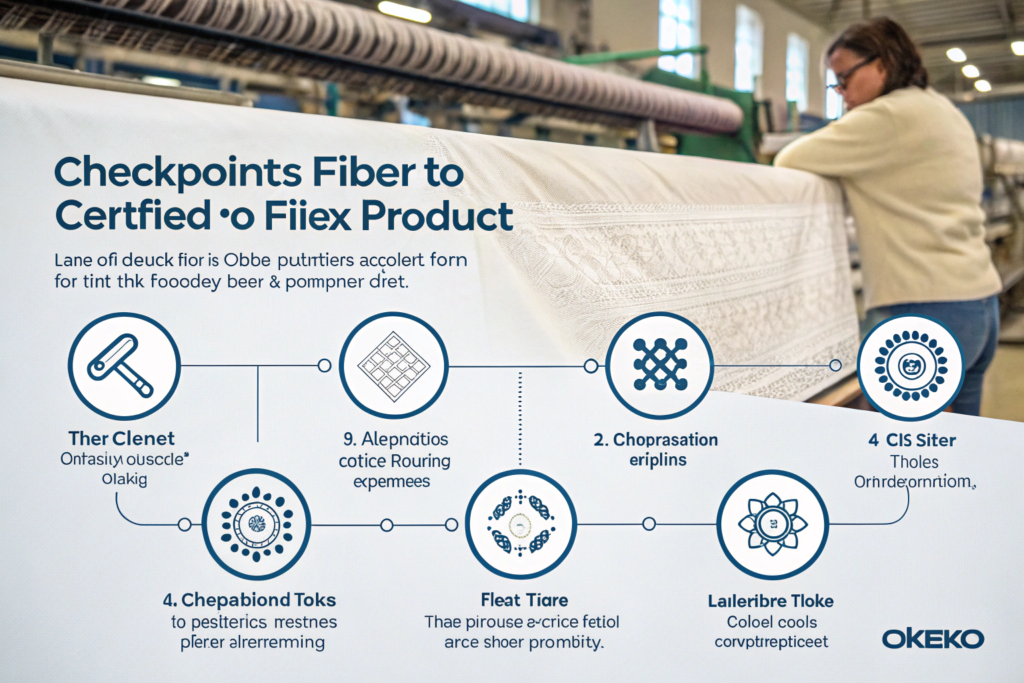
- Flat Embroidery (Schiffli): The stitching should be integrated and flat against the base tulle. Avoid laces where the embroidery thread forms high, loose loops on the back (wrong side) that can scratch.
- Soft Base Net: The ground fabric (tulle, mesh) must be pliable and soft. A stiff net will chafe. Ask if the net has been enzyme-washed for softness.
- Finished Edges: Scalloped or cut edges should be laser-cut and heat-sealed to be smooth, or traditionally rolled and stitched. Raw, frayed edges are unacceptable.
- Seam-Friendly Weight: The lace should be lightweight enough not to create bulky, irritating seams when sewn into a garment.
We developed a best-selling Oeko-Tex Class I Tencel™ lace for a Scandinavian sleepwear brand. The construction was a flat floral embroidery on a Tencel mesh base. The client reported zero comfort complaints in two years of sales, attributing part of their success to the "second-skin" feel of the lace trim on their pyjamas. For more on fiber properties, The Textile Institute’s resources offer deep technical insights.
How to Vet a Supplier for Genuine Oeko-Tex Certified Lace?
The marketplace is full of claims. Your job is to be a detective. A trustworthy supplier will be transparent and eager to prove their credentials. Here is a step-by-step vetting protocol:
Step 1: The Initial Inquiry – Go Beyond the Keyword.
Don’t just ask, "Do you have Oeko-Tex lace?" Be specific: "I am sourcing lace for direct-skin-contact intimate apparel requiring Oeko-Tex Standard 100, Class I certification. Can you provide the valid certificate for the specific lace products you are offering, and are you able to ship certified goods with a test report copy included in the shipment?" This separates serious suppliers from casual ones.
Step 2: Document Verification – The Three Checks.
When they send a certificate (they should proactively), conduct these checks:
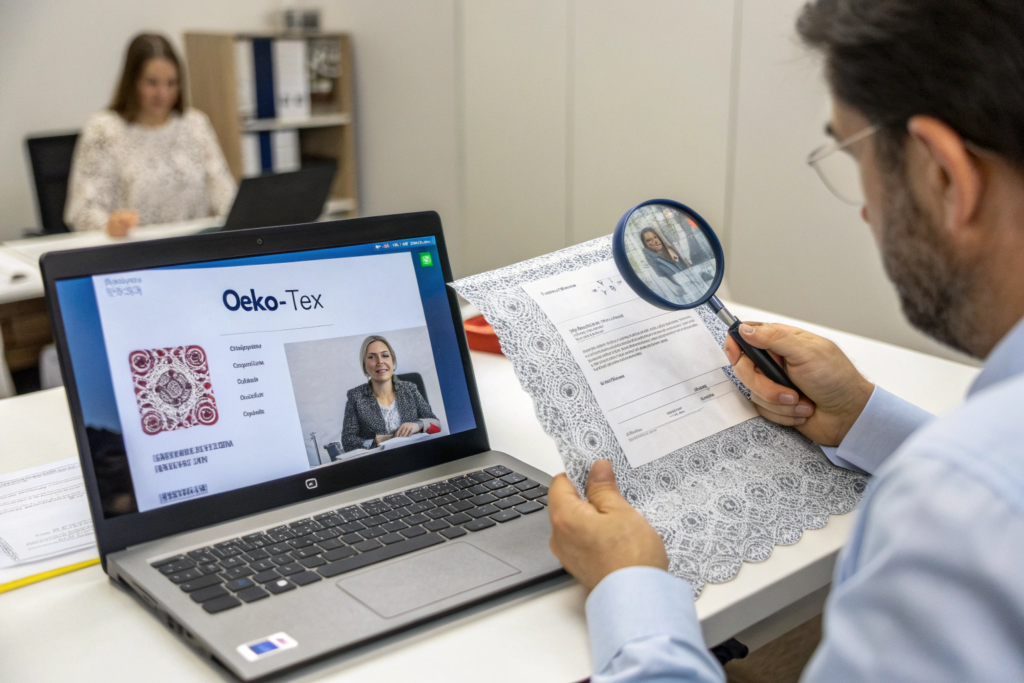
- Authenticity Check: Use the OEKO-TEX® label check on their official website. Enter the certificate number and the supplier’s name. The database will confirm if it’s valid and to whom it was issued.
- Specificity Check: Cross-reference the article number and description on the certificate with the product code of the lace they are quoting you. They must match exactly. If the supplier says, "Our factory is certified, so all our lace is," be very cautious. Certification is product-specific.
- Timeliness Check: Check the issue and expiry date. Certificates are valid for one year. Fabric from a batch produced under an expired certificate is not certified.
Step 3: Request a "Verification Sample" Before Bulk Order.
Order a 1-meter sample of the exact certified lace you intend to buy. When it arrives:
- Does it come with a hanging or sewn-in Oeko-Tex label for that article?
- Does the handfeel match the promise? Perform the "inner forearm test."
- Keep this sample as your reference standard for the bulk shipment.
Step 4: Audit Their Process (If Possible).
For large, recurring orders, ask about their quality control for certified batches. Do they batch-test? How do they prevent mixing certified and non-certified stock? At Shanghai Fumao, we maintain separate inventory logs for certified materials and our QC team performs random spot-checks against the certificate specs as part of our in-house audit.
What Are the Red Flags and Green Lights?
- Red Flags: Hesitation to provide certificates; blurry or cropped certificate images; certificates with a different company name; offering "Oeko-Tex similar" or "Oeko-Tex compliant" fabric (these are meaningless terms).
- Green Lights: Immediate provision of clear certificates; ability to explain the certification; offering to include labels with shipment; having a dedicated compliance officer or department.
What Practical Steps Ensure Your Order Stays Certified?
Securing a certified sample is half the battle. Ensuring your entire bulk order meets the same standard is the other half. This requires clear contracts and strategic verification.
1. Specify Certification in Your Purchase Contract.
Your PO and contract must be explicit. Include clauses such as:
- "Goods must conform to the quality, safety, and specifications of the approved sample, reference #XXX, which is Oeko-Tex Standard 100, Class I certified under certificate number [Insert Number]."
- "Supplier warrants that the goods shipped are from the certified batch referenced above and are accompanied by a copy of the valid test report."
- "Goods found to be non-compliant with the stated certification upon independent testing by the buyer will be subject to full refund, return, or replacement at the supplier’s expense."
2. Insist on Oeko-Tex Labels and Documentation.
Negotiate for the supplier to provide the official Oeko-Tex labels (sewn-in or hangtags) for your order. This is your physical proof chain. Also, require a copy of the test report to be included in the shipment documentation. This is standard practice for reputable suppliers.
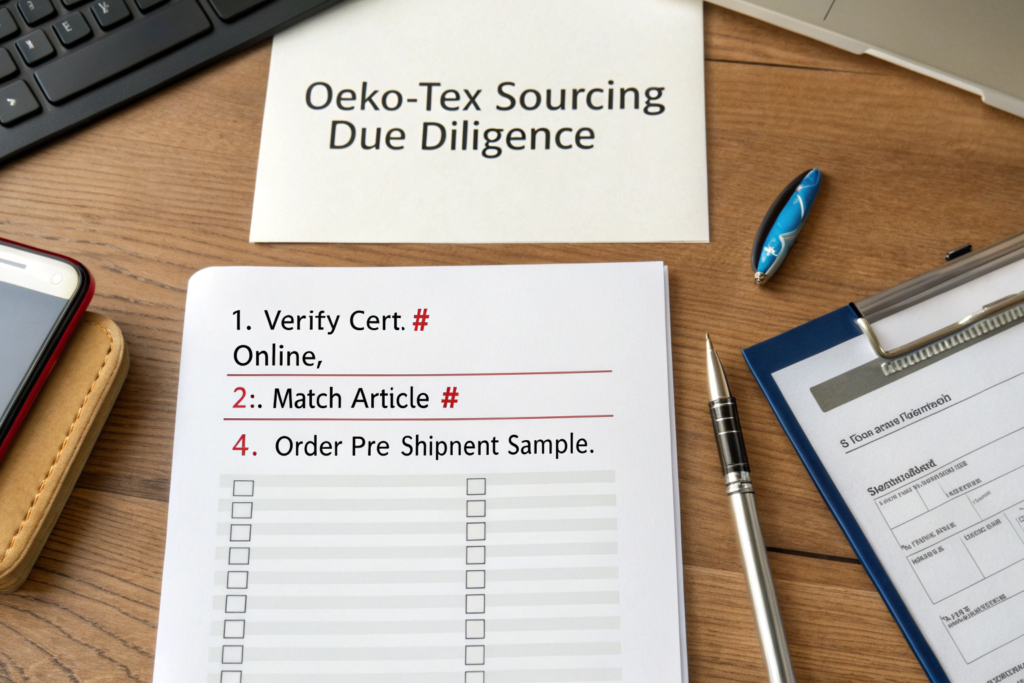
3. Conduct Third-Party Pre-Shipment Testing (For Critical Orders).
For large orders or new supplier relationships, budget for a third-party pre-shipment inspection that includes a lab test component. Companies like SGS, ITS, or Bureau Veritas can pull random samples from the finished, packed goods and test them against Oeko-Tex parameters. While an added cost, it is the ultimate insurance policy. We had a client from California who, before their first order with us, paid for an SGS audit of our facility and a random test of our certified lace stock. We passed, and it built a trust that has lasted for 50+ subsequent orders.
4. Manage Your Supply Chain Logistically.
Once you have certified fabric, protect its integrity. Store it separately from non-certified materials in your own warehouse to prevent mix-ups. Train your cutters and sewers to handle it as a designated "certified" lot.
What if You Need Custom-Developed Certified Lace?
If you’re developing a new lace design, the certification process must be planned from the start. Work with a supplier who has experience shepherding products through Oeko-Tex testing. The process is:
- Develop the lace sample using certified base yarns and approved dyes from the get-go.
- Submit the final production sample to an Oeko-Tex testing institute.
- Upon passing, receive a certificate for that specific article.
- Only then proceed with bulk production, ensuring all inputs remain identical to the tested sample.
This requires a partner with strong R&D and compliance capabilities. The Sustainable Apparel Coalition’s Higg Index materials module can also help assess the environmental impact of your base materials alongside their safety.
Conclusion
Sourcing genuinely Oeko-Tex certified lace for sensitive skin is a deliberate process that replaces assumption with verification. It moves from asking "Is it safe?" to demanding "Prove it, and prove it applies to this exact fabric." This rigorous approach protects your customers from discomfort, your brand from liability, and your business from costly recalls.
The path is clear: prioritize Class I certification, vet suppliers through document verification and sample testing, enshrine requirements in contracts, and consider third-party audits for high-stakes orders. By partnering with a transparent, knowledgeable supplier who views certification as a core responsibility—not just a marketing line—you integrate safety into the very foundation of your product.
At Shanghai Fumao, we build this trust through transparency. Our Oeko-Tex and GOTS certified lace collections come with full documentation, and our in-house lab ensures consistency. We understand that for sensitive skin, there is no compromise. Let us help you source lace that is not only beautiful but also scientifically proven to be gentle. To request certificates and samples from our certified range, please contact our Business Director, Elaine. She will ensure you get the verified, skin-safe lace your designs deserve. Contact her at: elaine@fumaoclothing.com.