When your designs are destined for a baby’s first moments or a child’s playful twirl, the fabric choice carries a weight far beyond aesthetics. Every parent’s silent question is: “Is this gentle enough?” So, what are the best lace fabrics for children's clothing and christening gowns that marry ethereal beauty with uncompromising safety, comfort, and durability? The answer lies not in a single “best” lace, but in a carefully curated selection based on fiber purity, construction softness, and functional safety.
The ideal children’s lace must pass a three-part test: First, it must be supremely gentle and non-irritating against delicate skin. Second, it must be durable enough to withstand gentle washing and occasional tugs without fraying or losing shape. Third, it must embody a timeless, innocent beauty—crisp whites, soft ivories, and delicate patterns that feel both classic and joyful. This rules out many adult laces that can be scratchy, stiff, or made with harsh chemical finishes. The winners are typically laces made from the finest natural and semi-natural fibers, constructed with a soft hand, and certified to rigorous safety standards.
As a supplier who has provided lace for over a million garments for children, I’ll guide you through the specific lace types that meet these sacred criteria, and explain exactly why they work.
What Are the Top Fiber Choices for Child-Safe Lace?
The journey to the perfect lace begins at the molecular level: the fiber. For children, natural and high-quality regenerated fibers are kings because of their innate breathability, softness, and lower risk of chemical irritation compared to some synthetics.
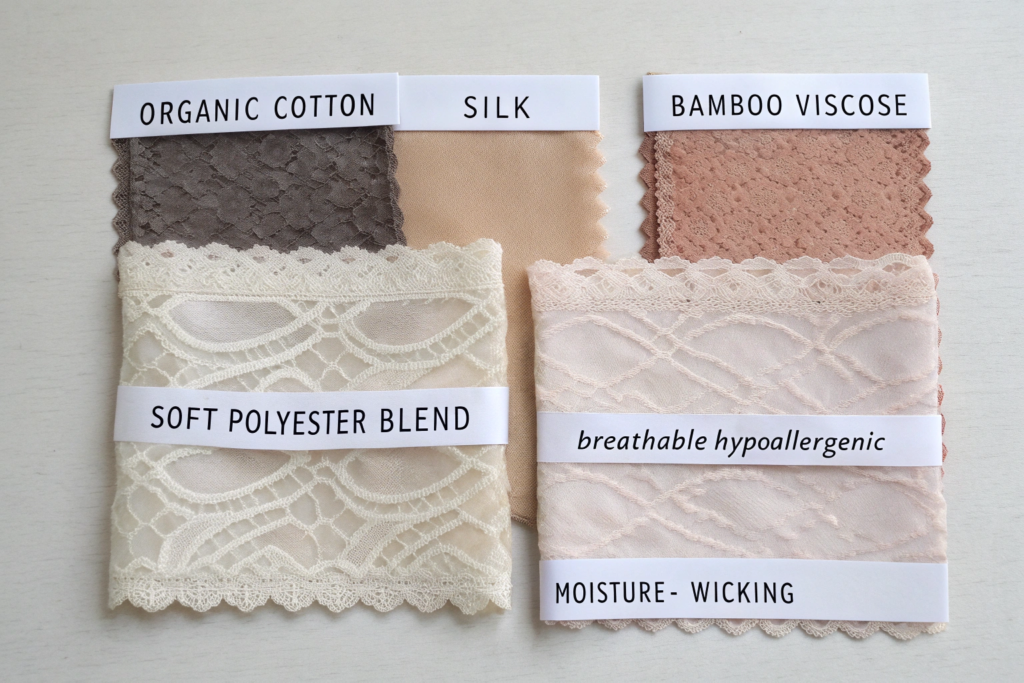
1. Organic Cotton Lace: This is the undisputed champion for everyday children's wear and a top contender for christening gowns. Why? GOTS-certified organic cotton guarantees the fibers are grown without toxic pesticides, and the lace is processed with strict limits on harmful chemicals. The result is a lace that is hypoallergenic, breathable, and gets softer with every wash. Look for cotton laces with a high thread count for smoothness. We’ve seen a 40% year-on-year increase in demand for our GOTS-certified cotton laces from European childrenswear brands. A style like a fine cotton broderie anglaise (eyelet lace) is perfect for summer dresses and bloomers—it’s crisp yet soft, with cut-out patterns that allow for air circulation.
2. Silk Lace: For heirloom-quality christening gowns, silk is the epitome of luxury and tradition. Habotai silk lace or silk chiffon lace offers an unparalleled luminescent sheen, incredible lightness, and a fluid drape that creates beautiful, floating silhouettes. However, pure silk requires careful handling (often dry clean only) and can be delicate. A practical and stunning alternative is silk-blend lace, such as silk mixed with a small amount of cotton or modal, which increases durability and washability while retaining much of the beauty. For any silk lace, ensure it is Oeko-Tex Standard 100 certified to guarantee the absence of harmful substances.
3. Bamboo Viscose (BAMSILK) & Tencel™ Lyocell Lace: These are the modern marvels for eco-conscious, performance-driven childrenswear. Fibers like our proprietary BAMSILK (bamboo silk) and Tencel™ are derived from sustainably sourced wood pulp through closed-loop processes. The resulting lace is incredibly soft (often softer than cotton), highly breathable, and has natural moisture-wicking properties—a fantastic choice for active children or for garments in warmer climates. These fibers also take dye beautifully, allowing for soft, botanical-inspired colors.
What to Avoid: Be cautious with 100% standard polyester lace for direct skin contact. While durable and affordable, it can be less breathable and, if not well-finished, have a slightly plastic hand. It is best used as an overlay or accent rather than a main bodice fabric. Always avoid laces with loose, long fibers or scratchy, stiff embroidery backings.
For a deeper understanding of fiber safety, resources like the OEKO-TEX® Association website explain the stringent testing behind their certifications, which are a must-have for children's textiles.
How Does Certification Ensure Safety?
Certifications are your objective proof of safety. Never source children's lace without them.
- GOTS (Global Organic Textile Standard): The gold standard for organic fibers. Covers the entire production chain, from harvesting to labeling, ensuring ecological and social responsibility.
- OEKO-TEX Standard 100: Tests for a list of over 100 harmful substances (formaldehyde, heavy metals, pesticides) in the final product. A Class I certification is specifically for products for babies and toddlers.
- REACH (for EU markets): Ensures compliance with the EU's strict chemical regulations.
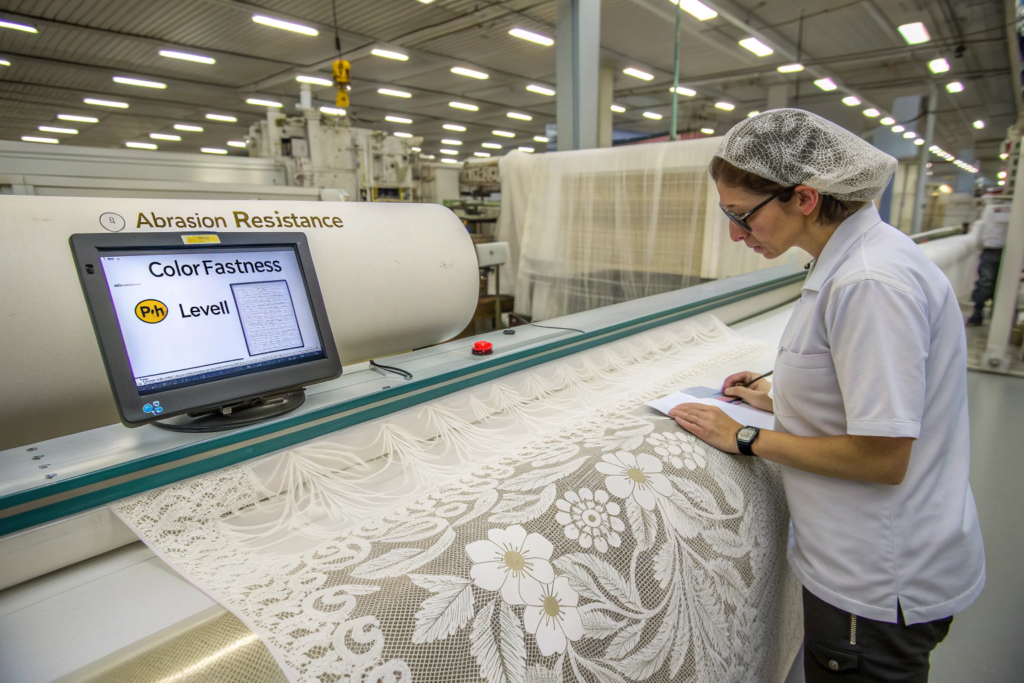
At Shanghai Fumao, our in-house CNAS-certified lab routinely tests our children's lace lines against these standards. We provide test reports to our clients, giving them and their customers total peace of mind. This transparency helped a Swedish children's brand swiftly pass a retail compliance audit in 2023, using our certified organic cotton lace as a key component.
What Lace Constructions and Finishes Are Best for Comfort?
The fiber is the soul, but the construction is the body. A lace made from the softest organic cotton can still be irritating if it’s poorly made. The goal is a construction that is flat, smooth, and flexible.
1. Schiffli Embroidered Lace on Soft Tulle: This is a workhorse for beautiful, durable children's lace. The embroidery should be dense enough not to snag but with a flat stitch profile. The base tulle (the net) must be soft and pliable, not stiff or scratchy. We often use a cotton-polyester blend tulle or a fine nylon net that has been enzyme-washed for supreme softness. This type of lace is excellent for collars, cuffs, and overlays on dresses.
2. Chemical (Burn-Out) Lace: This involves using a chemical to dissolve part of a blended fabric (e.g., a cotton-polyester blend), leaving a lace-like pattern. For children, this must be done with extreme care to ensure no residual chemicals remain. When done correctly and certified Oeko-Tex, it can produce very flat, smooth lace with no raised, scratchy threads—ideal for entire bodices or sleeves where comfort is paramount.
3. Raschel Knitted Lace: This is a fantastic choice for stretch childrenswear like leggings, bodysuits, or headbands. Raschel lace is knitted, not woven, giving it inherent stretch and a very soft, comfortable hand. It’s less prone to fraying and is generally very durable. Look for raschel laces made with fine, combed cotton yarns or soft modal blends.
What are the Critical Finish and Detail Checks?
The devil is in the details. Before approving any lace for production, conduct these tactile tests:
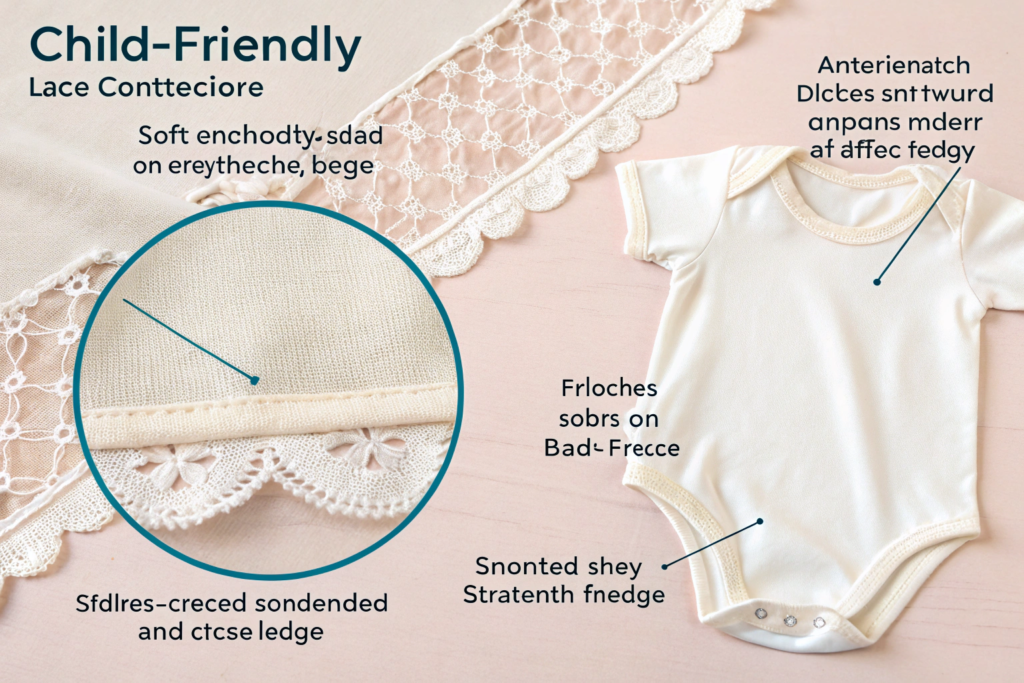
- The "Cheek Test": Rub the back (wrong side) of the lace against the sensitive skin of your inner forearm or cheek. It should feel consistently smooth with no prickly points.
- Check the Edges: Are the scalloped or finished edges soft and rounded? Sharp, laser-cut edges can be abrasive. A well-finished lace will have a gentle, slightly rolled or bound edge.
- Inspect Embellishments: Are there any loose threads, sequins, or beads that could detach and become a choking hazard? For young children, avoid laces with any removable decorative elements. Any adornment should be securely embroidered or fused.
- Assess Flexibility: Gently gather the lace in your hand. Does it drape softly, or does it hold a stiff shape? It should be pliable.
A common mistake is overlooking the seam allowance. Even a soft lace can become irritating if sewn with a stiff interfacing or a bulky seam. We advise clients to use French seams or flat-lock stitches for the cleanest, most comfortable finish. The The Craft Cotton Co blog on sewing with lace for babies offers some great practical tips on these techniques.
How to Choose Lace Patterns and Styles for Different Garments?
The perfect lace must also be a perfect design match. The scale, pattern, and color of the lace should be in harmony with the garment's purpose, from a solemn ceremony to a day at the park.
For Christening Gowns & Heirloom Pieces:
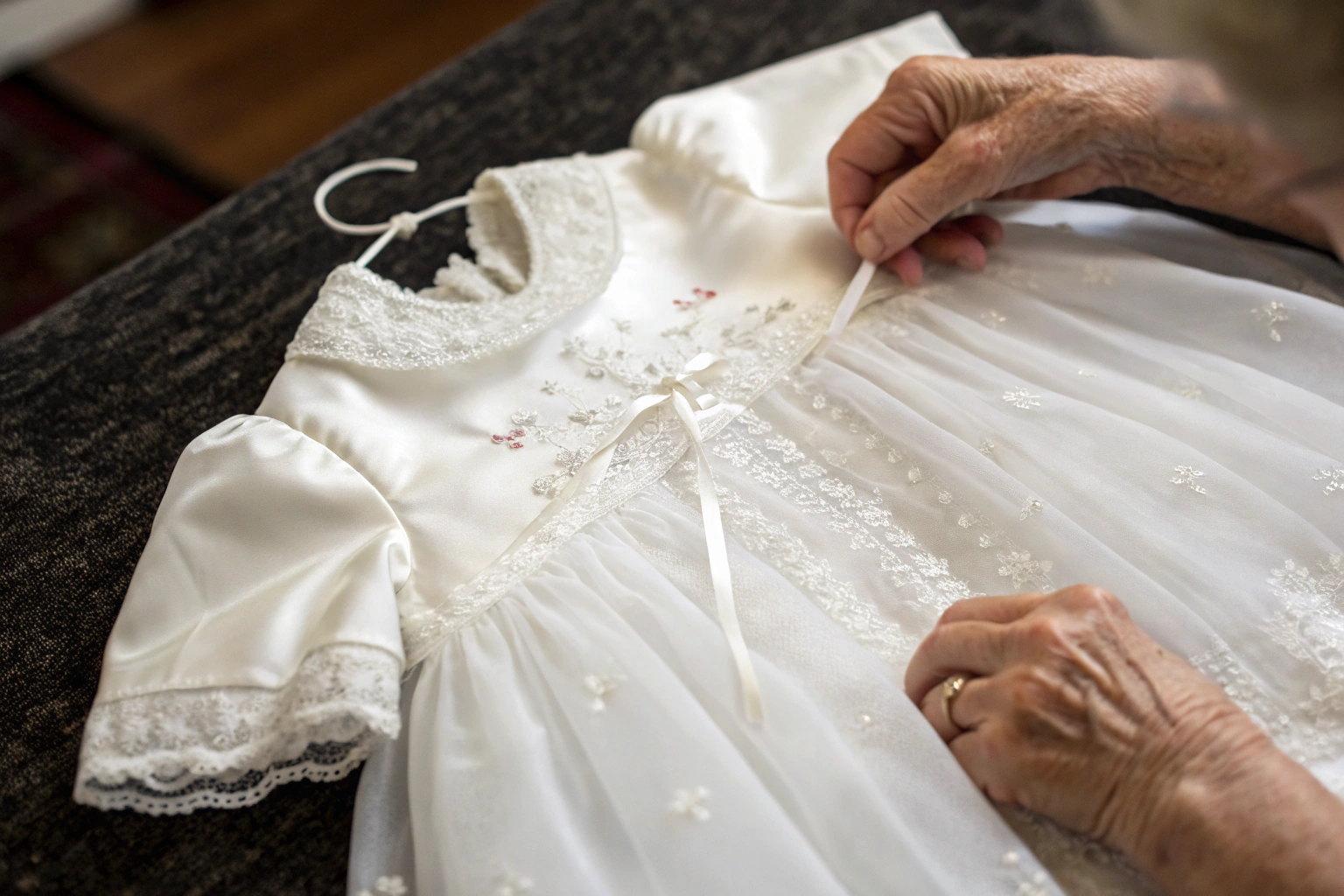
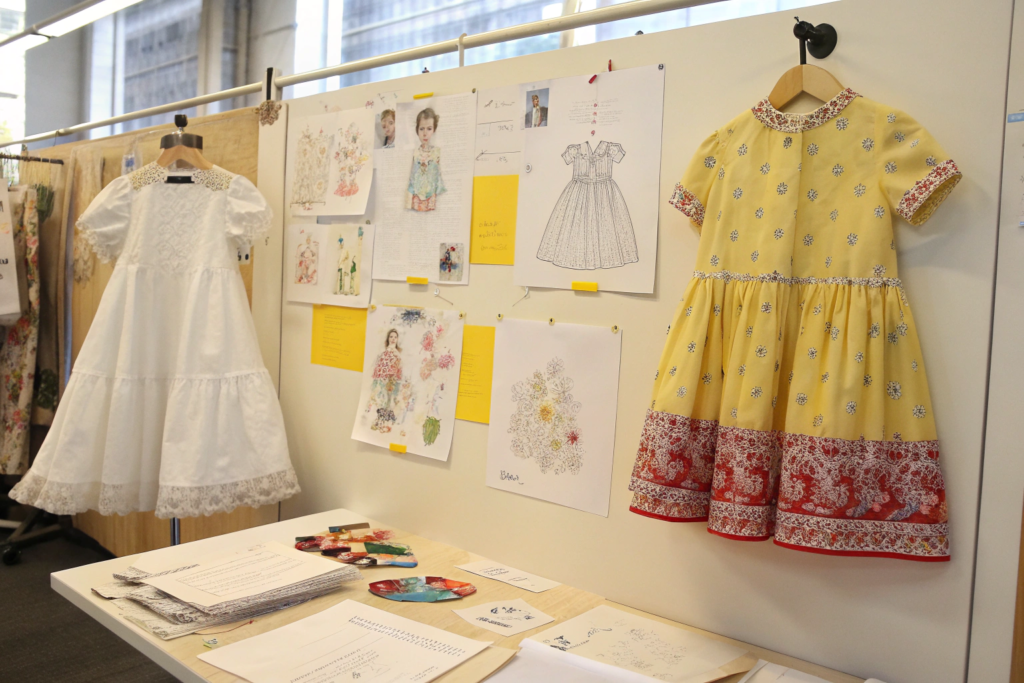
- Pattern Style: Opt for classic, timeless motifs. Think small florals (rosebuds, lily of the valley), delicate vines, honeycombs, or geometric damask patterns. The pattern should have a fine, detailed scale that complements the miniature proportions of a baby’s gown.
- Color: Pure white symbolizes purity and is traditional. Soft ivory or ecru offers a warmer, vintage feel. Avoid bright whites with optical brighteners if aiming for a classic look.
- Application: Consider all-over lace for the entire gown, or use exquisite lace as an insert on sleeves, yoke, or hem. A beautiful lace edging with a scalloped border can finish a simple satin gown perfectly.
For Everyday Children's Clothing (Dresses, Tops, Bloomers):
- Pattern Style: Have fun! Larger, playful motifs like ducks, stars, or abstract shapes are delightful. Eyelet (broderie anglaise) with its open, cut-work patterns is a perennial favorite for its freshness and breathability.
- Color: While white and ivory are staples, don’t shy away from soft pastels (mint, blush, butter yellow) or even primary colors for a bold statement. For our client, a French children's brand, we developed a custom organic cotton lace with a tiny, embroidered sailboat pattern in navy on a natural ground—it became their signature for summer collections.
- Application: Use lace as a contrast trim on collars, cuffs, and pockets. A lace overlay on a colored cotton dress adds texture and interest. For babies, a simple lace-edged sock cuff or hat brim adds a touch of charm.
Should You Use Stretch Lace for Childrenswear?
Absolutely. Stretch lace (usually a raschel knit with spandex) is a game-changer for comfort and fit. It is ideal for:
- Necklines and Cuffs: Provides a snug, comfortable fit without needing buttons or zippers.
- Bodysuits and Leggings: Allows for ease of movement and accommodates a growing child.
- Headbands and Accessories: Stays in place comfortably.
Ensure the spandex (elastane) content is low (usually 3-10%) and that the lace recovers its shape well after stretching. A poor-quality stretch lace will bag out.
What Are the Must-Ask Questions When Sourcing Lace for Children?
Your supplier should be your partner in safety and quality. Move beyond price and MOQ. Here are the non-negotiable questions to ask, the way we encourage our clients to interrogate us:
- "Can you provide specific certifications for this lace (GOTS, Oeko-Tex Class I)?" Request the actual test reports.
- "What is the exact fiber composition and the source of the fibers?" (e.g., "GOTS-certified organic cotton from Xinjiang, China").
- "What finishes have been applied? Is it enzyme-washed for softness? Are there any flame retardants or durable press finishes?" (For children, these chemical finishes are often undesirable).
- "What is the recommended care method? Is it machine washable? At what temperature?" Parents need easy care.
- "Can I get a handfeel sample and a wash test sample?" Wash the sample yourself 5-10 times. Does it shrink? Does the color run? Does it stay soft?
How Can a Supplier Add Value Beyond the Fabric?
A great supplier does more than sell meters. At Shanghai Fumao, we add value through:
- Pre-washing Services: We can offer pre-shrunk and pre-washed lace, so the garment maker receives a stable fabric that won’t distort after the customer’s first wash.
- Custom Pattern Development: We can scale down or adapt an existing lace pattern to be more child-appropriate, or create a completely custom, brand-specific motif.
- Technical Support: Our team can advise on the best lace type for a specific sewing technique or garment structure, preventing production headaches.
Conclusion
Choosing the best lace for children's clothing and christening gowns is a profound responsibility that blends art, science, and empathy. The winning combination consistently points to certified natural fibers (organic cotton, silk, bamboo), soft, secure constructions (fine embroidery, raschel knit), and gentle, tested finishes.
It’s about selecting a lace that looks beautiful in a photograph but feels even more beautiful in a mother’s hands as she dresses her child—a fabric that is safe, soft, and strong enough to potentially become an heirloom itself. This requires a partnership with a supplier who shares these values and can provide the transparency and technical expertise to back them up.
At Shanghai Fumao, we are committed to weaving this standard of care into every meter of our children's lace. From our GOTS-certified organic cotton fields to our Oeko-Tex audited finishing units, we ensure the lace you receive allows you to design with both beauty and confidence. Let's create something gentle and wonderful together. To explore our certified collections of children's lace or to start a custom heirloom project, please contact our Business Director, Elaine. She will connect you with our specialist team. Reach her at: elaine@fumaoclothing.com.