You’ve invested in a beautiful lace, perhaps a delicate Chantilly for a wedding gown or a vintage-inspired Leavers lace for a collection. A year later, you pull it from storage, and your heart sinks—a faint but undeniable yellow cast has appeared, and the fibers feel brittle. This damage is often irreversible. So, how do you store and handle lace fabric to prevent this costly and heartbreaking yellowing and aging? The answer lies not in a single magic trick, but in a holistic understanding of lace’s enemies: light, acid, moisture, and improper physical handling.
The preservation of lace is a fight against chemical degradation and physical stress. Yellowing is primarily caused by oxidation of fibers (especially natural fibers like silk and cotton) and acid migration from poor-quality storage materials. Aging manifests as fiber embrittlement, often accelerated by exposure to UV light and pollutants. The key to prevention is creating a stable, clean, and dark micro-environment while handling the fabric with the respect its delicate structure demands. Whether you’re a designer archiving samples, a retailer storing inventory, or a manufacturer holding raw materials, these protocols are non-negotiable for protecting your asset.
Let’s dive into the specific, actionable steps you can take, from the moment the lace leaves our warehouse at Shanghai Fumao to the day it’s finally cut for production.
What Are the Primary Causes of Lace Yellowing and Aging?
You can’t defend against an enemy you don’t understand. The degradation of lace is a chemical and physical process driven by several common culprits. Identifying them is the first step to building an effective defense.
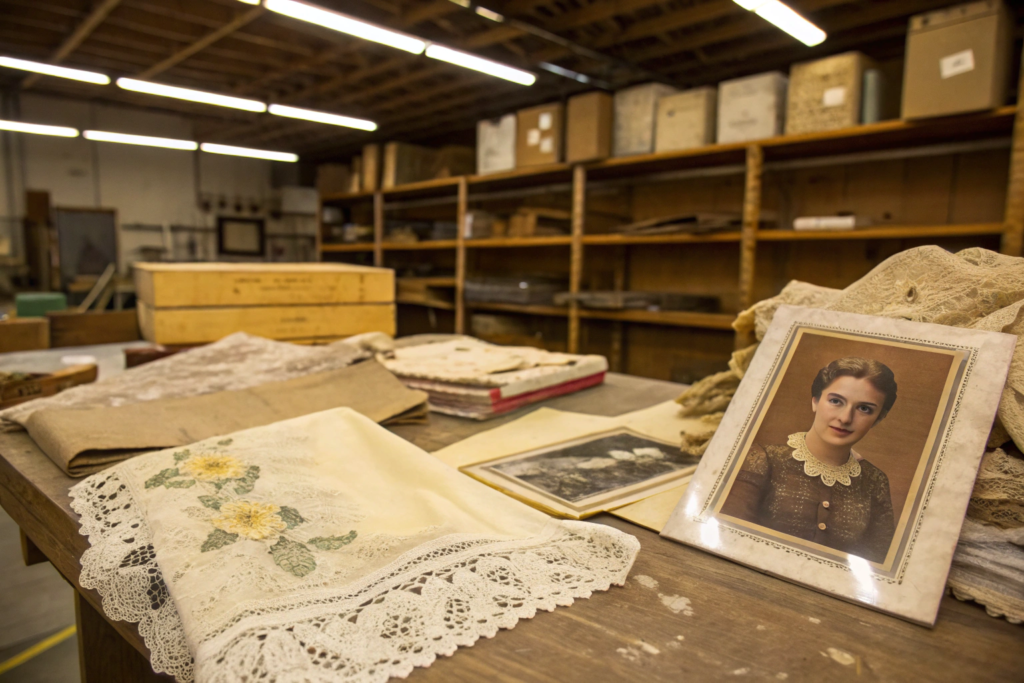
The most aggressive cause is exposure to light, particularly ultraviolet (UV) rays from sunlight and even fluorescent lighting. UV radiation breaks down the molecular chains in fibers, leading to fading, yellowing (especially in white and ivory laces), and loss of strength. This damage is cumulative and irreversible. The second major enemy is acidic compounds. These can come from the storage environment itself: wooden shelves (which off-gas acids), non-acid-free cardboard boxes, some plastic bags (which can release plasticizers), and even inks from labels or newsprint. These acids migrate into the fibers, catalyzing yellowing and accelerating decay. Moisture and humidity fluctuations promote mold growth and can cause dyes to run or metals in metallic threads to tarnish. Finally, physical stresses like folding (creating permanent creases), hanging (causing distortion and stress on weak points), and contact with rough surfaces lead to tears, snags, and structural aging.
How Do Different Lace Fibers React?
Not all laces age the same. Your storage strategy should be tailored to the fiber content, which we always specify on our Fumao product tags.
- Natural Fibers (Silk, Cotton, Linen): Most prone to yellowing due to oxidation. Silk is particularly sensitive to light and perspiration acids. Cotton and linen are strong but can be damaged by prolonged dampness, leading to mildew.
- Synthetic Fibers (Polyester, Nylon): More resistant to yellowing from oxidation but can be degraded by UV light over very long periods. They are less susceptible to acid damage but can be stained by dye migration from other materials.
- Blends and Metallic Threads: Blends require a strategy for the most delicate component. Metallic threads (often a polyester film on a carrier) can tarnish or delaminate with humidity and handling.
A resource like the Canadian Conservation Institute’s notes on textile care provides excellent science-backed principles that apply directly to lace preservation.
What is the "One Touch" Rule in Handling?
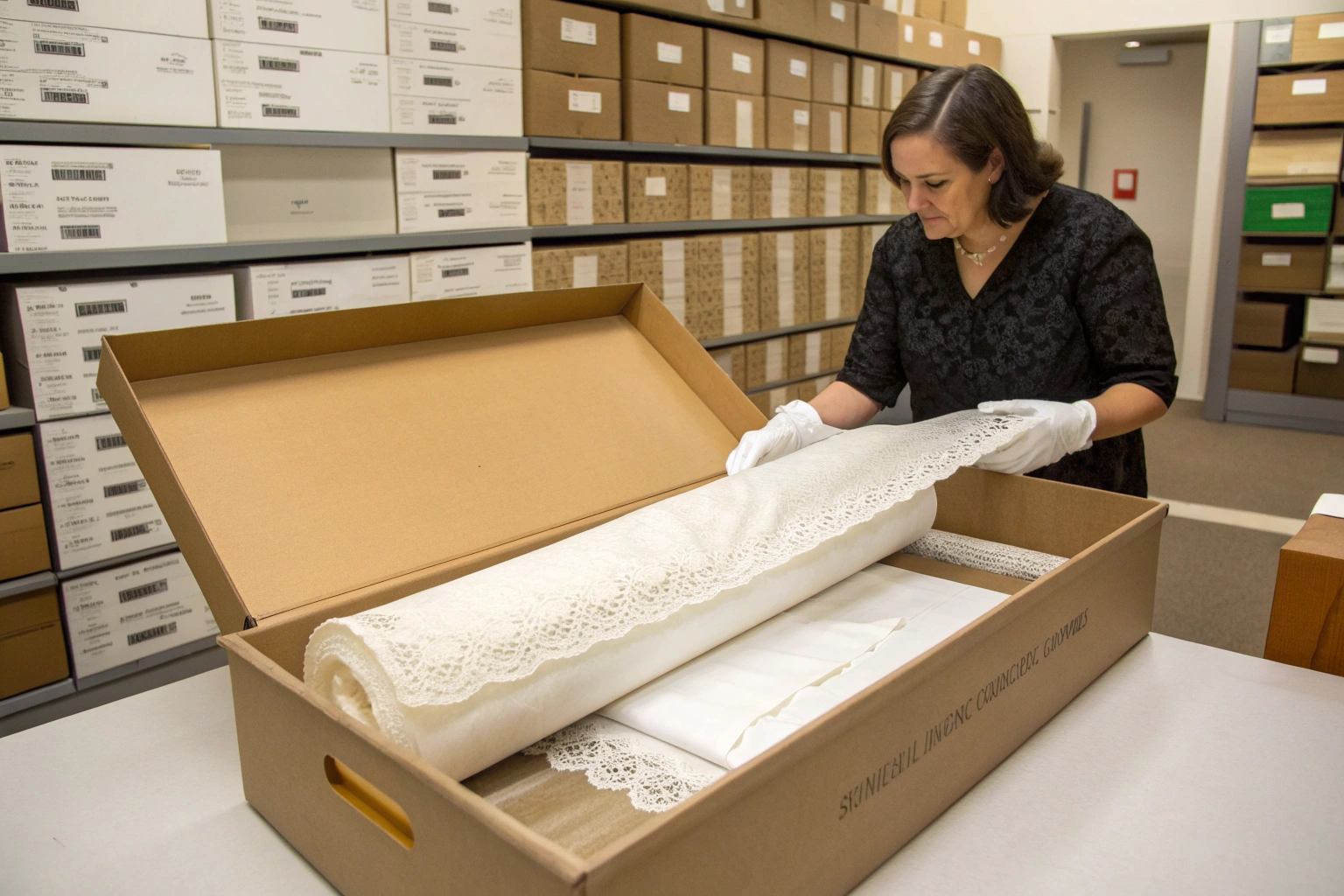
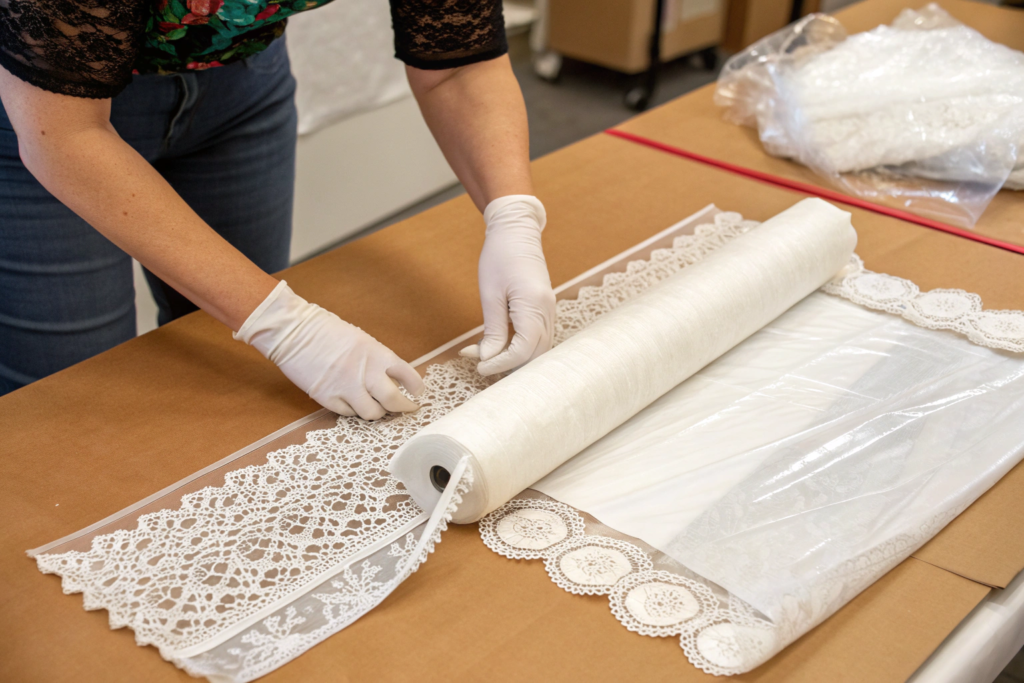
Before storage even begins, proper handling is critical. We implement a strict protocol in our own QC and packaging area: the "One Touch" rule with barriers. This means the lace fabric should ideally only come into contact with clean, pH-neutral materials. In practice, this means:
- Wear White Cotton Gloves: The oils and acids from bare hands can transfer to fibers, creating spots that may yellow over time.
- Use Clean, Dedicated Surfaces: Never lay lace directly on a worktable. Always use a clean, white cotton sheet or acid-free paper as a barrier.
- Avoid Talking Directly Over Unprotected Lace: Saliva droplets are acidic and can cause localized damage.
This minimizes the introduction of contaminants before the lace even enters its long-term storage.
What is the Correct Way to Prepare Lace for Long-Term Storage?
Preparation is everything. Rushing lace into a box or bag without proper preparation is inviting disaster. The goal is to remove immediate threats, provide physical support, and create a stable inner environment before the final boxing.
The absolute worst thing you can do is fold lace tightly and put it in a plastic bag. Folds become permanent creases that weaken fibers, and non-breathable plastic traps moisture and off-gasses. Here is the industry-best-practice preparation method, which we recommend to all our clients receiving bulk orders:
Step 1: Initial Inspection and Airing
Upon receipt, in a clean, dry room, unroll the lace on a protected surface. Check for any shipping odors or moisture. Allow it to "rest" and acclimate to your storage room’s humidity for 24 hours if it has come from a different climate. Do not expose to direct sunlight.
Step 2: The Roll, Don’t Fold Principle
Always roll lace onto a supportive core. This prevents sharp fold lines.
- Core Material: Use a 3-4 inch diameter tube of acid-free cardboard or roll onto itself if the piece is wide and sturdy enough.
- Technique: Lay the lace face-down (if there is a right side) on acid-free tissue paper. Loosely roll it along the length (selvage to selvage), ensuring it is even but not tight. Avoid rolling on the bias.
Step 3: Interleaving and Cushioning
As you roll, or once rolled, cushion the lace with unbuffered, acid-free tissue paper. Do not use colored tissue or newspaper. The tissue acts as a buffer against pressure and absorbs minor moisture fluctuations. For very delicate laces, you can also use rolls of soft, undyed muslin fabric.
Step 4: Primary Wrapping
Wrap the cushioned roll in a final layer of acid-free tissue. Then, for an additional layer of protection against dust and pests, place it inside a breathable, archival-quality bag. The gold standard is a bag made from Tyvek or inert polyethylene (like Mylar). Avoid standard polyethylene zip bags for long-term storage, as they can become brittle and emit gases. Label the bag clearly with content details.
What Materials Should You Absolutely Avoid?
Your storage supplies are as important as the technique. Blacklist these common but harmful materials:
- Wood & Particle Board: Shelving and boxes made from these materials emit formic and acetic acids.
- Regular Cardboard & Newspaper: Highly acidic. The acid will "burn" into the fabric over time.
- PVC/Vinyl Bags: They emit plasticizers that create a sticky film on fibers.
- Rubber Bands & Metal Clips: Can cut fibers or leave stains from corrosion.
- Colored Tissue or Fabric: Dyes can migrate, especially in humid conditions.
Investing in proper archival supplies from the start saves money on ruined inventory. For those sourcing these materials, a guide on archival storage supplies for textiles can be a helpful starting point.
How Should You Store Lace Rolls and Samples Differently?
- Bulk Rolls: Follow the roll-and-box method above. Store boxes on powder-coated metal shelving, off the floor, and away from exterior walls.
- Small Samples & Swatches: These are high-risk due to frequent handling. Mount them on acid-free cardstock using stainless steel pins (not glue or tape). Store these cards upright in archival file boxes, separated by acid-free dividers. We provide our key clients with sample libraries prepared this way for their long-term reference, which has helped one New York-based designer maintain a consistent color and quality standard across 5+ years of seasonal collections.
What Are the Ideal Environmental Conditions for Storing Lace?
The physical storage location is the final, critical shield. Even perfectly prepared lace will succumb to a poor environment. The goal is to create a cool, dark, dry, and stable sanctuary.
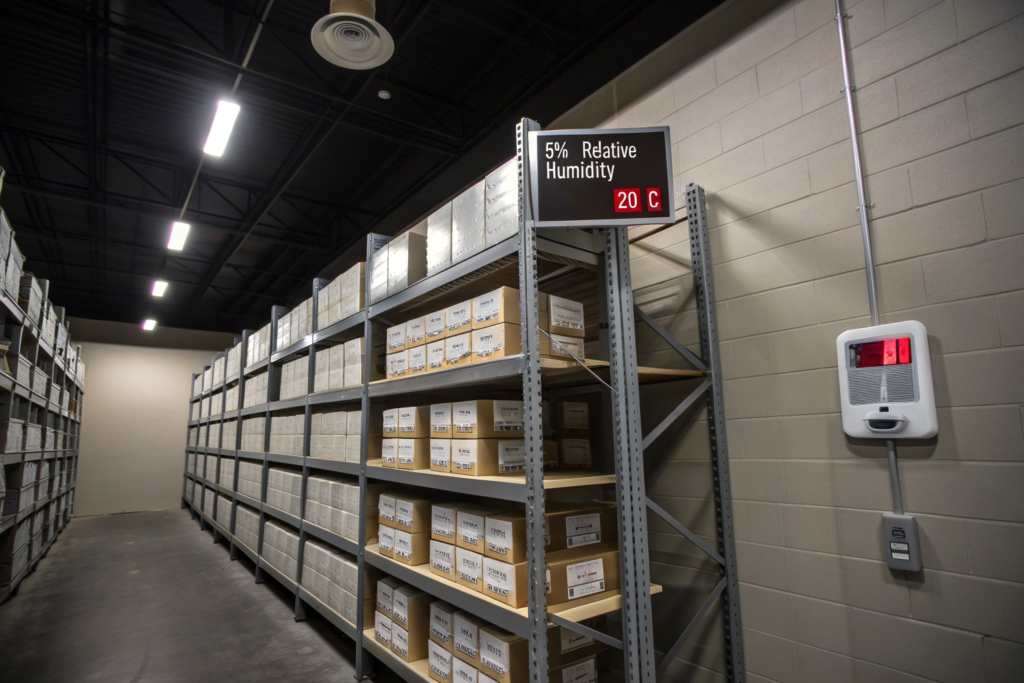
The gold standard, as employed by museums and which we emulate for our own premium stock, is defined by three key parameters:
- Temperature: Cool is best. Aim for a consistent temperature between 60-68°F (15-20°C). Avoid attics (too hot) or basements (prone to dampness and flooding).
- Relative Humidity (RH): This is arguably the most important factor. Maintain a stable RH between 45-55%. Fluctuations cause fibers to expand and contract, leading to stress. High humidity (>60%) invites mold and insect life. Low humidity (<35%) can desiccate and embrittle fibers. Use a hygrometer to monitor this. For valuable archives, a dehumidifier/humidifier system may be necessary.
- Light: Total darkness is ideal. Store lace in opaque boxes inside a room with no windows or blackout curtains. If light is needed for access, use LED lights, which emit negligible UV and little heat, and only turn them on when absolutely necessary.
How to Manage Air Quality and Pests?
The air itself can carry damaging agents.
- Pollution & Dust: Filter the air in the storage room if possible. Ensure boxes are well-sealed to keep out dust, which is abrasive and can attract pests.
- Insect Prevention: The best defense is a clean, cool, dry environment. Avoid mothballs (camphor, naphthalene) as their fumes are toxic, can stain, and leave an odor embedded in the fibers. Instead, use herbal deterrents like lavender or cedar in sachets placed outside the storage boxes, or consider pheromone traps. Regularly inspect boxes for signs of pests like silverfish or carpet beetles.
What is a Practical "Priority-Based" Storage Strategy?
Not every business can build a museum-grade vault. Here’s a pragmatic, tiered approach we suggest:
- Tier 1 (Highest Value/Vintage): Invest in full archival protocol: acid-free boxes, climate-controlled dark storage. This is for heirloom laces, one-of-a-kind designer pieces, or extremely high-value inventory.
- Tier 2 (Production Inventory & Key Samples): Use acid-free tissue and boxes. Store in the coolest, darkest, driest interior closet or room available. Monitor with a simple hygrometer. This is the standard for most of our clients’ bulk orders.
- Tier 3 (Short-term/Working Stock): For lace that will be used within 6 months, clean, breathable cotton bags (like pillowcases) and careful rolling on acid-free tubes are sufficient. Keep away from sunlight and moisture.
A case in point: A bridal boutique in Milan that sources our guipure lace once suffered yellowing on a stock of ivory gowns. We audited their storage and found them in a sun-lit back room in standard garment bags. By switching to breathable cotton gown bags and moving racks to an interior room, they eliminated the problem entirely.
How to Handle and Inspect Stored Lace Periodically?
Storage isn’t "set and forget." Even in ideal conditions, periodic, gentle inspection is crucial to catch any developing issues early. The rule here is minimal intervention with maximum care.
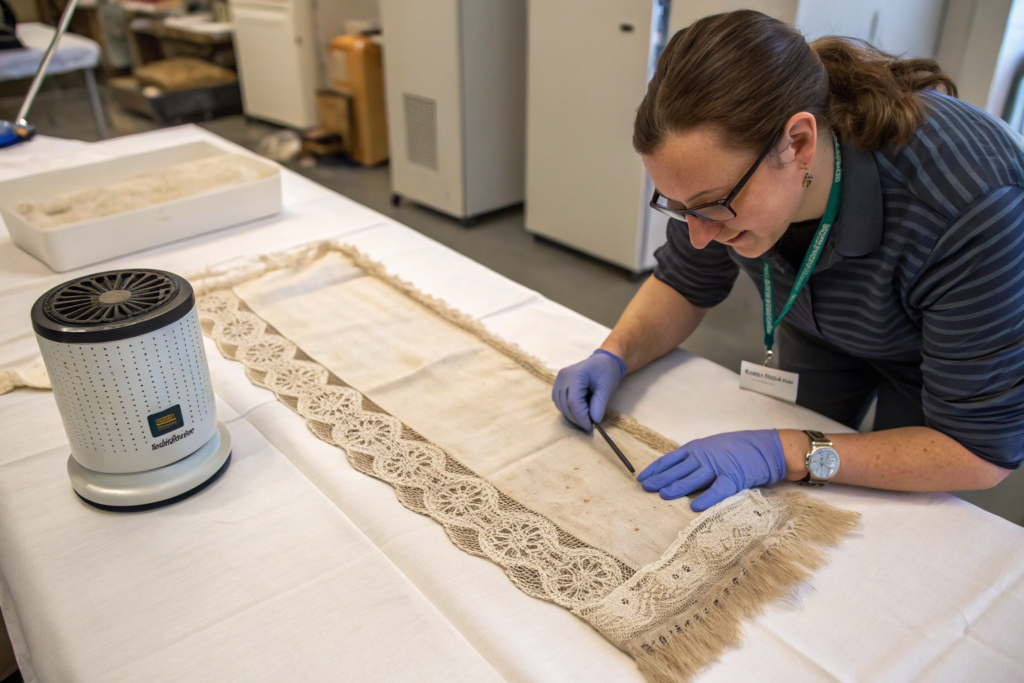
Plan a gentle inspection every 6 to 12 months. Choose a dry day with moderate humidity. Prepare your clean workspace with fresh acid-free paper. Wearing gloves, carefully remove one box at a time. Open it and note the condition. You are checking for:
- Odors: A sour or musty smell indicates microbial growth.
- Visible Mold or Stains: Look for any new spots or discoloration.
- Insect Activity: Frass (insect droppings), shed skins, or live insects.
- Condition of the Storage Materials: Is the tissue paper discolored? Is the box intact?
If the lace is in good condition, do not unroll it unnecessarily. Simply reseal the box and return it. If you detect a problem:
- For Dust: Use a soft, natural-bristle brush (like a clean hake brush) to gently brush dust away from the fabric surface.
- For Minor Mustiness (No Visible Mold): Increase air circulation in the storage room. You can place the opened box in a room with a HEPA air purifier for a few hours, away from direct light, to help dissipate odors. Do not use air fresheners.
- For Serious Issues (Mold, Pests): Isolate the affected box immediately. Consult a professional textile conservator. Do not attempt to clean mold yourself, as spores can spread and improper cleaning can set stains.
When and How Should You Refold or Re-roll?
Over very long periods (5+ years), even gentle rolls can develop a "set." During a major inventory overhaul, you may choose to re-roll the lace in the opposite direction. This helps relieve any long-term stress on the fibers. Follow the same meticulous rolling technique as before, using fresh acid-free materials. This is also an opportunity to update labels and documentation.
Conclusion
Preventing the yellowing and aging of lace fabric is a proactive discipline, not a reactive chore. It’s a commitment to preserving both the monetary value and the aesthetic soul of your textile investments. By understanding the enemies—light, acid, moisture, and poor handling—and countering them with the right materials (acid-free, breathable) and the right environment (cool, dark, stable), you create a legacy of beauty that endures.
The steps are clear: handle with gloved hands, roll don’t fold, cushion with acid-free tissue, box in archival materials, and store in a climate-controlled darkness. This protocol bridges the gap between the meticulous care of a museum and the practical needs of a modern fashion business.
At Shanghai Fumao, we view our partnership as extending beyond the point of sale. We provide not just lace, but the knowledge to protect it. Our own warehouses in Keqiao adhere to these stringent standards to ensure the fabric you receive is in pristine condition, and we are always here to advise on its long-term care. By integrating these storage principles, you transform your inventory from a perishable commodity into a curated archive of quality. Ready to discuss the perfect lace for your next project, backed by our expertise in both production and preservation? Reach out to our Business Director, Elaine, to request samples and our detailed fabric care guide. Contact her at: elaine@fumaoclothing.com.