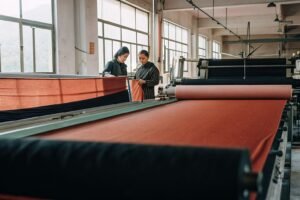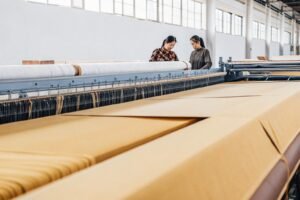
The moment a bride sees herself in the dress for the first time—that’s the moment we, as fabric makers, work for. But in 2018, we almost missed it for a major New York designer. Their vision was a completely sheer lace bodice with a bold, architectural floral pattern, but every sample we sent was either too stiff, too flimsy, or the pattern got lost. The designer was ready to scrap lace entirely. Then, our R&D team presented a new 3D-embroidered guipure lace on a silk tulle base, using a mix of cotton and viscose threads for depth. The designer went silent on the video call, then said, "That’s it. You’ve captured the emotion." That experience taught me that lace in modern design is no longer just a trimming; it’s the emotional and structural heartbeat of a garment. It carries the narrative, defines the silhouette, and creates the unforgettable first impression.
Today, lace in bridal and evening wear has evolved from a traditional decorative element to a multifunctional design cornerstone. Its role is tri-fold: as a storytelling medium that conveys romance, artistry, and brand identity; as a structural fabric that can sculpt the body through strategic placement and varying densities; and as a textural catalyst that creates visual depth, contrast, and modernity through innovative combinations with other materials like silk satin, neoprene, or even latex. Modern lace balances heritage craftsmanship with cutting-edge technology to meet contemporary demands for individuality, comfort, and dramatic effect.
If you view lace as merely a pretty overlay, you’re missing its transformative power in today’s atelier. Let’s explore how the world’s top designers are re-engineering lace to build not just dresses, but dreams and statements.
How is Lace Used as a Structural Element in Silhouette Creation?
Gone are the days when lace was only a soft layer over a structured undergarment. Today, lace is the structure. Designers manipulate its intrinsic properties—density, stretch, and dimensional stability—to engineer support and shape directly into the garment. This shift is driven by the desire for seamless, lightweight construction that moves with the body.
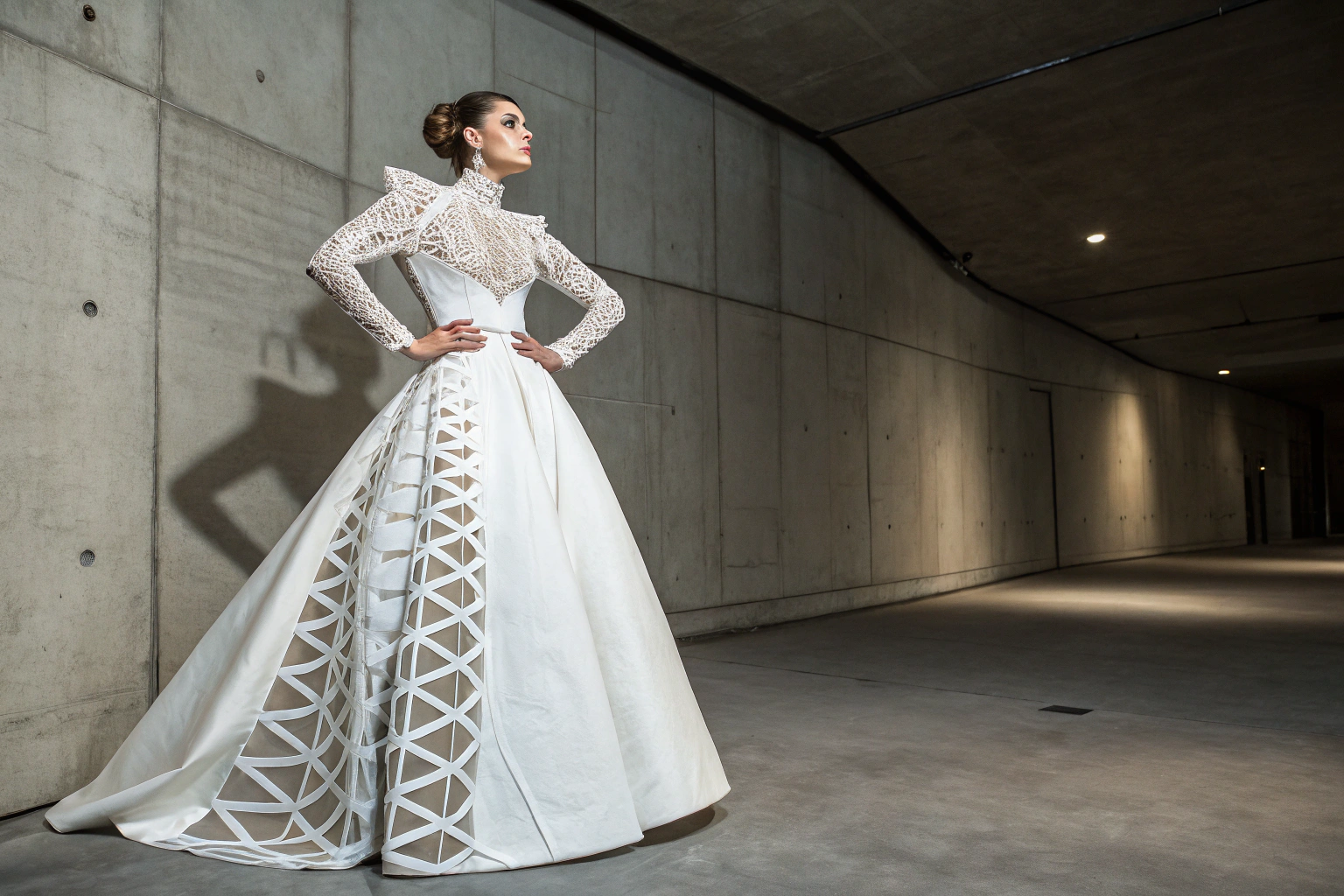
The key is strategic reinforcement. Imagine a fitted, backless mermaid gown. A single layer of delicate Chantilly lace would lack the integrity to hold the shape. The modern solution? Laser-cut lace bonded to power mesh or a ultra-fine powernet. This creates a "second skin" foundation with targeted control. The lace provides the aesthetic, while the bonded technical base provides the architecture. We executed this for a London-based couture house in 2022. They wanted a seamless "floating lace" look through the torso. We developed a custom stretch polyamide guipure and engineered the bonding process so the seams vanished. The final dress had no boning, yet it sculpted the body perfectly, thanks to the engineered tension of the composite lace fabric.
Furthermore, lace is being used in 3D molding. Through advanced heat-setting (for synthetic laces) or careful manipulation during construction, lace can be permanently shaped into cups, ruffles, or petals that stand away from the body, creating volume and drama without multiple layers of tulle. This technique turns lace from a covering into a building material.
What Are the Innovative Techniques for Applying Lace in Modern Design?
Modern application is about fusion and deception. The goal is a look of effortless artistry, achieved through meticulous technique.
- Laser-Cutting & Laser-Scribing: This technology revolutionized lace application. It allows for:
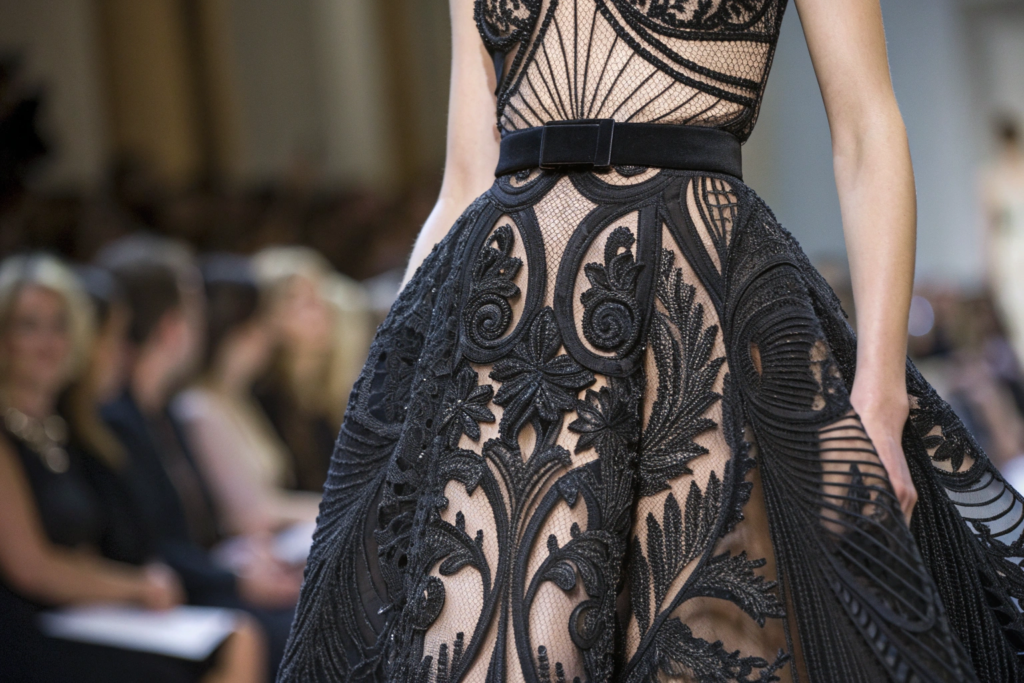
- Precision Placement: Lace motifs can be laser-cut individually and appliquéd with pixel-perfect accuracy, eliminating the bulk of traditional seams.
- Scribing: Instead of cutting all the way through, the laser partially etches the backing tulle, creating a "shadow lace" effect or allowing sections to be torn away for a deconstructed look. It’s how many designers achieve those intricate, seamless lace trails that seem to grow organically from the fabric.
- Strategic Sheerness & Opacity: Modern design uses lace to play a sophisticated game of reveal and conceal. Dense Alençon or Venise lace might cover the bodice for modesty and structure, while transitioning to a sheer illusion net or chantilly at the shoulders and back. This creates a focal point and balances weight visually.
- Lace Overlays on Unexpected Fabrics: The true mark of modernity is juxtaposition. We’re seeing:
- Lace over neoprene for a sculptural, contemporary edge in evening separates.
- Lace over technical satins with a waterproof backing for daring "wet look" effects.
- Lace over latex (through specialized bonding) for high-fashion, avant-garde statements. Sourcing the right adhesive for these complex fabric bonding techniques is a technical challenge we frequently solve for designers pushing boundaries.
How Does the Choice of Lace Type Dictate the Garment’s Character?
The lace type sets the entire emotional tone. It’s the difference between a romantic countryside wedding and a metropolitan gallery opening.
| Lace Type | Key Characteristics | Modern Design Role | Best For |
|---|---|---|---|
| Guipure (Venise) | Dense, heavy, no net ground, embossed look. | Structural focal point. Used as bold appliqués, sculpted bodices, or statement sleeves. Adds drama and weight. | Architectural silhouettes, art-deco inspired designs, high-impact statement pieces. |
| Chantilly | Fine, delicate, with a distinctive scalloped pattern on a net ground. | Romantic fluidity. Used for flowing overlays, cascading layers, and soft, ethereal effects. The classic "bridal" lace, now often dyed black for evening. | Boho, romantic, and vintage-inspired gowns; graceful evening sheaths. |
| Alençon | Delicate patterns on a fine net ground, often outlined with a heavier cord (cordé). | Elegant definition. The corded edge gives clarity to motifs. Used for classic, refined silhouettes where detail is paramount. Often used in "sheath" style gowns or tailored bridal suits. | Traditional yet refined bridal, sophisticated column dresses. |
| Embroidered Tulle/Illusion | Machine-embroidered patterns on a sheer net base. | Illusion and depth. Creates a "second skin" effect for necklines, backs, and sleeves. Allows for daring cuts while maintaining coverage. The foundation for modern, sheer panels. | Illusion necklines, sleeves, and backs; adding texture to sheer areas. |
| Raschel Knitted Lace | Durable, often with stretch, can feature modern geometric patterns. | Modern comfort and style. Used in fitted sheaths, jumpsuits, and cocktail dresses. Its stretch allows for minimalist, body-hugging silhouettes without complex seaming. | Bridal jumpsuits, reception dresses, modern cocktail attire. |
How is Sustainability Influencing Lace Sourcing and Design?
The modern bride and conscious consumer are asking, "What is this made of?" This has fundamentally altered the lace conversation. It’s no longer just about beauty; it’s about provenance and impact.
- Material Innovation: Demand is soaring for laces made from certified organic cotton, GOTS-approved viscose, and recycled polyamide (rPET) or polyester. The challenge is maintaining the delicate hand and drape with these fibers, which often behave differently than virgin synthetics. In 2023, we developed a collection of bridal laces using post-industrial recycled nylon from fishing nets. The key was adapting our dyeing process, as the recycled fiber had a different heat sensitivity and dye affinity. The result was a lace with a compelling story and identical luxury to its virgin counterpart.
- Zero-Waste Design & Production: Designers are minimizing off-cuts by:
- Using lace trim strategically rather than whole overlays.
- Designing patterns that utilize the full width of the lace, integrating the selvage into the design.
- Upcycling lace remnants into veils, hair accessories, or jewelry. Some forward-thinking brands we work with even return their small cuttings to us, which we repurpose into non-woven felt for packaging.
- Investment Heirlooms: There’s a move towards timeless designs and higher quality, encouraging the "wear once, treasure forever" or even "re-wear" mentality. This shifts the focus to classic, high-quality laces that won’t look dated, favoring natural fibers like silk lace that age beautifully.
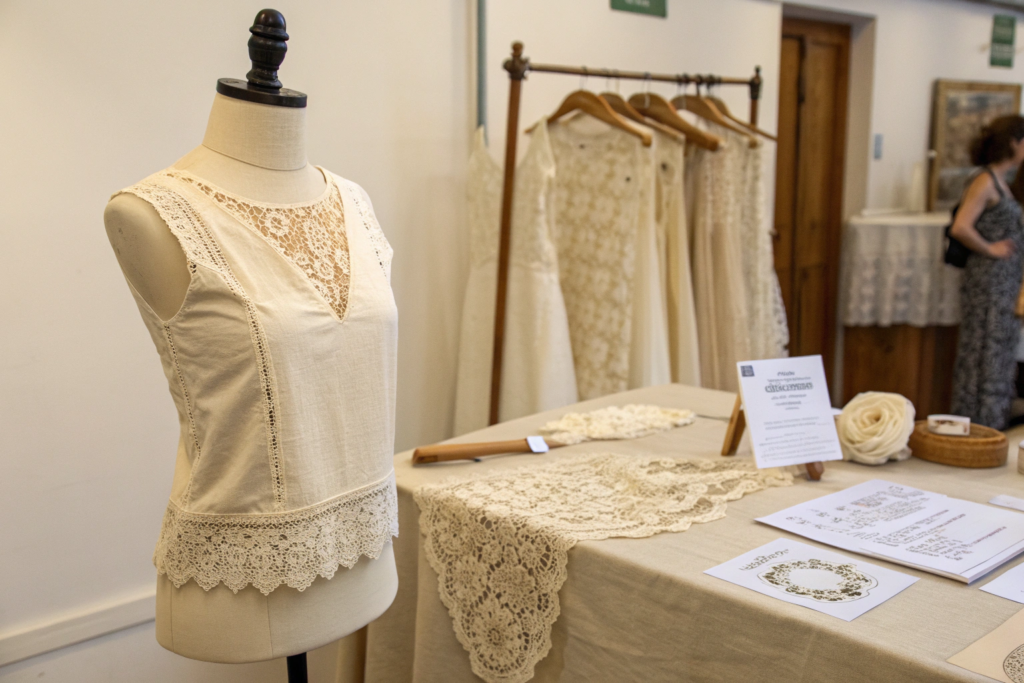
How are Designers Personalizing Lace for Exclusive Collections?
Exclusivity is the ultimate luxury. Personalization happens at the fabric level:
- Custom Motif Development: Instead of buying from a catalog, brands invest in designing their own signature lace pattern. This involves the digitization process we’ve discussed, turning a hand-drawn sketch (often inspired by personal symbolism—like a family flower) into a producible file. The minimum order quantity for custom lace is the barrier, but for a flagship gown or capsule collection, it creates an unmatched value proposition.
- Hybrid Creations: Designers mix and match. They might take a vintage Leavers lace floral and have us re-engineer it as a Raschel knit for stretch and comfort, or combine a traditional guipure motif with a ultra-modern transparent monofilament ground.
- Regional Craftsmanship: Incorporating hand-made elements like French broderie de Lunéville (tiny beadwork on lace) or Indian zardozi (metallic thread embroidery) onto a machine-made base creates a one-of-a-kind piece. The key for suppliers like Shanghai Fumao is to seamlessly integrate these specialized, often outsourced, handicrafts into the broader production workflow without compromising timing.
What is the Future of Lace in Tech-Infused Evening Wear?
The frontier is where tradition meets technology. We are moving into an era of "smart lace":
- Integrated Illumination: We are experimenting with electroluminescent (EL) wires and micro-LEDs that can be woven or embroidered into lace patterns, allowing sections of a gown to glow softly—a breathtaking effect for runway or performance. The challenge is power source and washability, but solutions are emerging.
- Responsive Textiles: Imagine lace that changes its opacity or pattern in response to body temperature or light. While still in R&D, thermochromic or photochromic dyes applied to lace are being explored for transformative fashion pieces.
- Digital-Only Lace: For virtual fashion and digital influencers, designers are creating incredibly intricate, impossible-to-manufacture lace patterns using 3D modeling software. This pushes the aesthetic boundaries without physical constraints, influencing real-world designs.
Conclusion
The role of lace in modern bridal and evening wear has transcended ornamentation. It is the primary language through which a designer speaks of romance, architecture, heritage, and innovation. It is a collaborative medium that requires deep dialogue between the designer’s vision and the fabric developer’s technical prowess. Success now hinges on understanding lace not as a commodity, but as a customizable, structural, and even sustainable material capable of carrying profound emotional and brand value.
The most memorable garments in the decades to come will be those where the lace was not an afterthought, but the starting point—the very soul of the design, engineered for the modern body and conscience.
Ready to make lace the cornerstone of your next iconic collection? Partner with a fabric innovator who understands its emotional weight and technical possibilities. Contact our Business Director, Elaine, at elaine@fumaoclothing.com to begin the conversation. Let’s co-create the lace that will define your brand’s future.