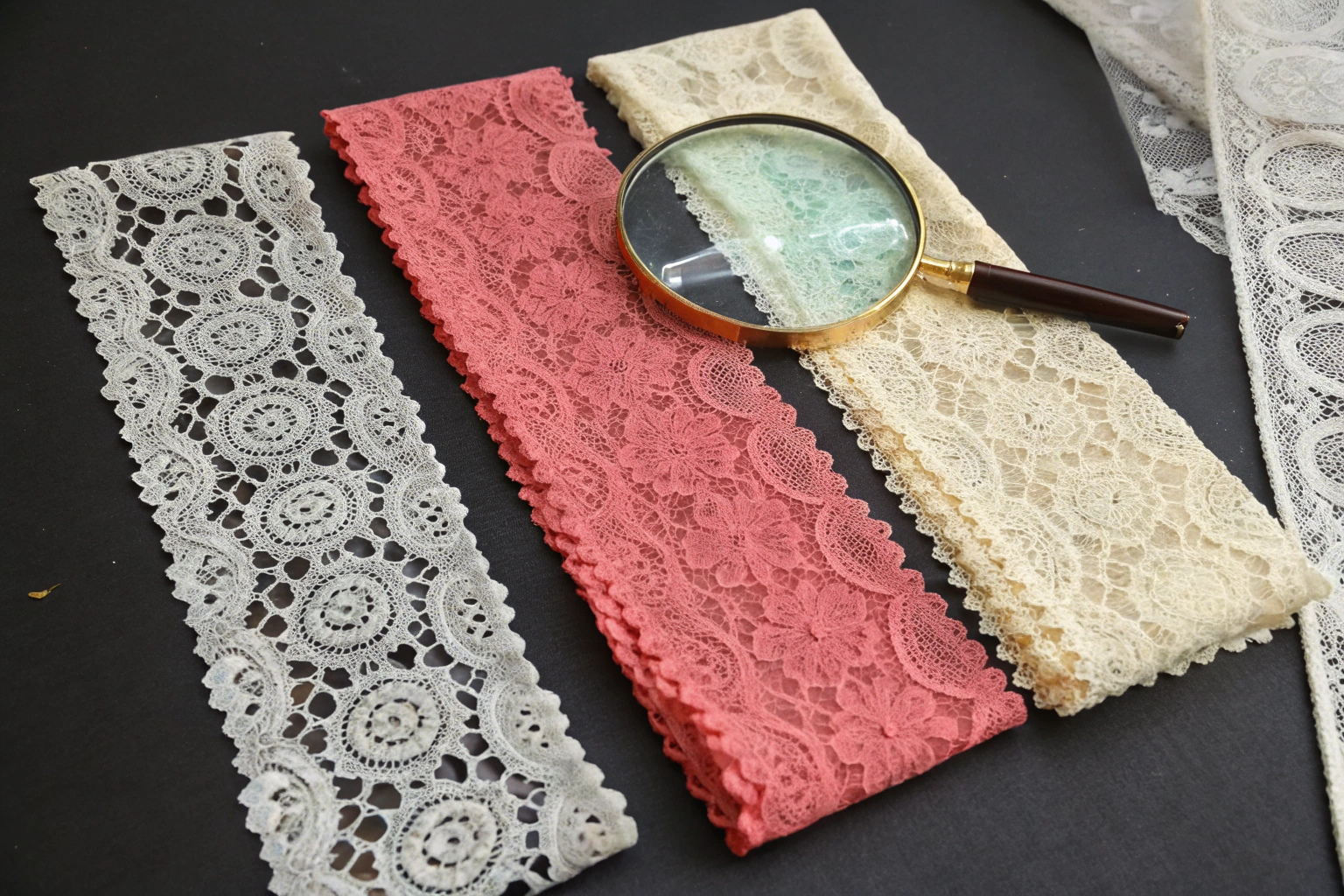
You’re scrolling through lace samples, imagining them in your next collection. One sample card says "100% Nylon," another "Polyester Lace," and a third boasts "Soft Cotton Lace." The prices are all different. Which one do you choose? It’s more than just a fiber label—it’s a decision that will impact your garment’s drape, durability, cost, and how your customer feels wearing it. Choosing the wrong composition can turn a dreamy design into a scratchy, ill-fitting, or poorly received product.
After twenty years at Shanghai Fumao in the Keqiao textile hub, I’ve seen this confusion firsthand. The truth is, nylon, polyester, and cotton aren’t just interchangeable ingredients. They each tell a different story and serve a different purpose. This guide will break down exactly what you’re buying with each fiber type. You’ll learn to match the composition to your design’s intent, budget, and target market with confidence, ensuring the lace you source performs as beautifully as it looks.
Understanding composition is the first step to becoming a savvy buyer. It’s the foundation that determines everything else—from the dyeing process to the care label you’ll eventually write. Let’s demystify these three major players in the lace world.
Nylon Lace: The Gold Standard for Softness and Luxury
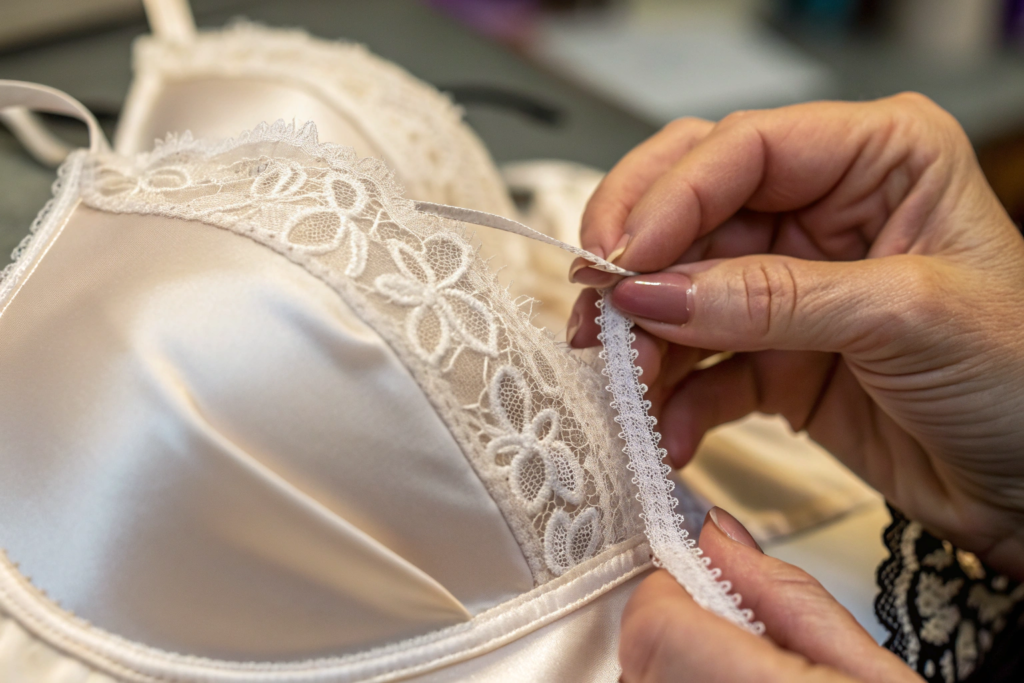
When people think of high-end lingerie or delicate bridal veils, they’re often thinking of nylon lace. Nylon, a synthetic polymer, is spun into incredibly fine, strong filaments. This allows it to be woven into lace that is remarkably soft to the touch, has a subtle, natural-looking luster (not a plastic shine), and possesses excellent strength and recovery. It drapes beautifully and feels luxurious against the skin, which is why it’s the perennial favorite for intimate apparel and couture.
However, nylon has its quirks. It is less resistant to UV light and chlorine than polyester, meaning prolonged sun exposure or pool water can weaken it and cause yellowing over time. It also has a lower melting point, so ironing requires a cooler setting. From a production standpoint, nylon dyes brilliantly, especially for deep, rich colors, but the process needs precise pH and temperature control. At Shanghai Fumao, our dyeing partners are experts in this, ensuring color consistency across every batch. (Here’s an insider tip: the best nylon lace often uses a higher filament count yarn—more fine threads per strand—which boosts that signature softness.)
Why is Nylon the Top Choice for Lingerie and Bridal Lace?
The answer lies in three key performance factors: hand feel, drape, and strength. Lingerie is in direct, all-day contact with sensitive skin. Nylon’s inherent softness prevents irritation. Its excellent recovery means it can stretch slightly with movement and snap back, maintaining the garment’s shape without bagging. For bridal, the luxurious drape is essential for creating fluid, romantic silhouettes in veils and gowns. The strength is also critical—a snag on a beaded wedding dress shouldn’t cause a major run.
We worked with a Los Angeles-based lingerie brand in 2023 that was transitioning from a polyester lace to a nylon one for their premium line. While the per-meter cost was 25% higher, the customer feedback was transformative. They reported a 40% decrease in returns citing "itchiness" and a significant boost in positive reviews mentioning "comfort." The investment in composition directly translated to brand value. For designers, researching how to source high-quality nylon lace for lingerie on specialist forums can provide valuable peer insights.
What Are the Care and Durability Trade-offs with Nylon?
Nylon asks for a bit more care in exchange for its luxury. It should be washed in cool water with mild detergent. Bleach is a definite enemy—it will cause severe yellowing and fiber degradation. As mentioned, heat is a risk; always iron on a low setting with a press cloth. Its durability against everyday abrasion is good, but its Achilles’ heel is prolonged exposure to sunlight (think a lace curtain in a south-facing window) and harsh chemicals like chlorine.
A practical example from our work: a client making resort wear cover-ups wanted a nylon lace. We had to advise them that if the garment was meant for poolside use, it would have a limited lifespan. We instead developed a specially coated polyester lace that mimicked nylon’s hand feel but offered superior chlorine resistance. Understanding the long-term effects of sun and chlorine on swimwear fabrics is crucial for making the right choice.
Polyester Lace: The Cost-Effective and Versatile Workhorse
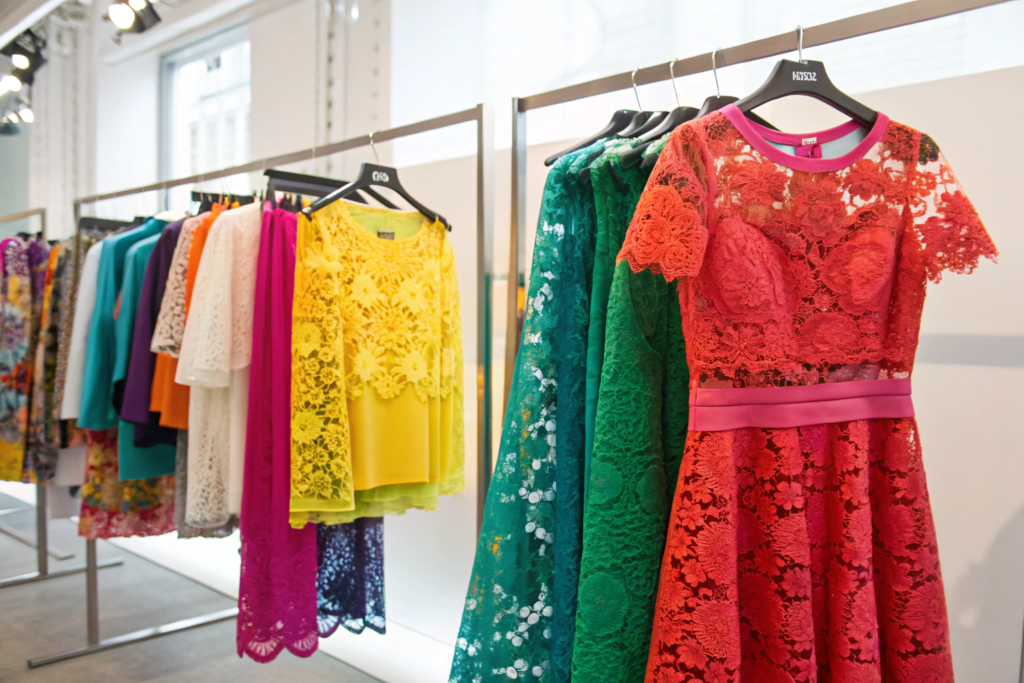
Polyester lace is the backbone of the contemporary fashion industry. Thanks to advanced manufacturing, it’s no longer the stiff, plasticky fabric of the past. Modern polyester filaments can be engineered to be very fine and soft, closely mimicking the feel of nylon at a more competitive price point. Its superpowers are excellent colorfastness, wrinkle resistance, and durability. It holds dye brilliantly, resulting in vibrant, fade-resistant colors, and it’s generally more resistant to UV, chlorine, and abrasion than nylon.
For brands, this means consistency and resilience. A polyester lace garment will look vibrant after multiple washes and can withstand more rigorous wear. It’s also the preferred base for printed laces, as the fiber accepts prints beautifully and holds the design sharply. The main traditional drawback has been a potential for less breathability and a slightly crisper hand feel than premium nylon, though ongoing innovation is closing this gap rapidly.
How Has Polyester Lace Quality Improved in Recent Years?
The game-changer has been microfiber technology and modified cross-section filaments. Instead of a round filament, polyester can now be extruded in shapes that scatter light differently, reducing shine and creating a softer, more matte, or even silky luster. Furthermore, chemical treatments and finishing processes, like advanced softening baths, can dramatically improve the hand feel. At our Shanghai Fumao CNAS lab, we constantly test new polyester yarns to find the ones that best bridge the gap between performance and aesthetics.
In 2022, we developed a "Dull Touch" polyester lace for a major European high-street retailer. By using a specially modified yarn and a proprietary finishing recipe, we achieved a matte, soft hand that met their strict quality touch-test, allowing them to hit their target price point for a mid-tier collection without sacrificing perceived quality. This kind of innovation is key. For buyers, it’s worth exploring resources on the latest innovations in sustainable polyester fibers to stay ahead of trends.
When is Polyester Lace the Undisputed Best Choice?
Polyester is the champion in several key scenarios:
- High-Color Fashion Lace: For neon brights, deep blacks, or complex prints that need to stay crisp.
- Outdoor and Performance Applications: For laces used in athletic mesh panels, outdoor furniture accents, or accessories exposed to the elements.
- Stretch Lace Blends: Polyester combines very well with Lycra (spandex) to create durable, colorfast stretch laces for activewear and shapewear.
- Budget-Conscious Projects: Where achieving a specific look at an accessible price is the primary goal.
Its resilience makes it ideal for children’s wear or decorative items that require frequent washing. If you’re designing a vibrant, printed lace for a summer festival collection that needs to be produced in large volume at a keen price, polyester is almost certainly your answer.
Cotton Lace: The Natural Choice for Comfort and Classic Style
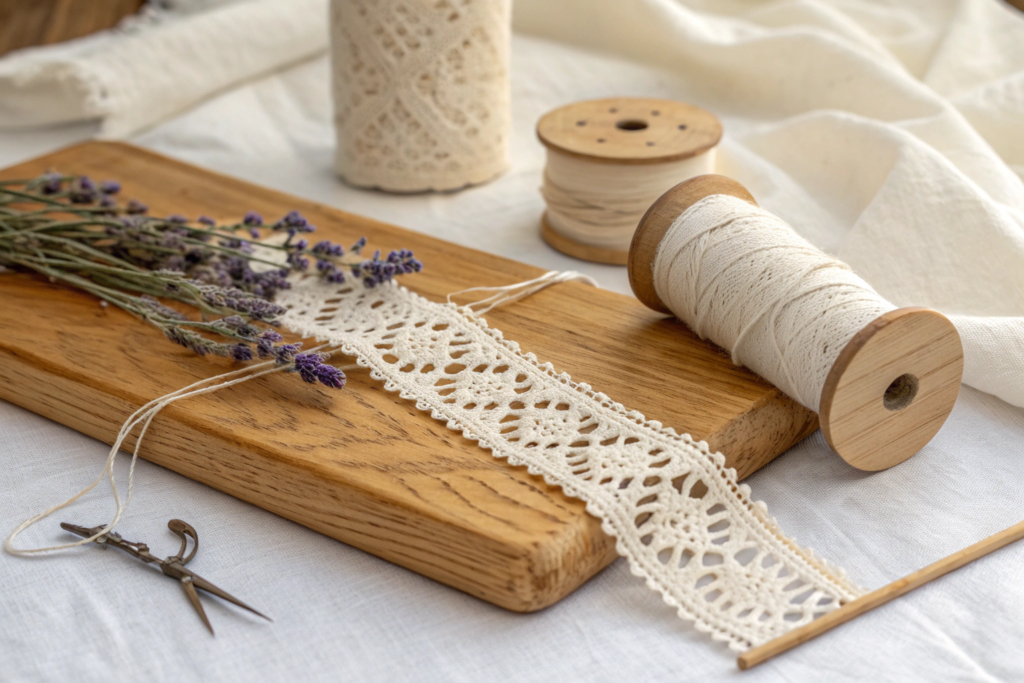
Cotton lace brings a completely different character to the table. As a natural cellulose fiber, it is highly breathable, absorbent, and has a gentle, matte appearance. It feels cool and soft against the skin, with a "dry" hand feel rather than the slippery feel of synthetics. It evokes a sense of heritage, craft, and natural purity—think vintage linens, bohemian blouses, and heirloom christening gowns.
The production of cotton lace is often more involved. The yarn is less uniform than synthetic filaments, which can give it a desirable, slight organic texture but also requires more skill in spinning and weaving to ensure consistency. Cotton dyes well but may not achieve the same extreme vibrancy as polyester. Its main functional drawbacks are that it wrinkles easily, has less inherent strength and recovery than synthetics, and can shrink if not pre-treated properly. We always pre-shrink our cotton lace fabrics to mitigate this last issue for our clients.
What Are the Ideal Applications for Cotton Lace?
Cotton lace shines where natural breathability and a classic, non-synthetic aesthetic are paramount. Its top uses are in Heirloom and Children’s Wear (for its gentle, hypoallergenic nature), Home Textiles (tablecloths, curtain trims, pillowcases where breathability is valued), Vintage or Bohemian Fashion Styles, and Ecclesiastical or Traditional Garments. It’s also a favorite for crafters and those practicing historical reenactment sewing.
We collaborated with a Scandinavian homewares brand specializing in organic bedding. They needed a lace trim for duvet covers that aligned with their GOTS (Global Organic Textile Standard) certification. We sourced GOTS-certified organic cotton yarn and produced a custom cluny-style lace for them. The MOQ was higher due to the specialty yarn, but it perfectly matched their brand ethos and allowed them to command a premium price. For brands on this path, understanding the certification process for organic textiles is essential groundwork.
How Does Blended Lace (e.g., Cotton-Polyester) Offer the Best of Both Worlds?
Blends are the strategic compromise. A common blend like 65% Polyester / 35% Cotton aims to combine polyester’s strength, wrinkle resistance, and cost-effectiveness with cotton’s softness and breathability. The result is a lace that is easier to care for, more durable, and often more affordable than 100% cotton, while still offering a natural fiber feel.
The performance depends on the blend ratio. A higher cotton content will behave more like cotton; a higher polyester content will lean towards polyester’s traits. Blends are fantastic for everyday apparel like blouses, dresses, and casual separates where you want the look and partial feel of cotton without the high maintenance. When developing a blend, it’s critical to test for even dye uptake, as different fibers can absorb dye at different rates. A deep dive into the science and benefits of common fabric blends can help inform your specification.
Conclusion
Choosing between nylon, polyester, and cotton lace isn’t about finding the "best" fiber. It’s about finding the right tool for the job. Ask yourself: What is the primary function of this garment? (Comfort, durability, visual impact?) Who is my target customer? (Luxury shopper, value seeker, eco-conscious buyer?) What is my price point and production volume? The answers will point you clearly in one direction.
Let your design vision lead, but allow practical reality to guide the final specification. A stunning gown might deserve the luxury of nylon, while a trendy, high-turnover top is perfectly served by advanced polyester. Never be afraid to ask your supplier for swatches and to test them—wash them, stretch them, hold them up to the light.
At Shanghai Fumao, we’re here to be your guide and partner in this decision. We provide not just fabric, but the expertise to match the perfect composition to your project’s unique needs. With our integrated control from yarn to finishing, we ensure the lace you choose performs to its fullest potential.
Ready to select the ideal lace composition for your next collection? Bring your designs and questions to our team. Contact our Business Director, Elaine, at elaine@fumaoclothing.com. Let’s analyze your needs together and source or develop the lace that will make your designs successful, from the fiber up.