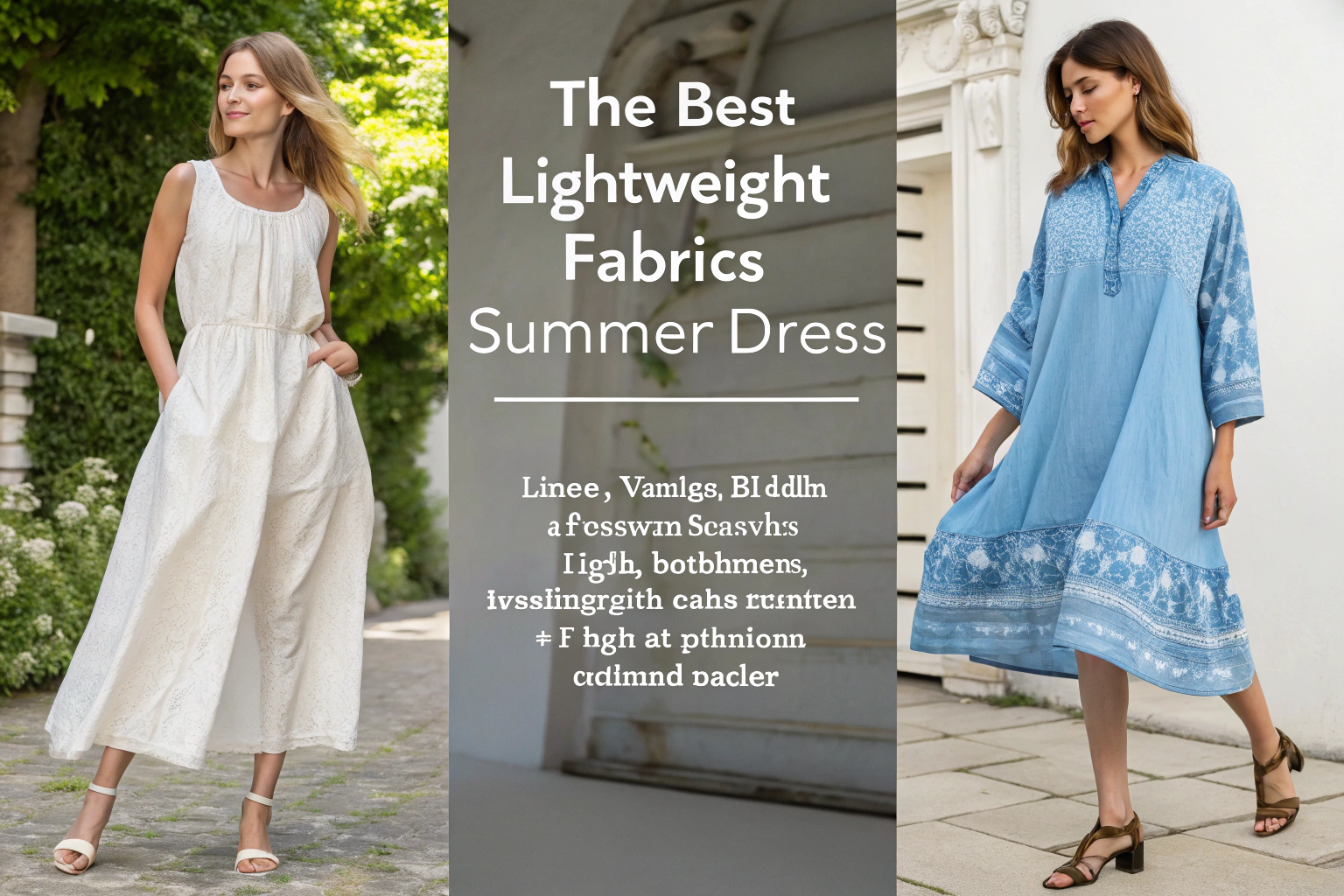
When summer heat hits, choosing the right fabric isn’t just about style—it’s a matter of comfort and practicality. Nothing ruins a beautiful summer design faster than a fabric that feels heavy, traps sweat, or loses its shape in the humidity. We’ve all seen those lovely dresses that become uncomfortable after just an hour in the sun. So, what truly makes a fabric perfect for hot weather, and which ones deliver both comfort and durability?
The best lightweight fabrics for summer dresses and blouses combine natural breathability, moisture-wicking properties, and a fluid drape. Top performers include linen (for supreme breathability), cotton voile and lawn (for crisp softness), silk (for luxurious temperature regulation), rayon/viscose (for excellent drape and affordability), and lightweight technical blends (for added performance). The "best" choice depends on balancing factors like care requirements, desired structure, and whether the garment is for casual daywear or elevated evening looks.
Knowing the distinct personality of each fabric helps you match the material to the garment’s purpose. Let’s move beyond general descriptions and dive into the specific characteristics, handling, and ideal applications of each top summer fabric, so you can source and design with confidence.
Why is natural fiber breathability non-negotiable for summer?
The fundamental job of a summer fabric is to allow air to circulate between your skin and the outside environment. Natural fibers have microscopic structures that make them inherently breathable, absorbing and releasing moisture vapor efficiently.
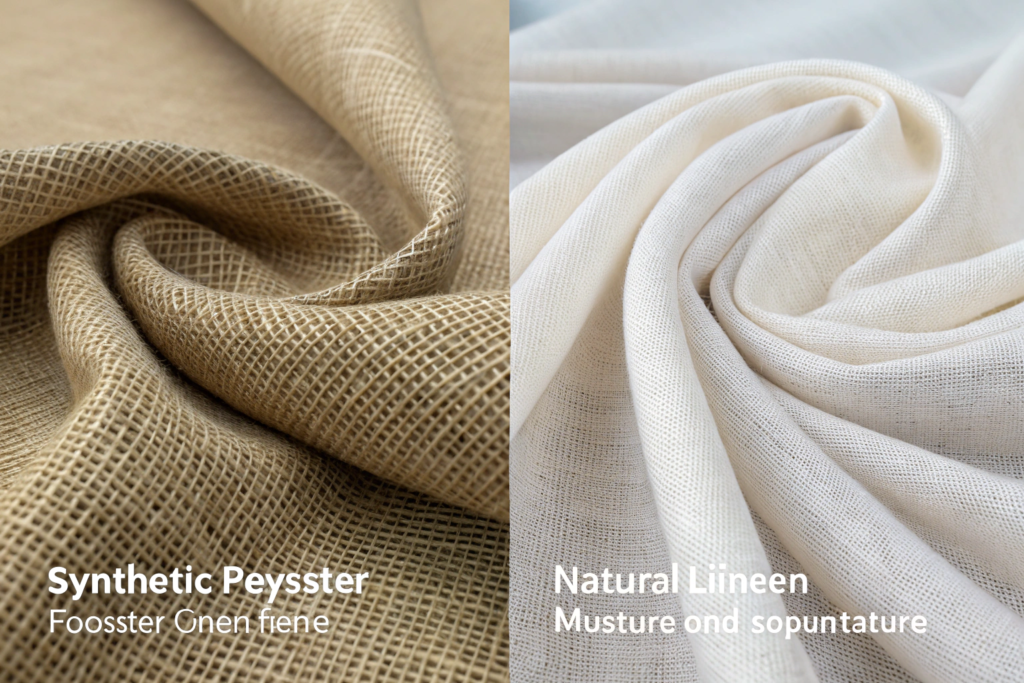
Think of your skin needing to "breathe." Synthetic fibers like standard polyester are often less breathable because they are essentially plastic filaments; they can trap heat and moisture against the skin. Natural fibers like cotton, linen, and silk are cellulose or protein-based. Their molecular structure allows them to absorb perspiration and release it through evaporation, creating a natural cooling effect. This is why a linen shirt feels cool to the touch. Breathability also relates to the fabric’s weave or knit structure—looser weaves (like in gauze) promote more airflow than tight satin weaves, even in the same fiber.
How does linen’s structure make it the "king of summer"?
Linen, made from the flax plant, is legendary for a reason. Its fibers are hollow, creating a natural conduit for air and moisture. It can absorb up to 20% of its weight in moisture without feeling damp, and it dries quickly. This makes it exceptionally cool and hygienic. However, pure linen has a distinctive texture—it’s crisp and can wrinkle easily. This "lived-in" wrinkle is now part of its aesthetic charm. For a more refined look with less wrinkling, consider linen blends. A 55% linen / 45% cotton blend is a fantastic workhorse: it retains about 80% of linen’s breathability while gaining cotton’s softness and reduced wrinkling. In our work with a French boutique brand, they opted for a slub linen-cotton blend for their signature summer tunic dress. The slight texture added visual interest, while the blend improved the drape and made it more palatable for customers wary of heavy wrinkling.
Is all cotton created equal for lightweight summer wear?
Absolutely not. The name "cotton" covers a vast range. For lightweight, airy garments, you must look at specific weaves:
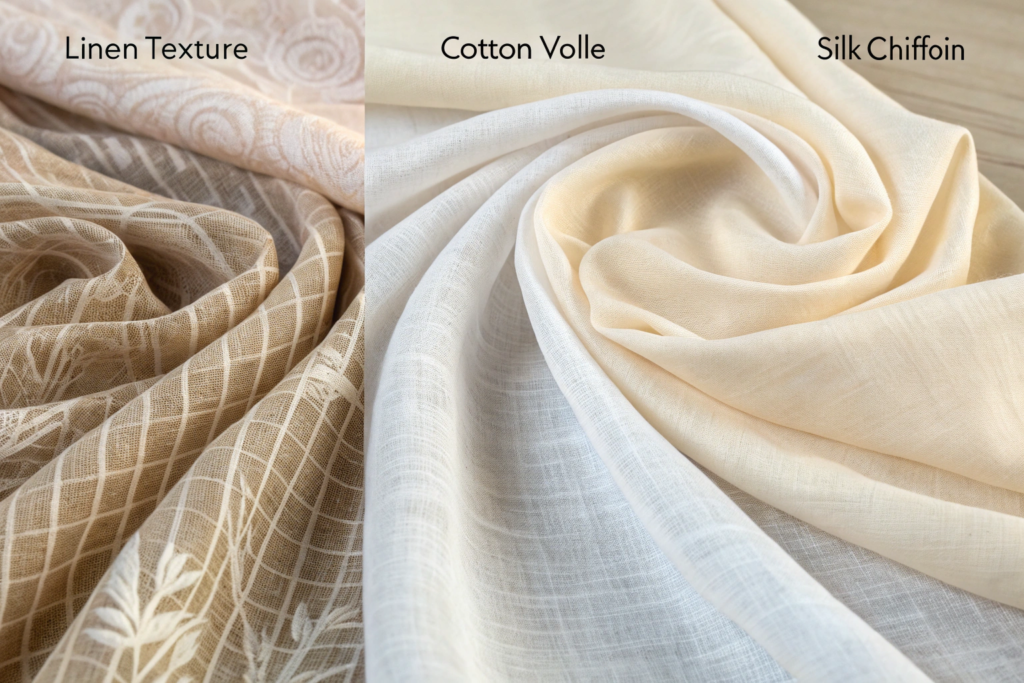
- Cotton Voile: A plain weave, semi-sheer fabric with a slightly crisp hand. It’s perfect for floaty blouses, sleeve details, and layered dresses.
- Cotton Lawn: Slightly heavier and more opaque than voile, but still very light. It has a smooth, fine texture with a subtle crispness, ideal for structured yet lightweight blouses and dresses.
- Cotton Poplin: A plain weave with a very smooth surface, offering a neat, polished look for shift dresses and tailored blouses.
- Seersucker: A textured cotton with a puckered stripe, literally designed to hold the fabric away from the skin to improve airflow. It’s the ultimate no-iron summer fabric.
For the softest, most luxurious feel, look for long-staple or extra-long staple (ELS) cotton like Supima, Egyptian, or Pima. These fibers are longer and finer, resulting in stronger, softer, and more lustrous yarns. A guide like this resource on cotton fabric weights and weaves can help differentiate them further.
How do silk and rayon achieve such a luxurious, fluid drape?
Drape is how a fabric falls and flows over the body. For summer dresses and blouses, a beautiful drape creates elegance and movement. Silk and rayon are masters of this, but for different reasons and at different price points.
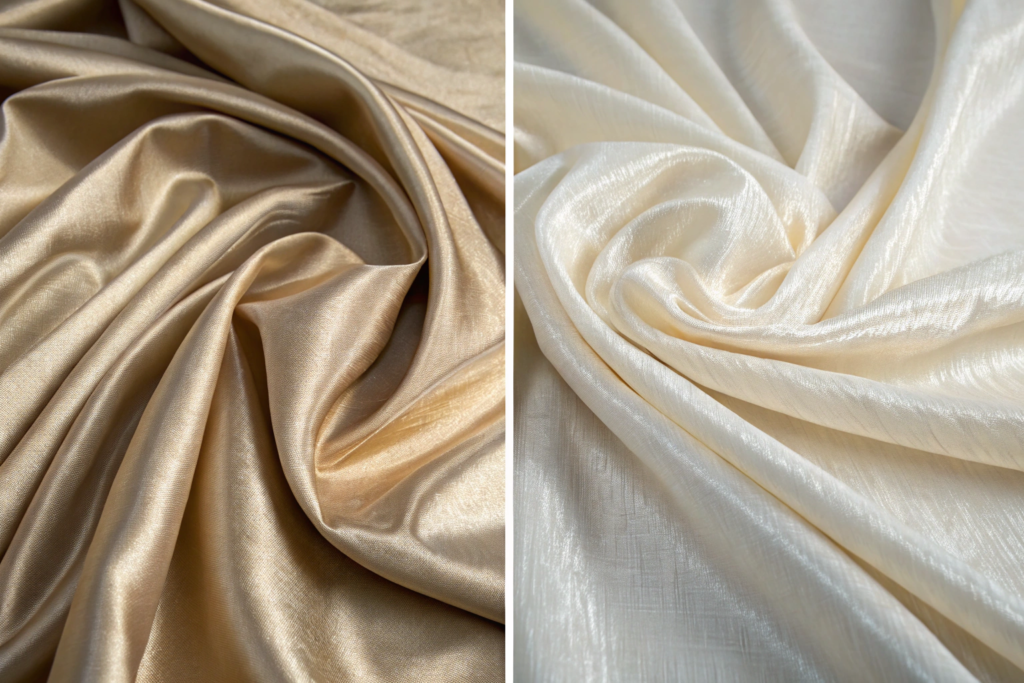
Both fibers produce filaments that can be spun into very fine, continuous yarns. These smooth yarns, when woven into loose constructions like chiffon, satin, or crepe, allow the fabric to glide and flow fluidly. Silk, a natural protein fiber, has a triangular prism-like structure that refracts light, giving it its signature luminous sheen. Rayon (also called viscose), a regenerated cellulose fiber, is engineered to mimic this smoothness and drape but is derived from wood pulp, making it more affordable. It’s exceptionally absorbent and cool to wear.
What are the key differences between silk and rayon in practical use?
Understanding their differences is crucial for sourcing the right fabric for your price point and care requirements.
| Characteristic | Silk | Rayon (Viscose) |
|---|---|---|
| Source | Natural (silkworm cocoon) | Semi-synthetic (regenerated wood pulp) |
| Hand Feel | Luxuriously smooth, strong, with a natural luster. | Very soft, smooth, excellent drape, can be matte or have a subtle luster. |
| Breathability | Excellent. Thermoregulating—warm in winter, cool in summer. | Excellent. Highly absorbent and cool. |
| Care | Delicate. Often dry-clean or hand-wash only. Can water spot. | Often machine washable (cold, gentle), but can shrink or weaken when wet. Must be handled carefully. |
| Cost | High | Moderate to Low |
| Sustainability Note | Traditional silk production has ethical concerns (silkworm killing). Peace Silk is an alternative. | Can be sustainable if sourced from certified forests (FSC) and produced in closed-loop systems (e.g., Tencel™ Lyocell). |
For a bestselling blouse style at Shanghai Fumao, we developed a washable silk option and a high-quality matte rayon alternative. The rayon version captured 70% of the sales due to its lower price point and easier care label, while the silk option served the luxury segment. Both were successful because we matched the fabric to the customer’s lifestyle.
Are there performance issues to watch for with rayon?
Yes, rayon requires specific handling. Its key weakness is loss of strength when wet. Garments can stretch or distort if not supported during washing. Always recommend cold, gentle machine wash or hand wash, and laying flat to dry—never wring. It can also be prone to wrinkling. However, advancements like lyocell (Tencel™) have improved this. Tencel™ is a type of rayon made in a more environmentally friendly closed-loop process. Its fibers are stronger, especially when wet, more wrinkle-resistant, and have a beautiful, fluid drape. It’s a superb, more durable choice for modern summer apparel. For deep dives into fiber properties, detailed guides on viscose/rayon characteristics are invaluable for designers.
Can lightweight technical fabrics compete with natural fibers?
The short answer is yes, and they are increasingly doing so. The old rule that "synthetics are hot" is being rewritten by innovative fiber engineering aimed precisely at summer comfort.
Modern performance synthetics are designed to actively manage moisture and heat. Polyester is no longer a single category. Moisture-wicking polyester is engineered with microscopic channels that pull sweat away from the skin to the fabric’s outer surface, where it evaporates quickly. This keeps the wearer dry. Sun-protective fabrics often have a tight weave or a special coating to achieve a high UPF (Ultraviolet Protection Factor) rating, crucial for beach cover-ups or outdoor summer wear. Quick-dry nylon is another excellent choice for active summer dresses or travel wear, as it sheds water and dries in minutes.
What are "cooling" fabric technologies, and do they work?
They are not a gimmick. Technologies like Coolmax® (by The Lycra Company) or 37.5® Technology embed permanent particles into the fiber that enhance evaporation. Some fabrics have phase-change material (PCM) microcapsules that absorb excess body heat. In our CNAS-certified lab, we tested a lightweight 100% polyester fabric with a cooling finish against a standard cotton poplin of the same weight. The polyester fabric showed a surface temperature reduction of 2-3°C in a controlled warm environment after moisture application. For a 2024 collection of golf skorts and polo dresses, a US client chose a blend of recycled polyester with cooling technology. The feedback was overwhelmingly positive on comfort during activity, proving that in high-sweat scenarios, smart synthetics can outperform naturals.
How to source sustainable, high-performance summer fabrics?
The demand is for performance and responsibility. Look for:
- Recycled Polyester (rPET): Made from post-consumer plastic bottles, offering the performance of polyester with a lower environmental footprint.
- ECOMADE™ or similar polyesters: These are bio-based or use reduced-energy production processes.
- Tencel™ Lyocell (Modal): As mentioned, a superstar for its soft drape, strength, and eco-credentialed closed-loop production.
- Linen-Cotton-Rayon Blends: These tri-blends are becoming popular, combining linen’s breathability, cotton’s softness, and rayon’s drape into one easy-care fabric.
When sourcing, always ask for certifications like Global Recycled Standard (GRS) for recycled content or OEKO-TEX® STANDARD 100 for safety. An industry resource like Textile Exchange’s Materials Hub is excellent for comparing the impacts of different fibers.
What are the hidden sourcing and production pitfalls for lightweight fabrics?
Lightweight fabrics are beautiful but can be tricky to work with. Sourcing them successfully means anticipating and mitigating these challenges in your supply chain—from the mill to the cutting room.
The primary issues are transparency/opacity, dimensional stability (shrinkage and stretching), and handling during production. A fabric that looks perfect on the roll can behave differently when cut, sewn, and washed. You must account for this in your costing, pattern-making, and quality control processes. For example, a very fine chiffon may require 100% interlining or French seams, which increases fabric consumption and labor cost. A lightweight linen may have high shrinkage, requiring pre-washing (sanforization) before cutting.
How to manage shrinkage and distortion in production?
This is where your supplier’s expertise is critical. You must have clear conversations about pre-treatment.
- For Cotton Voile/Lawn: Specify if you need pre-shrunk or sanforized fabric. This chemical or mechanical process pre-shrinks the fabric, minimizing further shrinkage to 1-3%.
- For Rayon: Discuss pre-washing with the mill. Some advanced mills can do this at the fabric stage, stabilizing it before it’s shipped to you. If not, your garment factory must factor in fabric shrinkage (which can be 8-10%!) during pattern grading and allow for pre-washing of cut pieces or finished garments.
- For Silk Chiffon/Habotai: It often requires steam relaxing on the cutting table to allow it to "rest" and stabilize before cutting.
Always, always conduct your own wash testing on fabric samples before bulk production. In 2023, we helped a UK brand avoid a disaster when their sourced rayon crepe from another vendor shrunk 12% lengthwise in a test wash. We were able to provide a comparable Tencel™ crepe with pre-treatment, limiting shrinkage to under 3%.
Why does fabric opacity matter more than you think?
"Summer" and "sheer" often go hand-in-hand, but retail returns happen when a dress is more transparent than the customer expected. When sourcing, ask for the fabric’s opacity rating or simply do a "hand test." Place the fabric over your hand—can you see the skin and lines clearly? If yes, it will likely require a lining or slip. This decision impacts the garment’s cost, weight, and breathability. A fully lined chiffon dress will be less cool than an unlined one. Sometimes, the solution is a clever design: a self-lined bodice or a built-in slip. For a popular smock dress style, we developed a cotton-muslin blend that was lightweight but naturally opaque, eliminating the need for a lining and keeping the garment cool and cost-effective. Forums like PatternReview’s discussions on sewing sheer fabrics highlight these practical challenges from a maker’s perspective.
Conclusion
Selecting the best lightweight fabric for summer dresses and blouses is a nuanced art that blends science, aesthetics, and practical garment engineering. The ideal choice starts with prioritizing natural breathability from fibers like linen, premium cotton, and silk, then expands to include the exceptional drape of rayon and the smart performance of modern technical blends. Success lies not just in picking a beautiful swatch, but in understanding how that fabric will behave from the cutting table through to the customer’s closet—managing shrinkage, opacity, and care requirements with foresight.
By moving beyond generic categories and developing a deep knowledge of specific weaves, blends, and finishes, you can create summer collections that are as comfortable and durable as they are stylish. This expertise allows you to make informed sourcing decisions that align with your brand’s quality, cost, and sustainability goals.
Ready to source the perfect lightweight fabrics for your next summer collection? Partner with a supplier that offers both variety and deep technical knowledge. At Shanghai Fumao, we specialize in the full spectrum of summer fabrics—from rustic linens and delicate cottons to fluid Tencel™ and innovative cooling blends. Our team can guide you on pre-treatment options, shrinkage management, and selecting the right fabric for your specific design and price point. Let’s create summer pieces that your customers will love to wear. Contact our Business Director Elaine to explore our seasonal swatches: elaine@fumaoclothing.com.