Ever wondered how your waterproof jacket stays dry in a downpour or how your favorite vegan handbag gets its leather-like look? The secret often lies in coated fabrics. For fashion brands, outdoor gear manufacturers, and furniture makers, understanding the difference between PU and PVC coatings isn’t just technical jargon—it’s critical for selecting the right material that balances performance, cost, aesthetics, and increasingly, sustainability. Making the wrong choice can lead to products that crack, peel, or fail to meet consumer expectations.
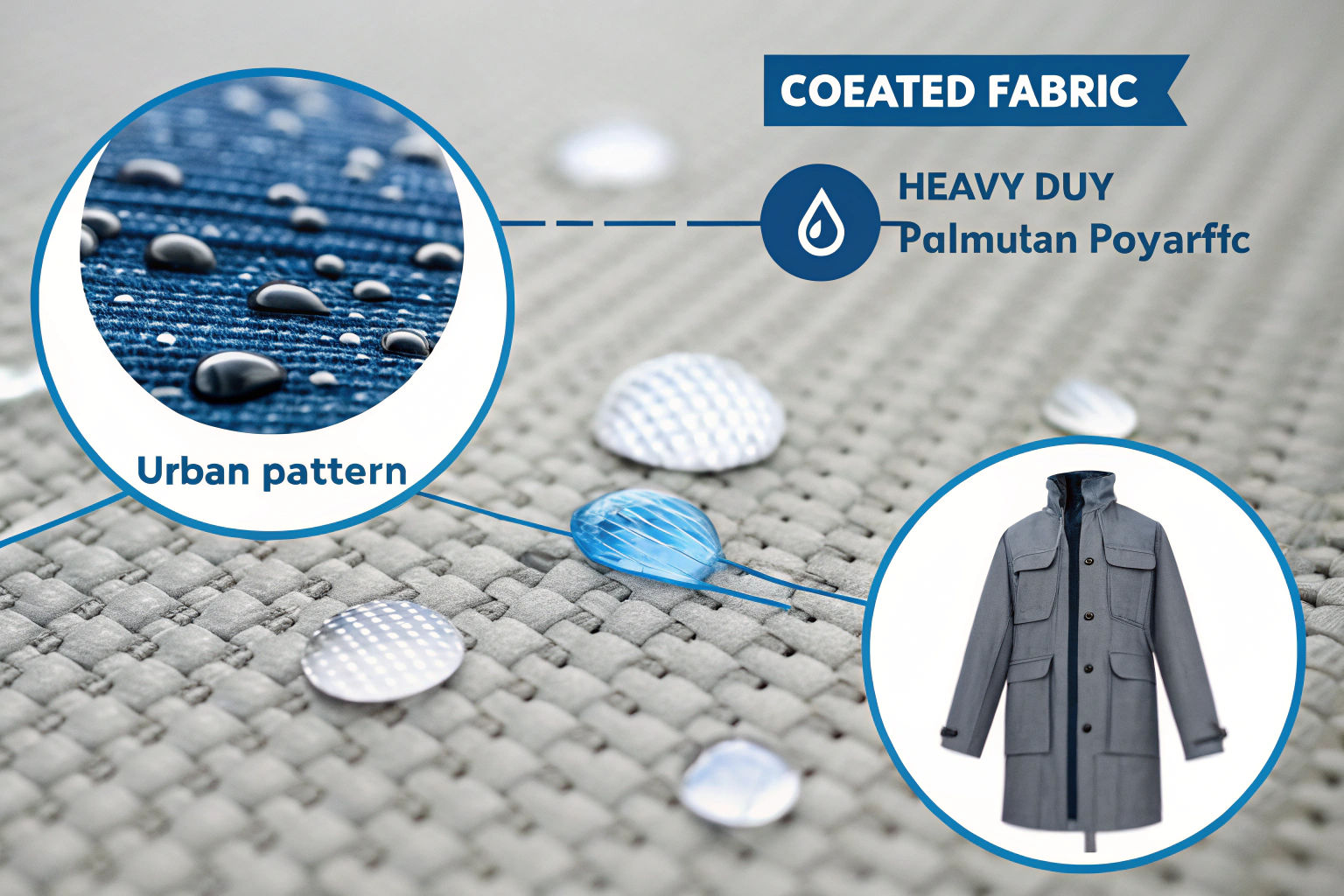
Coated fabrics are base textiles (like polyester or nylon) that have been treated with a polymer layer—most commonly Polyurethane (PU) or Polyvinyl Chloride (PVC). This coating transforms the fabric, granting it new properties like waterproofness, wind resistance, durability, and a specific texture or sheen. While both create functional barriers, their environmental impact, hand feel, and performance differ significantly. PU tends to be softer, more breathable, and eco-friendlier, while PVC is often more rigid, highly durable, and cost-effective.
At Shanghai Fumao, with our own coating factory in the Keqiao textile cluster, we see this decision daily. It’s not about one being universally better, but about which is right for your specific product. Let’s peel back the layers on PU and PVC to help you make an informed choice for your next collection.
What is the Core Difference Between PU and PVC Coatings?
The choice between PU (Polyurethane) and PVC (Polyvinyl Chloride) starts at the molecular level. Think of it as the difference between a flexible, breathable rain jacket and a sturdy, waterproof inflatable boat. Both keep water out, but their composition, feel, and ideal uses are worlds apart. For brands, this fundamental distinction impacts everything from product design to marketing claims.
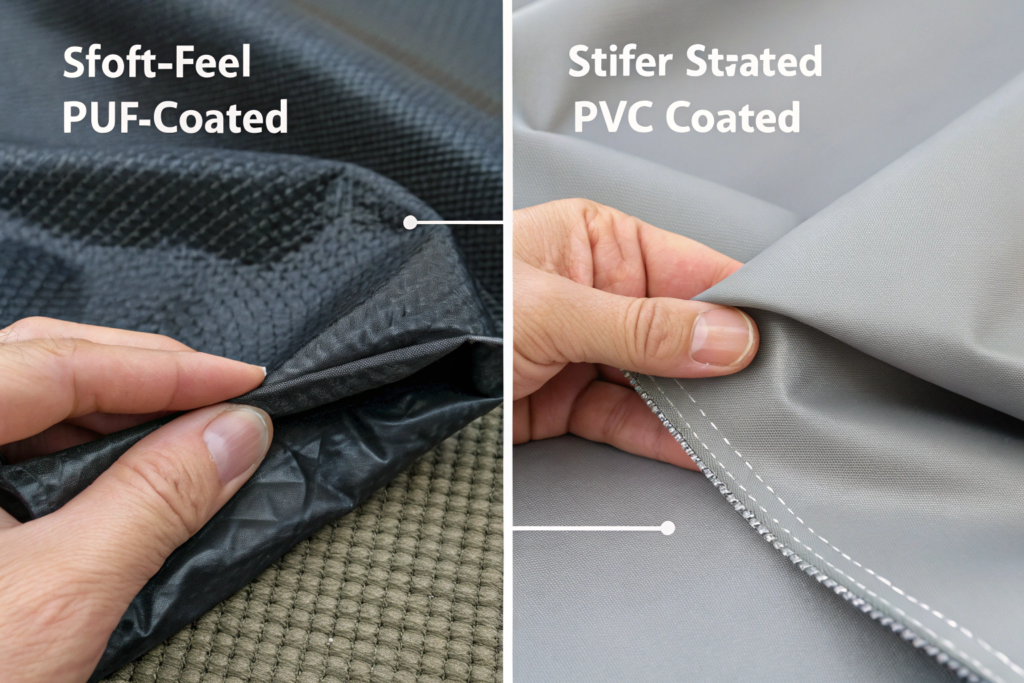
PU coating is essentially a layer of polyurethane applied to one side of the fabric. It can be done as a laminate (applying a pre-made PU film) or by direct coating (spreading a liquid PU formulation). The result is a fabric that remains relatively soft, supple, and importantly, microporous, allowing some air and vapor to pass through (breathability). PVC coating involves applying a paste containing PVC resin, plasticizers (like phthalates, which are increasingly regulated), and stabilizers. This creates a more substantial, often glossy, and completely impermeable layer. The plasticizers are what make PVC flexible; without them, it would be rigid like a pipe.
The environmental and performance gap is significant. PU is generally considered more environmentally progressive. High-quality PU coatings can be made solvent-free, and the base chemistry is more amenable to recycling and innovation (like bio-based PU). PVC has faced scrutiny due to the potential environmental and health impacts of certain plasticizers and the release of chlorine-based compounds if incinerated. However, advancements in phthalate-free PVC and REACH-compliant formulations are making PVC a more responsible option where its unmatched durability is required. For a deep dive into material science, the Specialty Fabrics Review provides excellent resources on the chemistry and evolution of textile coating polymers.
How Does Application Method Affect Fabric Performance?
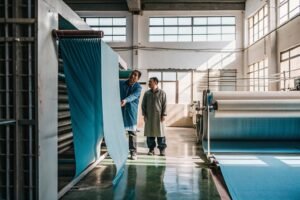
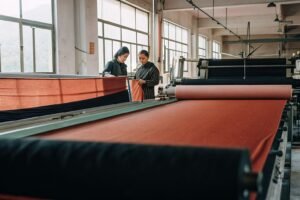
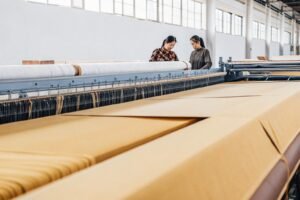
The way the coating is applied is as crucial as the material itself. At our Shanghai Fumao coating facility, we use different techniques based on the desired outcome:
- Direct Coating: Liquid coating is applied directly onto the moving fabric web. This is excellent for achieving specific weights and finishes and is common for both PU and PVC. It allows for great control over thickness.
- Transfer Coating (Release Paper Coating): The polymer is first coated onto a release paper with a precise texture (e.g., leather grain, pebble). The fabric is then laminated to it. Once set, the paper is peeled away, leaving a perfectly textured surface on the fabric. This is the secret behind high-quality vegan leather for bags and shoes. The texture and consistency are far superior to direct embossing.
- Lamination: A pre-manufactured polymer film is bonded to the fabric using heat and adhesive. This method ensures a perfectly uniform coating layer and is often used for high-tech waterproof breathable membranes.
In 2022, we worked with an emerging European sneaker brand on their line of vegan leather sneakers. They needed a material that had a consistent pebble grain, good abrasion resistance, and was certified free of restricted substances. By using a transfer-coated PU on a high-tensile knitted polyester base, we achieved a product that met their ethical standards and performance needs, with a yield strength 40% higher than their previous supplier’s offering. Understanding these processes is key, and forums like Leather Naturally often discuss the technical comparisons between coated fabrics and genuine leather.
What Are the Primary Applications in Fashion and Apparel?
In the world of fashion and apparel, coated fabrics are the workhorses behind functionality and aesthetic innovation. They allow designers to create statement pieces that are also practical. The choice between PU and PVC here often comes down to the garment’s purpose, desired price point, and the brand’s sustainability narrative.
PU coatings are the darlings of contemporary fashion and performance wear. Their soft hand feel, excellent drape, and ability to be made breathable make them ideal for:
- High-Fashion Outerwear: Designer raincoats, trench coats, and avant-garde jackets that need to look good and offer weather protection without feeling like a plastic bag.
- Performance Activewear: Lightweight rain shells, ski wear, and hiking gear where moisture vapor transmission (breathability) is as important as keeping rain out.
- Accessories & Footwear: The go-to material for modern vegan leather bags, wallets, belts, and shoe uppers. Transfer-coated PU can mimic everything from calfskin to exotic leathers with stunning accuracy.
PVC coatings find their strength in applications where extreme durability, water impermeability, or a specific glossy aesthetic are paramount:
- Protective Workwear: Heavy-duty rain gear, industrial aprons, and fishing bibs that need to withstand harsh conditions.
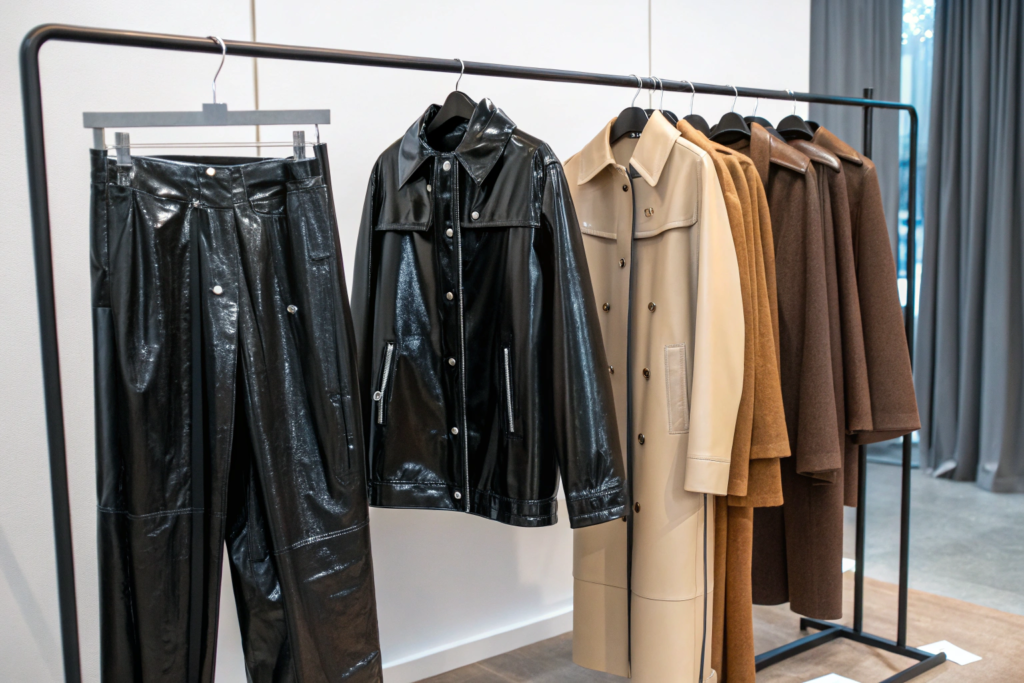
- Statement Fashion Pieces: The classic "wet look" jackets, boots, and accessories popular in certain subcultures and seasonal trends. The high-gloss, rigid finish is a deliberate aesthetic choice.
- Low-Cost Accessories: Where extreme cost sensitivity is a factor, PVC can provide a leather-like look at a very competitive price point, though this is shifting with rising material costs and regulations.
The trend is decisively moving toward PU and innovative alternatives. A major fast-fashion retailer we supply faced pressure to eliminate PVC from its global supply chain by 2025. We helped them transition their entire line of affordable outerwear jackets to a new generation of phthalate-free, polyether-based PU. This not only met their compliance goals but also improved the garment’s packability and softness, leading to a 15% reduction in returns due to "stiffness" complaints. Staying ahead of such trends is vital, and publications like Ecotextile News are essential for tracking sustainable innovations in synthetic materials.
Why is Breathability a Key Decision Factor?
For apparel, breathability isn’t a luxury; it’s a necessity for comfort. This is where PU typically outperforms PVC. Breathability in coated fabrics is measured by its Moisture Vapor Transmission Rate (MVTR), or how well water vapor (sweat) from your body can escape through the material.
- Microporous PU: The coating has microscopic pores that are small enough to block liquid water droplets but large enough to allow vapor molecules to pass. Think of it as a very fine sieve.
- Hydrophilic PU: This coating has no physical pores. Instead, it uses a chemical process to absorb moisture vapor on the inside, transport it through the polymer layer via molecular diffusion, and release it on the outside. It’s like a sponge moving water across itself.
PVC coatings are generally monolithic and non-porous, offering superb waterproofness but very low inherent breathability. Ventilation must be designed into the garment through zippers or mesh panels. When a US-based brand approached us for a line of urban commuter cycling jackets, they needed a fabric that was waterproof in a sudden storm but wouldn’t leave the rider soaked in sweat. Our solution was a bi-component laminated fabric using a hydrophilic PU membrane, which achieved an MVTR of over 10,000 g/m²/24h, meeting their stringent performance benchmark.
How Are Coated Fabrics Used in Technical and Industrial Sectors?
Beyond the runway, coated fabrics are engineering materials that solve tough problems. In technical and industrial applications, the demands shift from drape and fashion to extreme durability, chemical resistance, fire retardancy, and long-term weathering. Here, the inherent properties of PVC and specialized PUs come into their own.
This sector prioritizes function over form. PVC’s robustness makes it a champion here:
- Transportation: Truck tarps, life rafts, inflatable boats, and convertible tops. PVC-coated polyester is the standard for its excellent tensile strength, tear resistance, and long-term UV stability (with proper stabilizers).
- Architecture & Construction: Tensile membrane structures (like stadium roofs), industrial curtains, and temporary warehouses. PVC-coated glass fiber fabrics are dominant due to their dimensional stability and flame-retardant properties.
- Safety & Protection: Firemen’s hosepipes, chemical containment berms, and radiation shielding curtains. Specific formulations can be engineered to resist oils, acids, and alkalis.
PU coatings also have critical technical roles, especially where flexibility at low temperatures or abrasion resistance is key:
- Military & Tactical Gear: Covers, packs, and shelters that must remain pliable in Arctic conditions, where PVC can become stiff and brittle.
- Medical Applications: Coated fabrics for anti-static surfaces, protective covers, and certain types of inflatable splints where biocompatibility is a concern.
- Advanced Composites: As a component in some composite materials for added surface protection.
The choice is driven by specification sheets, not style guides. For a project supplying fabric for modular disaster relief tents to a UN partner, the requirements were brutal: must withstand 120-day continuous UV exposure, resist mildew, have a certified flame-retardant rating, and remain waterproof under 3000mm water column pressure. A high-tenacity PVC-coated polyester scrim fabric, with a top coat of PVDF (Polyvinylidene Fluoride) for extra UV protection, was the only viable solution. For engineers, resources like Industrial Fabric Association International (IFAI) are invaluable for specifying fabrics for architectural and industrial use.

What Testing Standards Matter for Industrial Fabrics?
| When your product is a stadium roof or a chemical container, failure is not an option. Compliance with international testing standards is the language of trust in this sector. Key tests include: | Test Standard | What It Measures | Why It Matters |
|---|---|---|---|
| ISO 1421 | Strength of coated fabrics (strip and grab tensile). | Ensures the fabric can bear mechanical loads without tearing. | |
| ISO 811 | Hydrostatic resistance (water column in mm). | Quantifies waterproofness under pressure (e.g., ponding water on a roof). | |
| ISO 5470-1 | Abrasion resistance (Martindale method). | Predicts how long the surface will last against wear and friction. | |
| ISO 4892 | Resistance to artificial weathering (Xenon arc). | Simulates years of sun, rain, and thermal cycling to forecast lifespan. | |
| EN 13501 / NFPA 701 | Fire behavior / Flame retardancy. | Critical for public safety in architectural and transport applications. |
Our in-house CNAS-accredited lab runs these tests routinely. It allowed us to quickly certify a new line of flame-retardant PVC tarpaulin for the Middle Eastern market, where certifications are a non-negotiable gateway for business. Providing this data upfront cuts months off the approval process for our clients.
What Are the Sustainability Trends and Future Alternatives?
The environmental conversation is reshaping the coated fabrics industry. While both PU and PVC are derived from fossil fuels, the industry is racing to develop more sustainable solutions across the entire lifecycle—from raw materials and production to end-of-life. For forward-thinking brands, this isn’t just about risk mitigation; it’s a powerful product story.
The sustainability push is multi-frontal:
- Bio-based & Recycled Inputs: Developing PU coatings using content from renewable sources like castor oil (e.g., partly bio-based PU) or using recycled polyester (rPET) as the base fabric. Post-consumer recycled PVC is also gaining traction in industrial applications.
- Cleaner Chemistry: Moving to water-based PU dispersions instead of solvent-based systems, reducing VOC emissions. Developing phthalate-free, heavy-metal-free plasticizer systems for PVC.
- End-of-Life Solutions: Innovations in chemical recycling of polyester-based coated fabrics are emerging, where the polymer coating and the fabric can be separated and recovered. Mechanical recycling into non-woven products is also an option for some waste streams.
- Novel Alternatives: The rise of next-gen materials like polyolefin-based coatings (TPO, TPU) and even bio-fabricated "leathers" grown from mycelium or other organisms. While not yet scalable for all applications, they point to the future.
At Shanghai Fumao, our R&D focus reflects this. We’ve invested in a new production line for water-based PU coating, reducing our solvent use by over 90% for those products. Furthermore, we’ve developed a popular line of fabrics using GRS-certified rPET base cloth with a bio-based PU top coat, which has seen 50% year-on-year growth from eco-conscious European brands. Tracking these innovations is key, and platforms like Material Innovation Initiative highlight the latest developments in next-generation sustainable materials.
How Can Brands Navigate Greenwashing and Make Credible Claims?
With so many "eco" claims, verification is everything. Brands must move beyond vague terms like "eco-friendly" and rely on third-party certifications that provide chain-of-custody verification. Key certifications to look for in your coated fabric supplier include:
- Global Recycled Standard (GRS): Verifies the recycled content in both the fabric and coating.
- OEKO-TEX® STANDARD 100: Confirms the final product is free from harmful levels of regulated substances—crucial for apparel touching skin.
- REACH Compliance: Evidence that the product complies with the EU’s regulations on restricted chemicals (e.g., phthalates in PVC).
- Environmental Product Declarations (EPD): A standardized report detailing the environmental impact of a product throughout its lifecycle (cradle-to-gate).
We advise our clients to be specific and transparent. Instead of "sustainable jacket," say "jacket made with 60% recycled polyester and a water-based PU coating, certified by OEKO-TEX®." This builds trust. A Canadian outdoor brand we partner with uses our certified fabrics and prominently features the certification badges on their hangtags and website, which they credit for a 20% increase in online conversion rates for their "Eco-essentials" line. For brands building their strategy, the Sustainable Apparel Coalition’s Higg Index tools are a benchmark for measuring and communicating environmental impact.
Conclusion
Choosing between PU and PVC coated fabrics is a strategic decision that ripples through your product’s performance, cost, consumer perception, and environmental footprint. PU offers a softer, more breathable, and increasingly sustainable path ideal for fashion, performance apparel, and high-quality vegan leather. PVC delivers unmatched durability and cost-effectiveness for demanding industrial, architectural, and protective applications, especially as its formulations become greener.
The future lies not in a simple binary choice, but in a spectrum of advanced materials—from improved bio-based PUs to responsibly managed PVCs and entirely new polymer chemistries. The key is partnering with a supplier that not only provides the material but also the expertise, transparency, and innovative drive to match your product’s needs with the right technical solution.
Ready to explore the right coated fabric for your next project? Shanghai Fumao’s integrated coating factory and R&D team are here to turn your concept into a high-performance, commercially viable reality. Contact our Business Director Elaine today at elaine@fumaoclothing.com to request samples and discuss your specific coating requirements.