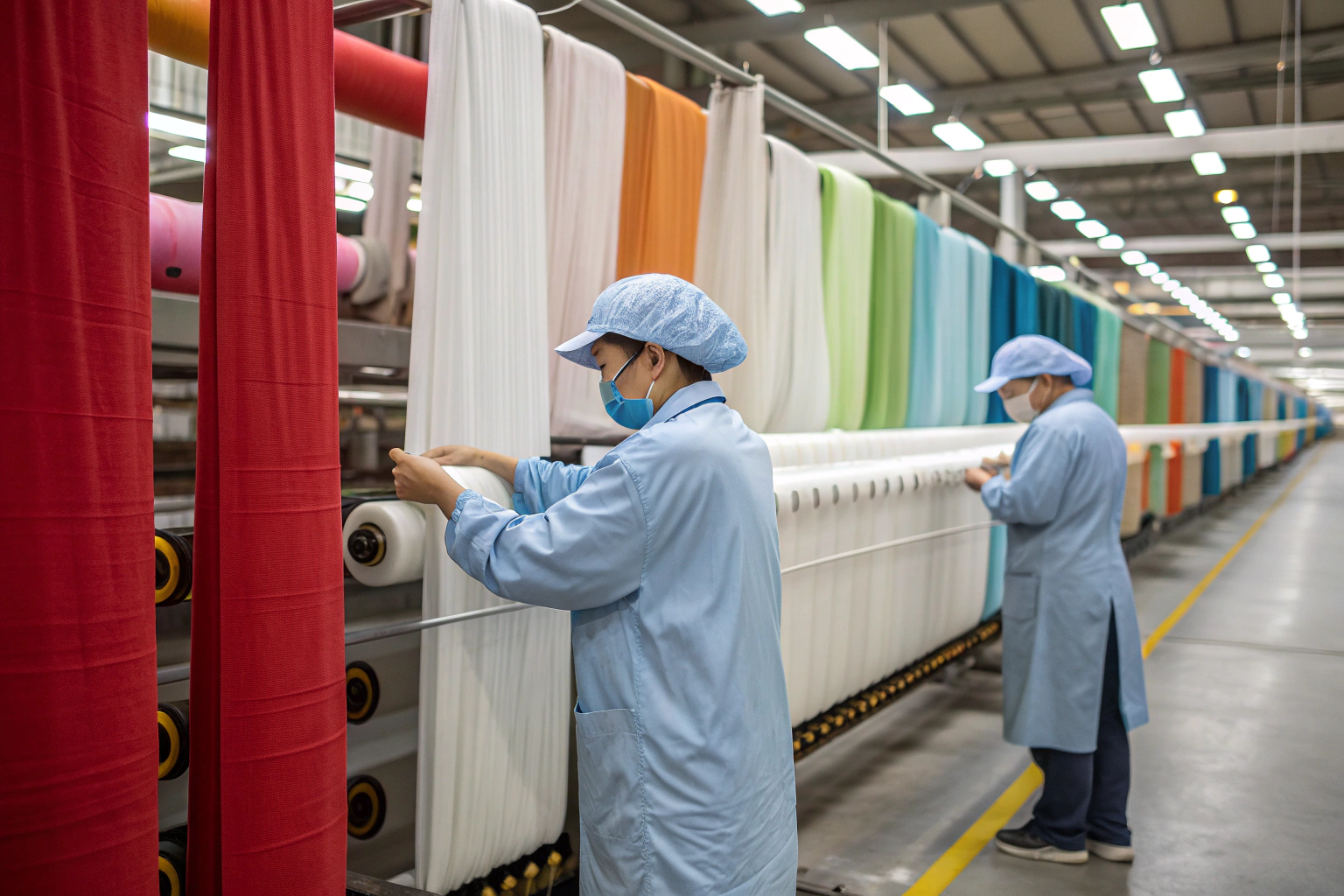
Keeping your fabric color consistent across a 10,000-meter order shouldn’t feel like a gamble. Yet, for many brands sourcing from Asia, achieving a perfect, uniform dye lot in bulk production remains a top challenge. Variations in shade from roll to roll can derail your entire production line, leading to costly delays, wasted materials, and compromised product quality. If you’re tired of playing color roulette with your offshore fabric supplier, you’re asking the right question.
The key to consistent dye lots lies not in a single magic step, but in a rigorously controlled, end-to-end process that integrates precise lab dips, standardized bulk dyeing procedures, and real-time digital quality tracking. It’s about moving from reactive inspection to proactive process control at every stage, from the chemical vat to the finished roll. This systematic approach is what separates reliable partners from inconsistent ones.
In this article, I’ll share the behind-the-scenes methods my team at Shanghai Fumao uses to lock in color consistency, drawing from over two decades in Keqiao’s textile hub. We’ll break down the practical steps, the critical control points most factories miss, and how modern technology is making predictable quality easier to achieve for overseas buyers.
What Are the Most Critical Steps for Color Matching Before Bulk Dyeing?
You can’t fix a bad color match in bulk. Getting the pre-production steps right is the absolute foundation for dye lot consistency. This phase is all about communication, precision, and setting an unshakable standard that the entire production run will follow. Skipping or rushing these steps is the most common reason for color disasters later on.
The non-negotiable steps are: 1) Obtaining a perfect physical lab dip approval against your standard, 2) Creating a comprehensive and locked Technical Data Sheet (TDS), and 3) Conducting a pilot or small batch run to confirm the process scales. The lab dip isn’t just a "color suggestion"; it’s the legal color contract between you and the factory. At Shanghai Fumao, we treat it as such, often creating 3-5 incremental dip options to hit the exact nuance a client wants.
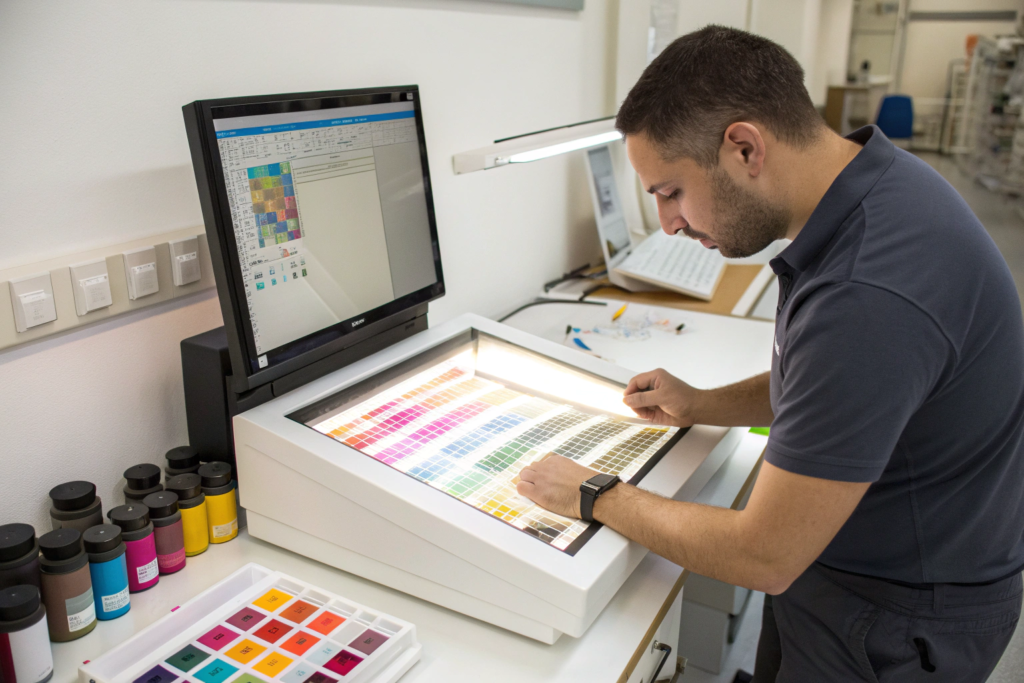
Many buyers don’t realize that the conditions of approval are as important as the swatch itself. A color that looks right under your office LED lights might look completely different under store halogen or natural daylight. This is where specifying the standard light source for color evaluation becomes critical. We always advise clients to approve lab dips under D65 (average daylight) and include a secondary check under the lighting their end-product will most likely be seen in. For more on this, the Society of Dyers and Colourists (SDC) offers excellent resources on the importance of metamersim in textile color approval.
Why is a ‘Locked’ Technical Data Sheet Your Best Insurance Policy?
Think of the TDS as the recipe and the lab dip as the taste sample. The TDS documents exactly how that "taste" was achieved: the specific dye stuffs (including their manufacturer and batch numbers), the exact chemical auxiliaries, the pH levels, temperature curves, and time parameters for every stage of dyeing. When this document is "locked" after pilot approval, it becomes the bible for production. Any deviation requires formal change control.
In practice, we use a digital TDS system where each parameter is logged and requires supervisor authorization to alter. For instance, a client in Germany sourcing organic cotton jersey for sustainable activewear needed absolute consistency across 15 sequential dye lots over 6 months. By locking the TDS from the first perfect pilot run—down to the specific lot of reactive dyes used—we achieved a Delta E (color difference measurement) of less than 0.8 across all batches, which is virtually imperceptible to the human eye. The Textile Institute’s forum has insightful discussions on managing dye recipe documentation for global supply chains.
How Does a Pilot Run De-Risk Your Entire Order?
The pilot run, or sample bulk run, is the final dress rehearsal. It’s where you take the approved lab dip and locked TDS and run a mini-production of 100-500 meters on the actual factory equipment that will be used for the full order. This step tests the scalability of the process and catches issues that a 20-gram lab dip never could—like how the fabric tension on a 200-meter beam dyeing machine affects dye uptake.
We once had a Scandinavian home textiles brand that skipped the pilot run to save two weeks on their timeline. Their chosen linen-blend fabric, which dyed perfectly in the lab, showed severe side-to-center shading in bulk because of the way the large jig dyeing machine circulated the dye bath. This resulted in 8,000 meters of unsellable fabric. A pilot run of even 200 meters would have revealed this, allowing for process adjustments like modifying the reel speed or dye bath flow. Learning from such mistakes is key, and platforms like Texintel often feature case studies on troubleshooting common fabric dyeing defects in bulk production.
How Can Digital and Process Control Ensure Consistency During Dyeing?
Once the dye vats start rolling, consistency shifts from planning to execution. This is where the real test happens. Even with a perfect recipe, variables in water quality, machine calibration, and operator handling can introduce variation. Controlling the dyeing process in real-time is what turns a good recipe into a great, repeatable product.
Modern consistency is achieved through a combination of Automated Process Control systems and rigorous Standard Operating Procedures (SOPs) for machine and chemical management. The goal is to remove human guesswork from the equation. Our partnered dye houses use computer-controlled dosing systems that inject dyes and chemicals with pharmaceutical precision, and they log every parameter—temperature, time, pH—digitally for each batch. This creates a traceable record.
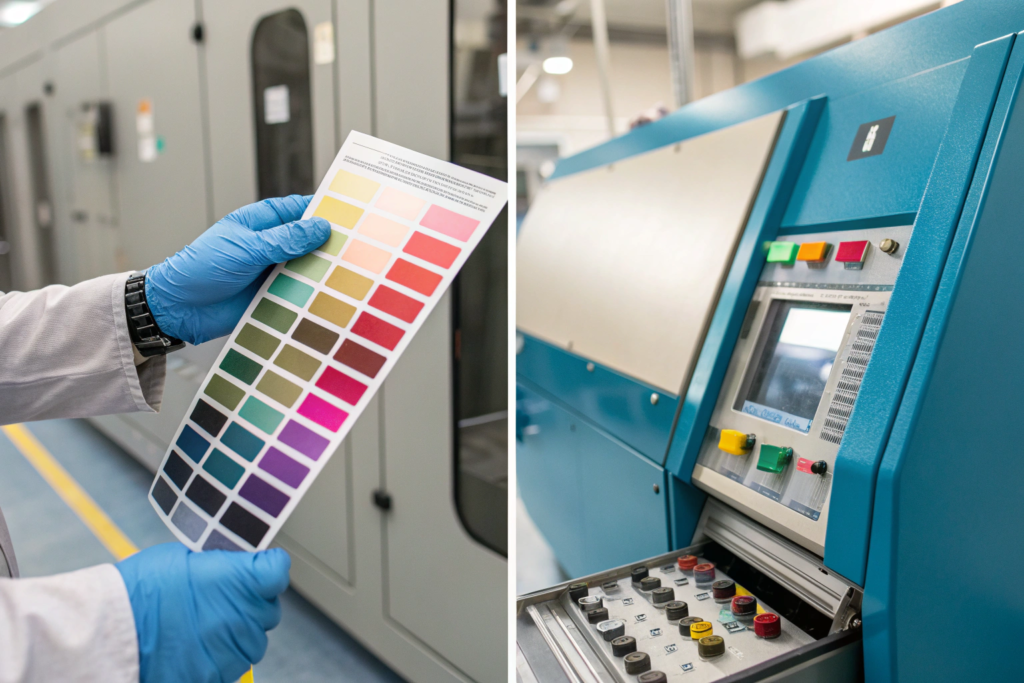
A major pain point for brands is the inconsistency between different dyeing machines, even in the same factory. A batch dyed on Machine #1 in March might not match a batch from Machine #2 in May. To combat this, we implement dyeing machine calibration and profiling. This involves running standardized fabric and dye recipes on each machine and measuring the output with a spectrophotometer to create a "machine profile." The recipe can then be fine-tuned for each specific machine to yield the identical color. Resources on Textile World often explore the latest advancements in automated dyehouse management systems.
What Role Does Water Quality and Chemical Management Play?
This is the "hidden variable" most buyers never think about. Textile dyeing is a wet process, and water is the primary medium. Variations in water hardness, pH, and mineral content from one day to the next can drastically alter dye fixation and final shade. A consistent dye lot starts with consistent input water.
Our protocol involves pre-treating all water to a defined standard before it enters the dyeing cycle. We also manage our chemical and dye stores with a "first-in, first-out" (FIFO) system and strict lot tracking. Using dyes from the same chemical lot number across an entire production run is crucial. For a recent project with a US-based athleisure brand producing moisture-wicking polyester blends, we coordinated with our dye supplier to reserve an entire lot of disperse dyes for their 50,000-meter order, eliminating one major source of potential variance. For deeper insights, the American Association of Textile Chemists and Colorists (AATCC) provides technical monographs on the impact of water chemistry on textile dyeing reproducibility.
How Does In-Line Monitoring Catch Drift Before It’s a Disaster?
Waiting until the fabric is dried and finished to check the color is way too late. In-line monitoring systems are the real-time safety net. These can be simple but effective, like taking a small "cutting" from the fabric as it exits the dye range (while still wet) and immediately checking it against the standard in a lab, or more advanced solutions like spectrophotometers mounted over the fabric stream.
(Here’s a practical tip from our floor: the wet fabric color is always darker than the final dried color. But the relationship is predictable. We establish a "wet-to-dry correlation" for each fabric type during the pilot run. This allows our QC team to make predictive judgments and even minor corrections on the fly while the batch is still in the machine, saving huge amounts of time and material. Discussions on Fibre2Fashion’s expert forums can shed light on practical methods for real-time shade monitoring in continuous dyeing ranges.
What Post-Dyeing Checks Guarantee Roll-to-Roll Uniformity?
The fabric is dyed, but the job isn’t done. Post-dyeing processes like drying, fixing, and finishing can also impact the final perceived color and hand feel. Furthermore, consistency isn’t just about one roll; it’s about ensuring every single roll in the order matches each other. This requires a structured release protocol before any fabric leaves the dye house.
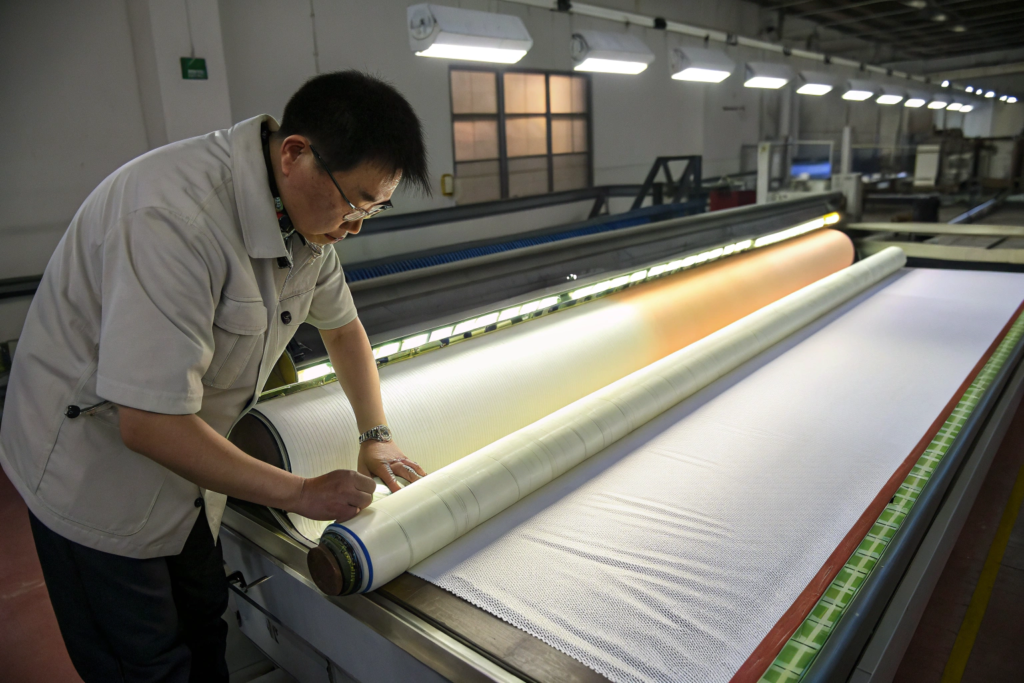
The final guarantee comes from a multi-stage release process: 1) Final shade approval on dried/finished fabric, 2) Side-to-side and end-to-end shading checks on full rolls, and 3) Inter-roll comparison using statistical sampling. We don’t just check a small swatch; we run the entire roll past an inspection frame with standardized D65 lighting, looking for any barre, streakiness, or shading issues across its full width and length.
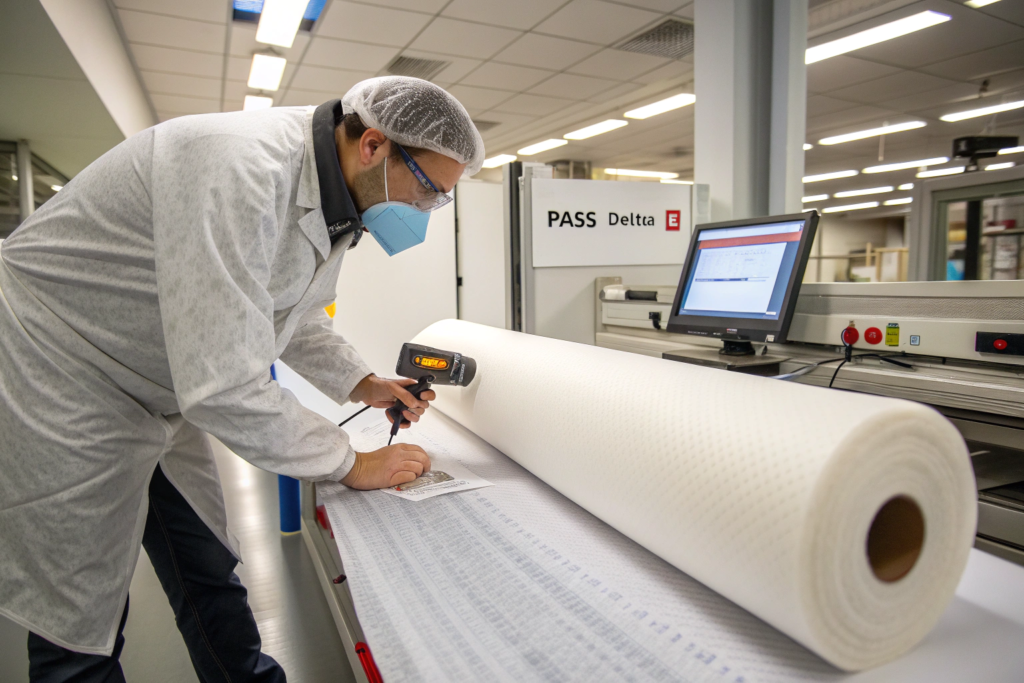
We use spectrophotometers for objective measurement, but the human eye under controlled lighting is the final judge for visual acceptability. Each approved roll gets a unique barcode linked to its digital quality passport, which includes all its process data and color measurement values (Lab*, Delta E). This level of traceability gives our clients, like a prominent French lingerie brand sourcing delicate stretch satins and laces, the confidence that Roll #45 will perfectly match Roll #12, even if they are cut months apart. The International Organization for Standardization (ISO) provides the framework for these checks, such as ISO 105-J03:2009 for calculating small color differences.
How is Shade Banding Used to Manage Commercial Acceptability?
In the real world, a Delta E of 0.0 across thousands of meters is physically impossible. The smart approach is to establish a mutually agreed-upon "shade band" or tolerance before production starts. This is a defined, acceptable range of color difference, usually expressed as a maximum Delta E value (e.g., Delta E CMC < 1.0 for solid shades).
All rolls within this band are considered a commercial match and can be used together in garment production. We provide clients with a shade band report for their entire lot, showing the measured Delta E of each roll against the master standard. This transparent data prevents arguments at the garment factory stage. For example, when producing heavyweight cotton canvas for an Australian workwear brand, we agreed on a slightly wider shade band (Delta E CMC < 1.5) due to the inherent variability of the natural fiber, which was clearly communicated and accepted, preventing any claims.
Why is Proper Packaging and Storage Part of Color Consistency?
It sounds simple, but improper storage can ruin a perfect dye lot. Fabric rolled under different tensions can crease, leading to "pressure marks" that look like color differences. Exposure to sunlight, humidity, or atmospheric contaminants (like ozone in industrial areas) can cause shade change or fading even before the fabric is cut.
Our protocol includes rolling fabric under consistent tension, wrapping it in neutral pH paper (not direct plastic contact which can cause condensation), and storing it in a clean, dark, climate-controlled warehouse. For sensitive fabrics like viscose or certain deep blacks, we might even use UV-protective wrapping. Ensuring your supplier has these basic warehouse controls is a non-negotiable part of preserving the quality you’ve paid for. Industry best practices for textile storage and handling to prevent quality degradation are often detailed by logistics and packaging specialists in the field.
How Can You Partner with Your Supplier for Better Dye Lot Control?
Achieving consistency isn’t just your supplier’s job; it’s a partnership. The most successful long-term relationships are built on clear communication, shared standards, and sometimes, joint investment in process improvement. As a buyer, your approach and specifications directly influence the outcome.
Be a partner, not just a purchaser. This means providing clear, physical standards (not just Pantone numbers), being available for timely approvals, understanding reasonable tolerances for your fabric type, and visiting the factory when possible. At Shanghai Fumao, we see our most successful clients as those who engage early, ask detailed questions about our control processes, and treat us as an extension of their own team. This collaborative spirit filters down to the factory floor and leads to better results for everyone.
Your sourcing strategy matters. Constantly jumping between 5 different factories for the same fabric based on price alone is a recipe for inconsistency. Building a deep, transparent relationship with one capable supplier allows for cumulative process knowledge and continuous improvement specific to your products. We invested in digital shade matching and tracking software partly because several of our key European partners expressed a shared need for better data, and it has paid off for all of us.
What Specifications Should You Always Include in Your RFQ?
| Your Request for Quotation sets the tone. To attract suppliers capable of consistency, your RFQ must go beyond "100% Cotton Poplin, Color: Navy." It should signal that you are a knowledgeable buyer who values quality control. Key specifications to include: | Specification | Example | Purpose |
|---|---|---|---|
| Physical Reference Standards | "Lab dips must match provided physical fabric swatch." | Eliminates digital color interpretation errors. | |
| Light Source for Approval | "Approvals will be conducted under D65 lighting." | Ensures color is judged under a consistent, standard light. | |
| Shade Tolerance | "Maximum acceptable Delta E (CMC 2:1) is 1.0." | Sets a clear, measurable quality target. | |
| Testing Standards | "Fabric must pass AATCC 61-2A colorfastness to washing." | Defines required performance beyond just initial color. | |
| Delivery Condition | "Fabric must be rolled on tubes, wrapped in pH-neutral paper." | Protects the fabric quality after it leaves the factory. |
Providing this detail upfront scares away unreliable suppliers and attracts serious, professional ones like us. It also forms the basis of your purchase contract. For help drafting comprehensive specifications, many independent sourcing consultants publish useful guides to writing bulletproof textile purchase orders.
When Should You Consider a Factory Audit for Dyeing Capability?
If your order volume is significant or your product is particularly color-sensitive, a dedicated dye house audit is worth the investment. Don’t just audit the trading company’s office; insist on visiting their core production partners. Look for:
- Process Control: Are there SOPs visibly posted? Do they use automated dosing?
- Lab Capability: Is the lab equipped with a computerized color matching system and a light box?
- Housekeeping: Is the dye house clean and organized? Sloppy housekeeping often correlates with sloppy process control.
- Records: Can they show you batch records and QC data from previous runs?
In early 2023, we hosted a potential client from the UK who was sourcing technical recycled polyester for outdoor gear. They spent a full day in our partnered dye house, reviewing calibration logs and water treatment systems. This hands-on verification gave them the confidence to place a 30,000-meter order, and the relationship has thrived on that foundation of transparency. Knowing what to look for during a textile dyeing facility assessment can be the difference between a successful partnership and a problematic one.
Conclusion
Consistent fabric dye lots are not a matter of luck; they are the engineered result of a disciplined, end-to-end system. It starts with precise pre-production communication and lab work, is executed through digitally controlled and monitored dyeing processes, and is verified by rigorous post-dyeing checks and proper handling. The variables are many—water, chemicals, machines, time—but each one can be measured, controlled, and standardized.
The most important factor, however, may be the partnership itself. Choosing a supplier like Shanghai Fumao that is embedded in a mature textile ecosystem and invests in process control technology is the first major step. The second is engaging as an informed partner, providing clear standards and valuing transparency over the absolute lowest price. When both parties are aligned on the goal of predictable quality, achieving roll-to-roll color consistency becomes a standard operating procedure, not a hopeful exception.
Ready to eliminate color surprises from your supply chain? Let’s co-create a process that delivers the consistent, high-quality fabric your brand depends on. Contact our Business Director Elaine today at elaine@fumaoclothing.com to discuss how we can bring precision and reliability to your next production run.