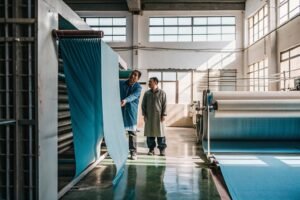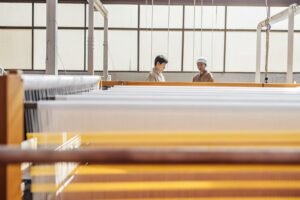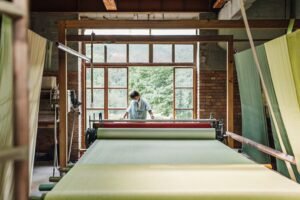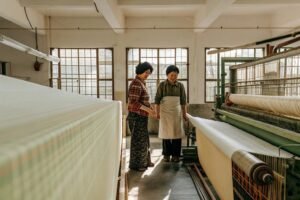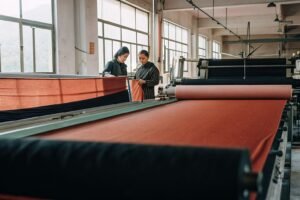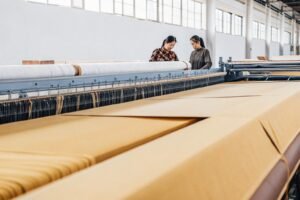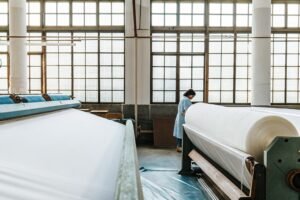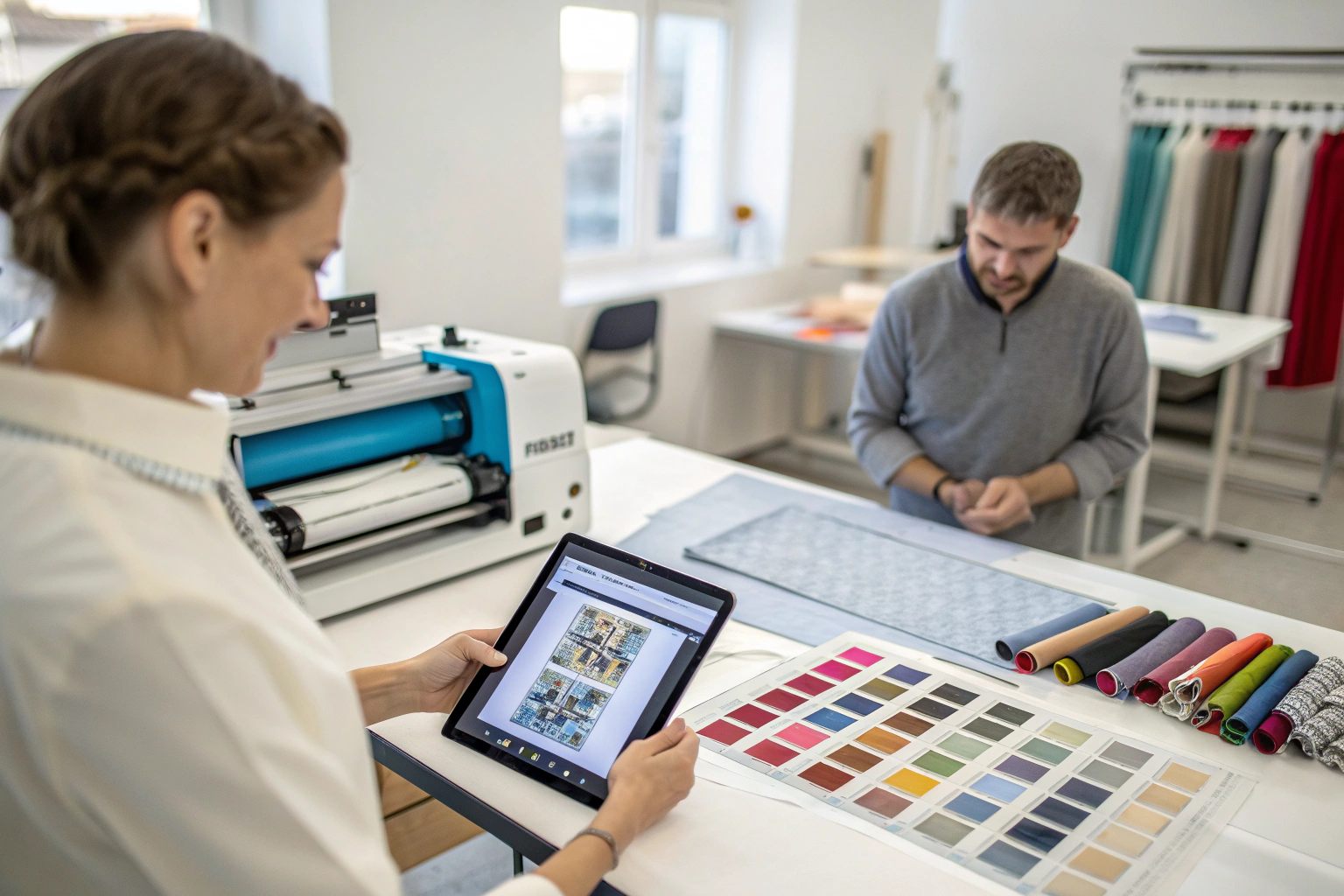
You have a brilliant idea for a sustainable clothing line. You’ve sketched the designs, you know your target customer, but you only need 500 meters of a custom recycled cotton blend to start. You contact a dozen manufacturers from an online directory, and the responses are either radio silence or a minimum order quantity (MOQ) of 10,000 meters that would bankrupt you before you even begin. This frustrating scenario stops countless indie brands and entrepreneurs dead in their tracks. Finding a partner who can turn your small-scale vision into tangible, high-quality fabric is the single biggest hurdle in launching a fashion brand today.
The key is to target specialized suppliers within major textile clusters who have built their business model around agility and flexibility, not just mass production. A true small-batch fabric manufacturer will offer MOQs starting from 100-500 meters per design/color, provide integrated development services (lab dips, strike-offs), and operate with a “studio” mindset that values collaboration over sheer volume. These partners are not found by searching for the largest factories; they are discovered by looking for those with dedicated “small-order” departments, digital on-demand platforms, or a core focus on innovation and sampling.
I’ve seen this from both sides of the table. In early 2024, a startup from Portland approached us with a concept for a biodegradable fabric blend for outdoor gear. They needed just 300 meters for their first prototype run. Our standard mills wouldn’t touch the order. But because Shanghai Fumao maintains a dedicated “Fumao Studio” line for runs of 300-1000 meters, we could leverage our in-house small-batch dyeing and finishing unit. We developed the fabric, and their successful Kickstarter campaign has now grown into a 5,000-meter annual order. That’s the potential you unlock. This guide will map out the practical, step-by-step strategy to find and vet the right manufacturing partner for your small-batch dreams.
Where to Look: Sourcing Channels for Small-Batch Manufacturers
The traditional sourcing playbook—attending massive trade shows or cold-calling giant conglomerates—will lead you to dead ends for small orders. You need to be strategic and look in the niches where agile operators thrive. Your sourcing channels must prioritize discovery of specialized capabilities over broad supplier lists.
Effective channels include targeted digital platforms that filter for low MOQs, niche trade show sections dedicated to innovation, and leveraging industry networks for referrals to “studio” producers. The goal is not to find the cheapest supplier, but the most aligned one. You are looking for a partner whose business model is structurally designed to handle lower volumes profitably, often through higher levels of automation, vertical integration of sample processes, or a focus on premium, innovative fabrics.
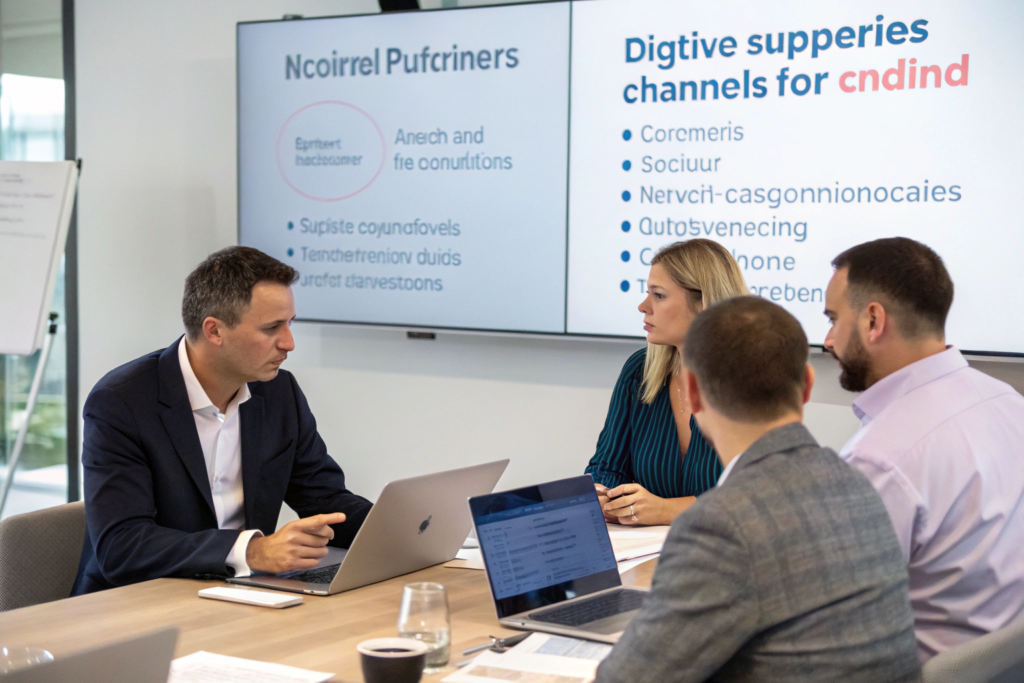
Which online platforms are best for finding low-MOQ suppliers?
General B2B marketplaces like Alibaba are overwhelming and geared toward bulk. You need platforms with advanced filters and verification for small-batch production.
- Specific B2B Platforms: Look for sites like Maker’s Row (US-focused but with offshore partners), Kompass (using advanced filters for “sample production” or “prototyping”), and even LinkedIn Sales Navigator. Use search terms like “small batch fabric mill,” “sample development service,” or “low MOQ textile producer.”
- Supplier Websites: A manufacturer’s own website is a goldmine of clues. Look for clear mentions of “Small Batch Services,” “Development Studio,” “Sampling Department,” or “On-Demand Manufacturing.” Pages dedicated to “Custom Fabric Development” or “Innovation Lab” are strong indicators. For example, on the Shanghai Fumao website, we clearly list our “Fumao Studio” service with a 300-meter MOQ, because we want to attract exactly these kinds of projects.
- Industry Forums & Communities: Niche online communities are invaluable. Engaging in discussions on platforms like The Fashion Group or Reddit’s r/streetwearstartup can yield personal recommendations. Often, the best small-batch suppliers are found through word-of-mouth in these circles. A useful thread to explore might be about tips for sourcing low MOQ custom fabric in Asia where real experiences are shared.
Are trade shows still relevant for small-batch sourcing?
Absolutely, but with a changed approach. Large shows like Première Vision (Paris) or Texworld are valuable for trend intelligence, but the real action for small batches happens in specific zones.
- Focus on “Innovation” and “Smart Creation” Zones: Major shows now have dedicated areas for smaller, agile companies. At Première Vision, the “Smart Creation” sector showcases sustainable and innovative suppliers, many of whom offer low-MOQ development. In China, the Intertextile Shanghai fair has a “Functional Fabric Zone” where many innovative mills display their sample capabilities.
- Regional & Specialized Shows: Consider smaller, focused fairs. In Europe, Techtextil focuses on technical textiles where development runs are common. In the US, Material World was historically a good resource. The key is to go with a mission: collect contacts from booths that explicitly mention sampling or small runs, and have prepared questions about their MOQ structure. Don’t just grab swatches; engage in a conversation about their process for a 500-meter order.
What to Look For: Key Capabilities of a True Small-Batch Partner
Finding a supplier who says they do small batches is one thing. Verifying they have the operational setup to do it well—and profitably for both parties—is another. You must look beyond the marketing and assess their tangible infrastructure, processes, and mindset.
A capable small-batch manufacturer will have a distinct operational model. This often includes: a separate sample/small-order production line to avoid disrupting bulk orders, in-house lab and sampling facilities (dye kitchen, sample loom/knitter), vertical control over key processes like dyeing or finishing to ensure consistency on short runs, and a project management team accustomed to guiding clients through a development timeline. Their pricing will be higher per meter than bulk, but it should be transparent and reflect the value of their flexibility and support.
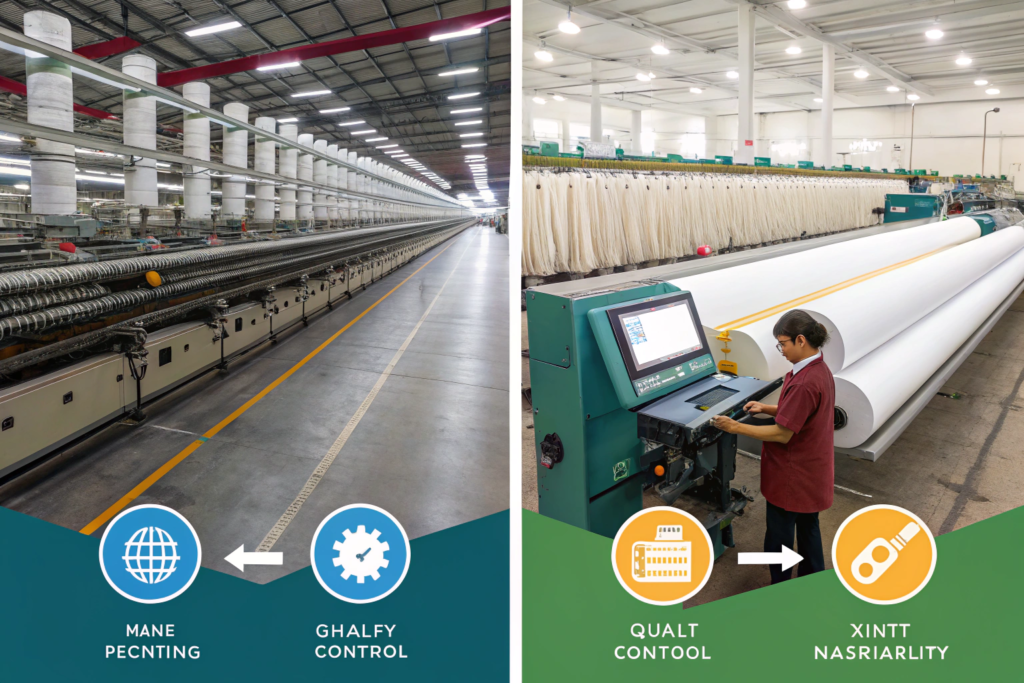
What questions should I ask about their production process?
Your initial discovery call or questionnaire must be technical. Their answers will reveal if they are truly built for small batches or just tolerating them.
- “What is your exact MOQ for woven/knitted custom fabric, and what does it include?” (A good answer: “300 meters for wovens, including lab dips, one strike-off, and standard testing.” A bad answer: “We can try 500m, but price will be very high.”)
- “Do you have separate machinery or time slots dedicated to small-batch production?” This is critical for scheduling reliability.
- “Which parts of the process are done in-house vs. outsourced?” The more processes kept in-house (especially dyeing), the better the control and communication for small runs. For a complex order involving custom jacquard fabric development with low MOQ, you need a supplier with direct access to a sample jacquard loom.
- “What is your standard timeline for a 500-meter development order, from approved lab dip to finished fabric?” Compare this to their bulk timeline. It should be shorter, as small batches can be agile.
We faced this test with a London-based designer in 2023. They asked all these questions and also requested a virtual tour of our small-batch dyeing facility. This showed they were serious, and our ability to show real-time footage of the facility secured the partnership. They now run all their exclusive prints through us.
How do I evaluate their development and communication support?
For small batches, the development phase is the production phase. The level of support is non-negotiable.
- Development Services: Expect and require lab dips (small yarn-dyed samples for color matching), handloom/knit-downs (small fabric samples for hand feel and construction), and strike-offs (printed design samples). A professional partner will include a set number of iterations in their development fee. Ask to see examples of their lab dip reports.
- Communication Protocol: Who will be your single point of contact? A dedicated account manager for small projects is a green flag. What communication tools do they use (Email, WhatsApp, Trello, PLM software)? Frequency of updates is key. You should expect weekly progress reports with photos during development.
- Technical Documentation: They should provide a detailed tech pack for the fabric itself, including composition, weight, width, finish, and test reports. This is your blueprint for consistency in future orders. Understanding the key components of a fabric technical specification sheet will help you evaluate what they provide. At Shanghai Fumao, we provide a digital QC passport with every small batch, linking to all test data and production notes, which builds immense trust.
How to Navigate Costs and Build a Viable Partnership
Let’s talk money. Small-batch customization has a different cost structure than bulk manufacturing. The unit price will be higher, and there are usually non-recurring engineering (NRE) or development fees. Understanding and budgeting for this is crucial to avoid sticker shock and to build a sustainable, transparent relationship with your manufacturer.
The total cost is comprised of: 1) Development Fees (covers staff time, sample materials, and machine setup), 2) Fabric Cost per Meter (higher due to lower efficiency and premium on small dye lots), and 3) Testing & Shipping Costs. A trustworthy supplier will break this down clearly upfront. The partnership becomes viable when you view this initial investment not just as fabric cost, but as R&D cost for your brand, yielding a unique product and a tested supply chain for scaling.
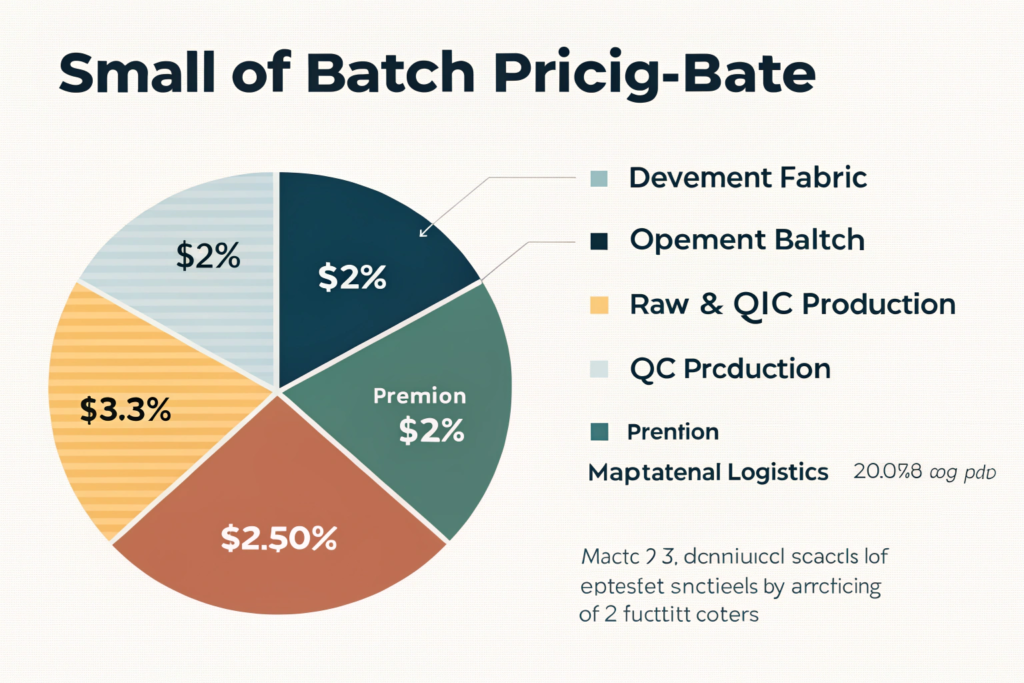
What is a reasonable cost structure for a small batch?
Beware of suppliers who give a single “per meter” price without context. A legitimate quote should be itemized.
- Development Fee: This can range from $200 to $1,500+ depending on complexity (e.g., a new fiber blend vs. a standard cotton in a custom color). This fee often includes 2-3 rounds of lab dips and one strike-off.
- Fabric Price per Meter: Expect to pay 1.5x to 3x the estimated bulk price for the same fabric. For example, if a cotton twill is $3/meter at 10,000m MOQ, a 500m order might be $5-$7/meter.
- Minimum Charge: Many mills have a minimum financial charge (e.g., $1,500-$3,000 per order) regardless of meterage to make the run economically viable.
A real case: A Los Angeles activewear brand needed a custom moisture-wicking fabric with a proprietary ceramic coating. Our development fee was $800 for lab dips and a 50-meter test run to verify performance. The per-meter cost for the first 500-meter batch was 2.2x our projected bulk price. They budgeted for this, and the successful fabric became the cornerstone of their line, allowing them to later place a 5,000-meter order at a near-bulk price.
How can I position myself as a valuable client?
Even with a small order, you can build a relationship that makes the supplier eager to work with you.
- Be Professionally Prepared: Have clear, concise tech packs. Provide physical reference samples or precise Pantone codes. The easier you make their job, the more willing they are to accommodate you.
- Communicate Clearly and Respectfully: Be responsive, consolidate feedback, and respect time zone differences. A collaborative attitude goes a long way.
- Show Scalability Potential: While being honest about your current needs, share your business vision. Suppliers are more invested if they see a path to growing together. Discussing strategies for scaling from prototype to bulk production shows you are thinking ahead.
- Be Loyal and Give Credit: If a supplier does great work on your small batch, give them repeat business and credit them in your brand story if appropriate. This goodwill is currency. At Shanghai Fumao, our most successful small-batch clients have grown with us, and we prioritize their new developments because of the strong, professional relationship we’ve built from day one.
Red Flags and How to Protect Your Project
The excitement of finding a potential partner can sometimes blind you to warning signs. Protecting your design, your budget, and your timeline is paramount when dealing with small-batch production, where margins for error are slim.
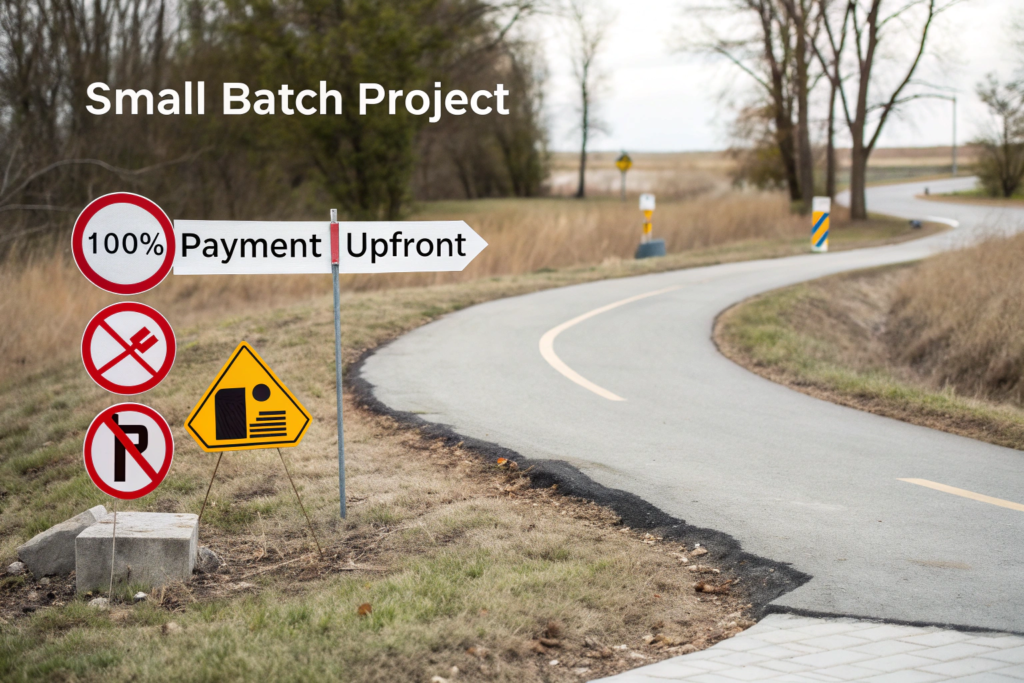
Major red flags include: vague or evasive answers about MOQ and pricing, no request for a detailed tech pack or specifications, inability to provide sample yardage or previous small-batch references, pressure for full payment upfront, and lack of a formal contract. Trust your instincts. If communication feels difficult during the quoting stage, it will only get worse during production.
What contractual terms are essential for a small-batch order?
A formal contract or detailed purchase agreement is your safety net. Do not proceed on a proforma invoice (PI) alone if substantial development is involved.
- Scope of Work: Clearly define what is included: number of lab dip revisions, strike-offs, meters of production fabric, and specific tests (e.g., wash fastness, shrinkage).
- Payment Schedule: A fair schedule protects both parties. A common structure is: 30% deposit to start development, 40% approval payment after lab dips/strike-offs are approved, and 30% balance before shipment. Never agree to 100% upfront.
- Intellectual Property (IP) Clause: This is critical. The contract must state that all designs, developments, and formulations created for your order are your exclusive property. The supplier cannot sell or use them for other clients.
- Confidentiality Agreement (NDA): Have a mutual NDA in place before sharing detailed designs or innovative concepts. For highly unique projects, like developing a fabric using legal safeguards for custom textile designs when outsourcing, this step is non-negotiable.
How do I manage quality control from afar?
You likely can’t travel to inspect 500 meters of fabric. Therefore, your QC process must be remote but rigorous.
- Pre-Production Approval: Do not approve bulk production until you have physically received and approved the strike-off/sample yardage in person. The color and hand feel on a screen are not reliable.
- In-Process Updates: Require the supplier to send photos or videos during key stages: yarn/dye lot, fabric off the loom, after finishing.
- Third-Party or Supplier-Led Final Inspection: Specify that the final fabric will undergo a full inspection (e.g., 4-point system) before shipping, and that the report will be shared with you. You can also hire a local third-party inspection company for the final check, which is a cost-effective insurance policy for a small but crucial order.
We integrate this for our clients. For every small batch, we send a video walkthrough of the finished rolls on our inspection machine, highlighting any points we note. This transparency has prevented disputes and built incredible trust, turning first-time clients into long-term partners.
Conclusion
Finding a fabric manufacturer for small-batch customization is a targeted search for agility over scale, partnership over transaction. It requires looking in the right places—niche platforms, innovation zones, and specialized studios—and then rigorously vetting for the operational capabilities, communication style, and transparent cost structure that make small-run production feasible. The journey is as much about building a relationship as it is about sourcing a material.
Success lies in clear preparation, professional communication, and a mutual understanding of the investment required. By approaching the process strategically, you transform the hurdle of low MOQs into an opportunity to create something truly unique and build a supply chain foundation that can scale with your brand’s growth. The right manufacturer won’t just see a small order; they will see the potential of your vision and partner with you to realize it.
If you are tired of hitting MOQ walls and are ready to develop your exclusive fabrics with a partner built for creativity and small-scale precision, let’s talk. At Shanghai Fumao, our Fumao Studio is dedicated to turning innovative concepts into tangible reality, with MOQs starting at 300 meters and a full suite of development support. We combine the resources of a major textile group with the agility of a design studio. Ready to bring your custom fabric to life? Contact our Business Director, Elaine, to start a conversation about your project. Email her at elaine@fumaoclothing.com. Let’s weave your vision, one small batch at a time.