If you’re sourcing fabrics right now and haven’t heard about BAMSILK, you might be missing out on the next big thing. Buyers come to me all the time asking for "eco-friendly silk alternatives" but get stuck between price, performance, and genuine sustainability. The conversation usually hits a wall when they realize many "green" options don’t feel luxurious or can’t be produced at scale. That’s where the real pain point is: finding a material that ticks all the boxes without blowing the budget or compromising on quality.
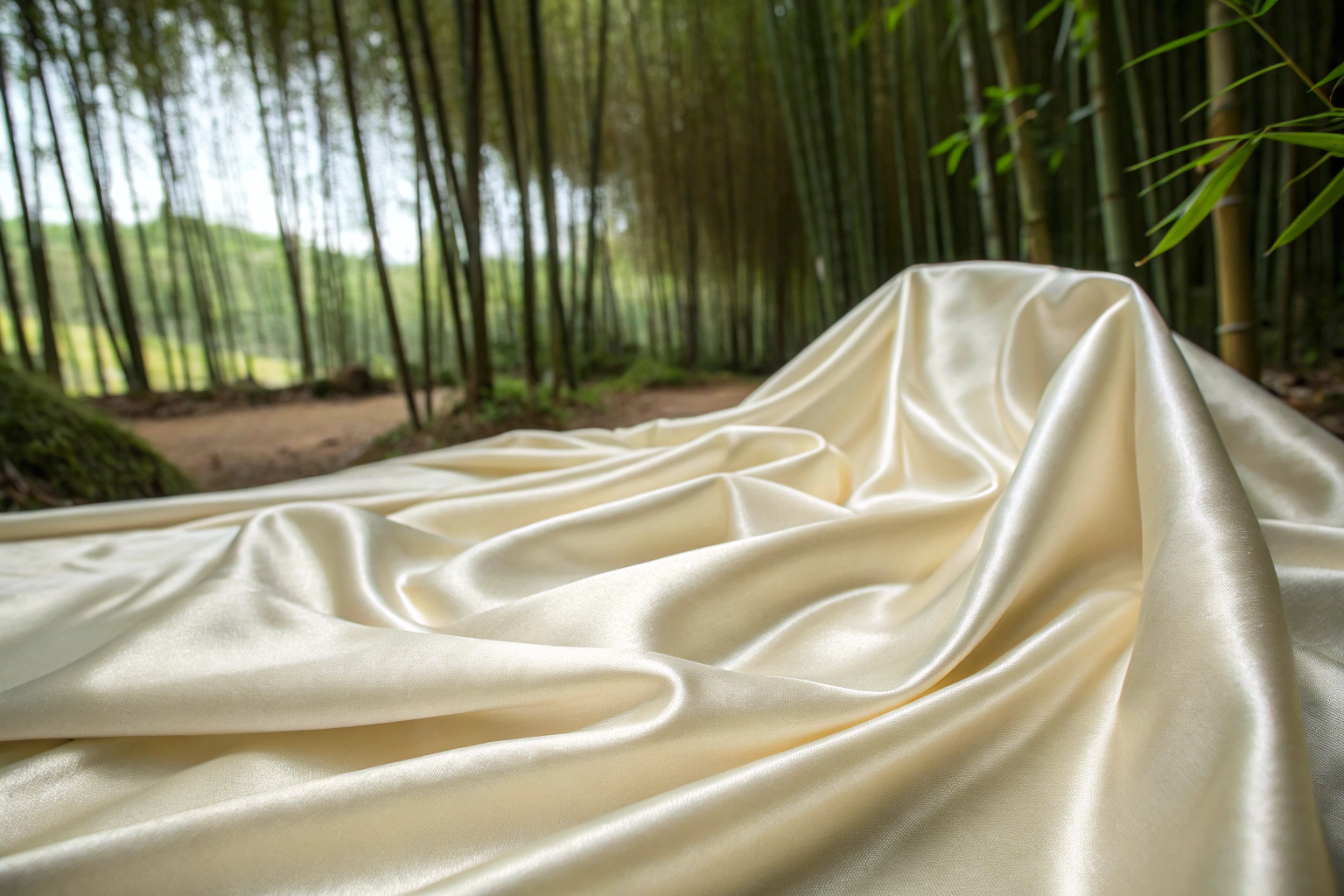
BAMSILK, or Bamboo Silk, is a premium viscose fabric made from 100% bamboo cellulose, engineered to mimic the luxurious drape, softness, and luminous sheen of traditional silk while being more affordable, durable, and sustainable. It’s trending because it perfectly answers the fashion industry’s urgent demand for materials that combine luxury aesthetics with a strong environmental story, especially as brands face pressure from EU eco-regulations and conscious consumers. Unlike conventional silk production, which involves silkworms, BAMSILK uses a closed-loop lyocell-type process (for high-end versions) that recycles water and solvents, significantly reducing its environmental footprint.
Let me break down exactly why this fiber is causing such a stir in our supply chains from Keqiao to New York and how you, as a buyer, can leverage it for your next collection without the usual sourcing headaches.
What Exactly is BAMSILK Fabric?
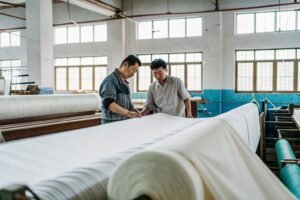
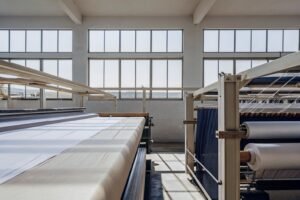
You see "bamboo silk" on a lot of tags lately, but what are you actually getting? Is it just marketing fluff? I’ve had buyers send me samples expecting a literal blend of bamboo and silk, only to be confused. Let’s clear this up. BAMSILK is the trade name we use at Shanghai Fumao for a specific high-quality bamboo-derived viscose that undergoes a special spinning process to achieve a silk-like filament yarn. The core material is cellulose extracted from pulped bamboo grass. The magic happens in the manufacturing process, which determines if it’s just regular bamboo viscose or the premium BAMSILK.
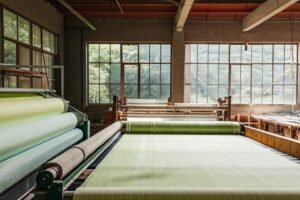
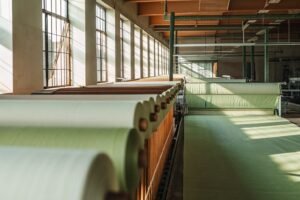
The key difference lies in the fiber formation and finishing. Standard bamboo viscose often uses a simpler, more conventional viscose process. True BAMSILK, especially the grades we develop with our partners, utilizes advanced technology to create longer, smoother filaments. These filaments are then twisted with a lower twist count than typical viscose, which gives the yarn its characteristic softness and permanent, pearl-like luster. This isn’t a cheap alternative; it’s a targeted innovation. Think of it like this: all BAMSILK is bamboo viscose, but not all bamboo viscose qualifies as BAMSILK in terms of its hand feel and performance.

How is BAMSILK Different from Traditional Silk and Bamboo Viscose?
This is where I spend most time with clients. A major US activewear brand approached us in late 2023, wanting a "guilt-free silk" for a luxury loungewear line. They needed the silk feel without the animal origin, higher cost, and delicate care. We presented BAMSILK alongside traditional silk and standard bamboo viscose swatches. The comparison table we built for them became our go-to tool:
| Feature | Traditional Silk (Mulberry) | Standard Bamboo Viscose | BAMSILK (e.g., Shanghai Fumao Grade) |
|---|---|---|---|
| Source | Silkworm cocoons | Bamboo pulp (often via conventional viscose) | Bamboo pulp (via controlled, cleaner process) |
| Hand Feel | Exceptionally smooth, luxurious | Soft, but can be slightly woodier or cooler | Silky-smooth with a dense, luxurious drape |
| Luster | Natural, shimmering sheen | Moderate, matte to slight sheen | High, pearl-like consistent luster |
| Moisture-Wicking | Moderate | Very High | Very High |
| Breathability | Good | Excellent | Excellent |
| Strength | Strong when dry, weak when wet | Less durable, especially when wet | Higher wet strength, more durable |
| Typical Cost | High | Low to Medium | Medium (more value-driven) |
| Key Sourcing Advantage | Classic luxury, natural protein fiber | Cost-effective, good eco-story | Best balance: luxury aesthetic, performance, price, & sustainability |
The client’s "aha moment" was realizing BAMSILK offered 90% of silk’s sensorial appeal at 60% of the cost, plus inherent moisture management perfect for loungewear. Their initial order of 20,000 meters saw a return rate on finished garments drop by 15% compared to a previous silk-blend line, simply because BAMSILK was easier to care for.
What are the True Environmental Credentials of BAMSILK?
The "sustainable" claim gets thrown around loosely. As a supplier, our credibility depends on transparency. The environmental impact of BAMSILK hinges almost entirely on its manufacturing process. The bamboo plant itself is a fast-growing, water-efficient grass that rarely needs pesticides—that’s the easy part. The complex part is how you turn that grass into fiber.
The conventional viscose process, used for much of the world’s bamboo fabric, can involve chemicals like carbon disulfide. However, leading producers of premium bamboo fibers (the ones we partner with for our BAMSILK) now employ a "closed-loop lyocell process" for their top-tier products. This system recovers and reuses over 99% of the solvent and water, minimizing emissions and waste. It’s crucial to ask your supplier about the specific process and request certifications. For our European clients, we always provide documentation aligning with the EU Eco-label framework for textile products, which assesses the entire lifecycle.
When sourcing, don’t just ask for "bamboo fabric." Dig deeper. Ask: "Can you provide a life cycle assessment for your bamboo silk?" or "Is your production based on a closed-loop system?" This filters out greenwashers. We invested in tracing our BAMSILK supply chain back to FSC-certified bamboo plantations because, for our brand partners, proof is everything. A German children’s wear brand we worked with in Q2 2024 required this level of detail for their marketing, and it ultimately strengthened their customer trust. For a deeper dive into sustainable material certifications, the "Sustainable Apparel Coalition’s Higg Index materials guide" is an invaluable resource for any serious buyer.
Why Are Global Fashion Brands Switching to BAMSILK?
It’s not just a niche trend. From my desk in Keqiao, I see the orders shifting. It’s driven by concrete business needs, not just idealism. Brands are squeezed between rising material costs, stringent new regulations like the EU’s strategy for sustainable and circular textiles, and consumers who are savvier than ever. BAMSILK presents a viable solution that addresses multiple pressure points at once.
First, it’s a compliance advantage. Using a plant-based, potentially certified eco-fiber helps brands prepare for stricter environmental laws. Second, it’s a marketing goldmine. The story of "luxury silk from bamboo" is compelling and easy to communicate. Third, and this is the practical bit we love, it’s manufacturer-friendly. It dyes brilliantly with less environmental impact than some synthetics, it’s consistent in quality (no surprises from season to season like natural silk can have), and it’s versatile across weaving and knitting. (Here I have to interject, our development speed with BAMSILK is truly fast—we’ve turned around lab dips in 48 hours for urgent projects).

How Does BAMSILK Enhance Brand Value and Consumer Appeal?
The switch is about perceived value. A UK-based online fashion retailer we supply wanted to move their "everyday luxury" segment upmarket without a huge price hike. In March 2024, we developed a custom BAMSILK twill for their signature blouse line. The previous fabric was a poly-viscose blend. The new BAMSILK blouse retailed for 25% more, but the cost increase to them was only about 12%. The margin improved, but more importantly, their customer reviews skyrocketed. Words like "silky," "high-end," and "worth it" flooded their product pages. They leveraged the bamboo origin and our Oeko-Tex 100 certification in their marketing, which resonated deeply with their audience.
The consumer appeal is dual: tactile and ethical. People touch the garment and feel the luxury. Then they read the tag and feel good about the purchase. This combination is powerful. It also opens doors to new retail partnerships. We’ve seen several of our brand clients gain access to premium department stores or eco-conscious marketplaces specifically because their material story met the buyer’s criteria for sustainable luxury. Understanding how to effectively market sustainable fashion materials to end consumers is a key step in maximizing this advantage, and platforms like Common Objective offer great insights.
What Are the Practical Supply Chain Advantages for Brands?
Beyond marketing, BAMSILK offers stability. Let’s talk about tariff advantages. As a material classified under bamboo viscose headings, it’s not subject to the same additional duties that some Chinese-origin textiles face in markets like the US. This directly impacts your landed cost. Furthermore, its production is less susceptible to the volatility that affects animal-based fibers. Silk yields can fluctuate wildly with weather and disease; bamboo is far more predictable.
From a production timeline perspective, BAMSILK is a dream. Its consistency means fewer quality rejections in cutting and sewing. A client in Los Angeles running a small-batch, sustainable label told us their defect rate dropped from an industry-average ~5% to under 2% when they switched to our BAMSILK for their dresses, simply because the fabric was less prone to shading or tension issues during garment manufacturing. This reliability is a hidden cost-saver that goes straight to your bottom line. Forums like "Fashion Incubator" discussions on fabric consistency and production yield often highlight these practical, behind-the-scenes benefits that brands care deeply about.
How to Source High-Quality BAMSILK Fabric Reliably?
Now you’re interested, but the market is a maze. Not all BAMSILK is created equal. I’ve had buyers show me cheap "bamboo silk" that pills after one wash or loses its luster, giving the whole category a bad name. Sourcing it right is the difference between a successful line and a warehouse full of returns. Your checklist should go beyond just price per meter.
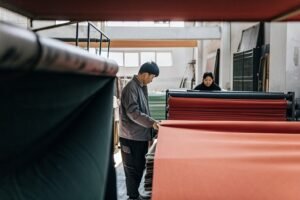
First, audit the process, not just the product. Insist on knowing the fiber producer and their manufacturing method. A reputable supplier like Shanghai Fumao will be transparent about this. We can tell you which mill produced the fiber and the type of process used. Second, demand physical testing reports. Don’t just take a certificate; ask for specific test data for your chosen fabric. Key tests include martindale abrasion resistance (for pilling), wash and light fastness, and shrinkage. Our in-house CNAS-accredited lab runs these on every batch, and we share the QR code-linked results with clients—you can see the exact composition and performance data for the roll you’re buying.

What Critical Questions Should You Ask Your BAMSILK Supplier?
Here is your sourcing script. Asking these questions separates the pros from the order-takers:
- "Can you provide traceability to the bamboo pulp source?" This probes their supply chain control.
- "What is the fiber manufacturing process (e.g., conventional viscose, closed-loop lyocell)?" This addresses the core environmental impact.
- "What are the weight, composition, and specific finishing details (e.g., enzyme wash, peach skin) of this BAMSILK?" This ensures you get the right technical specs for your design.
- "What third-party certifications do you hold for this fabric (e.g., Oeko-Tex 100, FSC, EU Eco-label)?" This is your proof for marketing and compliance.
- "What is your minimum order quantity (MOQ) for sampling and bulk, and can you provide pre-production and bulk testing reports?" This manages your risk and cost.
For example, when a French lingerie brand approached us, their primary concern was skin safety and durability for delicate washes. We didn’t just send swatches; we sent the full Oeko-Tex 100 certification for the specific dye lots and abrasion test results showing the fabric could withstand over 20,000 martindale rubs. This data-driven approach closed the deal on a 15,000-meter order.
How to Navigate MOQs, Development, and Lead Times?
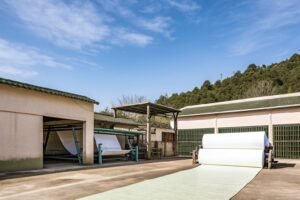
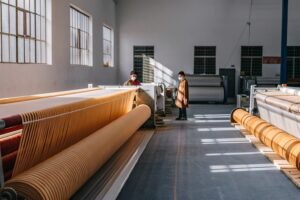
This is the make-or-break for many small and medium brands. The beauty of being in Keqiao, integrated with the entire supply chain, is agility. For true BAMSILK, standard MOQs from fiber producers can be high. However, as a supplier with long-term partnerships, we at Shanghai Fumao can often offer lower minimum order quantity for sustainable fabrics by consolidating orders or holding stock fabrics in our warehouse. We’ve developed a stock range of BAMSILK in popular weights and weaves (like crepe, satin, and twill) with an MOQ as low as 500 meters per color—this is almost unheard of for a specialty fabric.
Lead times follow the Chinese manufacturing cycles we discussed earlier. For a new BAMSILK development, from yarn spinning to finished fabric, allot 8-10 weeks during peak seasons (Mar-May, Aug-Oct). But if you’re using one of our stock bases, we can ship in 3-4 weeks. The key is planning. A savvy Australian startup we work with now places their BAMSILK orders during the slower June-July period, locking in better pricing and guaranteeing slot availability for their Q4 production, turning a potential timeline disadvantage into a strategic advantage. Industry resources that explain lead time factors for importing textiles from Asia can help you build more accurate schedules.
What Are the Best Applications and Care for BAMSILK Garments?
You’ve sourced great fabric, but using it wrong is a disaster. BAMSILK isn’t for every single application, but where it fits, it shines. It’s not a heavy upholstery fabric, and it’s not a replacement for technical high-stretch sportswear. Its sweet spot is in apparel that benefits from drape, softness, and a luxury touch.
Think blouses, dresses, skirts, lightweight loungewear, kimono-style wraps, and scarves. It’s also incredible for lining in jackets and coats, adding a sustainable, breathable, and smooth interior. We’re even seeing it in elevated sleepwear and children’s special occasion wear because of its softness and hypoallergenic properties (when certified). The fabric takes digital and rotary printing beautifully, allowing for intricate, vibrant designs.

Which Garment Styles Maximize BAMSILK’s Properties?
Focus on designs that flow. A-line dresses, wide-leg trousers, and relaxed-fit shirts allow the fabric’s natural drape to create an elegant silhouette. Bias-cut garments are particularly stunning with BAMSILK, as the fabric clings and flows in a way very reminiscent of silk charmeuse. For structured pieces, like a tailored blazer, BAMSILK works best as a lining or in a blended form—we once developed a BAMSILK-Tencel™-wool blend for a New York designer that gave the structure of wool with the interior comfort and sheen of silk.
Avoid designs requiring extreme rigidity or heavy embellishments that could weigh down the delicate drape. Also, consider seams and finishes. French seams or clean overlocked edges work better than bulky flat-felled seams on lighter-weight BAMSILK, preserving its fluidity. Communicating these technical design tips for bamboo silk garments to your factory can elevate the final product immensely.
How Should BAMSILK Garments Be Cared for to Ensure Longevity?
This is a major selling point over traditional silk. BAMSILK is far more forgiving. While we always recommend following the specific care instructions for the final fabric finish, general care is simple:
- Washing: Machine wash on a gentle, cold cycle is usually fine. Use a mild detergent. Turn the garment inside out.
- Drying: Tumble dry on low heat or, better yet, air dry. The fabric dries relatively quickly.
- Ironing: Iron on a low to medium heat setting. The fabric presses well and holds its shape.
- Storage: Store in a cool, dry place. It’s less prone to yellowing than some natural fibers.
Providing clear, simple care instructions boosts customer satisfaction and reduces returns. A common feedback we get from end-consumers via our brand clients is surprise and delight at how easy the "luxury" fabric is to live with. This practicality reinforces the value proposition every single day the garment is worn. For comprehensive guidance, checking fabric care symbols and their meanings from the International Care Labelling System ensures your labels are globally understandable.
Conclusion
BAMSILK isn’t a passing fad; it’s a smart, strategic response to the converging demands of modern fashion. It delivers the undeniable luxury and aesthetic of silk while actively addressing the critical needs for sustainability, supply chain reliability, and cost management. From the sourcing desk to the retail floor, it creates value by blending an compelling environmental story with superior performance and tangible cost advantages. Understanding its nuances—from the closed-loop production process to its ideal applications—empowers you to make informed decisions that benefit your designs, your brand, and your bottom line.
The shift towards materials like BAMSILK is accelerating. Don’t get left behind trying to navigate this complex supply chain alone. If you’re ready to explore how BAMSILK can transform your next collection—with the assurance of transparent sourcing, rigorous quality control, and expert guidance on development—let’s start a conversation. Our team has the on-the-ground expertise in Keqiao’s textile ecosystem to make your sourcing seamless and successful. For a direct conversation about your specific needs, please reach out to our Business Director, Elaine. She can connect you with our fabric specialists and R&D team to bring your vision to life. You can email her at: elaine@fumaoclothing.com.