You’ve seen the OEKO-TEX® label on clothing tags and supplier websites. You know it means "tested for harmful substances." But what does that actually mean? What specific substances are they looking for, and how do they decide if a garment passes or fails? Without understanding the testing criteria, you can’t fully assess the value this certification brings to your brand or hold your suppliers accountable.
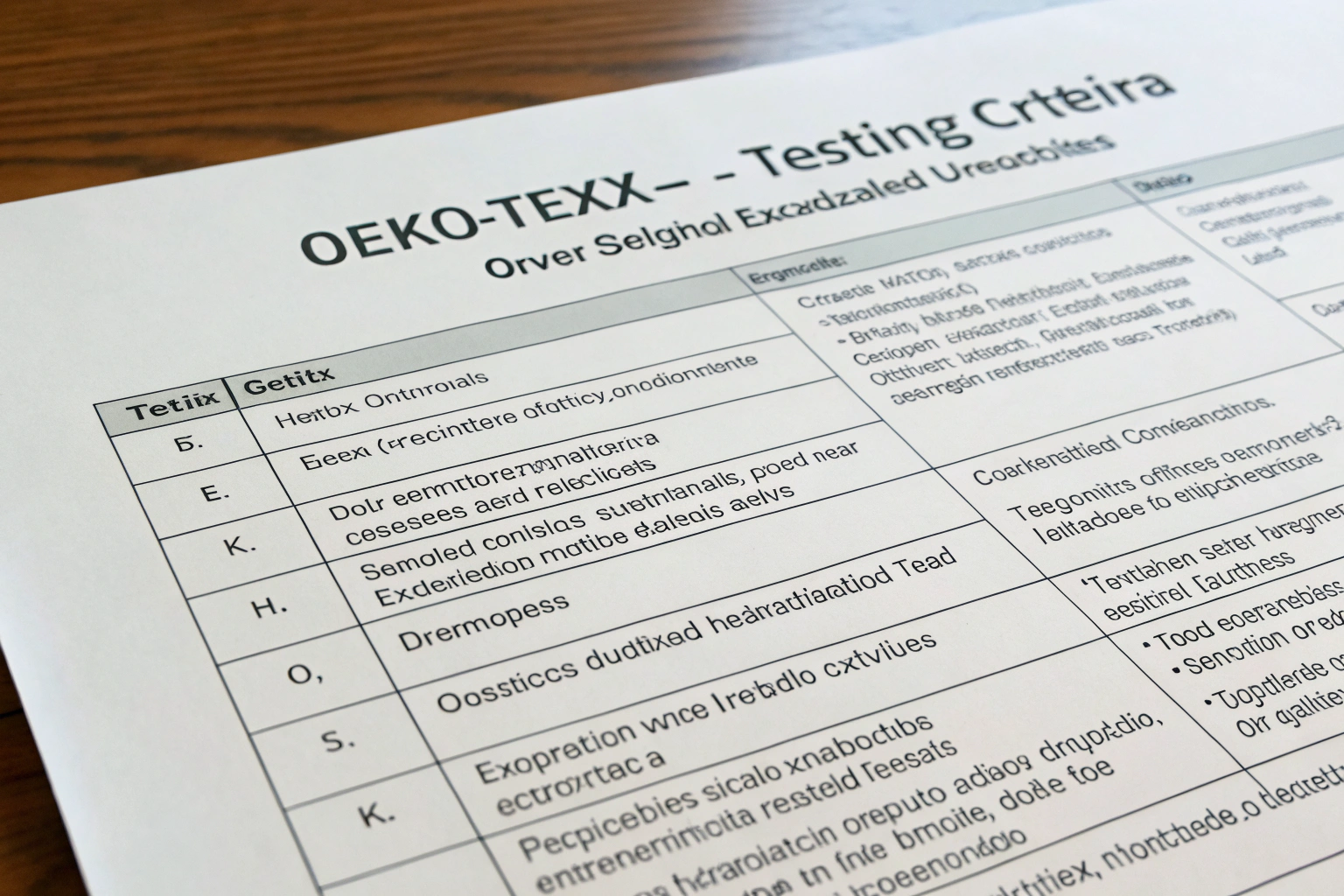
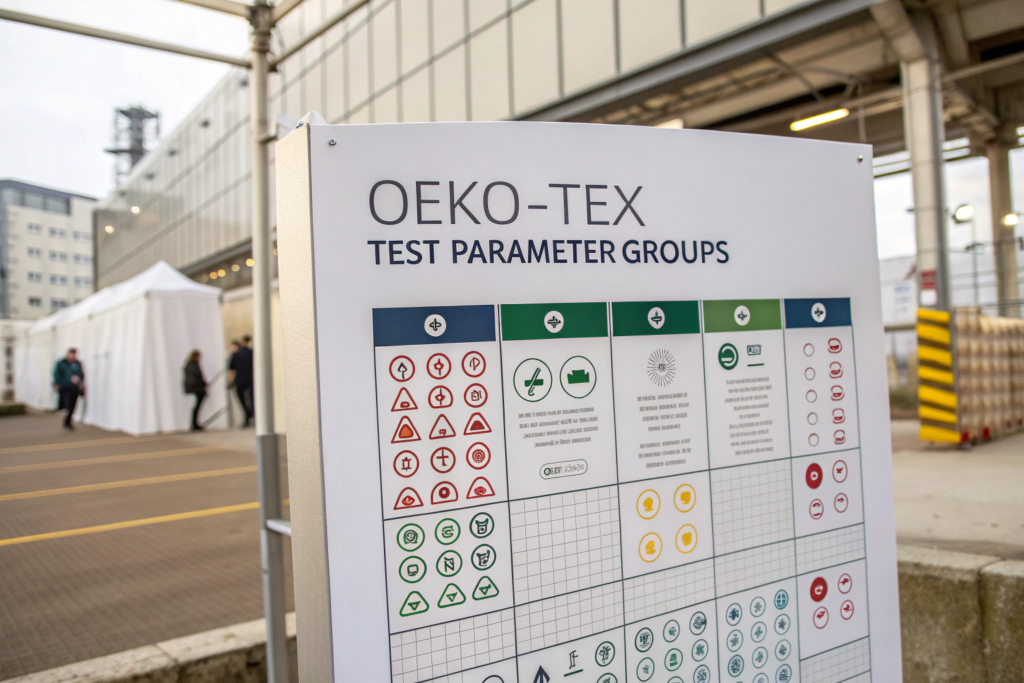
The OEKO-TEX® testing criteria are a comprehensive, globally standardized catalog of over 100 individual test parameters for regulated and unregulated harmful substances. For garments, these criteria are grouped into several categories—including illegal substances, legally regulated chemicals, known harmful (but unregulated) chemicals, and health parameters—and are applied with varying strictness across four different product classes based on human ecological safety.
To make informed sourcing decisions, you need to go beyond the label and understand the science and system behind it. Let’s demystify the OEKO-TEX® criteria, explaining what they test for, how they’re categorized, and what this means for your different product lines.
What Substances Are Actually Tested in OEKO-TEX® Certification?
When we say a garment is OEKO-TEX® certified, it’s not a vague promise of "no bad chemicals." It’s a precise statement that the product has passed specific scientific tests. The criteria catalog is exhaustive and updated annually by scientific experts, reflecting the latest research.
The OEKO-TEX® STANDARD 100 test criteria cover a wide spectrum of substance groups. These include:
- Illegal Substances: Such as carcinogenic dyes banned by law.
- Legally Regulated Substances: Including formaldehyde, heavy metals (like cadmium, lead), and certain pesticides, but often with stricter limits than national laws.
- Unregulated but Harmful Substances: This is a key differentiator. It covers parameters like allergenic dye residues, chlorinated phenols, and emissions of volatile chemicals.
- Health-Based Parameters: Including skin-friendly pH values and colorfastness to ensure product integrity during use and care.
The rigor lies in the details. For example, testing for phthalates—plasticizers often used in prints or plastisol transfers—is standard, even in markets where their use in adult textiles isn’t fully restricted. This proactive testing protects your brand from future regulations and consumer concerns.
How are harmful dyes and colorants regulated in the testing?
The criteria strictly prohibit the use of carcinogenic azo dyes that can cleave into known amine compounds. But it goes further, also testing for and limiting the presence of allergenic disperse dyes. These dyes, used mainly on polyester, can cause skin reactions. At Shanghai Fumao, we source all dyestuffs from OEKO-TEX® compliant chemical suppliers. Last year, this prevented a major issue for a client’s dark-colored polyester activewear line, ensuring the deep blacks and navies met the strict limits for allergenic dye residues, a common failure point for uncertified suppliers.
What about substances from fabric treatments and finishes?
Finishes are a major focus. Tests cover:
- Formaldehyde: Used for anti-wrinkle or easy-care finishes. OEKO-TEX® limits are very low, especially for babywear.
- Pentachlorophenol (PCP): A historical biocide in textiles.
- PFAS (Per- and polyfluoroalkyl substances): Often called "forever chemicals," used for water-repellent finishes. Their regulation in OEKO-TEX® is increasingly strict.
We advise clients early in the product development phase. For a client needing water-resistant outerwear, we presented certified alternatives to traditional PFAS-based finishes, ensuring their performance jackets passed OEKO-TEX® testing without compromising functionality.
How Do the Four Product Classes Affect Testing Strictness?
Not all garments are created equal in terms of human ecological safety. A baby’s onesie has more stringent safety requirements than a winter coat. OEKO-TEX® recognizes this through its system of four product classes, which is fundamental to understanding the certification’s relevance to your specific products.
The strictness of the OEKO-TEX® limits varies significantly across four product classes:
- Class I: Products for Babies and Toddlers (under 3 years): Most stringent limits.
- Class II: Products with Direct Skin Contact (e.g., underwear, shirts): High limits.
- Class III: Products without Direct Skin Contact (e.g., jackets, linings): Standard limits.
- Class IV: Decoration Materials (e.g., curtains, tablecloths): Least stringent, but still safe for use.
This means a certified baby blanket (Class I) has been held to a much higher safety standard than a certified decorative pillowcase (Class IV).
Misunderstanding product class is a common source of error. A supplier might have certification for Class III garments but not for the Class II garment you are ordering. Always verify the class.
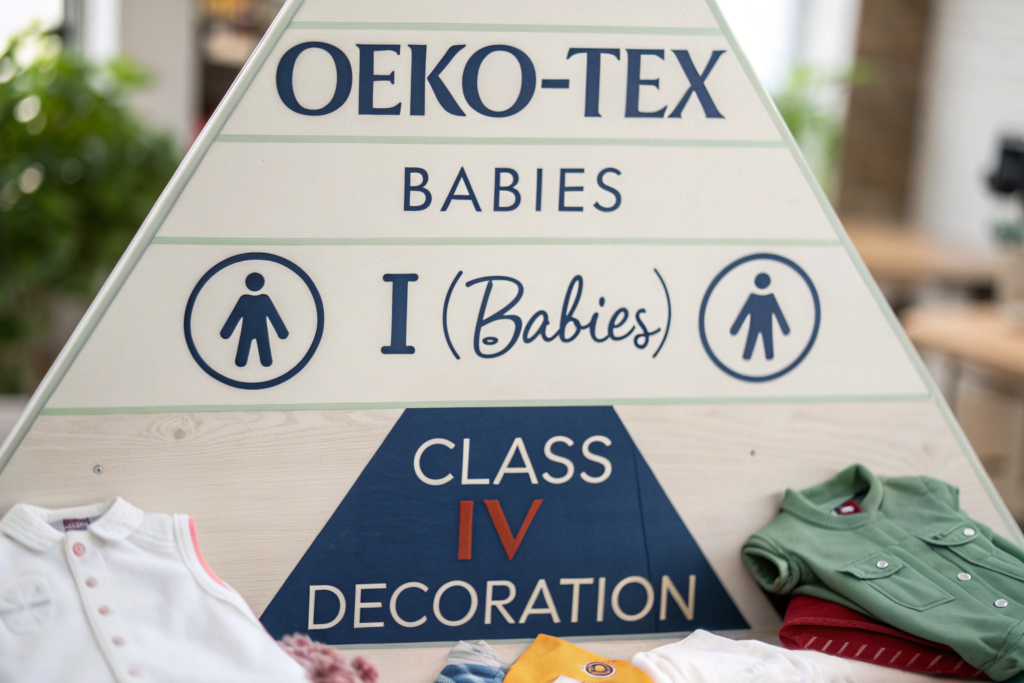
Why is Product Class I for babies so much stricter?
A baby’s skin is more permeable, their metabolism is less developed, and they have a higher tendency to put textiles in their mouths. Therefore, Class I has the lowest possible thresholds for virtually all substances, especially for heavy metals and formaldehyde. It also includes a mandatory saliva and perspiration fastness test to ensure dyes don’t leach out. When we produce for kids’ wear brands, we always specify Class I certification, even for items for toddlers, because it represents the gold standard in safety that parents trust.
How do I determine the correct product class for my garment?
The classification is based on the product’s most foreseeable use. Here’s a quick guide:
| Your Garment Type | Primary OEKO-TEX® Product Class | Key Consideration |
|---|---|---|
| Bodysuits, bedding for under 3 yrs | Class I | Mandatory for all baby items. |
| T-shirts, underwear, leggings, socks | Class II | Any garment worn directly against skin. |
| Jackets, coats, hats, non-skin contact linings | Class III | Outer layers where a lining typically separates from skin. |
| Backpacks, decorative trims, furniture fabric | Class IV | For non-apparel or decorative components. |
A common pitfall is a lined jacket. The outer shell might be Class III, but if the lining is in direct skin contact, it should be Class II. At Shanghai Fumao, our technical team reviews each product’s construction to assign the correct class for certification, ensuring complete compliance.
How is the Testing Conducted and Who Performs It?
The credibility of any certification lies in the integrity of its testing process. You might wonder: who does the tests? Are they done on a "golden sample" or on actual production? Understanding the methodology is key to trusting the outcome.
OEKO-TEX® testing is conducted exclusively by independent, OEKO-TEX®-approved institutes and laboratories worldwide. These are not the manufacturers’ own labs. The testing is performed on representative product samples submitted by the applicant, but the certification is granted based on a comprehensive system that includes auditing the manufacturer’s quality assurance processes to ensure consistent compliance in mass production.
The process is designed to prevent fraud and ensure ongoing compliance, addressing a major buyer pain point.
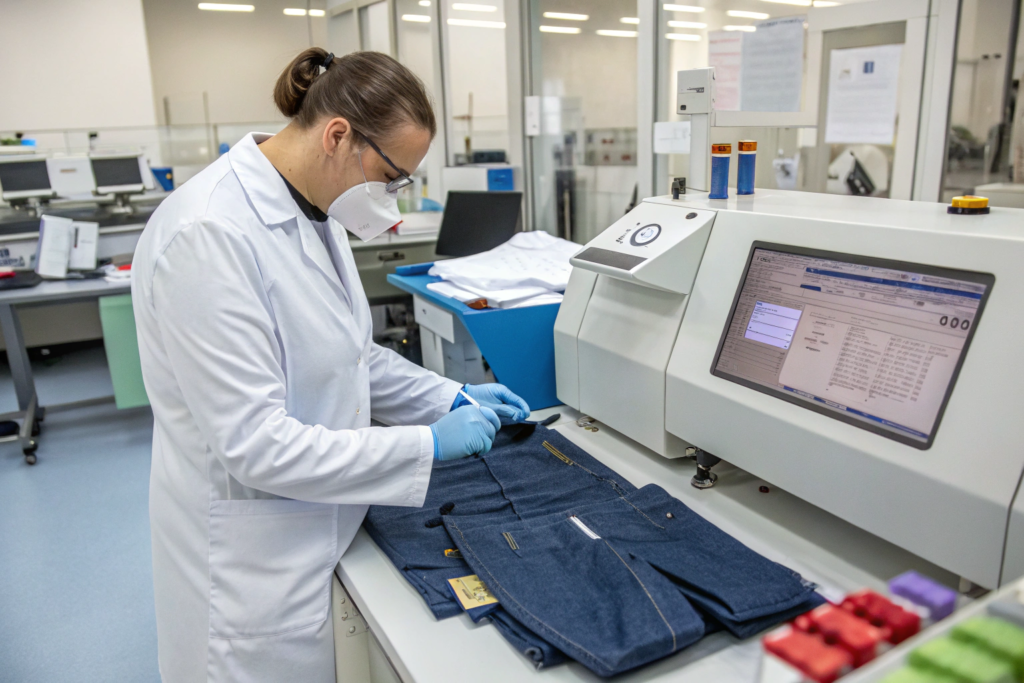
Is testing only done on the final garment?
No. The principle of article certification requires that every component be tested and certified. This includes the main fabric, sewing threads, linings, prints, embroidery threads, buttons, zippers, and even non-textile parts like decorative plastic gems. The laboratory creates a test plan that may involve testing individual components or a composite sample of the whole article. This holistic approach is why we meticulously vet our trim suppliers at Fumao Clothing. Last year, we caught an issue with a batch of otherwise standard polyamide zippers that had elevated antimony levels; we replaced them with certified trims, preventing a potential certificate failure for a large run of trousers.
How does OEKO-TEX® prevent certificate falsification or misuse?
The system has several safeguards:
- Each certificate has a unique number linked to a specific applicant, product type, and component list.
- Certificates are published in a public database where buyers like you can verify them.
- OEKO-TEX® institutes conduct regular, unannounced audits and market surveillance tests on certified products.
If a certified article is found non-compliant, the certificate is withdrawn. This external oversight gave a client from Seattle the confidence to switch to us. They had a prior supplier whose in-house "compliance report" couldn’t be verified; our OEKO-TEX® certificate provided them with an independently verifiable guarantee.
What Does This Mean for Your Sourcing and Brand Claims?
Understanding the criteria is not an academic exercise. It has direct, practical implications for how you source products and what marketing claims you can legitimately make. It empowers you to ask better questions and build a safer, more credible brand.
The depth of OEKO-TEX® testing criteria means that sourcing certified garments provides you with a robust, science-backed defense against chemical risk. It allows you to make specific, verifiable claims like "tested for harmful substances according to OEKO-TEX® STANDARD 100" rather than vague terms like "non-toxic" or "eco-friendly," which are increasingly scrutinized by regulators and consumers alike.
This knowledge transforms your role from a passive buyer to an informed specifier.

How can I use this knowledge in supplier negotiations?
You can move from asking "Are you certified?" to asking precise questions:
- "For this polo shirt (Class II product), can you provide the test report summary showing compliance for phthalates and allergenic dyes?"
- "Is the certification for the factory where my order will be sewn, and does it cover all components?"
- "What is your process for ensuring batch-to-batch compliance with the OEKO-TEX® limits?"
This demonstrates expertise and raises the bar for the supplier. When Shanghai Fumao receives such detailed inquiries, we know we’re dealing with a professional partner, and we respond with our comprehensive compliance dossier.
What are the clear marketing advantages of sourcing OEKO-TEX® certified garments?
You gain a competitive edge through trust:
- Regulatory Preparedness: You’re already ahead of evolving chemical laws (like those targeting PFAS in California).
- Retailer Approval: Major platforms require material safety data. An OEKO-TEX® certificate simplifies this.
- Consumer Confidence: The label is a recognizable trust signal. A 2023 client launching a sustainable activewear line used "OEKO-TEX® Certified Safety" as a key marketing pillar. This clear claim, backed by our certification, helped them secure featured placement in a prominent eco-conscious online retailer, directly boosting their launch sales.
Conclusion
The OEKO-TEX® testing criteria represent one of the most rigorous and comprehensive systems for ensuring the human-ecological safety of textiles. By understanding that it tests for over 100 specific parameters—from illegal carcinogens to unregulated allergens—and applies them with varying strictness based on a product’s intimacy with skin, you can fully appreciate its value. This isn’t a generic greenwashing label; it’s a detailed, scientific protocol conducted by independent labs.
For brand owners and buyers, this knowledge is power. It enables you to verify supplier claims, ensure true product safety from the inside out, and communicate your brand’s commitment with authenticity and evidence. In a market demanding transparency, OEKO-TEX® provides the blueprint.
If you are looking to elevate your brand’s standards and require a manufacturing partner who not only understands these criteria but has built their production system around them, we are here to help. At Shanghai Fumao, OEKO-TEX® certification is integral to our quality assurance promise. Let us help you source with confidence and market with credibility. Contact our Business Director, Elaine, to learn more and request access to our certification details. Email: elaine@fumaoclothing.com.