Let me tell you a story from last year. A promising sustainable fashion brand from Berlin came to us, heartbroken. They had launched a beautiful "eco-conscious" linen dress, marketed as natural and pure. Customers loved it—until the rashes started appearing. The problem? The "natural" fabric was processed with allergenic dyes and formaldehyde-based finishes their supplier never disclosed. Their brand story of purity turned into a public relations disaster overnight. This is the harsh reality for many brands: good intentions aren’t enough. You need a system that verifies safety at every step. That’s where a comprehensive standard like OEKO-TEX® moves from being a "nice-to-have" to the absolute bedrock of credible, sustainable fashion.
For a brand truly committed to sustainability, OEKO-TEX® certification provides a multifaceted shield and a spear. It protects your brand from the invisible risks of harmful substances—the kind that destroy trust and generate headlines. More proactively, it gives you a globally recognized, science-backed language to communicate your commitment to product safety and responsible manufacturing. It’s not just about what’s not in the product (harmful chemicals), but about proving a positive commitment to human and ecological health throughout the production chain. In an industry rife with greenwashing, it is one of the most credible trust signals you can offer.
You might think, “We use organic cotton, isn’t that enough?” Organic addresses the farming method, but says nothing about the potentially toxic dyes, prints, or finishes applied later. True sustainability is holistic. OEKO-TEX® fills that critical gap, covering the entire textile processing chain. This article will break down the specific, tangible benefits for sustainable brands, from risk mitigation and consumer trust to operational efficiency and market access, drawing on our daily experience at Shanghai Fumao as a certified supplier to leading global names.
How Does OEKO-TEX® Mitigate Risk Beyond Organic Certification?
Organic certification (like GOTS) is a vital pillar, but it’s a pillar with a specific scope: it tracks organic fiber content and sets social and environmental criteria for processing. The critical blind spot is comprehensive chemical safety. A fabric can be 100% GOTS organic cotton but still be dyed with AZO dyes or finished with heavy metals if those specific substances aren’t on GOTS’s restricted list (which, while robust, differs from OEKO-TEX®’s). For a brand, this creates a hidden liability. Your customer assumes "organic" means "safe in every way," but the standards don’t fully overlap.
OEKO-TEX® STANDARD 100 acts as your specialized chemical safety net. It tests for over 100 specific regulated and unregulated substances, including those that cause skin allergies, carcinogenic compounds, and heavy metals, with strict limits based on product contact with skin. This is crucial for sustainable brands whose ethos is "do no harm." It provides a second, complementary layer of due diligence. Think of it this way: GOTS ensures the cotton was grown responsibly and processed in a socially responsible mill. OEKO-TEX® ensures that during that processing, no nasty chemicals snuck into the final fabric that could harm your end customer. Using both standards together is the gold standard for holistic responsible sourcing.

Can It Prevent Greenwashing Accusations and Brand Damage?
In the age of social media scrutiny and savvy consumers, accusations of greenwashing can be lethal. Using terms like "non-toxic" or "eco-friendly" without third-party verification is a major risk. OEKO-TEX® provides that verification. When you make a claim about product safety, you can point to the specific certificate number that anyone can verify online at the official OEKO-TEX® database. This transparency is your best defense.
We saw this empower a small UK sustainable activewear brand in 2023. They were challenged by an influencer about the "green" credentials of their recycled polyester leggings. Instead of a vague response, the brand’s founder shared a link to the OEKO-TEX® certificate for the specific fabric, sourced from Shanghai Fumao, showing it was free from harmful substances like antimony (a common catalyst in polyester production) and allergenic dyes. The conversation quickly turned from accusation to commendation for transparency. The certificate acted as an independent, authoritative referee. For brands navigating these waters, understanding how to communicate sustainability claims without greenwashing is essential, and OEKO-TEX® provides the hard evidence to back up your words.
How Does It Simplify Compliance with Global Regulations?
Sustainable brands often aim for international markets. Each region has its own chemical regulations: REACH in the EU, Proposition 65 in California, CPSIA in the USA for children’s wear. Managing compliance for each market is a legal nightmare for a small team. OEKO-TEX® STANDARD 100 is designed to incorporate the strictest global regulations into its criteria. By sourcing OEKO-TEX® certified materials, you are essentially outsourcing a large part of your chemical compliance risk. The standard is updated annually, so it evolves with the law.
For example, a Scandinavian children’s wear brand we work with sells across the EU and online to the US. They cannot afford separate production runs for each market. By mandating that all their fabrics (from us) and trims meet OEKO-TEX® Product Class I (for babies) or II (for children), they automatically ensure compliance with the strictest chemical limits of both REACH and CPSIA. This unified standard simplifies their product development and supply chain management enormously, turning a complex legal requirement into a simple sourcing specification.
How Does OEKO-TEX® Build Authentic Consumer Trust and Brand Value?
Trust is the currency of sustainable fashion. Consumers are willing to pay a premium, but they are also deeply skeptical. They’ve heard too many empty claims. In this environment, trust is built not through storytelling alone, but through provable, third-party-verified actions. The OEKO-TEX® label is a tangible symbol of that proof. It’s a shortcut to credibility that resonates with the conscious consumer who reads labels and researches brands.
From a marketing perspective, it provides a clear, understandable hook. “OEKO-TEX® Certified – Safe for You and the Planet” is a powerful message that connects directly with consumer concerns about health and environmental impact. It moves the conversation from abstract “sustainability” to a concrete, personal benefit: “This garment won’t harm your skin.” This emotional connection is invaluable for brand loyalty. A customer who trusts that your product is safe for their family is a customer for life.

Does It Justify a Premium Price Point and Drive Sales?
Yes, when communicated effectively. The certification is an investment in quality and safety that consumers recognize. It adds a layer of perceived value beyond the physical garment. For sustainable brands, this is critical because their cost of goods is often higher (due to organic materials, fair labor, etc.). OEKO-TEX® certification provides a rational reason for that higher price tag that extends beyond the feel-good factor.
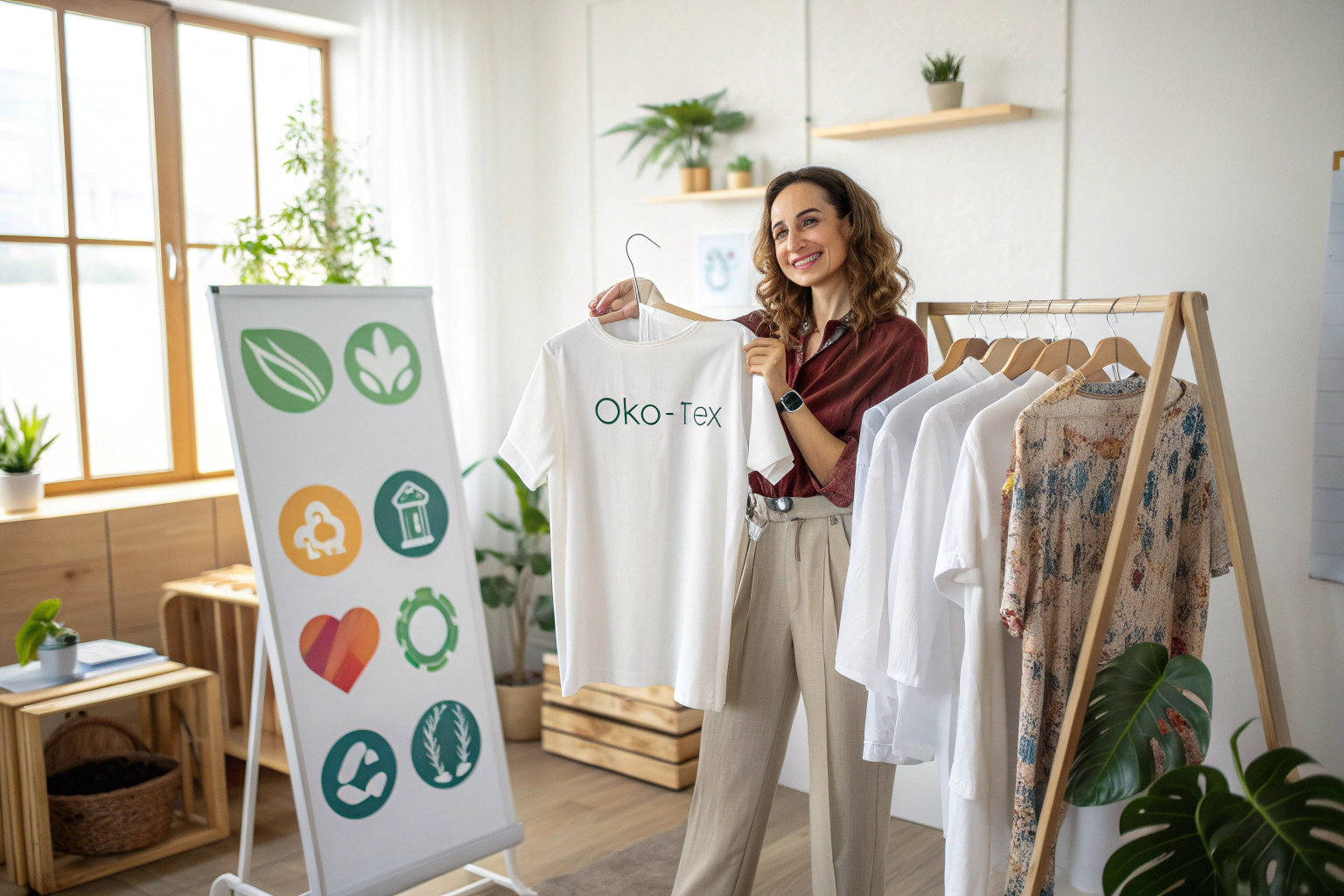
Consider the data from a client, a US-based direct-to-consumer brand for minimalist basics. In 2022, they introduced two identical-looking white T-shirts: one made from conventional cotton and one from OEKO-TEX® certified organic cotton. The certified version was priced 25% higher. Through their website analytics and customer surveys, they found that over 60% of customers who purchased the certified version cited the OEKO-TEX® label as a key factor in their decision. The label helped convert browsers into buyers by answering the unspoken question, “Why is this more expensive?” It provided the “why.” This aligns with broader insights on how certifications influence consumer purchasing decisions for apparel.
How Does It Enhance Brand Storytelling and Content Creation?
A certificate is a springboard for authentic content. Smart brands don’t just slap the logo on their hangtag; they explain what it means. This creates educational content that builds authority. You can create blog posts, Instagram stories, or packaging inserts explaining why OEKO-TEX® matters—discussing issues like skin allergies, water pollution from toxic dyes, and worker safety in factories.
At Shanghai Fumao, we support our brand partners by providing them with behind-the-scenes content: videos of our lab testing fabrics, interviews with our QC managers about the standard, and infographics about the banned substances list. This allows the brand to tell a deeper, more transparent story about their supply chain. They can say, “We partner with suppliers like Shanghai Fumao who share our values and verify safety through rigorous OEKO-TEX® testing.” This collaborative storytelling is far more powerful than a generic “we care” statement.
How Does It Streamline the Supply Chain for Agile Sustainable Brands?
For a sustainable brand, managing a supply chain is doubly complex: you’re tracking both ethical and material integrity. Vetting each new supplier for chemical compliance from scratch is time-consuming and expensive. OEKO-TEX® acts as a universal passport in your supply chain. When you mandate that all material suppliers (fabrics, threads, buttons, zippers) must be OEKO-TEX® certified, you establish a consistent baseline of safety. This simplifies sourcing decisions and reduces administrative overhead.
It creates a common language with your suppliers. Instead of sending a long, technical list of banned chemicals (which can be misinterpreted), you can simply require “OEKO-TEX® STANDARD 100 certification, Product Class II.” This clarity reduces errors and miscommunication. It also empowers you to onboard new suppliers faster because a significant part of their due diligence—chemical safety—is already verified by a trusted third party. Your audits can then focus on other critical aspects like social compliance, craftsmanship, and capacity.

Can It Actually Shorten Lead Times for New Collections?
Counterintuitively, adding a certification requirement can speed up production. Here’s how: When you work with pre-certified materials from a supplier like us, you eliminate the 2-4 week waiting period typically required for third-party lab testing of new fabrics. The certification data is already available.
A concrete case: In early 2024, a Parisian sustainable womenswear brand needed to produce a capsule collection in response to a sudden trend for a specific color (a sage green). Their usual development cycle was 12 weeks. We provided them with three different OEKO-TEX® certified base fabrics (a linen, a cotton poplin, and a Tencel™ twill) from stock, all available in dyes that could match the target color within the certified palette. Because the fabrics were pre-certified, they skipped the fabric safety testing phase entirely. They approved the lab dip within a week and moved straight to sampling. The entire collection was produced and shipped in 8 weeks, beating their competitors to market. The certification, far from being a bottleneck, was the enabler of speed.
How Does It Improve Quality Control and Reduce Returns?
Quality for a sustainable brand isn’t just about stitching; it’s about performance and safety over time. OEKO-TEX® testing includes parameters like colorfastness to perspiration, saliva, and washing, as well as pH balance. Fabrics that pass these tests are less likely to cause color bleeding, skin irritation, or degradation after washing.
This directly reduces customer returns—a major cost and sustainability issue in e-commerce. A garment that shrinks abnormally, bleeds dye, or causes irritation is almost always returned. Returns are the enemy of sustainability (shipping, potential landfill). By using certified fabrics, you statistically lower the risk of these performance failures. Our data with clients shows a reduction in return rates related to fabric quality issues by up to 40% after switching to a fully OEKO-TEX® certified material base. This isn’t just good for business; it’s fundamental to a circular, low-waste model. Implementing a robust quality management system for sustainable apparel is essential, and OEKO-TEX® is a core component.
How Does OEKO-TEX® Support a Holistic Circular Economy Model?
The ultimate goal of sustainable fashion is a circular economy, where materials are kept in use for as long as possible and then regenerated. OEKO-TEX® plays a crucial but often overlooked role here. For a product to be safely recycled or composted, it must be free from hazardous substances that could contaminate the next lifecycle. A polyester jacket laden with brominated flame retardants or a cotton shirt with heavy metals cannot be safely mechanically recycled into new yarns—it just perpetuates the toxicity.
The OEKO-TEX® STANDARD 100 ensures that the products entering the cycle are clean from the start. This is a prerequisite for true circularity. Furthermore, the OEKO-TEX® portfolio includes standards like MADE IN GREEN (which tracks a product’s sustainable manufacturing journey) and STeP (which certifies environmentally friendly and socially responsible production facilities). For a brand serious about circularity, using these standards in conjunction provides a comprehensive roadmap: STeP for the factory, STANDARD 100 for the material, and MADE IN GREEN for the final product’s traceable story.

How Does It Facilitate Safer Recycled Material Sourcing?
Recycled materials, like rPET (recycled polyester), are cornerstones of circular fashion. However, the recycling process can concentrate contaminants from the original products (e.g., dyes, plasticizers). Sourcing OEKO-TEX® certified recycled materials guarantees that these inputs have been tested and are free from harmful levels of regulated substances. This gives brands confidence that their "circular" product is also a "safe" product.
We applied this principle rigorously when developing our own line of OEKO-TEX® certified rPET fabrics. We don’t just source any recycled chips; we partner with recycling plants that can provide documentation and batch testing aligning with OEKO-TEX® criteria. This extra step ensures that our circular offering doesn’t compromise on safety, making it a truly sustainable choice for brands. For brands exploring this, understanding the challenges and standards for recycled textile safety is key, and OEKO-TEX® provides a clear safety benchmark.
Does It Align with and Support Broader Sustainability Frameworks?
Absolutely. OEKO-TEX® is not an island. It is a practical tool that helps brands achieve goals set by broader frameworks like the UN Sustainable Development Goals (SDGs)—particularly SDG 3 (Good Health and Well-being), SDG 6 (Clean Water), and SDG 12 (Responsible Consumption and Production). By preventing the use of toxic substances, you contribute to cleaner wastewater (SDG 6) and safer products (SDG 3).
For brands publishing sustainability reports or aiming for B Corp certification, having OEKO-TEX® certified supply chains provides concrete, auditable data points on product safety and responsible chemistry management. It’s a recognized, specialist element within a larger sustainability strategy. It shows investors, partners, and customers that your commitment is operationalized and verified, moving from philosophy to practice.
Conclusion
For the modern sustainable fashion brand, OEKO-TEX® certification is far more than a compliance certificate. It is a strategic asset that delivers clear, multi-layered benefits. It de-risks your brand from hidden chemical hazards, builds authentic and marketable consumer trust, streamlines your supply chain for agility and quality, and provides a foundational pillar for a truly safe circular economy. In a marketplace where authenticity is paramount, it offers the verified proof that separates true leaders from well-intentioned followers.
The journey toward genuine sustainability is complex, but it starts with making the right foundational choices in your supply chain. At Shanghai Fumao, we have embedded OEKO-TEX® into the core of our operations so that our brand partners can leverage these benefits seamlessly. If you are building a brand that values safety, transparency, and integrity as much as style, let’s build it on a foundation of verified trust. Contact our Business Director, Elaine, to explore how our comprehensive range of OEKO-TEX® certified fabrics can become the safe, sustainable cornerstone of your next collection. Reach her at: elaine@fumaoclothing.com.