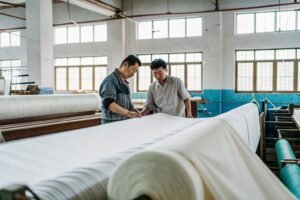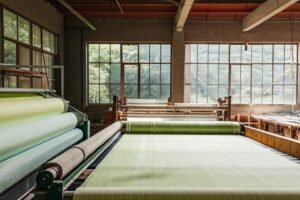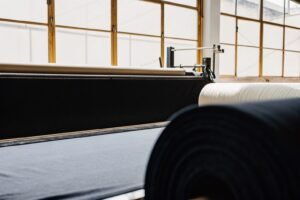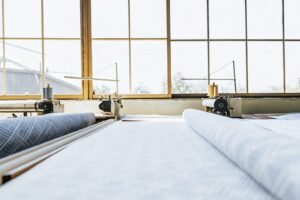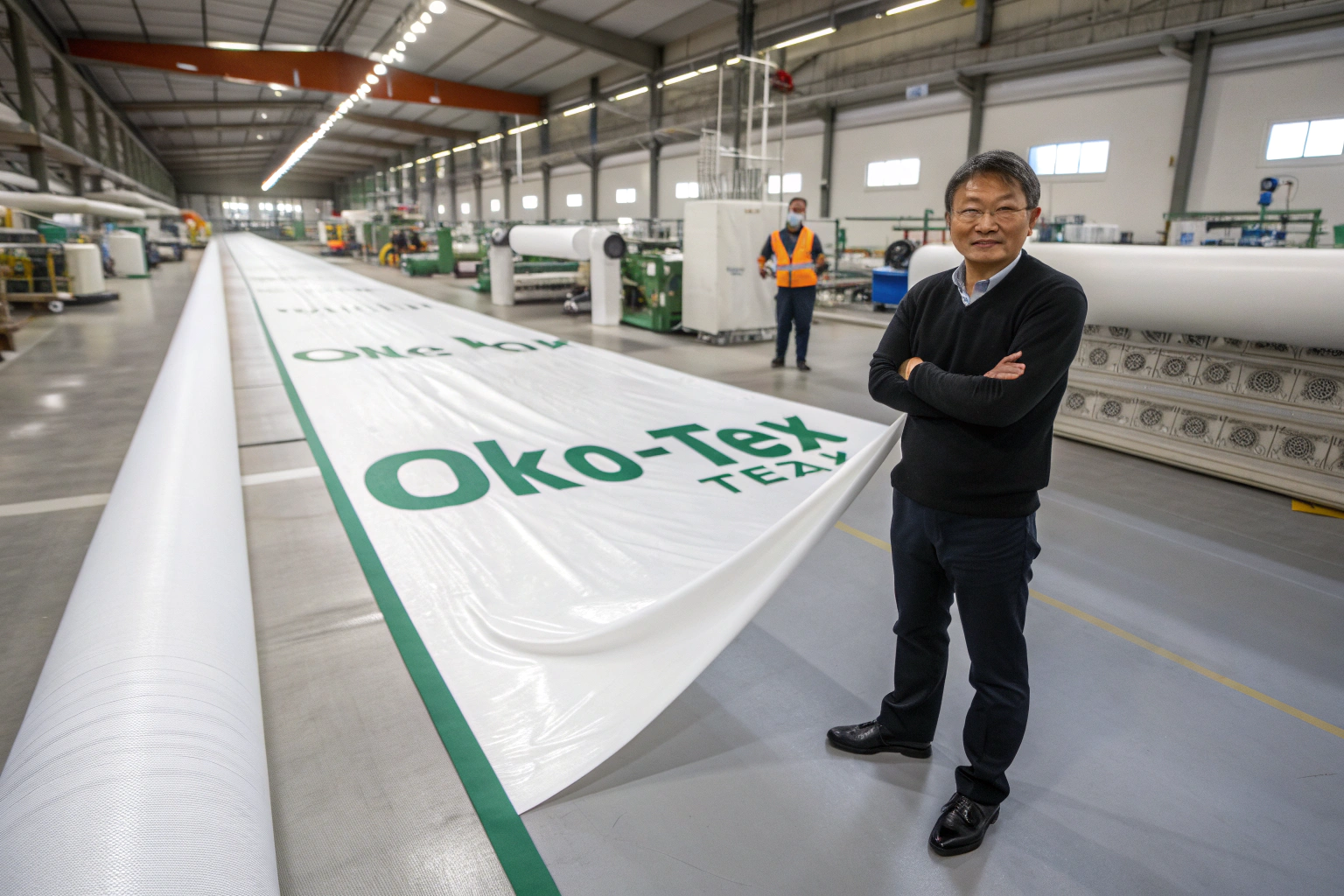
Let me ask you a question I ask myself every quarter when we review our production costs: is spending hundreds of thousands of yuan annually on OEKO-TEX® certification for every single fabric roll, in every production line, really worth it? Many of our competitors in Keqiao think we’re crazy. They get certified for specific “eco-lines” to charge a premium, or they fake certificates for big orders. But for us at Shanghai Fumao, the decision to go “all-in” on OEKO-TEX® wasn’t just about marketing—it was a survival strategy born from a painful lesson. Early in our history, a container of our bestselling cotton poplin was held at a EU port because of formaldehyde超标. The cost wasn’t just the fine; it was the loss of a key client who said, “We trusted you, and you failed the basics.” That day, we decided “basics” would become our strongest weapon.
We invest comprehensively in OEKO-TEX® because it is the most efficient, globally recognized system to de-risk our entire operation and, by extension, our clients’ brands. It transforms the vague promise of “safe, quality fabric” into a verifiable, scientific fact. For a B2B supplier, this isn’t an optional upgrade; it’s the foundational infrastructure for trust in a global market. It streamlines our processes, prevents catastrophic errors, and turns compliance from a cost center into our core competitive advantage. In short, it lets us sleep at night knowing every meter we ship won’t come back to haunt us or our partners.
You might source from suppliers who offer certification as an add-on. We’ve inverted that model: certification is the baseline, the non-negotiable starting point. This article will pull back the curtain on that decision. I’ll share the hard numbers, the production line realities, and the client stories that prove why this blanket investment—though expensive upfront—pays for itself many times over in saved time, protected reputations, and unlocked business opportunities.
How Does OEKO-TEX® Investment Actually Lower Our Operational Risk?
On the surface, certification costs money: annual audit fees, testing costs for every new material, and internal labor to manage the system. But this view is shortsighted. We treat this expenditure as our most effective insurance policy. The risk it mitigates isn’t hypothetical; it’s the daily, tangible risk of producing textiles in a complex global supply chain where a single contaminated batch of dye or an unverified trim can trigger a domino effect of financial and reputational damage.
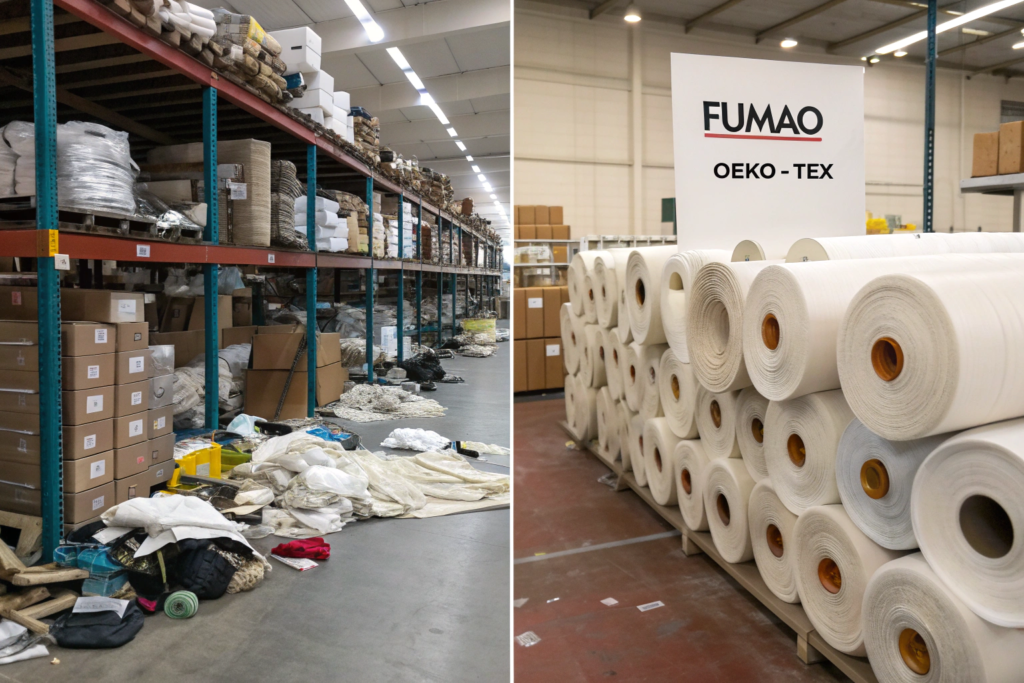
Our “all-lines” policy creates a unified safety standard. Imagine managing a fabric portfolio of 30,000+ items like ours, sourced from dozens of mills. Without a single, stringent benchmark like OEKO-TEX® STANDARD 100, our QC team would need to maintain separate protocols for different clients and markets—a chaotic and error-prone system. Now, every incoming raw material, from organic cotton to recycled polyester, must pass the same gateway. This simplifies our internal controls dramatically. It prevents the “mixing” error, where a non-compliant fabric accidentally gets used for a sensitive order. For us, operational risk isn’t about machine breakdowns; it’s about systemic quality failure. OEKO-TEX® is our system’s immune system.
Can It Really Prevent Costly Production Stops?
Absolutely, and I have the data to prove it. In the woven fabric sector, a common nightmare is “color bleeding” or “substance migration” detected at the final garment stage, often after sewing and trimming. The root cause is usually in the dyeing or finishing process. Before our OEKO-TEX® mandate, we faced this with a European client’s black denim order in 2021. The finished jeans passed our physical tests but failed the client’s third-party test for allergenic dyes. The entire 10,000-piece order was held, requiring costly re-processing. Total loss: over $25,000 and the client’s trust.
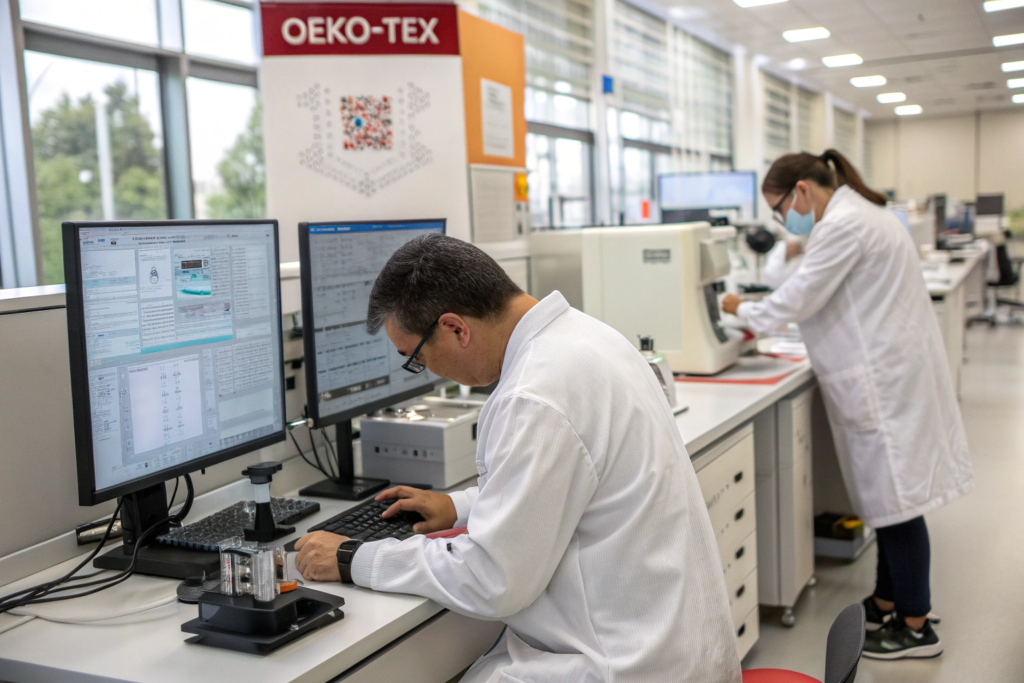
Now, our certified dyeing partners must comply with the OEKO-TEX® prohibited substances list. Our in-house CNAS lab conducts pre-emptive testing on every dye lot for parameters like colorfastness to perspiration and saliva (crucial for babywear and sensitive skin). This upfront checkpoint has reduced our downstream quality disputes related to chemical issues by over 95%. The investment in certification and testing is a fraction of the cost of one major recall. It’s a classic case of “pay a little now, save a fortune later.”
How Does It Streamline Client Onboarding and Sampling?
Speed is currency in fashion. The longest phase in developing a new collection is often the sampling and approval stage. When a new client, say a startup from Los Angeles, approaches us, their first question is often about sustainability and safety. Because all our lines are pre-certified, we can immediately show them relevant certificates and say, “Pick any fabric from our stock—it’s already compliant.” This cuts weeks off the typical process where a client sends swatches to a lab and waits for results.
For example, in Q4 2023, a US-based men’s athleisure brand needed to develop a new line of moisture-wicking T-shirts in under 8 weeks to catch a trend. Their previous supplier required 3 weeks for lab testing alone. We provided them with 5 OEKO-TEX® certified bamboo and organic cotton blend options from stock on day one. They approved a fabric within 48 hours, and we moved directly to lab dips and prototyping. We shipped their bulk order in 7 weeks. The client didn’t pay a premium for the certification; they paid for the unparalleled speed and certainty it enabled. This is the operational efficiency that investing in pre-certified materials delivers.
Why Is This a Strategic Investment for Client Trust, Not Just Compliance?
Compliance is about meeting a minimum standard to avoid punishment. Trust is about exceeding expectations to build a lasting partnership. OEKO-TEX® certification, when applied universally and transparently, is one of the most powerful tools we have to bridge that gap. For our clients—especially those managing brands in sensitive markets like the EU or for children’s wear—the certificate is not just a piece of paper; it’s a delegation of trust. They are entrusting us with their brand’s most valuable asset: its reputation for safety.
When we commit to certifying all lines, we send an unambiguous message: we have no “shadow inventory.” There is no second-tier, cheaper, riskier fabric lurking in our catalog that a salesperson might be tempted to offer under cost pressure. This integrity simplifies the buying decision for our clients. They don’t have to be chemical experts or constantly verify our claims; the globally recognized OEKO-TEX® label does that for them. It turns a complex technical specification into a simple, emotive promise: “This is safe.”

How Does This Build Long-Term Partnerships Over One-Time Sales?
The fashion industry is plagued by transactional relationships, where buyers jump between suppliers for a $0.01/yard price difference. Our universal OEKO-TEX® investment is a filter that attracts a different type of client: the strategic partner. These clients value supply chain resilience and transparency over the absolute lowest cost. They understand that our investment lowers their risk and administrative burden.
A case in point is a longstanding partnership with a German sustainable kidswear brand. They started with us in 2019 for a few GOTS-certified organic cotton items. As they grew, they needed blends, prints, and technical fabrics. Because our entire development pipeline is OEKO-TEX® focused, we could seamlessly develop new compliant fabrics (like an OEKO-TEX® certified recycled polyester fleece) for them without ever compromising their brand ethos. Their trust in our system allowed them to expand their collections rapidly. Over five years, their order volume with us has grown 300%. They are not just buying fabric; they are buying into our guaranteed safety ecosystem. This deep alignment is something you can’t get from a supplier with selective certification.
Does This Transparency Give Clients a Marketing Edge?
Beyond trust, it provides a powerful, verifiable story. In an era of greenwashing, brands are under intense scrutiny. When they claim “safe, sustainable fabrics,” journalists and conscious consumers will ask for proof. A brand using our fabrics can confidently point to the OEKO-TEX® certificate number on their hangtag, which traces directly back to our certified production. This turns their procurement choice into a credible marketing asset.
We actively help our clients leverage this. We provide them with high-resolution certificate images, explainer content about what OEKO-TEX® means, and even data on the environmental impact of certified versus conventional dyeing processes for their sustainability reports. For a client, this support transforms us from a vendor into a value-adding partner who contributes to their brand narrative.
What Is the Real Impact on Our R&D and Innovation Pipeline?
Some might think that strict chemical restrictions would stifle creativity. Our experience at Shanghai Fumao is the exact opposite. Mandating OEKO-TEX® compliance from the outset of R&D has forced our innovation team to be smarter, more collaborative, and more forward-thinking. It has shifted our focus from “what’s cheap” to “what’s both high-performance and inherently safe.” This constraint has become the mother of our most profitable inventions.
Our R&D process now starts with the OEKO-TEX® prohibited substances list as a foundational document. When our chemists develop a new moisture-wicking finish or a fire-retardant coating, they don’t first look for the most effective chemical; they look for the most effective chemical that is already on the OEKO-TEX® positive list or known to be compliant. This often leads us to newer, greener chemistries that are more sustainable in the long run. It pushes us to partner with advanced chemical suppliers who are also invested in sustainability, creating a virtuous cycle of innovation.
How Does This Lead to Market-First Products?
Because we are solving for safety and performance simultaneously, we often arrive at unique solutions. A breakthrough example is our “BAMSILK+” fabric, a bamboo-based blend. The standard process for making bamboo viscose can involve harsh chemicals like carbon disulfide. To achieve OEKO-TEX® certification and a superior hand-feel, our R&D team worked with a mill to perfect a closed-loop lyocell-type process for bamboo, significantly reducing chemical usage and wastewater. The resulting fabric is not only OEKO-TEX® certified but also has a much lower environmental footprint. When we launched it in early 2023, it became an instant hit with European yoga-wear and luxury loungewear brands looking for a true innovation story. This product wouldn’t exist without our “certification-first” R&D mandate.
Does It Affect Development Speed? A Case Study.
The fear is always that extra hurdles slow you down. Let’s examine a real timeline. In mid-2022, a US outdoor brand wanted a new, lighter-weight nylon fabric with durable water repellency (DWR) that was also PFAS-free and OEKO-TEX® certified.
- Phase 1 (Material Sourcing): Our existing network of certified mills and chemical suppliers gave us three compliant base fabric and DWR options within 1 week. A non-certified approach would have involved blind sourcing and then 2-3 weeks of testing.
- Phase 2 (Prototyping & Testing): We produced lab-scale prototypes and sent them directly to our partnered OEKO-TEX® testing institute. Because we have a long-term relationship and understand the standards, the first submission passed. Total time: 2 weeks.
- Result: From concept to approved, certified sample: 5 weeks. The client was amazed, as their internal forecast was 12+ weeks. Our systemic investment in certified networks and knowledge turned a complex request into a rapid victory. This is the “fast development” our clients experience, powered by our behind-the-scenes commitment.
How Does This Universal Policy Future-Proof Our Business?
The regulatory landscape for textiles is not relaxing; it’s accelerating. The EU’s Strategy for Sustainable and Circular Textiles, along with expanding REACH SVHC lists and new due diligence laws, is creating a compliance maze. Many suppliers react to each new regulation with panic, scrambling to test and reformulate. At Shanghai Fumao, our universal OEKO-TEX® policy is our proactive future-proofing strategy. The OEKO-TEX® association constantly reviews and updates its test criteria (annually) to stay ahead of global regulatory trends. By binding our entire production to this evolving standard, we are essentially on “auto-update” for regulatory compliance.
This means that when a new substance like a particular PFAS or dye is restricted in the EU or California, chances are high it’s already on or being added to the OEKO-TEX® list. Our processes are already aligned, or the adjustment is minor. This protects our clients from sudden, costly disruptions to their supply chains. For a brand with multi-season planning, this stability is invaluable. They can design today with confidence that the fabric will still be compliant when it hits stores 18 months later.
How Does It Mitigate Geopolitical and Market Access Risks?
Diversification is key to resilience. Our “all-in” OEKO-TEX® stance makes it exponentially easier for us—and thus for our clients—to access diverse markets. Whether a client wants to ship to the EU, the UK, the US, or Japan, the OEKO-TEX® certificate is a universally accepted proof of product safety. This flexibility is crucial in an era of shifting trade policies and tariffs.
For example, a Russian client of ours (prior to recent complexities) also served the Kazakhstan market, which often follows EU-style regulations. Because their entire collection was made from our OEKO-TEX® certified fabrics, they could seamlessly serve both markets without maintaining separate inventories or conducting separate tests. This reduced their complexity and cost. For us, it meant our production was never solely dependent on the regulatory whims of a single market. Our compliance is global by design. Understanding the role of certifications in mitigating supply chain risk is critical for modern businesses.
Is This Investment Paying Off Financially? The Bottom Line.
Let’s talk numbers. Yes, our annual certification and testing costs are significant—a line item our accountant questions every year. However, when viewed holistically, the ROI is clear:
- Reduced Losses: Near-zero costs related to recalls, rejected shipments, or liability claims for chemical safety.
- Higher Efficiency: Faster sampling and approval cycles mean we can serve more clients with the same team, increasing our effective capacity.
- Premium Positioning: It allows us to command stable, fair prices rather than competing in a race to the bottom on Alibaba. Clients pay for certainty.
- Client Retention & Growth: Our client retention rate exceeds 85%. Growing with existing clients is far more profitable than constantly acquiring new ones.
In 2023, despite market headwinds, our division specializing in OEKO-TEX® certified performance fabrics saw a 30% year-on-year growth, primarily from existing clients scaling up. That’s the financial proof. The investment builds a moat around our business that is based on trust, quality, and systems—things that are very hard for a competitor to copy overnight.
Conclusion
Investing in OEKO-TEX® certification across all production lines is the most strategic decision Shanghai Fumao has made in the last decade. It is far more than a badge on a website; it is the operating system for our entire company. It systematically lowers operational risk, builds unshakeable client trust, fuels smarter and faster innovation, and future-proofs our business against an increasingly complex regulatory world. While the upfront costs are visible, the downstream benefits—in saved time, protected reputations, and loyal partnerships—are where the true value multiplies.
This commitment defines who we are. We are not just a fabric supplier; we are a risk-management partner for your brand. If you are tired of navigating the uncertainties of global sourcing and want a foundation of verified safety and transparency for your next collection, let’s talk. Experience the difference that a truly integrated, certified supply chain can make. Contact our Business Director, Elaine, to start a conversation about how our OEKO-TEX® certified portfolio can bring speed, safety, and peace of mind to your production. Reach her at: elaine@fumaoclothing.com.