I want you to picture your sourcing strategy from five years ago. If you’re like most brands and importers back then, the checklist was pretty straightforward: price, quality, lead time, minimum order quantity. Maybe you’d ask about factory audits or social compliance if you were working with a major retailer. Chemical safety? That was often an afterthought, buried in a technical specification sheet if it was mentioned at all. Fast forward to today. That same checklist has been completely rewritten. The first questions I get now are about sustainability, transparency, and regulatory compliance. And right at the center of that new conversation is one acronym: OEKO-TEX.
So, what role does it actually play? It’s simple but profound: OEKO-TEX has evolved from a niche product certificate into the foundational pillar of modern, risk-averse apparel sourcing. It’s no longer just about whether a fabric is "safe." It’s about proving due diligence in an era of radical transparency, securing your supply chain against regulatory upheaval, and building consumer trust that directly translates to sales. In today’s landscape, sourcing without OEKO-TEX isn’t just risky—it’s strategically shortsighted. It’s like building a house without checking the land for environmental contamination. The structure might look fine, but the foundation is fundamentally compromised.
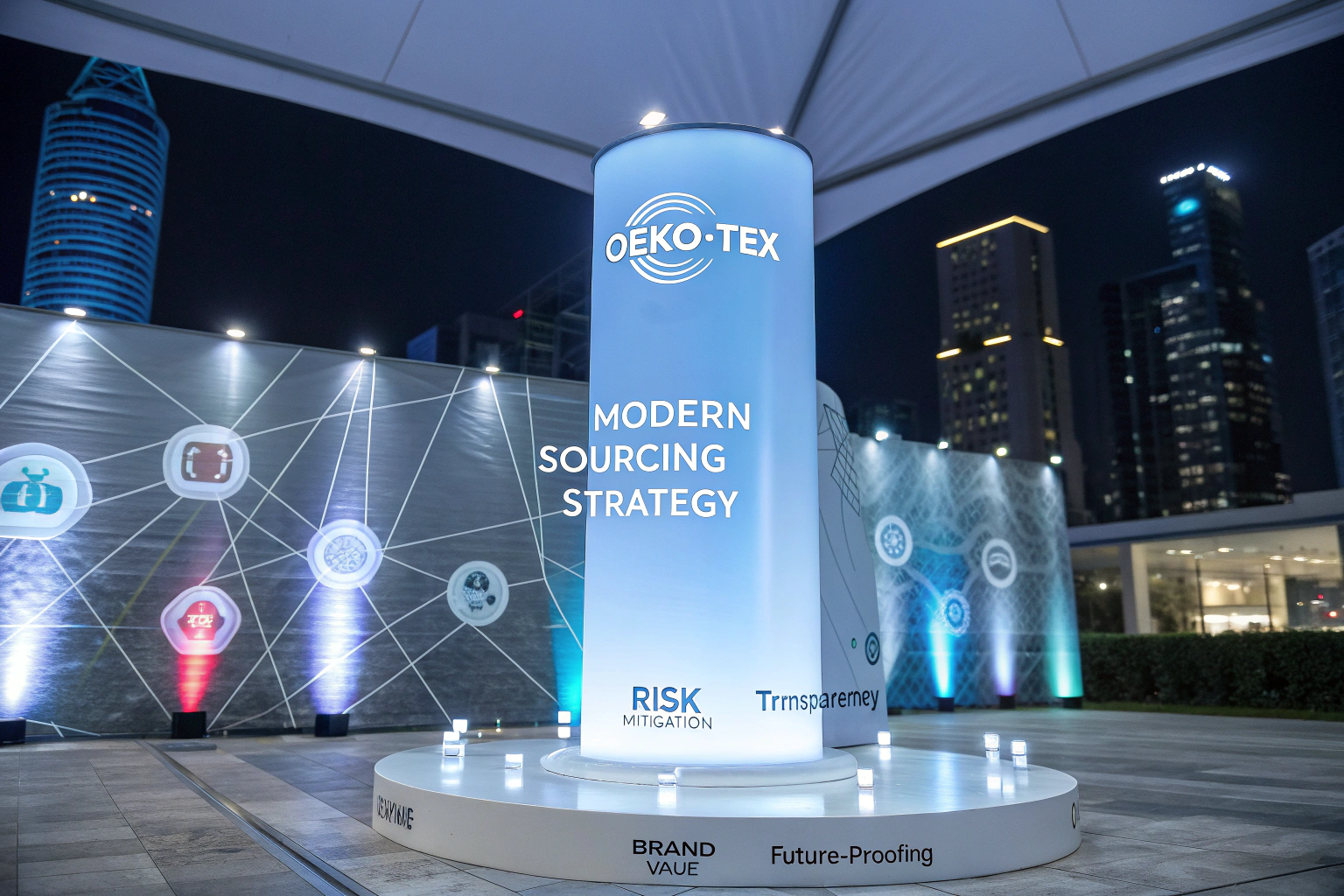
Let me be clear: modern sourcing isn’t about finding the cheapest option. It’s about finding the most resilient option. Your sourcing strategy is your brand’s immune system. OEKO-TEX is a core component of that immune system, providing a verified defense against a multitude of supply chain pathogens—from customs seizures and product recalls to social media scandals and investor scrutiny. This article will break down exactly how OEKO-TEX functions within the four key pillars of a modern sourcing strategy: Risk Mitigation, Supply Chain Transparency, Brand Value Creation, and Future-Proofing.
How has OEKO-TEX become central to risk mitigation?
The single biggest shift in sourcing mindset is the move from cost to risk as the primary decision factor. Every order you place is an investment, and OEKO-TEX is your most effective insurance policy against catastrophic loss. Let’s quantify the risks it mitigates:
-
Regulatory & Border Rejection Risk: Markets like the EU, US, and Canada are aggressively expanding their chemical regulations (REACH, CPSIA, etc.). A shipment flagged for excessive PFAS, phthalates, or heavy metals can be detained, destroyed, or returned at your expense. An OEKO-TEX certificate, especially with batch-specific test reports, is a universally recognized "passport" that dramatically smooths customs clearance. In 2023, a client shipping to Germany had a container held for random testing. Because they used our OEKO-TEX certified fabrics, they simply emailed the test reports to the authorities. The container was released in 48 hours, while a competitor’s non-certified shipment sat for weeks.
-
Product Recall & Liability Risk: The financial and reputational cost of a recall is astronomical. OEKO-TEX provides documented proof of due diligence. If a consumer claims harm, you can demonstrate you took every reasonable step to ensure product safety. This is a powerful legal and financial shield.
-
Reputational Risk: In the age of social media, a scandal about "toxic clothes" can go viral overnight. The OEKO-TEX label is a pre-emptive communication tool. It tells your customers, "We tested this for your safety," before any questions are asked.

What’s the real cost of not having OEKO-TEX in your strategy?
Let’s talk numbers through a real case. In late 2022, an American mid-market brand sourced 30,000 units of children’s pajamas from a non-certified supplier. The fabric was a cute printed flannel. After the products hit retail shelves, a consumer advocacy group conducted independent tests and found flame retardant chemicals (not required for the fabric type) at levels exceeding safety limits. The resulting recall cost over $1.2 million in direct costs (logistics, refunds, destruction) and an estimated $5 million in lost sales and brand damage. The CEO later told me, "The savings we made on the fabric cost were less than 1% of what we lost. It was the worst decision we ever made." Their sourcing strategy now mandates OEKO-TEX Standard 100 for all products.
How does it streamline supplier vetting and quality assurance?
Vetting a new supplier is time-consuming and expensive. An OEKO-TEX certified manufacturer has already undergone rigorous audits of its chemical management system. This acts as a powerful pre-qualifier. When you see that certificate, you know the factory has the basic infrastructure for safe production. It doesn’t replace your own audits, but it means you can focus your audit resources on other critical areas like social compliance, capacity, and craftsmanship, rather than starting from zero on chemical safety. It makes your sourcing team more efficient.
How does OEKO-TEX drive supply chain transparency?
"Transparency" is the most overused—and least understood—word in sourcing today. It doesn’t just mean knowing your factory’s name and address. It means understanding the chemical journey of your product. OEKO-TEX, particularly the STeP (Sustainable Textile and Leather Production) and MADE IN GREEN labels, forces this level of transparency.
The OEKO-TEX system requires certified entities to map and disclose their supply chains for critical inputs. When you source from a partner like Shanghai Fumao, you’re not just buying from us. You’re buying into a network of vetted, assessed suppliers for yarns, dyes, and auxiliaries. We can provide you with a transparency map that goes several tiers back. This is invaluable for:
- Meeting Retailer Demands: Major retailers now require this level of disclosure in their supplier portals.
- Building Your Own Story: Consumers want to know "what’s in my clothes." You can’t tell that story without data.
- Managing Circularity: For end-of-life recycling or take-back programs, knowing the chemical composition is essential.

What’s the difference between OEKO-TEX Standard 100 and MADE IN GREEN?
This is key for strategic positioning.
- OEKO-TEX Standard 100 is your product safety certificate. It answers: "Is this item chemically safe?"
- OEKO-TEX MADE IN GREEN is a product label that adds two crucial layers: 1) The product is made in STeP-certified facilities (ensuring environmentally friendly and socially responsible production sites), and 2) it is traceable via a unique QR code.
For a brand that wants to communicate a full sustainability story—safe product, responsible manufacturing, and full traceability—MADE IN GREEN is the gold standard. It turns transparency from a back-office function into a customer-facing marketing asset. We’re increasingly helping clients upgrade from Standard 100 to MADE IN GREEN for their core collections.
How does this transparency prevent “greenwashing” accusations?
Empty claims like "eco-friendly" or "non-toxic" are a liability. They invite scrutiny and can lead to lawsuits for deceptive marketing. OEKO-TEX provides the third-party, scientific verification to back up your claims. The specific label (Standard 100, STeP, MADE IN GREEN) defines exactly what you’re claiming. This precision protects your brand. It moves you from vague, risky marketing to specific, defensible communication.
Can OEKO-TEX directly create brand value and competitive advantage?
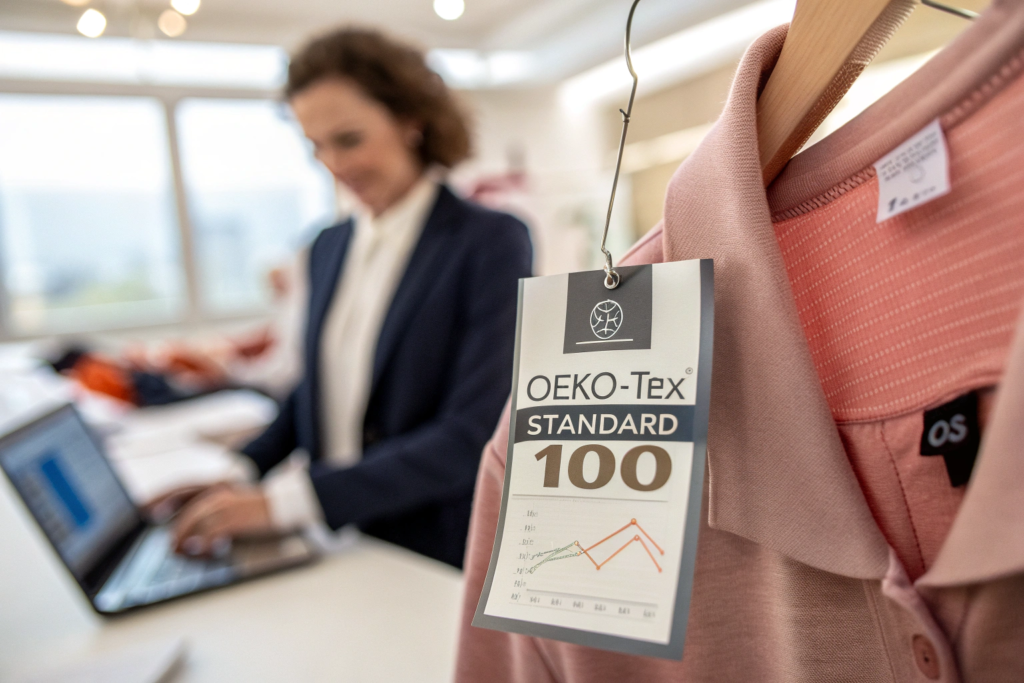
Beyond risk avoidance, OEKO-TEX is a powerful tool for value creation. In a crowded market, trust is a currency. The OEKO-TEX label is a instantly recognizable symbol of trust that can command a price premium, increase conversion rates, and foster customer loyalty.
Data from our clients supports this. A DTC activewear brand based in California started adding the OEKO-TEX STANDARD 100 logo to their product pages and hangtags in 2023. They A/B tested the product page with and without the certification call-out. The version with the OEKO-TEX badge saw a 17% higher conversion rate and a 12% reduction in product-related customer service inquiries. Their customers were willing to pay a 5-8% premium for the certified styles. Why? Because it reduced their cognitive load. In a sea of choices, the label provided a simple, trusted signal of quality and safety.
How does it align with ESG (Environmental, Social, and Governance) goals?
For publicly traded companies or those seeking investment, ESG performance is critical. OEKO-TEX certifications directly contribute to the "Social" (product safety, consumer health) and "Governance" (supply chain management, risk oversight) pillars. Investors and board members are asking harder questions about supply chain resilience. Being able to present a sourcing strategy built on verified, certified partners like Shanghai Fumao demonstrates mature risk management and long-term thinking. It’s no longer a nice-to-have; it’s a signal of professional governance.
What is the role in B2B sales and wholesale relationships?
If you sell to other retailers or wholesalers, their requirements are your requirements. OEKO-TEX is increasingly a non-negotiable condition for getting on the shelf. Major European department stores and North American specialty retailers have integrated OEKO-TEX into their mandatory sourcing manuals. Having your products pre-certified removes a major barrier to entry and speeds up the onboarding process with new retail partners. It makes you a easier, more reliable vendor to do business with.
How does OEKO-TEX future-proof your sourcing strategy?
The regulatory and consumer landscape is not static; it’s accelerating. Bans on entire chemical classes (like PFAS in the US and EU) are coming. Digital Product Passports (DPPs) in the EU will require detailed chemical information. OEKO-TEX is not just about today’s rules; it’s a system designed for adaptation.
The OEKO-TEX association updates its standards annually, incorporating new scientific findings and anticipating regulatory changes. By building your sourcing strategy around OEKO-TEX certified partners, you’re essentially future-proofing your compliance. You’re partnering with factories that are already plugged into this evolving knowledge network. When a new substance is restricted, our R&D team at Fumao Clothing is already working on alternatives and reformulations. Your sourcing strategy remains compliant not through frantic last-minute scrambling, but through proactive, systematic adaptation.

What about the rise of Digital Product Passports (DPPs)?
The EU’s DPP is a game-changer. It will require a unique digital identity for each product, containing data on durability, repairability, recycled content, and—critically—the presence of substances of concern. OEKO-TEX MADE IN GREEN, with its unique product ID and QR code linking to traceability and certification data, is essentially a ready-made, pre-compliant component of the DPP. Brands building their sourcing strategy around OEKO-TEX today will have a massive head start when DPPs become mandatory.
How does it prepare you for circular economy models?
True circularity—recycling garments into new fibers—requires knowing what chemicals are in the old garments. Contaminated feedstock can ruin a recycling batch or create new, unsafe recycled material. OEKO-TEX certification of the original product creates a "chemical passport" that informs safe end-of-life processing. Sourcing with circularity in mind means sourcing with OEKO-TEX in mind from day one. It’s a strategic investment in the entire lifecycle of your product.
Conclusion
The role of OEKO-TEX in modern apparel sourcing is transformative and multi-dimensional. It has moved from the periphery to the core. It is no longer a single certificate you check for; it is the operating system for responsible sourcing in the 21st century.
A modern sourcing strategy built without OEKO-TEX is like a financial portfolio without insurance—exposed, fragile, and vulnerable to shocks that can wipe out years of gains. Conversely, a strategy with OEKO-TEX at its foundation is resilient, transparent, value-creating, and prepared for the future. It aligns cost with conscience, and risk with reward.
The question for you is no longer "Should I consider OEKO-TEX?" but "How deeply can I integrate OEKO-TEX principles into every link of my supply chain?" The answer to that question will define your brand’s integrity, longevity, and success in the years to come.
Ready to rebuild your sourcing strategy on a foundation of verified safety and transparency? At Shanghai Fumao, we don’t just supply OEKO-TEX certified fabrics; we help you embed this critical system into your entire product development and procurement process. Contact our Business Director, Elaine, at elaine@fumaoclothing.com to discuss how we can partner to future-proof your sourcing from the fiber up.