
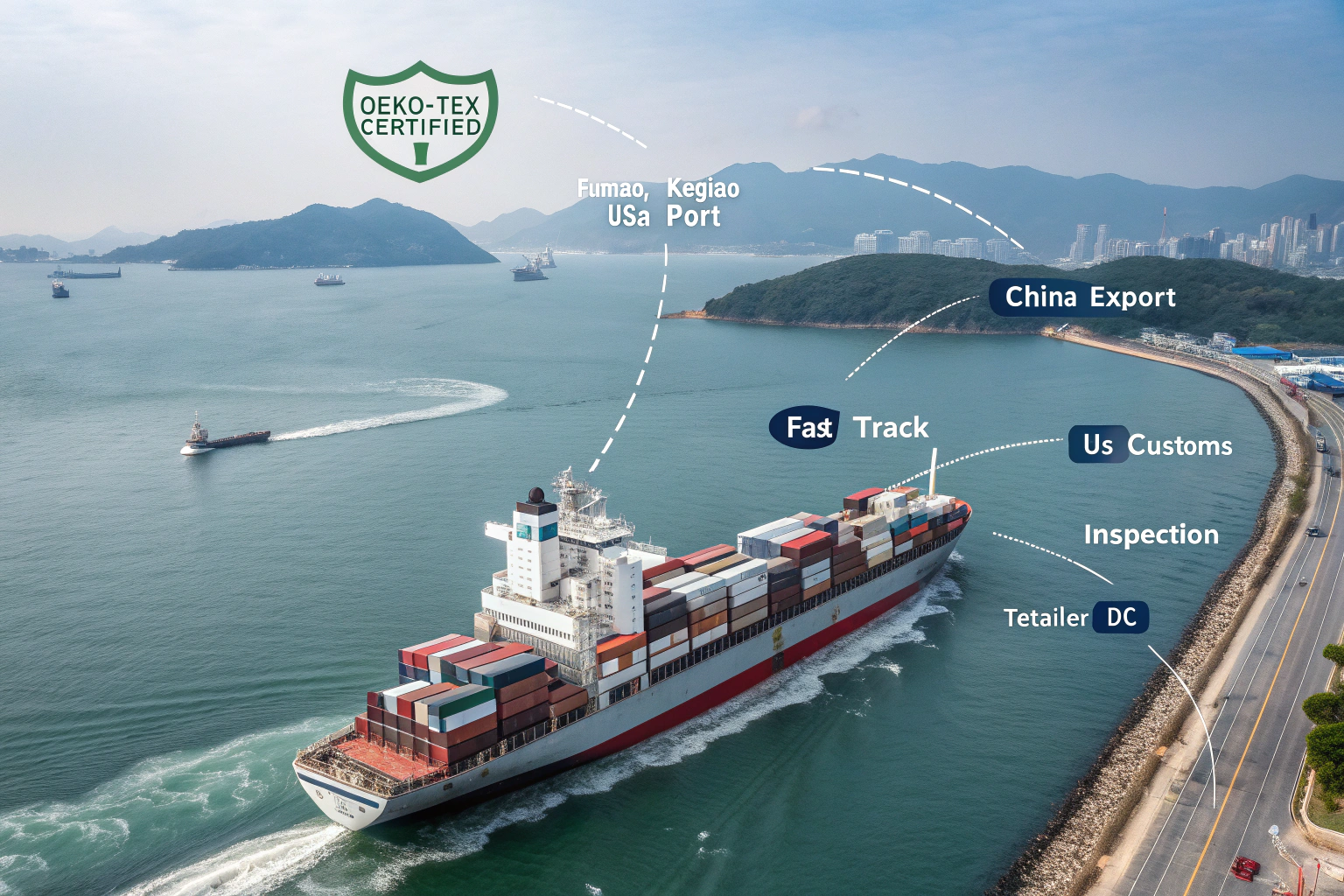
You’re staring at a spreadsheet filled with shipment dates, customs codes, and a gnawing anxiety about what’s inside that 40-foot container heading to Long Beach. For any American apparel importer, the process isn’t just about logistics; it’s a gauntlet of risk. Will Customs pull your shipment for testing? Will your products pass a random CPSC inspection? Could a retailer reject the delivery because the lab report doesn’t match their RSL? This is where a factory’s OEKO-TEX® certification moves from a “nice-to-have” marketing point to a critical operational tool. The question isn’t just if it simplifies the process, but how profoundly it streamlines the most fragile and costly part of your business: getting your goods safely from our dock to your warehouse.
Absolutely, sourcing OEKO-TEX® certified fabrics and garments from Fumao Clothing simplifies your import process by acting as a pre-cleared, standardized compliance passport that reduces customs friction, minimizes testing overhead, and provides unambiguous documentation for all supply chain partners. It transforms a subjective, variable risk—chemical compliance—into an objective, verified fact. This doesn’t just save you time; it protects your capital from the catastrophic costs of delays, rejections, and recalls.
Think of the import process as a series of gates. At each gate—Chinese export customs, U.S. CBP entry, retailer receiving—a guard can ask, “Prove these are safe.” Without a recognized certification, you hand them a stack of in-house test reports that they may or may not trust, triggering an inspection. With Fumao’s OEKO-TEX® certification, you hand them a globally recognized credential. It’s the difference between a handwritten note and a government-issued passport. It doesn’t guarantee zero scrutiny, but it drastically reduces its likelihood and severity. Let’s walk through the specific pain points it alleviates.
How Does It Reduce Customs Delays and Border Inspections?
U.S. Customs and Border Protection (CBP) and the Consumer Product Safety Commission (CPSC) are tasked with keeping non-compliant goods out of the country. They use a risk-based targeting system. Shipments with certain Harmonized Tariff Schedule (HTS) codes, from certain origins, or from shippers with a history of violations are flagged. What triggers a flag? A lack of credible, third-party safety documentation is a major red flag.
When you import OEKO-TEX® certified goods from Fumao, you provide a powerful piece of data: the certificate number and test report from an internationally accredited body. This documentation is entered on your commercial invoice and packing list. For a customs officer, this signifies that the product’s safety has been pre-vetted by a system they recognize. It moves your shipment lower on the risk profile. It doesn’t make you invisible to inspections, but it makes you a low-priority target.
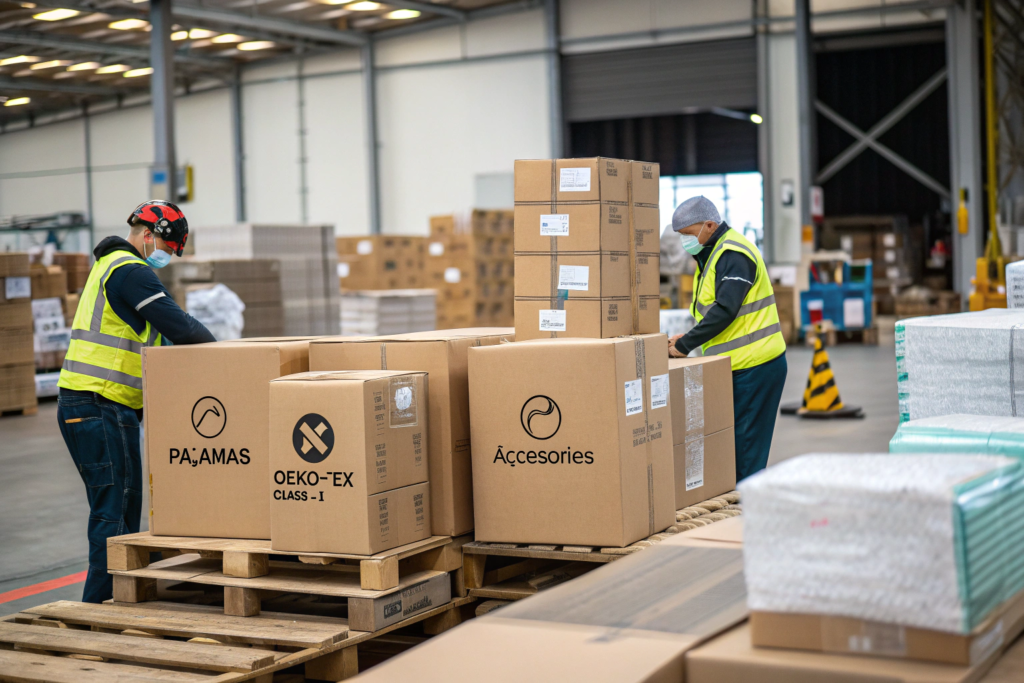
A concrete example: In 2023, a client of ours importing children’s pajamas had two simultaneous shipments. One was made with our OEKO-TEX® Class I certified flame-resistant fabric. The other was a non-certified accessory item from a different supplier. The accessory shipment was held at LAX for CPSC testing for flammability and lead, causing a 3-week delay and $2,800 in extra port fees. The pajama shipment cleared within 48 hours. The only material difference was the pre-verified OEKO-TEX® documentation. The importer now mandates certification for all SKUs. For official guidance, the U.S. CPSC Import Surveillance Page outlines their inspection protocols.
What about Section 321 and de minimis shipments?
For e-commerce brands shipping direct-to-consumer via express couriers (DHL, FedEx) under Section 321 (shipments under $800), clearance is usually fast. However, couriers themselves have compliance departments. Providing an OEKO-TEX® certificate when asked streamlines their internal audit process, preventing your parcels from being held in their hub for verification. It’s a smoothness factor at every logistical tier.
How does it help with ISF (Importer Security Filing) and documentation?
The “10+2” ISF filing requires accurate product descriptions. Listing the OEKO-TEX® certificate number in the appropriate fields demonstrates thorough preparation and compliance awareness to CBP, potentially reducing the chance of a Detailed Examination. Clean, complete paperwork is the first step to a clean import.
How Does It Streamline Communication with Freight Forwarders and 3PLs?
Your freight forwarder and third-party logistics (3PL) provider are not chemists. When they ask for compliance docs and you send them a 50-page chemical test report in Chinese, it creates confusion and delay. The OEKO-TEX® certificate is a universal document they understand.
We format our shipment documentation pack to include:
- The commercial invoice with the OEKO-TEX® certificate number clearly noted next to each certified item.
- A copy of the official, English-language OEKO-TEX® test report.
- A summary sheet from Shanghai Fumao that translates key findings: “Product: Women’s Jersey Top. Certificate: OEKO-TEX® ST 100 23.12345. Class: II. Status: PASS.”
This package allows your logistics partners to act swiftly and confidently. They can immediately answer questions from customs brokers or port authorities. It turns them from mere movers of boxes into informed advocates for your shipment. In the frantic world of logistics, clarity is speed. Forwarder forums on LinkedIn often discuss the value of standardized compliance docs from suppliers.
What is the impact on insurance and liability?
Maritime and cargo insurers assess risk. A shipment with verified safety certification is seen as less likely to be seized, detained, or rejected, which are all insured events. While it may not lower your premium directly, it strengthens your position in the event of a claim, demonstrating you exercised due diligence in selecting a certified supplier. It solidifies your supply chain’s insurability.
How Does It Simplify Compliance with Retailer and Platform Requirements?
This is where the simplification multiplies. If you’re importing to sell through Amazon, Walmart, Target, or specialty boutiques, each has its own Restricted Substances List (RSL) and requires a Supplier’s Declaration of Conformity (SDoC). Manually cross-referencing your product against each retailer’s unique, multi-page RSL is a monumental, error-prone task.
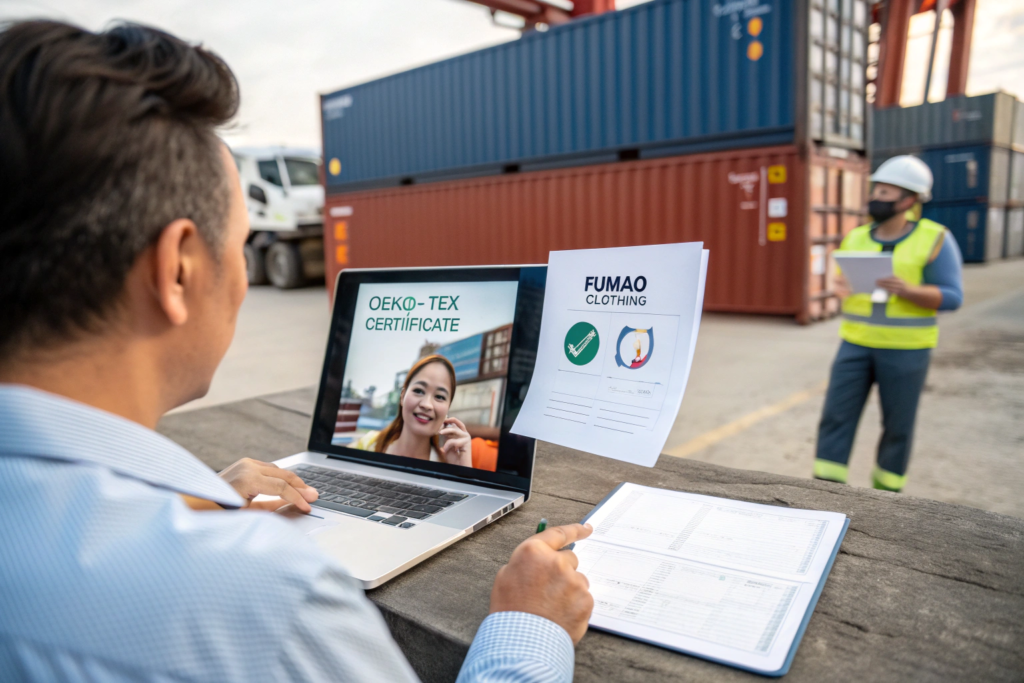
An OEKO-TEX® STANDARD 100 certificate (especially Class II or I) is widely accepted by major retailers as proof of conformity with their RSLs. Why? Because the OEKO-TEX® RSL is often more comprehensive and updated more frequently than many individual retailer lists. When you submit your OEKO-TEX® certificate to a retailer’s compliance portal, you are essentially saying, “This product has already passed a stricter test than your own.”
We have a client, an importer for several mid-tier department stores, who used to spend weeks each season preparing different documentation packs for each retailer. After switching the core of their assortment to our OEKO-TEX® certified fabrics, they now upload the same Fumao-provided certificate pack to all of them. Approval times have been cut by over 70%. The certificate acts as a universal adapter plug for retailer compliance. Resources like the American Apparel & Footwear Association (AAFA) RSL show the complexity that OEKO-TEX® helps navigate.
How does this work with Amazon’s Transparency and other marketplace rules?
Amazon’s requirements for certain categories (like children’s products or sleepwear) are stringent. An OEKO-TEX® certificate is one of the clearest forms of proof you can provide to unlock listing approvals and avoid suppressed ASINs. For platforms like Shopify where you control the narrative, the certificate boosts your product page’s trustworthiness, directly impacting conversion rates.
What about laboratory testing costs and lead time?
Here’s a major hidden simplification: reducing or eliminating your own third-party lab testing. Many importers, even with certified fabrics, would still do spot checks for their own peace of mind. When you partner with a manufacturer like Fumao with a CNAS-accredited in-house lab and a track record of 98%+ pass rates on external audits, the need for redundant testing diminishes. You can rely on our test reports, saving thousands of dollars and 2-3 weeks of lab turnaround time per season. This is a direct cost and time saving.
What Are the Long-Term Strategic Simplifications?
Beyond smoothing individual shipments, this certification simplifies your entire business model.
- Vendor Consolidation and Management: Instead of managing a dozen fabric and garment suppliers with varying compliance postures, you consolidate volume with a certified, vertically-integrated partner like us. This drastically simplifies communication, quality control, and strategic planning. You have one neck to choke, so to speak, and it’s a neck wearing a safety helmet.
- Predictability in Lead Times and Costs: Uncertified supply chains are prone to surprises—a failed test means re-dyeing, re-production, and missed ships. Our certified process is controlled, reducing batch failures to a statistical anomaly. This makes your lead times and costs more predictable, simplifying financial planning and inventory management.
- Future-Proofing Against Regulation: U.S. and state-level chemical regulations will only get stricter. By anchoring your supply chain to the OEKO-TEX® standard, you are automatically aligned with future regulatory updates (which OEKO-TEX® incorporates annually). You avoid the frantic, costly scramble to reformulate products when a new substance is banned.
- Brand Equity and Simplified Marketing: When your product is inherently safe, your marketing story becomes simpler and more powerful. You don’t need complex jargon; you can lead with the trusted OEKO-TEX® label. This simplifies customer education and decision-making, boosting conversion.
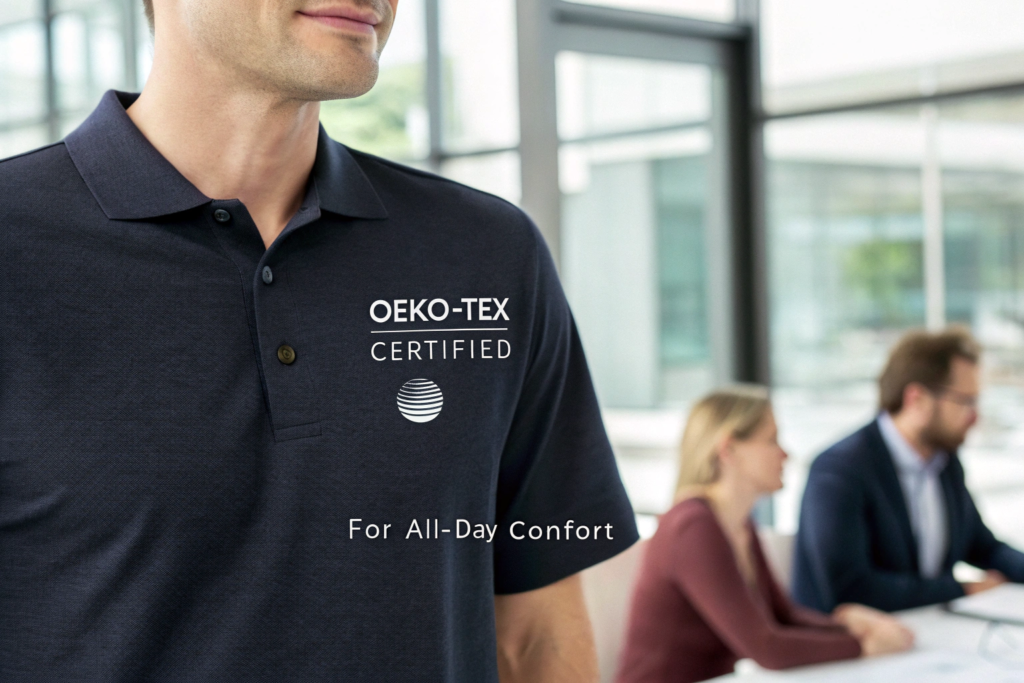
(Here’s a real simplification story: An importer of promotional corporate wear used to face constant minor rejections from clients worried about “rash potential” from low-cost polos. After moving their core polo program to our certified piqué cotton, they now lead their sales pitch with “OEKO-TEX® Certified for All-Day Comfort.” The objection disappeared. Sales cycles shortened. Their operation became simpler because the product’s value proposition became indisputable.)
How does Fumao’s specific role enhance this simplification?
We don’t just provide a certificate; we provide a turnkey certified supply chain module. Our value is integration:
- We control the chemistry from yarn to finished fabric.
- We manage the certification process for new articles.
- We provide the complete documentation pack formatted for import.
- We offer digital traceability (like QR codes) for ultimate transparency.
This means you, the importer, don’t need to become an expert in textile chemistry or certification logistics. You partner with us, and we deliver the simplified, compliant product stream. This is the ultimate simplification: outsourcing complexity to a competent partner.
Conclusion
Fumao Clothing’s OEKO-TEX® certification is more than a badge on a fabric swatch; it is a systemic import simplification engine. It clears logistical roadblocks at customs, creates a common language with all supply chain partners, satisfies retailer compliance hurdles en masse, and builds a predictable, future-proof foundation for your entire importing business. In an industry where complexity is the default, this certification is one of the most powerful tools an importer can wield to reduce risk, cost, and anxiety.
The journey from a factory in China to a shelf in America is fraught with potential breaks in the chain. Using a certified supplier like Fumao replaces the weakest links with forged steel. Ready to simplify your import process from the source? Let’s connect your brand to the clarity and confidence of a fully certified pipeline. Contact our Business Director, Elaine, to start streamlining: elaine@fumaoclothing.com.








