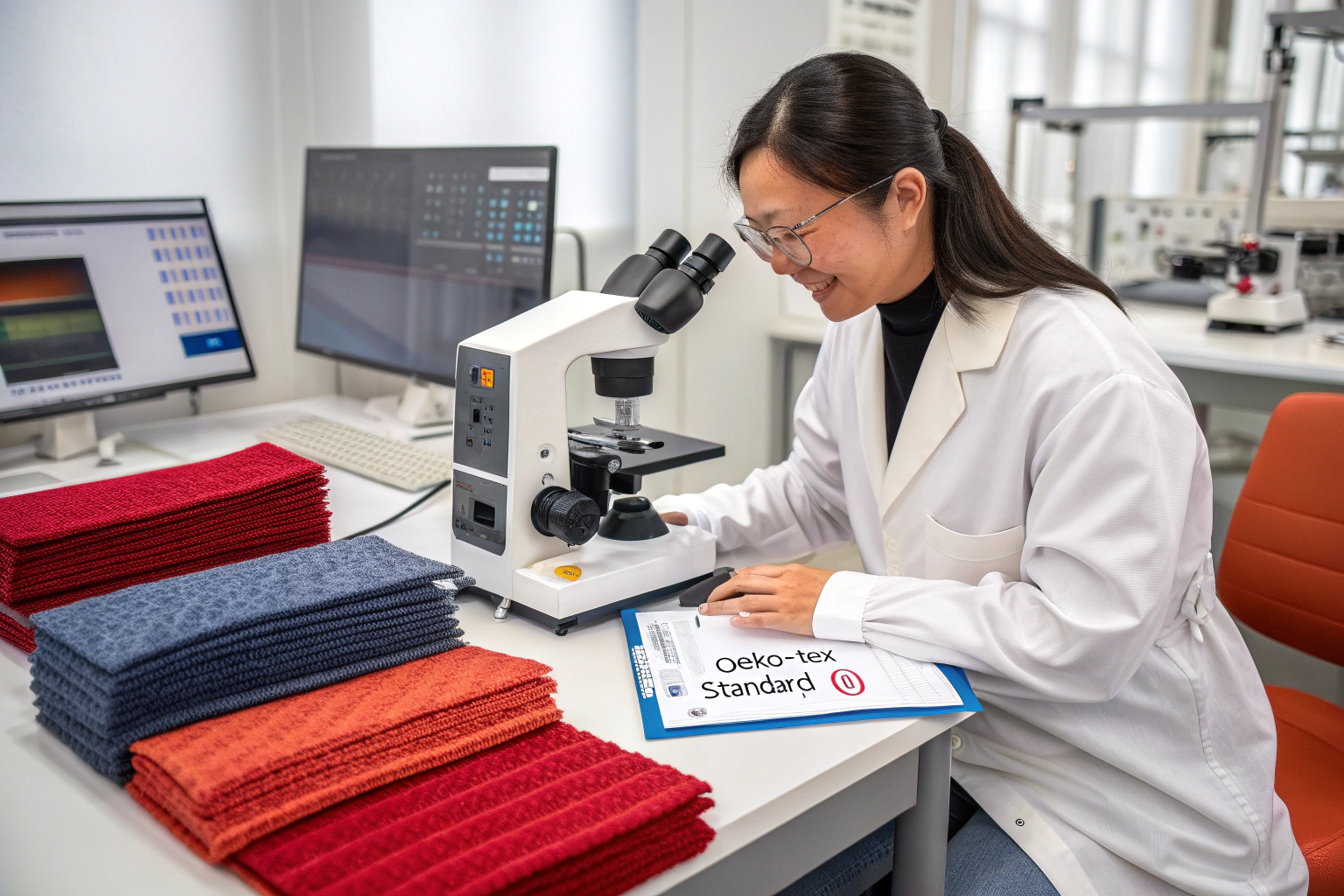
Every week, I talk to brands and buyers who are worried. They’ve found a fabric that looks perfect and fits their budget, but they’re stuck on one question: "Is it safe?" This isn’t just about avoiding a rash. It’s about protecting their brand’s reputation from a single failed safety test that can lead to massive recalls, fines, and broken consumer trust. For wholesale buyers of women’s wear—a category worn directly against sensitive skin—this risk is magnified.
So, why is OEKO-TEX® certification non-negotiable? In simple terms, it’s your most trusted, independent shield. It’s a globally recognized system that tests for harmful substances—from illegal pesticides to allergy-inducing dyes—at every stage of production. For wholesalers, it’s not an added cost; it’s a critical component of risk management and brand value. It directly answers the consumer’s unspoken question: "Can I trust what I’m wearing?"
Think of it this way: sourcing fabric without OEKO-TEX is like building a house without a foundation inspection. It might look fine now, but the first real stress test could reveal a catastrophic flaw. Let’s break down why this specific certification is your essential partner, especially when sourcing from complex supply chains in Asia.
What Exactly Does OEKO-TEX® STANDARD 100 Test For?
You wouldn’t buy food without a list of ingredients. Why treat fabric any differently? The OEKO-TEX® STANDARD 100 label gives you that detailed ingredient safety check, but for textiles. It’s the most common and recognizable certification in our industry for a reason.
At its core, STANDARD 100 is a product certification. It tests the final textile product—your fabric roll or finished garment—for a comprehensive list of regulated and unregulated harmful substances. The key is that the testing goes beyond just what’s legally required. They check for things that are scientifically concerning but not yet banned everywhere. The criteria are updated at least once a year, which keeps you ahead of new regulations. The tests are done by independent, authorized institutes, so you get an objective result, not a supplier’s promise. For a buyer, this means you’re getting a product verified to be harmless to human ecology, which is a powerful statement.
How Does the Certification Process Protect My Brand?
The process is systematic. First, every component of the product is tested—not just the main fabric, but the sewing threads, linings, prints, and even non-textile accessories like buttons or zippers. Nothing is assumed to be safe. The fabric is tested in its finished state, which is crucial because dyes and chemical finishes applied later can introduce hazards. The certification is issued for a specific article number, linking it directly to your product. This traceability is gold for due diligence. If a retailer or consumer asks for proof of safety, you have an official, verifiable certificate from a respected third party. It transforms a subjective claim of "good quality" into an objective, scientific fact. This is why major European retailers often mandate it. A 2023 project with a Danish sportswear brand comes to mind. They needed a quick-dry polyester for leggings. Our in-house CNAS lab did pre-tests, but we still sent samples for official OEKO-TEX® certification for functional fabrics. The certificate wasn’t just paperwork; it was the key that unlocked their purchase order because their compliance team could immediately green-light the material.
What Are the Different Product Classes and Why Do They Matter?
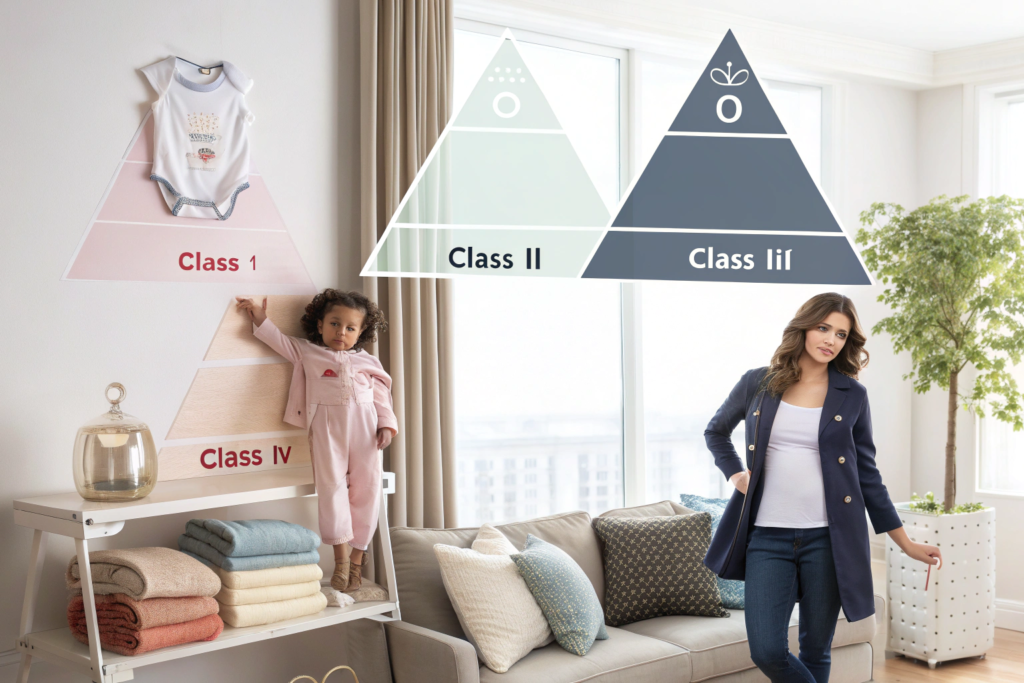
| This is where OEKO-TEX shows its precision. It doesn’t have a one-size-fits-all safety level. Instead, it uses four Product Classes, each with stricter limits. Think of it as safety tiers: | Product Class | Description | Examples | Why It’s Stricter |
|---|---|---|---|---|
| Class I | Articles for babies and toddlers up to 3 years | Baby onesies, bedding, soft toys | Babies’ skin is most sensitive and they often put textiles in their mouths. | |
| Class II | Articles with direct skin contact | Blouses, t-shirts, dresses, underwear, bedsheets | Worn directly against the skin for long periods. | |
| Class III | Articles with no or little direct skin contact | Jackets, coats, linings | Less direct exposure, so some parameter limits are higher. | |
| Class IV | Decoration materials | Curtains, tablecloths, upholstery | Not intended for wearing, but still tested for environmental safety. |
For women’s wear wholesale, Class II is your primary focus. A dress fabric needs a Class II certification. If you’re making a lined blazer, the lining should also meet Class II. Understanding this classification helps you specify exactly what you need to your supplier and avoid paying for over-testing or, worse, accepting under-tested goods. It also demonstrates a sophisticated understanding of global textile safety regulations for importers to your own customers. I once saved a client from a costly mistake. They were buying a beautiful polyester chiffon, certified, but only to Class IV. They wanted it for blouses (Class II). We caught the discrepancy during our QC review and had to source a properly certified alternative. That experience is why at Shanghai Fumao, we proactively guide clients through these details.
Beyond Basics: What’s the Difference Between STANDARD 100 and MADE IN GREEN?
Seeing an OEKO-TEX label is a great start, but which one? STANDARD 100 is about product safety. OEKO-TEX® MADE IN GREEN is about that plus sustainability and ethical production. It’s a newer, more comprehensive label for brands that want to tell a fuller story.
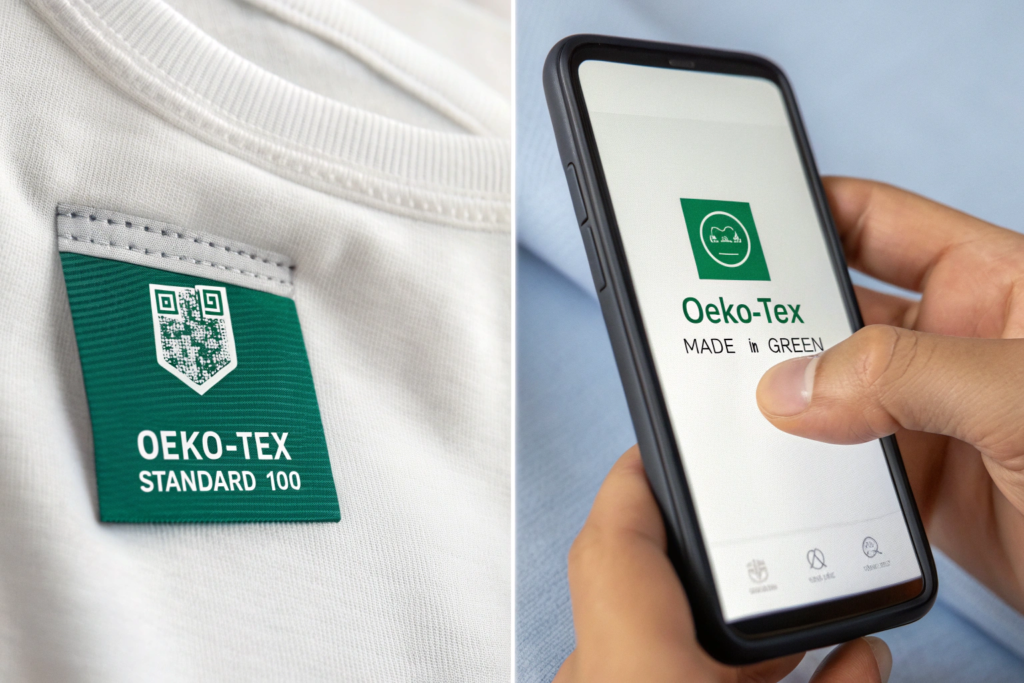
MADE IN GREEN combines three certificates into one: 1) STANDARD 100 (product safety), 2) STeP (Sustainable Textile & Leather Production, which audits the factory’s environmental and social practices), and 3) a requirement for the company to operate in compliance with the International Labour Organization (ILO) conventions. The coolest part? Each MADE IN GREEN label has a unique QR code. Scanning it shows the consumer the production stages and countries where the product was made. This level of transparency is becoming a huge market differentiator. For wholesalers, sourcing MADE IN GREEN certified fabric means you’re addressing three core consumer concerns—health, environment, and social responsibility—with one verified label. It future-proofs your supply chain against tightening ESG (Environmental, Social, and Governance) criteria from investors and large retailers.
How Does MADE IN GREEN Enhance My Brand’s Story?
In today’s market, "safe" is expected. "Responsibly made" is a premium story. The MADE IN GREEN label provides the verified narrative. That QR code isn’t just a tech gimmick; it’s a direct line of trust from your factory floor to your end consumer. It allows you to say, "This dress is not only safe to wear, but it was made in a factory that cares for its workers and the planet," and you can prove it. This is incredibly powerful for DTC (Direct-to-Consumer) brands and those selling on platforms where storytelling is key. It moves the conversation from cost to value. For example, we worked with an eco-conscious brand from California in early 2024 on a line of organic cotton lounge sets. By ensuring the fabric and production were MADE IN GREEN certified, they were able to leverage that in their marketing, resulting in a 15% higher average order value compared to their non-certified lines. The certification became a core part of their identity.
Is STeP Certification Relevant to Me as a Wholesale Buyer?
Absolutely. While STeP (Sustainable Textile Production) is a module within MADE IN GREEN, it’s also a standalone certification for production facilities. As a buyer, knowing your fabric supplier has a STeP-certified partner factory is a massive advantage. It de-risks your supply chain from environmental scandals or labor issues that could splash back on your brand. The STeP audit looks at things like chemical management, water and energy efficiency, wastewater treatment, worker health & safety, and social responsibility. When you partner with a supplier like Shanghai Fumao that prioritizes STeP-certified dyeing and finishing partners, you’re not just buying fabric; you’re buying into a responsible manufacturing philosophy. It shows you’ve done your homework deeper into the supply chain. Resources like the Sustainable Apparel Coalition’s Higg Index overview can help you understand these broader environmental metrics, but OEKO-TEX STeP provides a specific, audited benchmark.
How Can I Verify and Source OEKO-TEX Certified Fabrics Efficiently?
The certification is only as good as its verification. Sadly, I’ve seen fake certificates or ones that don’t match the shipped product batch. As a buyer, you need a clear process. The first step is always to ask for the official certificate and check its validity on the OEKO-TEX® website using the certificate number or company name.
But efficiency is key. You don’t have time to detective-work every fabric sample. This is where your supplier’s internal systems become your greatest asset. Look for a supplier with an in-house testing lab (even if not OEKO-TEX authorized) that can perform preliminary tests against OEKO-TEX limits. This filters out obviously non-compliant materials before spending time and money on official certification. Ask about their track record: What percentage of their products are certifiable? Do they have a dedicated compliance officer? How do they manage the logistics of sending samples to the authorized institutes? The goal is to find a partner who makes certification a streamlined part of their workflow, not an expensive, slow afterthought. (Here’s a tip from our floor: we batch-test similar fabric compositions to save our clients time and money).
What Are the Red Flags in a Fabric Certificate?
Don’t just glance at the certificate; read it. Key red flags:
- Expired Date: Certificates are valid for one year. An expired certificate is worthless.
- Article Number Mismatch: The described article on the certificate must exactly match the fabric you are buying (composition, weight, finish). A certificate for "Polyester Plain Weave" is too vague.
- Wrong Product Class: As discussed, ensure it’s Class II for women’s wear with skin contact.
- Testing Institute: Make sure it’s from an authorized institute (like Hohenstein, TESTEX, etc.). The logo should be present.
- Applicant vs. Manufacturer: The certificate lists both. The "Applicant" is who requested the test. The "Manufacturer" is where it was made. Ensure these align with your supply chain. If you’re buying from a trader, the manufacturer should be their mill.
A reliable supplier will provide all this data openly. At Shanghai Fumao, we use a QR code system on our swatch cards. Scanning it pulls up not just the composition and price, but also links to valid test reports, including OEKO-TEX, SGS, and our own lab data. This digital traceability builds immense trust.
How Does Integrated Production Speed Up Certified Sourcing?
Time is money. The traditional way: you get a sample, love it, send it for certification (4-6 weeks), then place the order. This kills agility. The modern way is to work with an integrated supplier who designs for compliance from the start. At our Keqiao base, our R&D team already avoids restricted dye stuffs and chemicals in our formulations. Our partnered dyeing and finishing factories are audited and use compliant auxiliaries. This means a huge portion of our standard inventory is already "certification-ready." When a US client needed a rush order of certified stretch satin for holiday dresses last August, we could pull a pre-tested stock fabric, send a sample from that batch for fast-track certification, and start production planning concurrently. We cut the typical 8-week lead time to 5 weeks. This integrated control, from yarn to finished fabric, is why clusters like Keqiao dominate. For deeper insights into building such a resilient supply chain, forums like Fashion-Incubator’s discussions on ethical sourcing offer valuable peer perspectives.
What Are the Real Costs and ROI of OEKO-TEX for Wholesalers?
Let’s talk numbers. Yes, certification has a cost: testing fees (which vary by article complexity and institute), and potentially a slightly higher fabric cost due to using compliant, often higher-quality dyes and chemicals. The testing fee might range from a few hundred to over a thousand dollars per article. This scares some buyers away, leading them to roll the dice on uncertified goods.
This is a classic case of "penny wise, pound foolish." The Return on Investment (ROI) isn’t just in avoiding disasters; it’s in unlocking value. First, it reduces your compliance risk cost. A single recall or customs blockage for failed safety tests can cost tens of thousands, dwarfing certification fees. Second, it increases your sales velocity. Many retailers, especially in Europe, will not even consider a product without OEKO-TEX or equivalent. It’s a ticket to play. Third, it builds brand equity. Consumers are increasingly making purchasing decisions based on trust and safety. The label on the hang tag justifies a premium price point and fosters loyalty. Calculate the ROI not as an expense, but as an insurance premium and marketing investment that directly protects and grows your margin.

Can Certification Actually Lower My Long-Term Production Costs?
It can, by reducing variability and defects. The processes required to consistently achieve certification (precise chemical dosing, controlled dyeing cycles, rigorous quality checks) naturally lead to higher production stability. This means fewer batch-to-batch color variations, better fabric hand feel consistency, and lower rejection rates. For you, this translates to fewer surprises, less waste, and smoother production runs. A stable supply chain is a cost-effective one. I recall a client from the UK who switched to us for their jersey dress line after facing inconsistent shrinkage and pH issues with their previous supplier. By insisting on OEKO-TEX certification (which includes pH and dimensional stability tests), they saw their in-factory rejection rate drop from 5% to under 1% within two seasons. The slightly higher fabric cost was absorbed by the massive savings in cut-and-sew waste and re-work.
How Does It Affect Shipping, Tariffs, and Market Access?
Here’s a practical advantage often overlooked: smooth logistics. OEKO-TEX certification is a recognized document by customs authorities in many countries. It can expedite clearance because it demonstrates compliance with safety regulations, reducing the risk of your shipment being held for random testing. While it doesn’t directly affect US tariffs, it absolutely affects market access. For example, selling into countries with stringent consumer protection laws (like South Korea or Turkey) is vastly easier with this certification in hand. It’s a universal passport for your goods. Furthermore, as sustainability-linked trade policies evolve, certifications like MADE IN GREEN could potentially future-proof you against carbon border taxes or preferential tariff schemes. Staying informed on platforms like Just Style’s regulatory updates is crucial for forward-thinking wholesalers.
Conclusion
Navigating the world of fabric sourcing is complex, but one thing should be simple: your commitment to safety. OEKO-TEX® certification, particularly STANDARD 100 for product safety and MADE IN GREEN for a holistic ethical story, is no longer a luxury for niche brands. It’s a fundamental requirement for any serious wholesaler in the women’s wear space. It transforms subjective quality claims into objective, verifiable trust. It protects your brand from catastrophic risk, satisfies retailer mandates, and meets the growing demand from conscious consumers.
The journey is about finding the right partner—one who understands these certifications not as a sales checkbox, but as an integral part of responsible manufacturing. A partner who has the integrated supply chain, testing capabilities, and transparency to make certification a smooth, efficient process rather than a bottleneck.
Your next collection deserves that foundation of trust. If you’re looking to source high-quality, compliant fabrics with the documentation and transparency to support your brand’s growth, let’s talk. We at Shanghai Fumao have built our processes around these very principles. To explore how we can streamline your certified fabric sourcing, reach out to our Business Director, Elaine. She and her team can guide you from concept to certified delivery. Contact Elaine directly at elaine@fumaoclothing.com to start the conversation.