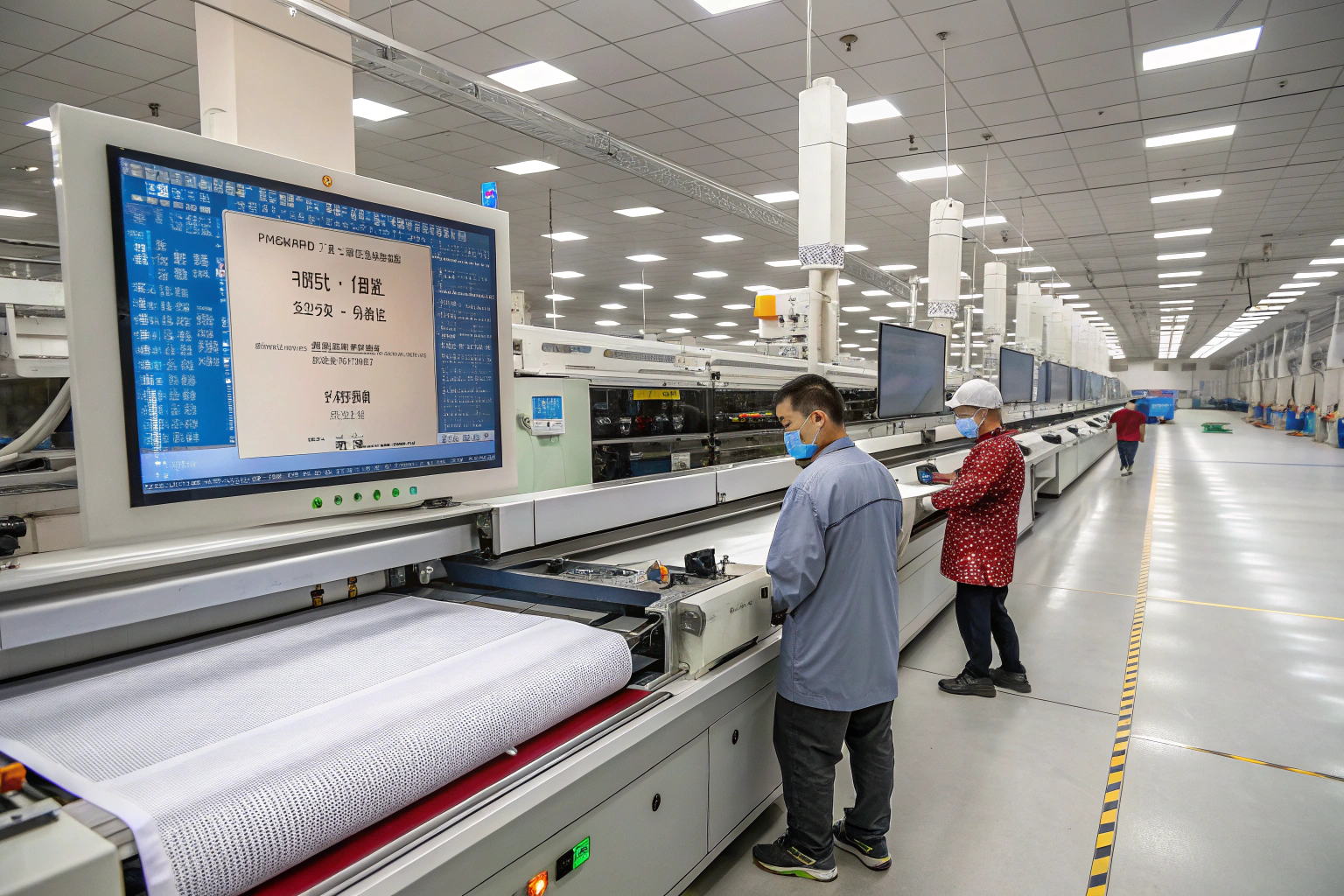
You’ve just launched a best-selling style. The first batch was perfect. But then, reorders start arriving. The color of Batch is slightly off. The hand feel of Batch is stiffer. By Batch , shrinkage is out of spec, and customer returns are skyrocketing. Your bestseller has become a logistics nightmare and a brand liability. This is the "batch inconsistency plague" that haunts apparel brands sourcing from disconnected supply chains. At Fumao, we don’t just aim for quality; we engineer batch-to-batch consistency as our fundamental promise. It’s not an outcome we hope for; it’s a process we control, measure, and guarantee from molecule to meter. For a brand, this consistency is what turns a one-hit wonder into a reliable, scalable cash cow.
Consistent quality isn’t about luck or having a "good factory." It’s the result of a vertically integrated, digitally monitored, and statistically controlled system. While many competitors are assemblers buying fabric from the open market (where variables change daily), we control the core variables: raw material specification, chemical recipes, machine parameters, and environmental conditions throughout the process. Our consistency is built on three pillars: Standardized Inputs, Controlled Processes, and Relentless Measurement. This system ensures that the 10,000th meter of fabric you receive is functionally and aesthetically identical to the first approval sample. It’s how we turn the art of textile making into a reproducible science.
Let me show you the cost of inconsistency: A US activewear brand we onboarded last year was losing 12% of their revenue to quality-related markdowns and returns from their previous supplier. The fabric weight, stretch recovery, and color would drift with every reorder. After switching to Fumao, we implemented our Digital Batch Consistency Protocol. In the first 12 months, their defect rate attributed to fabric fell to under 1.5%, and their customer reviews consistently praised the "reliable fit and feel." That’s the tangible value of consistency—it protects your margin and your reputation. We don’t just sell you fabric; we sell you predictability.
What is Our "Closed-Loop" Raw Material Sourcing System?
Inconsistency often begins at the very first step: the raw material. If the yarn’s fiber length, micron count, or twist varies, the final fabric will vary, no matter how good the later processes are. Our first defense is a "Closed-Loop" Sourcing Protocol. We don’t just buy "cotton yarn" on the spot market. We establish strategic, long-term partnerships with a limited number of certified spinning mills. For each fabric in our core portfolio, we co-develop a Raw Material Specification (RMS) that locks in over 20 parameters.
This RMS includes:
- Fiber Specifications: For cotton, this means staple length, micronaire (fineness), and strength (e.g., using USDA or USDA-equivalent grading). For synthetics, it’s polymer type, filament denier, and cross-section.
- Yarn Specifications: Yarn count (Ne or Denier), twist level (TPI), and evenness (Uster %).
- Certification Requirements: Mandatory GOTS, BCI, or GRS certification from the spinner, with Transaction Certificate traceability to the source.
We then conduct blind lot testing on incoming yarn shipments against this RMS in our CNAS lab. If a lot deviates beyond our strict tolerance limits (e.g., ±2% on yarn count), it is rejected. This rigorous gatekeeping ensures that every batch of fabric starts from an identical, high-quality foundation. A spinning mill that knows it will face such scrutiny is incentivized to maintain its own consistency.
How Does "Lot Traceability" from Yarn to Fabric Work?
Every bale or cone of yarn that enters our system is assigned a unique Fumao Material Lot ID. This ID is tracked digitally through every subsequent stage: weaving/knitting, dyeing, finishing. This means if a downstream quality test flags an anomaly—say, a higher pilling tendency—we can instantly trace it back to the specific yarn lot, the spinning mill, and even the cotton bale origin. This allows for root-cause correction, not just final product rejection. In one instance, tracing a subtle shade variation led us to a specific dye uptake issue in one yarn lot, which we then flagged for the spinner. This closed-loop feedback prevents future occurrences. This level of traceability is rare in fragmented supply chains. Resources like the Textile Genesis platform aim for this, but we’ve built it into our operational workflow.
Why is Pre-Blending of Raw Materials Critical for Natural Fibers?
For natural fibers like cotton or wool, inherent variation exists even within the same grade. To neutralize this, we employ pre-blending. Multiple bales of raw material (e.g., 20 bales of GOTS organic cotton) are mechanically blended into a homogeneous lot before spinning. This averaging effect ensures the yarn, and thus the fabric, has consistent fiber properties (length, strength, color) across the entire production run. Without this step, fabric can exhibit barre stripes (subtle horizontal streaks) due to minor differences between yarn cones. Our investment in automated blending lines is a direct investment in your visual consistency.
How Do Our Proprietary Process Control Protocols Work?
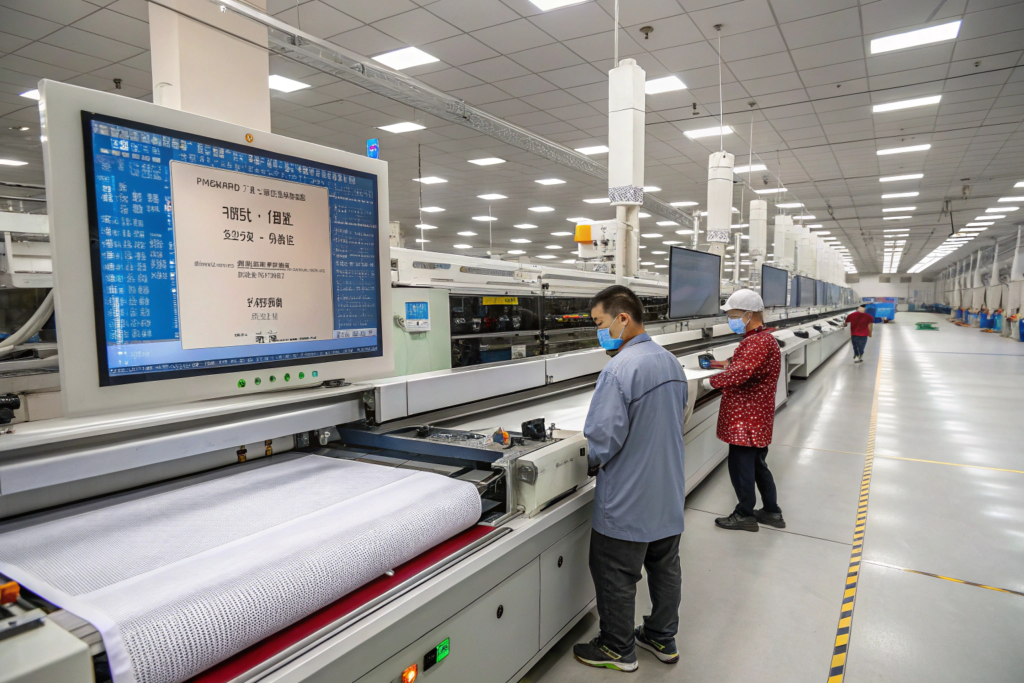
Consistent inputs are useless without consistent processes. Textile manufacturing is a chain of chemical and mechanical reactions—each one a potential point of variation. Our answer is the Fumao Process Control Protocol (FPCP), a set of digitalized standard operating procedures (SOPs) for every stage: warping, sizing, weaving/knitting, dyeing, and finishing. The FPCP doesn’t just say "dye at 60°C"; it specifies the exact temperature ramp curve, chemical dosing sequence, pH control points, and machine speeds, all monitored in real-time.
Key elements of the FPCP include:
- Digital Recipe Management: Dyeing and finishing recipes are not paper notebooks; they are locked digital files in our MES (Manufacturing Execution System). Operators cannot deviate; the machine will not start without the correct recipe loaded.
- Real-Time Sensor Monitoring: Critical parameters like dye bath temperature, pH, conductivity, and fabric tension are monitored by sensors, with data logged to a central cloud server. Any parameter drifting outside the set "control limits" triggers an automatic alert to the shift supervisor.
- Calibrated Machinery: All critical equipment—from looms and dyeing machines to stenters (finishing frames)—is on a strict preventive maintenance and calibration schedule. A loom with worn parts will produce fabric of varying density; a stenter with uneven temperature zones will cause inconsistent hand feel.

What is the Role of "First Article Approval" and "Golden Sample" Lockdown?
Before any bulk production begins, we run a First Article batch. This initial run is comprehensively tested in our lab and physically compared to the client’s Golden Sample (the approved standard). Only when the First Article passes all tests (color measurement under spectrophotometer ∆E < 0.8, shrinkage within 1%, etc.) and gets visual sign-off is the process "locked." The parameters from this successful run become the master settings for all subsequent bulk batches. This eliminates the "interpretation" variance that happens when different shift supervisors make their own adjustments.
How Does "Statistical Process Control (SPC)" Catch Drift Before It Becomes a Defect?
We don’t just inspect quality at the end; we predict and prevent variation during production using SPC. For key parameters (like fabric weight (GSM) or width), we take small samples at regular intervals (e.g., every 500 meters). The data is plotted on control charts. The system distinguishes between normal random variation and a concerning "trend" or "shift" in the process mean. For example, if GSM readings show a gradual downward trend, it signals a potential issue with yarn tension or loom settings long before the fabric falls out of spec. The process is stopped, corrected, and brought back into control. This is the difference between proactive quality assurance and reactive defect detection. Industry manuals on SPC in manufacturing detail this methodology.
Why is Our In-House CNAS Lab the Ultimate Consistency Guardian?
Final inspection can only catch what’s already wrong. True consistency assurance requires in-process and pre-shipment predictive testing. Our on-site, CNAS (China National Accreditation Service)-accredited laboratory is the brain of our consistency operation. It’s not a separate department; it’s integrated into the production flow. The lab performs over 200 tests daily, not just for final approval, but as checkpoints throughout manufacturing.
The lab’s role in consistency is threefold:
- Incoming Material Verification: Testing every yarn and chemical shipment against the RMS.
- In-Process Validation: Testing greige fabric (pre-dye) for construction and weight, testing dye liquors, and testing "half-finished" fabric after each major stage.
- Batch Release Authority: No batch of finished fabric leaves our warehouse without a full battery of tests and a Certificate of Analysis (CoA) that documents its performance against the spec. This CoA is your guarantee that Batch #XYZ123 is identical in performance to your approved sample.

How Does Spectrophotometry Ensure Perfect Color Match Batch-to-Batch?
Human eye color approval is subjective and affected by lighting. We use computerized spectrophotometry. The color of your approved lab dip is digitally encoded as a set of *Lab values. For every batch, we measure multiple points of the dyed fabric under controlled lighting. The instrument calculates the Delta E (∆E) value—the numerical difference between the batch and the standard. Our internal tolerance is ∆E < 1.0 (imperceptible to the human eye under standard lighting). If it’s above, the batch is re-worked or rejected. This removes all subjectivity and guarantees your navy is the same navy, season after season. Guides on color management in textiles** explain the critical role of ∆E.
What Performance Tests Guarantee Functional Consistency?
For performance fabrics, consistency in function is as important as color. Our lab conducts batch-specific tests that matter:
- For Moisture-Wicking Fabric: We measure the vertical wicking height (AATCC 197) to ensure identical drying speed.
- For Stretch Fabrics: We run growth and recovery tests (ISO 20932) to guarantee the same elasticity and shape retention.
- For Abrasion Resistance: We use the Martindale tester (ISO 12947) to verify the fabric will wear at the same rate.
Having this data for every batch means you can confidently market performance claims, knowing they are replicable. A client making yoga wear uses our consistent stretch recovery data to ensure their size charts remain accurate across all production runs.
How Does Digital Integration and AI Create a "Learning" System?
Our final layer of consistency is our Digital Quality Platform. This isn’t just a database; it’s an AI-assisted system that learns from every batch. Every test result, process parameter, and inspection note from every order is fed into a centralized data lake. Over time, the system identifies correlations and predicts optimal settings.
For example:
- The system might learn that when the humidity in the weaving room exceeds 70%, a slight adjustment to warp tension yields more consistent fabric density.
- It can predict that a specific combination of dye from Chemical Supplier A and cotton from Spinner B requires a 2°C lower dyeing temperature to achieve the same shade.
This moves us from standardized control to predictive optimization. It means our consistency isn’t static; it’s continuously improving, with each batch making the next one even more reliable.

What is the "Digital Twin" for Key Fabric Lines?
For our flagship fabrics, we are developing "Digital Twins"—virtual simulation models of the production process. By inputting the raw material specs, the digital twin can simulate the outcome and suggest the optimal machine parameters before physical production even starts. This reduces trial-and-error and gets us to a perfect, consistent result faster. This is cutting-edge Industry 4.0 application in textiles.
How Do You, the Client, Access This Consistency Data?
Through our Client Portal, you don’t just get a "pass" note. You get access to the key consistency data for your batch: the ∆E color report, the shrinkage graph, the physical test results. You can compare these metrics across your own historical orders to see the stability for yourself. This transparency is the ultimate proof of our system. It turns a claim into a verifiable dashboard. For brands with their own quality management systems, we offer API integration for seamless data flow.
Conclusion
At Fumao, consistent quality across all batches is not a hopeful outcome—it is a designed, engineered, and guaranteed characteristic of our product. It is achieved through the ruthless standardization of inputs, the digitization and control of processes, the predictive power of an in-house accredited lab, and the continuous learning of an integrated AI system. This multi-layered approach is what separates a true manufacturing partner from a commodity supplier.
For a brand, this consistency means predictable costing, reliable product performance, steadfast customer satisfaction, and ultimately, a protected and growing brand equity. It is the invisible infrastructure that allows you to scale with confidence.
Stop managing batch variations and start enjoying predictable quality. Request a consistency data report for one of our staple fabrics and see the proof in the numbers. Contact our Business Director, Elaine, at elaine@fumaoclothing.com to build a scalable, consistent supply chain.